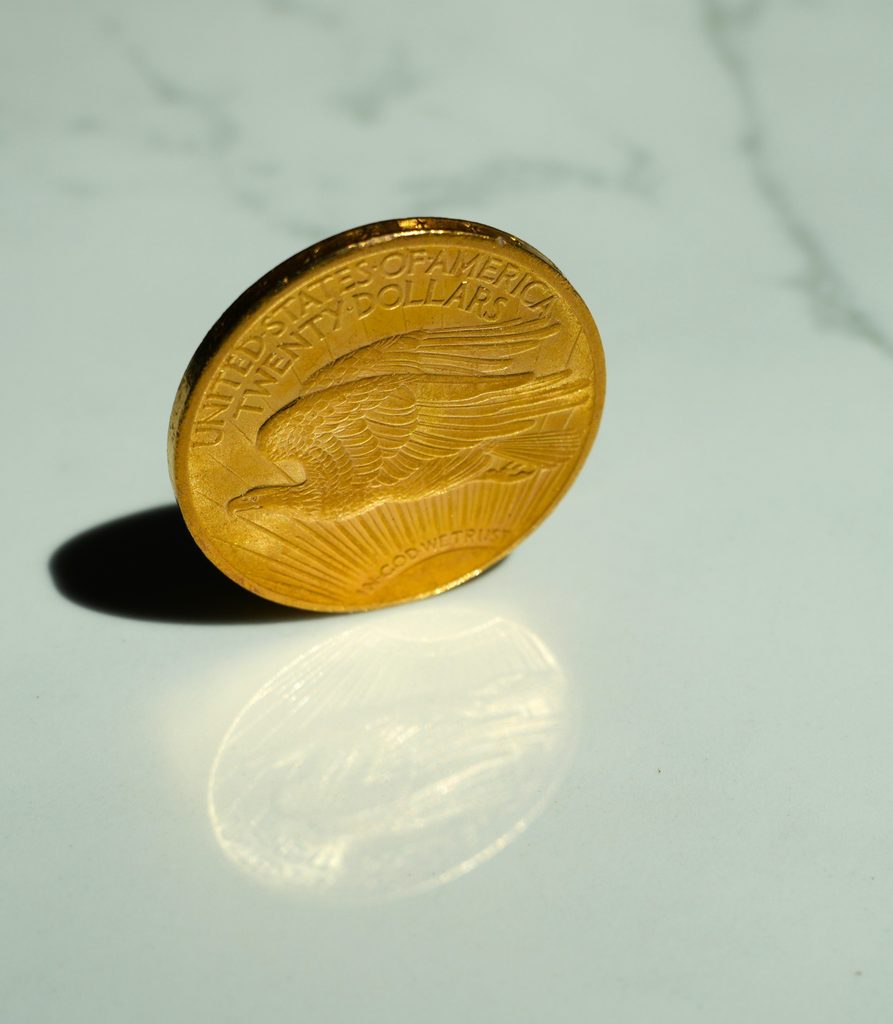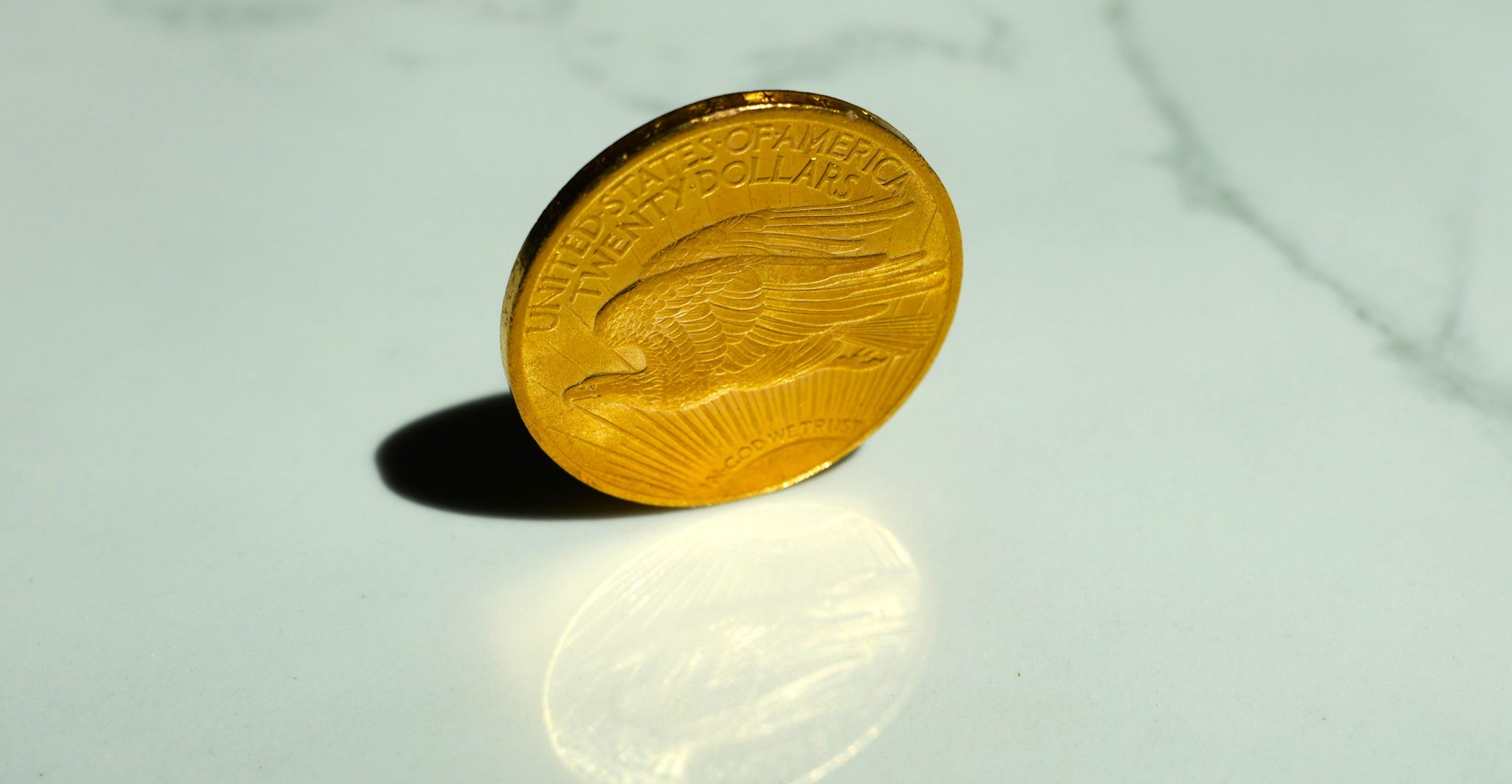
Creation of the 1933 Double Eagle
Creation of the 1933 Double Eagle
Episode #52
09.30.26
Why Rare Coins Hook You
If you’re not into rare coins yet, this is a great story and it’s going to get you hooked. That’s what happened to me, and it could happen to you. Coins are cool because you can learn all about the actual thing, the designs and the markings and all the different inscriptions on the coin itself.
But the best part, what I found the most fun is to figure out all the events going on around a certain coin. Incredible world events that are unfolding, usually directly impacting the creation of the rare coin. The story and the history around rare coins, that’s the fun part.
The Garrett Letter And The Missing Gold
Example number one, the 1933 St. Gauden’s Double Eagle.
There’s a famous coin collector, John Garrett. He’s sitting around 1934, and he has an idea. Listen to this. From a book that I’m going to tell you all about in a minute. This is from the book. It says,
“The events and proclamations of 1933 and their effect on gold ownership, which had culminated only days earlier on January 30th, intrigued him and awakened his curiosity. On February 2nd, 1934, Garrett wrote to Wayte Raymond, America’s foremost coin dealer.”
And this is what he wrote him. He said,
“It might be interesting for me to add to my collection. If it is not against the law, the last gold pieces, twenty dollars, ten, five, and two fifty. I do not know whether any of these were struck last year, but perhaps if you could come across the actual last ones in proof or uncirculated condition, you might put them aside for me.”
Okay, so that’s what he wrote to this coin dealer. This was that coin dealer right here. It says,
“Raymond, whose contacts were legion, checked around, certainly with his well-connected sometimes partner in Philadelphia, James G. McAllister. All in vain. He finally replied to Garrett on March 29th, 1934.”
So he took a couple months and he actually looked around for this on this request by Garrett. And this coin dealer writes back to his customer. He says,
“In reference to your inquiry about gold coins, would say that tens and twenties were struck in 1933, but I have never been able to get them.”
And so Tripp says in his book right here, he says, “No one could…yet.”
So what I was reading there is an excerpt from a great book by David Tripp titled ‘Illegal Tender.’ And the book tells the entire story of the 1933 Double Eagle gold coin, how it was created, and then how it became the most valuable coin in the world. I just read a letter from the legendary coin collector, John Garrett, a letter he sent to his coin dealer, Wayte Raymond, early 1934, asking if he could locate the gold coins that were struck in 1933.
He wanted one of each denomination so he could add them to his collection. But Garrett didn’t even know if the coins existed. This is a wise and prudent coin collector, John Garrett. He just realized the unprecedented economic and political events of the year before 1933. They totally altered the landscape of coin collecting. The rules of gold ownership were completely rewritten, and also it ended the creation of all gold coins by the U.S. government.
Then the population of existing coins around the country would be totally obliterated. So John Garrett, he realized there might be extreme rarity here for his collection. The 1933 gold coins that were just produced the previous year by the U.S. Mint, if he could get a few for his collection, and he’s asking his coin dealer if he can go out and get some for him.
The only problem is his dealer responds, and his dealer says, I can’t get them. This is one of the top coin dealers back in the day, Wait Raymond. So Raymond responds that he’s pretty sure that the $10 and the $20 gold coins were created, but he’s not able to locate any of them for his wealthy customer.
Attic Print Magazine And Website Update
Okay, so one thing I want to mention real quick. I’ve been working on volume number two, the fall edition of my print magazine. It’s called Attic. It’s where I put everything in ink. It’s this large print magazine that I’ve been doing with all my own high def photos and images of all the journeys that I go on, with in-depth articles. I’m trying to give you a unique view of all the things that I’m interested in and learning about, searching for the world’s greatest collectibles and exploring legendary creators and icons. You can check this out, go to my website. It’s atticcapital.com. This is my home on the internet. It’s everything I’m working on. I just gave the website a refresh, so check it out. Enter your email address if you want to stay updated on volume two, the fall edition of Attic Print Magazine. Okay,
Birth Of The 1933 Double Eagle
So I gotta introduce to you this book by David Tripp. Published in 2004, you wouldn’t even believe what amazing detail David Tripp researched for this book. So the book’s illegal tender. The subtitle is Gold Greed and the Mystery of the Lost 1933 Double Eagle. So we got to back up just a little bit from John Garrett’s request, that letter that he sent February 4th, 1934. We got to back up to the previous year to understand why Garrett was asking for these coins. So let’s go back to the previous year. David Tripp sets up the birth of the 1933 Double Eagle in his book. And this is how he says it right here. He says,
“On February 18th, work finally got underway on the 1933 $20 gold pieces. Still the country’s largest, grandest, and most beautifully conceived coins. It was the 25th year the St. Gauden’s design was struck, and it was to be the last.”
All right, so after 25 years of the St. Gauden’s Double Eagle gold coins, that trip just said, this was going to be the last year that these coins will be made. So we’re in early 1930s in America, and this makes you think about the Great Depression. That’s pretty much the first thing you think about when you’re thinking about 1930s. This was a pivotal year in US history, 1933. And this happens to be the date of the most valuable coin in the world, the 1933 Double Eagle. The same coin sold a few years ago for almost $20 million.
So why is it worth almost $20 million? That’s exactly what we’re going to look at in this episode. How it was created, how it became so rare and valuable, and the book by David Tripp is the best book that I’ve found on this subject so far. From the quote that I just read, we’re in February 1933. And work begins at the mint to start creating these coins. So now by March 2nd, 1933, the first batch of double eagles were ready to be struck. This also happened to be the Thursday before president-elect Franklin Delano Roosevelt was to be sworn in that Saturday.
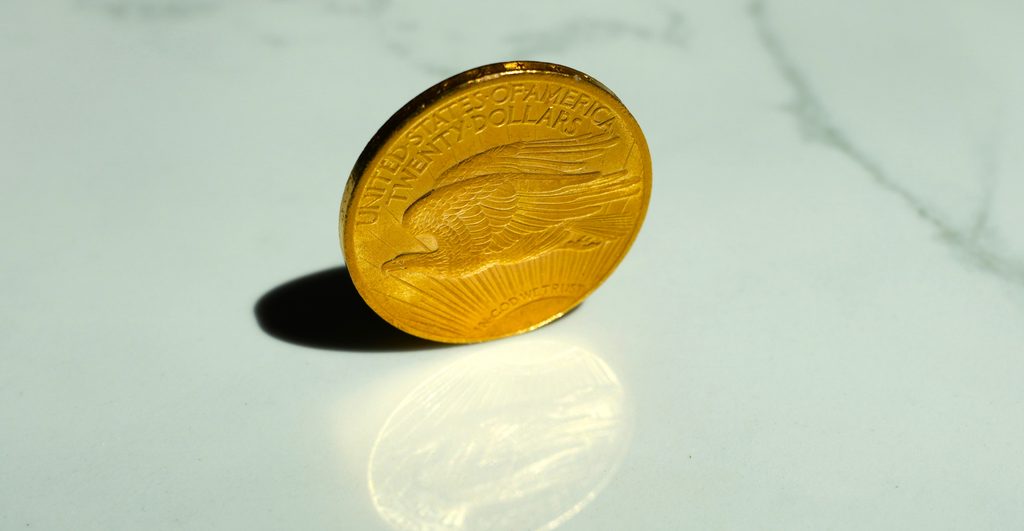
Something that we’re going to talk about in a few minutes, but you got to remember, at this exact time, there’s a major banking crisis going on around the country and around the entire world. This was the darkest period of the Great Depression right here, when the entire banking system was totally stressed to the limits, and banks were closing down day after day. But work at the U.S. Mint continued, even with the upcoming inauguration at the Capitol in just a few days. So with 120 tons of pressure, the mint presses struck down and created the very first 1933 St. Gaudens Double Eagle. On that first day, just about 4,000 double eagles were struck and then moved down the hallway to the Coiner’s vault.
Just a few days later, March 6th, 1933, FDR is in. The new president is sworn into office. Franklin Delano Roosevelt is inheriting a major economic crisis. At the same exact time, workers at the U.S. Mint have just created that first bag full of 1933 double eagles. So I love these points in history when we can trace back to the exact moment. It’s a moment where an iconic collectible rare coin like the 1933 Double Eagle collides precisely with all these other major events happening around the world. You see this over and over with the most valuable rare coins. So let’s look at Tripp’s book. Here’s how he describes the very beginning of this first batch of 1933 double eagles that are starting to roll off the mint presses. He says,
“The physical process of making money was precise. Every separate act was carefully scripted, each dependent on the other yet independently executed. All along the way, differences were carefully noted in the coiner’s record. By the end of business on Wednesday, March 8th, approximately 22,000 1933 double eagles had been made, not yet enough to pass on to the cashier.”
Now there’s a very strict process that’s followed, year after year. That’s what Tripp was just talking about. When these coins are made, the procedures are incredibly important, not just for quality control, but also for security purposes. You have average everyday American citizens working these jobs at the mint, and they’re handling the production of gold coins all day long. So of course there’s got to be certain measures set up for security purposes. And there’s tons of different checks and balances as these gold coins are minted and then moved throughout the building.
And the record keeping was very precise and exact to be sure not even one single coin was snuck out the door by an employee at the mint. And so Tripp’s book goes on and it outlines exactly how many double eagle coins were produced and then moved into the mint’s vaults for storage. The previous year, 1932, they created about 445,000 pieces. That’s roughly $9 million worth of coins. Now almost all the coins from 1932 and even 1931, almost all of them are still sitting in the mint vaults. Then in 1933, another $9 million worth of double legal coins were set to be minted. So another $445,000 coins. So just like the previous years, that’s what happened. March of 1933, with the newly elected President Roosevelt, he sworn into the Oval Office, the mint continues to create double legal coins. So David Tripp’s book, he describes it like this. He says,
“As the political firestorm in Washington raged, and gold lost its place as a medium of exchange, the mint in Philadelphia, seemingly oblivious to the real world, lethargically cranked out its golden product.”
We got to stop right here.
Great Depression And The Gold Standard
What is this all about? That quote that I just read, Tripp just writes, “The political firestorm in Washington raged.” What is he talking about right here? This is a key part to the 1933 Double Eagle story, so we have to understand the firestorm that he mentions.
We already know that President Franklin Roosevelt is about to be sworn in. He just won the election in a landslide victory over Herbert Hoover, who was struggling through this economic depression during all four years of his presidential term. And now for several months between FDR’s election victory and then being sworn into office in March, the economy’s getting worse by the day, and banks are failing, and everything’s starting to crumble.
Roosevelt’s getting ready to inherit the tanking economy. And just before the inauguration, the banking crisis is raging to a point where the leaders in Washington need to come up with a plan to save the entire system while Roosevelt is still the president-elect during this transition period before he’s even in office. And so every twist and turn during this transition period for Roosevelt, it’s completely laid out in David Tripp’s book. It’s such an important part of the 1933 Double Eagle story. Tripp goes through all the events from the election in 1932, then Roosevelt assembling his team of advisors and trying to deal with this crisis as the president-elect, and all the way up to his inauguration, and then everything after that to try to instill confidence back into the financial system.
But there’s so much happening around the country right now and around the entire world. Here’s how Tripp describes the dire situation that FDR is about to inherit from President Hoover. He says,
“In early 1930, unemployment reached 4 million. By the end of 1932, the number had more than tripled to approximately 25% of the workforce. Only a quarter of these people received any relief funds, however pitiful, from local government or private agencies.”
And Tripp goes on in his book. He says, this is how he explains this depression. He says,
“Abroad, the world’s economy was similarly shattered. Much of Europe’s malaise could be directly attributed to the fiscal consequences of World War I and the crushing terms of the Treaty of Versailles. Herbert Hoover called that war the primary cause of the Great Depression. Germany buckled under the cost of reparations, which it owed primarily to Britain and France. In a precarious international cycle of borrowing from Peter to pay Paul, American financiers lent Germany much of the money it needed to make its payments. These millions then found their way back to the United States government as repayment by France and Britain of the loans that they had been issued during the war. When the crash in 1929 deprived the American bankers of that essential ingredient, liquidity, the Europeans, as a result lacked the funds needed to service their debts. And the financial house of cards collapsed.”
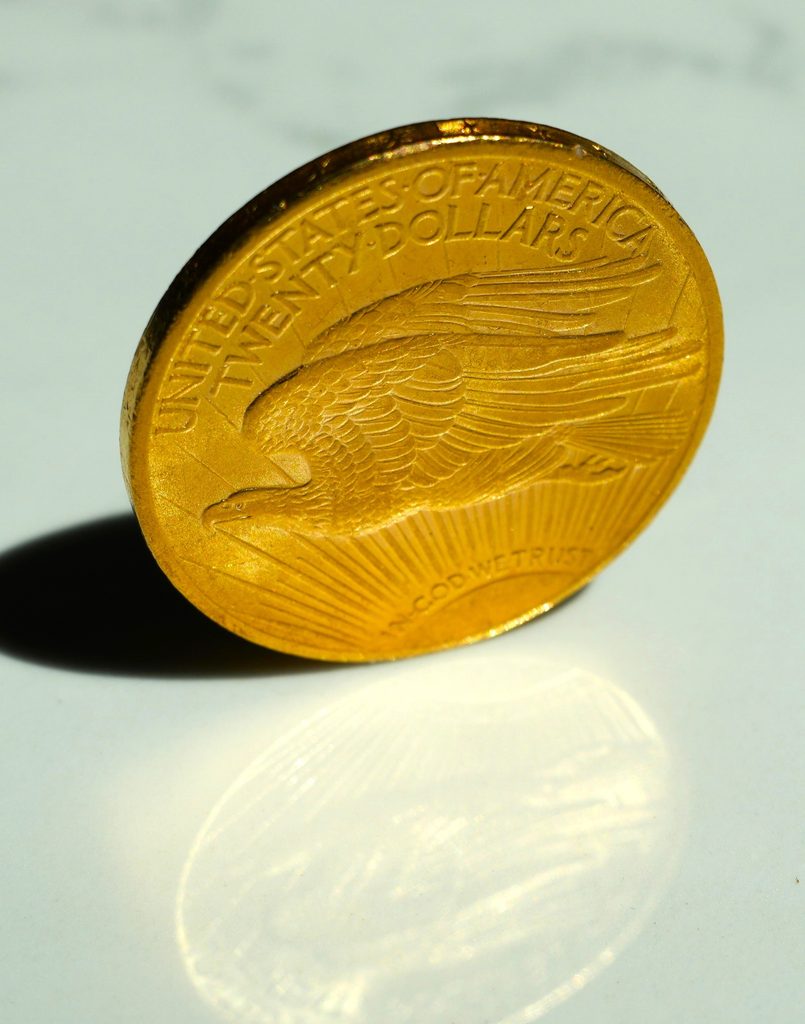
And so that’s David Tripp’s summary of what sparked the Great Depression. Over the course of several years, all these events led to a tightening of lending and liquidity around the world. So even by the late 1920s, banks were already struggling. By 1930, over 1,300 banks failed in a single year. The crisis just fed on itself because the global economy was connected like it had never been before. Even today, this crisis would just look like it was in slow motion, just because things move so much faster now. But this erosion in confidence in the financial institutions took several years to play out. But the momentum of the crisis is starting to build right here. That’s where we’re at in the story right now.
Right between the U.S. election of 1932 and then FDR taking office in early 1933. Now, so from Tripp’s book, here’s where the rubber meets the road, right here, at least back in the day. It’s a key phrase that I need to read. Here’s how he says it. He says,
“There seemed to be only one raft left to cling to in the roiling sea of economic uncertainty. Gold.”
So why does Tripp bring up gold right here? Back in 1933, most countries around the world were still using gold to back their monetary system, what’s known as the gold standard. And this was how banks and entire countries guaranteed the value of their currency. So like Tripp was saying, in one form or another, so it wasn’t completely clear-cut and uniform gold standard system around the world, but it was the same principle. Most banking was backed by actual gold. Here’s what Tripp says,
“From country to country, the amount of money in circulation was a fixed ratio to the amount of gold held in the reserves. When gold flowed out of a nation’s coffers in the course of trade, the monetary base shrank, credit was tightened, and deflationary forces were brought into play. The United States began haemorrhaging gold. Savvy investors such as Charles Merrill, one of the founders of Merrill Lynch, had predicted the Great Crash in February 1929 and had liquidated his positions. Now wary of the precarious state of the banks, he saw gold as a safe harbor and privately advised those of his inner circle to buy gold coins and send them out of the country.”
So that was Tripp. Now we can start to see how important gold was back in the day. Wealthy people start to hoard gold coins and they’re trying to store them out of the country because the Federal Reserve had actually started to keep records of anyone that was withdrawing gold in large amounts. David Tripp talks about this in his book. He calls them “sophisticated hoarders.” So it’s basically rich people and businesses they start to set up shell companies in other countries to hide their gold, hoping that the U.S. government wouldn’t be able to track them to someday maybe confiscate their stash.
So you have countries and governments, wealthy people and companies, they’re all looking to gold to protect themselves from this distrust of the banks that were failing with every passing week. And so of course, this leaves the average citizen who might not have a huge fortune, but they begin to catch on to what was happening and they start to do the exact same thing. They start to pull gold coins from their banks, and it might not be in large quantities for just one person. But when everybody starts doing the same thing, it really starts to add up quick. And suddenly gold is rapidly disappearing from the banking system all at once. And who knows where it’s going?
Maybe it’s going into private safes or vaults in foreign countries, under mattresses, maybe buried in the backyard, underground. Who knows? But the one place that it’s not, it’s not in the banks anymore. And that’s how the entire system was set up, to have the majority of the gold stored at banks and with the government. So you can see this is a huge problem they have now. He says
“The constant trickle of the little guys’ withdrawals, combined with a riptide of the yellow metal to companies and even countries hoping to write their own beleaguered economies, created such a tidal wave of uncertainty, instability, and fear that the nation’s banking system edged yet closer to the brink of total collapse.”
Now we have another big problem. The president of the United States since 1928 was Herbert Hoover, and he’s just been voted out. And FDR just won a landslide victory. But like Tripp just said, the banking system’s getting closer to the brink of total collapse. Now we have to make it a few long months until Roosevelt takes office in March. And they called this the Great Void, the four months between the election and then FDR finally getting sworn in. But things got so bad that individual states were declaring their own banking holidays during this great void period. Nobody really knew what to do, and apparently President Hoover, he just didn’t have the confidence of the people anymore.
After grinding through four really, really tough years, and he knew there was just nothing he could do to reestablish any stability at that point. And then amazingly, even newly elected Franklin Roosevelt didn’t have many ideas initially. Roosevelt didn’t even pick his Secretary of the Treasury until two weeks before the inauguration. And maybe he tried to do that sooner, and maybe nobody was crazy enough to accept the position. That’s one idea that I had. This entire thing just sort of lingered on for a few months until finally Roosevelt asked William Woodin to be his Secretary of the Treasury, and this is from Tripp’s book.
“Roosevelt made the offer. Stunned, the slightly built, self-effacing, 64-year-old Wooden asked to sleep on it. Twenty-four hours later, he accepted what Raymond Moley considered to be one of the most heroic jobs in the administration.”
So Tripp goes on in his book to describe this grim scene that Roosevelt and Wooden are facing right here.
“Will Wooden’s acceptance came with the inauguration just two weeks off? Since election day, the financial crisis had gathered speed and careened out of control, although there had been runs on banks throughout January. During the first two weeks of February, withdrawals of gold and currency had accelerated to $15 million per day, triple what they had been previously. It was unsettling when Louisiana declared a bank holiday at the beginning of the month. But when, two weeks later, February 14th, 1933, Governor Comstock of heavily industrialized Michigan slapped an eight-day moratorium on the state’s banks, a shiver rippled through the country and erupted in panic.”
So there’s this buildup to the panic right here, and it’s almost leading right up to inauguration day, because there’s no real leadership in place yet. But William Wooden gets busy, and he begins meeting with the current Treasury Secretary, Ogden Mills, before he’s even confirmed in his new job. And together they work pretty much around the clock to monitor this banking situation, and they’re trying to come up with a few solutions. They’re monitoring the situation here. And it’s not good. In the meantime, over $300 million worth of gold was withdrawn from the banks in the month leading up to the inauguration. Just to give you an idea of the acceleration of this panic, $226 million of that was withdrawn in the final week before FDR was sworn in.
So you can see why Woodin was working around the clock. He’s seen these daily reports of the withdrawals from the system. And he’s just probably thinking, like, what the heck did I just get myself into accepting this impossible job? They quote from the book right here. He says,
“If bold action was not taken, it would mean the obliteration of the banking system.”
So right now, we’re right at inauguration day. The book details this down to the very minute. And there’s actually a debate about whether President Hoover would have to take some kind of emergency action, or if it would be Roosevelt who would do it right after he’s sworn in. But somebody had to do something drastic to stop the withdrawals of gold from the banking system. Now the day before FDR sworn in, 11 30 p.m. that night, Hoover calls Roosevelt and he tells him he’s not going to be the one to take any emergency action. It would have to be Roosevelt who does it once he’s in office. So FDR is sworn in the next day, just one hour later.
Bank Holiday And The Gold Crackdown
Roosevelt issues the executive order to close every bank in the U.S. for three days. And then they added a few very important requirements to that order. So they created what they called special trust accounts that could be opened at any bank. And these were used as a way to lure people to deposit cash or gold that they were hiding, and it was a way to bring capital back to the banks. And then there was this crucial order that went beyond just halting the U.S. mint from gold payouts, but it was a complete ban on the withdrawal of gold from banks and the government.
All gold exports were banned. And just as important, the order also prohibited hoarding of gold, which they added would be punishable by a $10,000 fine and up to 10 years in prison for hoarding gold. Now they didn’t really get into the details of what exactly. Was considered hoarding, but that wasn’t really important at the time. They just needed some strong language to show that they were dead serious about gold staying exactly where they wanted it, which was in the bank vaults or in the government vaults. So I like what Chirpp says in his book about all this. Here’s how he describes the scene. He says,
“Never before in the nation’s history had a new president taking such sweeping, dramatic, controversial, and complex actions immediately upon taking office. He had invoked war powers and assumed quasi-dictorial powers. Yet Americans across the country took a collective sigh and began to adjust accordingly. At least now they knew the rules of the game.”
So Tripp’s hinting at some good news here. At the end of that excerpt that I just read, he said, Americans across the country took a collective sigh. And with that first executive order, FDR and his crew, they just bought some much needed time to think about what else that they could do and what the next steps would be. And Will Woodin didn’t waste any time coming up with his next idea. He decided that the Treasury could now issue currency against the sound assets deposited at the banks. So when I read this for the first time, I was like, yeah, that doesn’t really sound like a crazy idea. But I guess at the time, this was a pretty big leap to start issuing currency.
He realized that if people now trusted that banks were once again capitalized and were backed by the U.S. Treasury, that the new currency could be printed to increase the money supply. FDR agreed to Woodin’s plan, and the book says the president agreed after just 20 minutes of listening to Wooden. If that paints a picture of this urgent situation right here. So on March 9th, five days after his inauguration, the president signed the Emergency Banking Act of 1933. Here’s how Tripp describes the result of FDR’s new laws right here.
“Because of the complexity involved in checking the books of the nation’s banks, the bank holiday was extended to March 13th, when the first healthiest banks were allowed to open their doors and conduct business. The effect was electric. The people’s confidence was renewed, and money and gold started to pour back into the system.”
In just a few days of FDR’s presidency, he takes this action and almost immediately ends this runaway train bank panic that was sweeping the nation. Once the banks finally reopened on March 15th, the stock market rose by 15%, and billions poured back onto the bank’s balance sheets.
Now to top all that off, and I had no idea about this until I started reading the story, just a few weeks before his inauguration, on February 15th, Franklin Roosevelt survived an assassination attempt while he was giving a speech in Miami. Just as the gunman started shooting at Roosevelt, there was a lady standing next to the shooter. She swung her purse and knocked the guy’s shooting arm down to the side. After five shots, one of the bullets hits Anton Cermack, who was the mayor of Chicago standing next to Roosevelt. And Sirmack later died in the hospital from those gunshots. Five other bystanders were wounded, but the president-elect Roosevelt was unharmed. So think about this. These two months of February and March, Roosevelt survives an assassination attempt, he’s sworn in as president, he calms the global markets and reverses a banking panic after just a few days in office.
And then another week after that, he signs the Cullen Harrison Act, the law that would once again legalize the sale of beer and wine, marking the end of prohibition. So FDR is having quite a start to his first term in office. And this is a very historic year of 1933, and there’s so much more history with FDR. It’s the first New Deal, the brain trust, the first hundred days, all the reforms and the programs. The more I was learning about FDR this week, the more that I discovered I didn’t know as much as I thought about this guy. I have a book on my shelf, it’s called Franklin and Winston about FDR and his relationship with Winston Churchill. And now I can’t wait to dig into that book because FDR hasn’t seen anything yet. He doesn’t just have to save the country from the Great Depression, but he’s going to be dealing with Europe and World War II just a few years from now. But we need to get back to the gold coins. Before we do that, I need to read this from Tripp’s book. And he makes this comment about William Woodin, FDR’s pick for Secretary of the Treasury, and a guy who worked night and day to figure a way through this banking panic. And here’s how Tripp’s book says it.
“Moley was deeply impressed by the new Treasury Secretary, who he knew was far from well. Capitalism, he wrote, was saved in eight days, and no other single factor in its salvation was half so important as the imagination and sturdiness and common sense of Will Woodin.”
So there’s huge praise right there for Will Wooden, one of FDR’s guys who helped calm the banking panic in 1933. And now we know the banking crisis was subdued by these immediate actions of FDR as soon as he was sworn in. But we need to look now at how this all played out for the gold around the country. With all these new laws in effect, now the American people had to actually follow them for all the work. And a big part of the law was to turn all gold back into the government. And that was something that would take a huge amount of work and coordination and a lot of time to figure out. And then there were these questions about if the US was no longer on the gold standard, and a lot of debate about what the gold standard even was. So don’t feel bad if you don’t understand the gold standard. Because even back then, the people who were deciding the fate of the entire banking system weren’t even completely sure if the US was on it or off it. Here’s David Tripp in his book. He goes,
“Perhaps not wanting to discombobulate the public further or simply unsure of the matter himself. William Woodin went on record the day the gold embargo was announced. It’s ridiculous and misleading to say that we have gone off the gold standard. His opinion was echoed by former Under-Secretary of the Treasury Arthur Ballantyne and Senator Key Pittman of Nevada, who more emphatically interpreted the action as a protection of the gold standard.”
It seems like no politician wanted any part of this gold standard question or to make any bold claims about the gold standard. I’m sure everyone was pretty much just dancing around this issue when they were pinned down by any reporters. If they were smart, because I’m sure that they were just trying to not roil any confidence, as fragile as it was at the time. Here’s more debate about the state of the banking system. The book says on this question of the gold standard, here’s what it says.
“Others disagreed, the New York Daily News pointed out, quite rightly, that as the government itself had stopped honoring its obligations in gold, it was a technical abandonment of the gold standard. In the New York Times, an unnamed but noted banking authority looked into his crystal ball and saw a bleak future for the gold standard. Some persons may not redeposit their gold, in which case they will be forced to bury it, because it will be of utterly no use to them.”
And so that was from Tripp’s book. And so now, even more debate and confusion about the status of the gold standard. This is directly from the president himself, right here. It says,
“Two days later, during his first press conference, the president leaned back in his chair and further fanned the flames of uncertainty. He told nearly 150 reporters who crammed into his office that as long as nobody asks me whether we are off the gold standard or gold basis, that is all right, because nobody knows what the gold basis or gold standard really is. This statement may not have been strictly accurate, but it suited FDR to say so.” So end a quote. So t”
There’s jokes in the Oval Office by the president about the gold standard, and there’s plenty of debate going all around. But one thing is certain, the US government was extremely serious about recalling all the gold out there. And here’s details of that gold recall. And the government had to somehow motivate the public to take action. So of course they added some confusing verbiage about the penalties and it and imprisonment if citizens didn’t turn in their gold. Here’s what it says right here. It says,
“All of these instructions forbade the egress of gold from the government. Now it only remained a question of how to encourage, chide, bully, and coerce citizens to take their own gold coins and yellow notes back to the treasury. In theory, the recall of gold seems simple. The imposition of penalties of gold hoarding, without defining how much gold constituted a hoard was a start. The language of the internal orders was direct by government standards, but still confusing to the citizens it affected.”
So it’s crazy. The American public did take action. There’s a point in the book where he talks about people returning their gold to the government, and it was almost as a patriotic duty right here, hoping that it would turn the tide of this awful situation that the country was in. So here’s a passage from the book showing how the gold started flowing back into the U.S. government. It says,
“On March 10th, the passage of the Emergency Banking Act the previous day, in record time, was the banner news across the nation. It was also the first time the extent of the deluge of gold back to the Federal Reserve was reported in depth, and the news was astonishing. More than sixty-five million dollars had been returned in the three days since the president’s initial decree. The rush had just begun.”
Here’s one more report from the book on the little guy, the average citizen right here, bringing everything they could find that looked like gold, trying to help this situation. It says,
“Newspapers reported that it was not just businesses and wealthy skeptics repositioning their golden hordes. Law-abiding everyday citizens went to the banks not thinking of themselves as hoarders, but wanting to do the right thing. They came with little bags, briefcases, paper bundles, boxes, or bulging pockets. Many had only a few coins, while others had bags of thousands of dollars of double eagles. These bags would have included examples of Saint Gaudens designs dating from 1907 and those they had replaced, which had been in circulation from 1850 through 1907.”
So what he’s saying here in the book is that so many of these amazing Saint Gaudens gold coins were turned back in at this point, and they were all eventually melted down. It wasn’t just the thousands of bags of gold coins that were locked in the bank vaults that were melted, but even individual coins from the public that were turned back in.
And exactly the reason why these double eagle coins became so rare and valuable later on. Here’s another account from the book, and it just shows how motivated people were to turn in their gold. It was people in fear or confusion or just trying to do the right thing or just a mixture of all of the above. The book says right here,
“On March 10th, 1933, the gold stampede in reverse was on. In New York, men and women frightened by the draconian punishments threatened by the government, braving gale force winds and temperatures in the twenties nervously descended at dawn on the Federal Reserve Bank of New York at 33 Liberty Street. The banking emergency continued, but there were signs of abatement. The banks at last began to reopen, the most fiscally sound first. Confidence as well as gold was flowing back into the system. With a bit of bait and switch, the president extended the deadline for gold returns by another four days until St. Patrick’s Day. Perhaps a rainbow would emerge from these pots of gold.”
So Tripp says it right there. The gold stampede in reverse. And you can see this tide is starting to turn. The president and his crew are beginning to sense that they’re gaining some traction in this fight to save the banks. But the president and Will Woodin, they need to keep the pressure on right here, and they need to make sure that this banking panic doesn’t flare back up. The successful gold recall was in motion, but there’s still a staggering amount of gold that needs to be returned to the US government. Here’s what the book says. It says,
“But on April 5th, Roosevelt and Woodin’s patience with the gold hoarders ran out. Six hundred thirty three million had been returned in a month, but the government estimated that a billion dollars in gold was still outstanding. Six hundred million in currency and four hundred million in coin and bullion. On April third, the president forwarded to Attorney General Homer Cummings a copy of the new executive order, which I have under consideration forbidding the hoarding of gold coin, gold bullion, and gold certificates. He asked Cummings, please give me your opinion as soon as possible as to whether this order complies in all respects with the provisions of the Constitution and all other applicable laws. Within 24 hours, the Attorney General gave the thumbs up. And on April 5th, 1933, Franklin Delano Roosevelt issued Executive Order No. 6102.”
Executive Order 6102 Collector Exception
Here we go. There’s finally rules issued in this executive order that clarified what hoarding gold actually meant. Anything over $100 was considered hoarding. And then there’s also provisions for coin collectors. And actually, Will Woodin was a big coin collector, so I’m sure he had some input on this ruling. But there was an exemption, and here’s what it says. Gold coins having a recognized special value to collectors of rare and unusual coins.
This new exemption comes in, and I just feel terrible for these honest citizens who rush to return all their gold coins immediately in March, because this exemption wasn’t made until early April. So I’m sure there were a few collectors out there who were just kicking themselves for turning in their gold coins right away, afraid that they were going to be charged with hoarding. And there’s a few weeks in there until this exemption came out that allowed coin collectors to keep their coins.
Anyways, so this gold recall continued nationwide. And the book talks about another dozen executive orders through 1933 that addressed locating the gold and bringing it back into the U.S. government’s possession. They went as far as passing this Gold Reserve Act of 1934, proclaiming that all gold, with just a few exceptions, was property of the government of the United States. So David Tripp talks about the end for gold right here.
“With this act, gold coins were no longer a part of the American monetary system. It was the end of a grand tradition. The birth of America’s gold coins had been an integral part of debates by the founding fathers, Alexander Hamilton and Thomas Jefferson, over the establishment of the United States Mint in the 18th century.”
And David Shripp goes on. He says,
“Gold was the fuel for discovery of which in 1848, in vast amounts in California, had created great personal fortunes, including those of Leland Stanford, Collis Huntington, and Darius Ogden Mills, and it helped to propel an awkward, insular, and adolescent nation into the ranks of some of the wealthiest countries on earth.”
And then here’s another great passage right here from Tripp. We have to remember the connection of the St. Gaudens Double Eagle coins right here. They were created at the request of President Theodore Roosevelt 25 years earlier, who just happened to be FDR’s cousin. So Tripp reminds us of this connection here. He says,
“Ironically, Franklin Roosevelt rang the death knell for the coins whose innovative designs his exuberant cousin Theodore had battled so zealously to achieve.”
I did an episode on that story, Theodore Roosevelt and the creation of these coins. That’s a great story, too. So trip keeps going. He says,
“Will Woodin, the passionate collector, was extinguishing the very coins he loved. But in the battle to save the nation’s economy, there is no record that either man gave these ironies a moment’s thought.”
It’s just a crazy coincidence there with Theodore Roosevelt and then his cousin Franklin, 25 years later, melting down all those St. Godin’s gold coins. And there’s no record of FDR talking about that fact. Which is totally understandable. He’s trying to save the entire world economy, basically, right now. So his mind is plenty busy on other things. And they’re so busy that, listen to this.
“During the rush to save the banking system, right after the inauguration, Woodin orders the U.S. Mint not to pay out any more gold coins. But they forgot to instruct the mint to stop production of gold coins.”
So of course, the mint continued striking the new 1933 Saint Gaudens Double Eagles, even with all these new gold laws taking effect. Here’s Tripp.
“From March through May, as the new coins rang to life, they were masked in the blackness of the mint’s vaults, sequestered from their sisters. They were the last gold coins struck by America, her last treasure.”
Now we come all the way back to the coins.
Vault Ledgers Melting Coins Fort Knox
The Saint Gaudens Double Eagles from 1933. We began this episode by talking about how these coins started to be struck by the mint equipment. Then we had to go straight into this banking crisis, because that’s the biggest story driving everything in 1933. FDR, Will Wooden, and all the new laws that they set in place to divert this entire banking system from collapse.
But what about John Garrett? The famous coin collector from Baltimore who wrote that letter to his coin dealer. The letter that we started the episode off with. He’s trying to find out if he can add a few of the 1933 gold coins to his collection. The biggest question remains for John Garrett. Are there any of those coins out there? And if so, why can’t his coin dealer find any for them?
Let’s find out what happened during this unbelievable year of 1933. What happened to the 1933 double eagles that the mint just struck during the crisis? We talked earlier about that minting process and how many double eagles were made. So the entire minting process from February 18th to May 19th, 1933, is when all the double eagle gold coins were created. FDR and Will Woodin fighting the banking crisis.
The gold stampede in reverse, like Tripp said, the 1933 double eagles were created at this exact same time. Just business as usual in the corner of the U.S. Mint, almost like nothing was happening.
With 10 separate deliveries from the mint coiner to the mint cashier from March 15th to May 1933, all the coins are now delivered to the mint cashier. 100,000 coins in March, 200,000 coins in April, 245,500 coins in May. That’s 545,500 coins struck in 1933. Double Eagles. Now special testing has to occur just like every year before. It’s where a handful of these coins are randomly pulled out and then they’re tested by the assay commission to guarantee the quality. So 20 coins went to Washington, D.C., to the assay, and they call them specials. And then 446 more were sent to the Assay Commission.
Once the first six coins are tested by the assayer and passed, when the report was received back at the Philadelphia Mint, usually that would designate the first day that the coins could begin to be issued to the public, to be sent out into circulation. The problem was that Roosevelt’s gold recall started three weeks prior to the assay test. Gold was now pouring back into the government’s vaults by every law-abiding citizen in the country. So according to the cashier’s daily records at the Mint, no 1933 double eagles were distributed after they passed the assayers test. What remained were 480 1933 double eagles in two bags sitting in the cashier’s private vault.
The rest of the nearly 445,000 double eagles were locked underground in the cashier’s working vault, what they called vault E. Next, all of those coins, which were 1,780 bags full of coins, they’re moved from vault E down the hall to vault F. Each bag was accounted for by three members of the settlement committee. So there’s a handwritten ledger that’s signed by each member. But on this form, there’s one more signature. An authorized representative of the mint superintendent, a guy by the name of George A. McCann. Here’s what Tripp says in his book. He says,
“Caged, the 1933 Double Eagles, America’s last gold coins, laid dormant, facing extinction, never to be collected, spent, or saved, gathering dust, not interest. Yet some would be sprung and spirited well beyond their dungeon, drawing after them a fury of dragons intent on their return.” End of quote. “
Don’t forget that last phrase by Tripp. He just said, “drawing a fury of dragons intent of their return.” So we’ll come back to that in a second. But what now? How does this story end? We have a full blown gold recall going on across the country, and bags full of gold coins sitting in the mint vaults. Well, it would only make sense to gather up all the gold that’s pouring back into the U.S. government’s possession and then try to consolidate it somehow.
After the 1934 Gold Reserve Act was passed in January, the government revalued the price of gold from $20.67 per ounce to $35 per ounce, almost double. Now all that gold that was recalled over the previous year was now. How much more valuable? The next order from the Gold Reserve Act was that all monetary gold was to be held as bars.
The order states that gold coins were forbidden, so the obvious next step would be to melt all those gold coins and turn them into gold bars. The director of the U.S. Mint, Nellie Taylor Ross, ordered the mints in Philadelphia, Denver, and San Francisco to begin melting all general stocks of domestic coins. Here’s how Tripp explains it. He says,
“It was the beginning of the end for all the gold coins stored in the government’s vaults. The furnaces at the mint would now blaze. Each day, 84,000 ounces of gold coin was metamorphosized into bars. The smoke that issued from the tall stack that loomed above the mint added to the hazy pall that hung over the city. At this rate, it would take more than two and a half years to melt the nation’s vast hordes of gold coins.”
So, as the U.S. Mint prepared to melt all the gold coins and turn them into bars, Nellie Ross sent an order to Philadelphia for sample coins to be sent to the Smithsonian Institution for the National Collection. Two 1933 Double Eagles found their way to the Smithsonian. The coins had been withdrawn from the cashier’s vault by George A. McCann, who also controlled 469 more 1933 Double Eagles. The remaining 445,000 double eagles from 1933, they remained in Vault F. Now, during the same time that the country was melting down all the gold coins to form gold bars, a new facility was under construction in the countryside near Camp Knox, Kentucky. And this building was called Fort Knox.
All gold coins melted into gold bars would be shipped off to the new facility. And David Tripp describes it right here. He says,
“The spot had been selected by Roosevelt not for its superior security, but because he felt that having the riches in one spot in America’s heartland would be psychologically comforting to Americans. And who could say he was wrong? The gold depository at Fort Knox, a small, squat building constructed of concrete, steel, and granite, which looks as though it had been dropped from above and simply sunk into the ground, has entered the vernacular as symbolizing the invulnerability of the enormous wealth of the United States.”
So Tripp keeps going. He says,
“That wealth was in the form of bars of gold. Ton upon ton, each bar had to be formed from gold coins. Once gleaming works of art, the gold was now rendered into plain utilitarian bricks that were not adorned with symbols of a nation’s great ideals, but furnished with a series of numbers that coldly stated the country’s bottom line.”
Alright, so two years later, the gold coins are still not completely melted down, but they’re getting close. So by February 3rd, 1937, it’s almost complete. And at that same time, there’s a curious entry at the Philadelphia Mint that appeared when George McCann broke the seal on Vault F for the first time since the June of 1933, but it was resealed on the same day. And that entry, it read, with former values 1933 intact.
Finally all these 1933 double eagle coins in Vault F that rolled down the hall to the melting and refining room where they would be transformed into gold bars. And then eventually trucked to Fort Knox, where they probably still are there to this day, hopefully. So here’s David Tripp again. He says,
“Four hundred forty-five thousand nineteen thirty three double eagles from the lower vault and four hundred and sixty-nine from the cashier’s vault had met their scalding end in the previous weeks. Twenty-nine others had been destroyed during this, say, in earlier years. The columns in the ledgers balanced. The only two extent 1933 Double Eagles resided in the national collection at the Smithsonian Institution. And as far as the United States government was concerned, the book on the 1933 Double Eagles were closed for good.”
And so we, of course, now we know that wasn’t the case. The ledgers showed that they balanced, but the ledgers were wrong.
A few 1933 St. Gottens Double Eagles flew the coop. They slipped out of the mint, and they found their way into the hands of collectors. But who? Who got them and how did they acquire them?
The Coins That Escaped And The Teaser
I gotta read this from Tripp’s book because we wrap it up right here on how the 1933 Double Eagle became the most valuable coin in the world with this excerpt right here from the great book, Illegal Tender. It says,
“Early February, 1937, Philadelphia. Israel Swit, a 41-year-old jeweler and old gold dealer in Jewelers Row, sat in his shop and looked at his latest purchase. In the gloomy half-light of his office, the small group of gold coins glinted alluringly. He picked one of the coins up and examined it. It was a double eagle and bore the date 1933. Somehow a few had survived. Two months later, the April 1937 edition of the Numismatic Scrapbook reported the latest scuttlebutt in the coin collecting hobby. Concerning the fate of the 1933 Double Eagles, it has been reported that a few escaped the melting pot, and those in the hands of collectors and dealers are being held at a fancy price. Their time had come.”
And so their time had come. It did not take long for the few 1933 Double Eagles to surface. And I’m sure every great coin collector and dealer was working their connections trying to find one of these coins. Where did they come from, though? If you keep reading the book, you might just start to solve this mystery, but we have to leave it right here for now. There’s no way that I’m going to spoil the ending of this book by telling you what happens.
Maybe we’ll never know exactly how this all went down. You have to read this book to find out. Let me remind you that we’re still only a few chapters into David Tripp’s book. So I already did a full episode a while back on the creation of the coin with Augustus Saint Gaudens and Theodore Roosevelt. That’s one of the great coin creator stories. But that entire episode covers only the first chapter of Tripp’s book, Illegal Tender.
Now, this second episode right here on Tripp’s book just covered the next few chapters after that. There’s 21 chapters in the book. So there’s still so much more to the story that you won’t even believe. We talk a lot about rarity with coin collectors. There’s only 10 or 20 of this coin, or there’s only a few known, or there’s the finest known example, or none graded higher. These are some of the common phrases that you’re going to hear with the most valuable coins in the world.
But what I love about the 1933 Double Eagle story is that there was supposed to be zero known. They were supposed to be melted down and officially gone. With the exception of those two examples that are sitting in the Smithsonian, which everybody knew about, these coins supposedly didn’t exist. And then once they were discovered, unprecedented action was taken by the government to reel them back in. And that’s what the rest of David Tripp’s book covers.
So here’s a little teaser for you. The fugitive coins that nobody knew existed were outlawed and they were forbidden to own. Hence the title of the book, Illegal Tender. So if you want rarity, it doesn’t get any better than this story right here: 1933 double eagle. From a population of zero to then being suddenly discovered. That’s a big part of the intrigue with these coins right here.
So just think back now. These coins are rolling off the mint presses while the government’s trying to save the entire system from collapse. It’s incredible. What was happening all around them at the exact time they were created?
One of my favorite characters in this story. FDR’s right hand man, the guy who didn’t even know if he wanted to accept the position when he was offered it. He first asked to sleep on it. I read this earlier. I love the hero of the story here. Here’s what it said.
“Moley was deeply impressed by the new Treasury Secretary, who he knew was far from well. Capitalism, he wrote, was saved in eight days, and no other single factor in its salvation was half so important as the imagination and sturdiness and common sense of Will Woodin.”