Chapter 01 · 0:00Why We Forget Legends
It's amazing how much we forget. Over the years and decades, things just get lost.
Which is why I'm here to bring it back.
Keeping these stories alive. From an old book, bringing it back from the source to refresh your memory.
You need to know I'm one of the biggest Nolan Ryan fans out there. For a long, long time this has been true. The book that I'm going to talk about, it's the second time I read this book. A few days ago, that was my second time reading it. The first time I read this book on Nolan Ryan, I was maybe 10 years old. I don't remember any of it, just that I was so excited to be reading an entire book straight from Nolan Ryan.
But we forget. I forget.
What exactly made Nolan Ryan a legend? It was the heat, the blazing fastball that he gassed hitters with for 27 seasons in the big leagues, striking out multiple generations of the world's greatest hitters.
Just straight Texas heat.
The entire book, it was Texas - Heat.
Check this out. Nolan's 19 years old. His very last game in the minor leagues. It's planned out before the game. He's going four innings and then he's off to the airport to join the big league team for the first time.
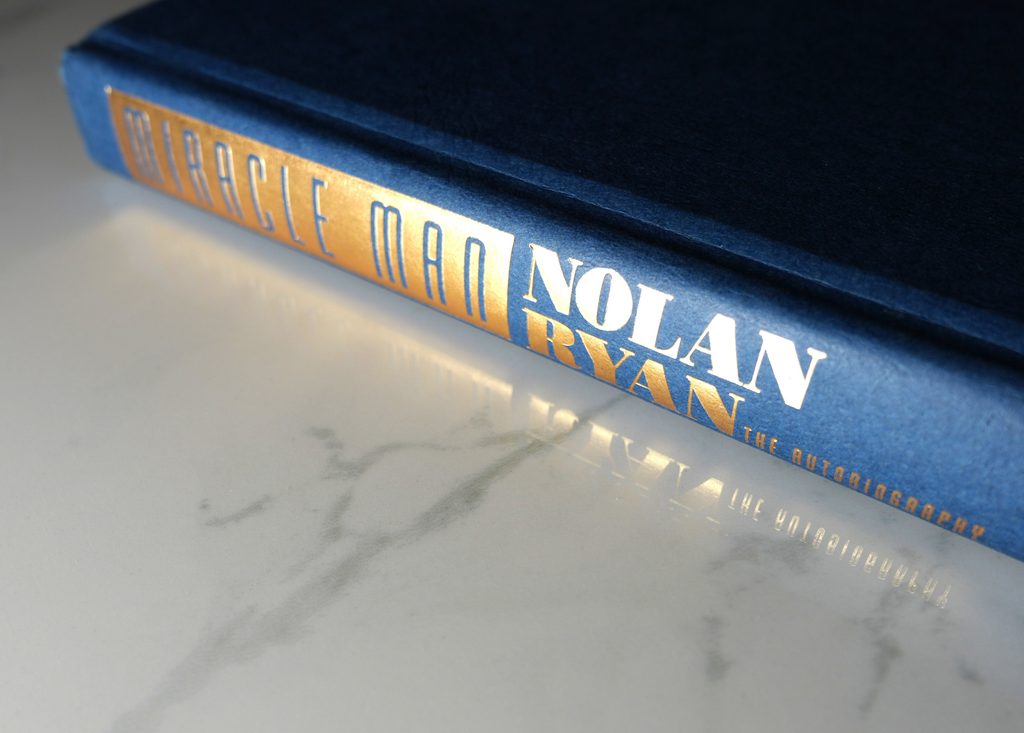
Oh yeah, and when he's pulled in the fourth inning, he had a no-hitter going. If this is surprising, it won't be by the end of this episode. This is from the book right here. Nolan says,
"I was set to pitch four innings in my last start and then catch a plane to join the Mets in the big leagues. At the end of the four innings, I had a no-hitter going, and my manager, Bill Virden, asked if I wanted to stay and go for it. I couldn't see how a no-hitter in the minors could compare with making the majors. So I told him I'd just as soon get going. He wished me the best. In just over a year, I had pitched in three leagues and was heading to the majors before I was 20 years old."
Chapter 02 · 2:34A No-Hitter Left Behind
So Nolan was drafted in the 10th round. 300 players picked before him in 1965. About a year goes by from getting drafted to then playing in the minors, and now right in the middle of this no-hitter, he's off to the big leagues to play for the New York Mets. This would be a common occurrence for the next 27 years. Nolan Ryan would have a no-hitter going.
So that's great. I love that. The coach says, you want to keep going. I hate to pull you out of this game when you have a chance to throw a no-hitter. Nolan says, nah, I'm good. I'm gonna head out. I want to catch my plane. See y'all later. Thanks for everything. He's off to the big leagues at age 19.
Chapter 03 · 3:20Miracle Man And The Origin Story
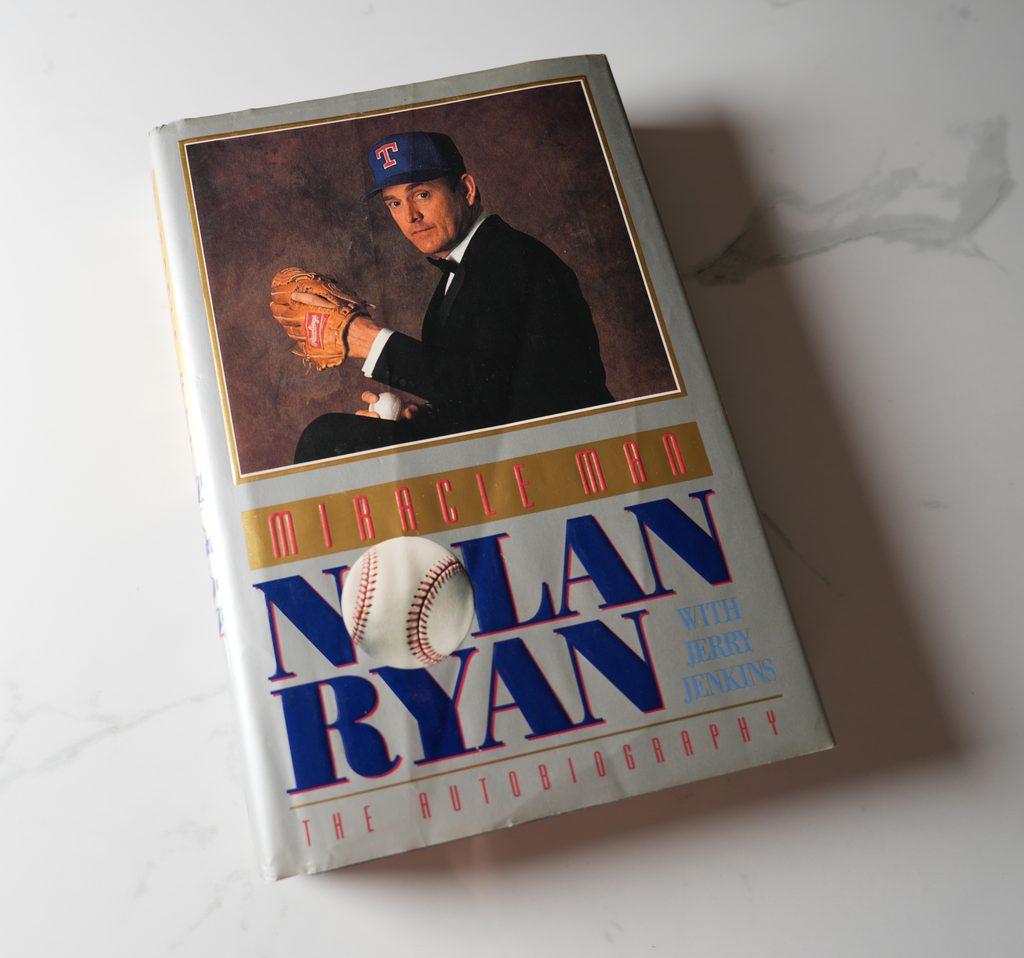
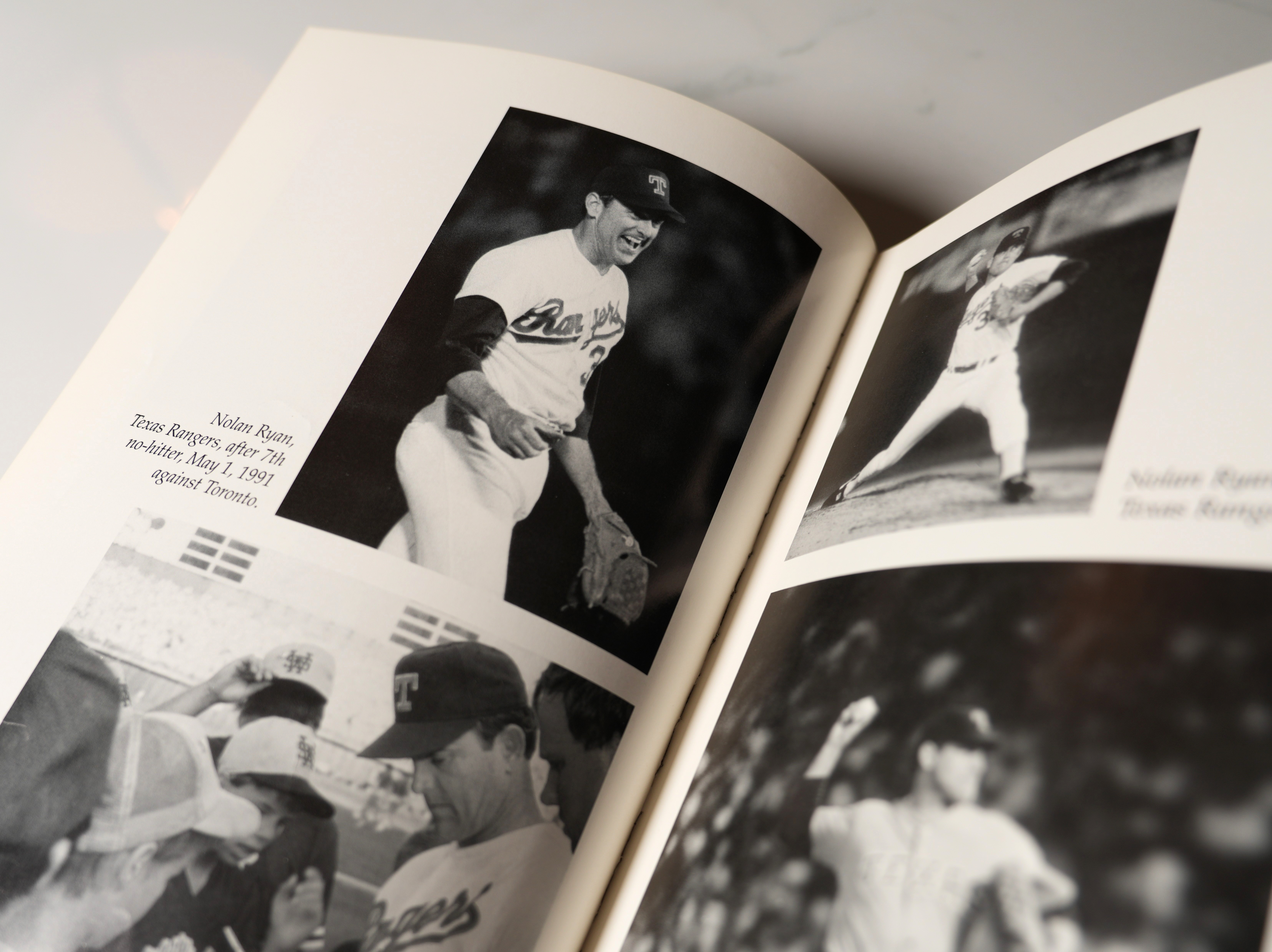
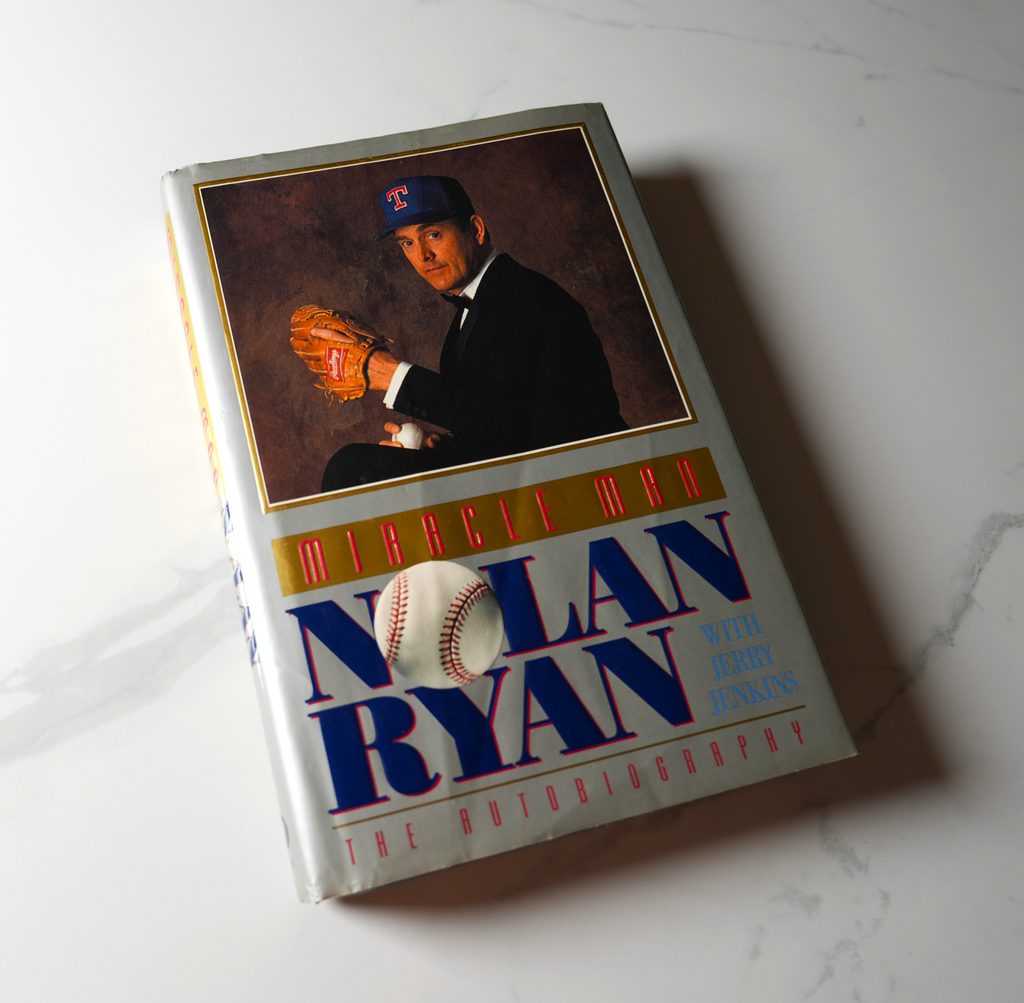
Back to Nolan, the book. I just read Nolan's autobiography. It's called 'Miracle Man.' He's still playing for the Texas Rangers at the time when he wrote his book. He retired in 1993, but he published this book before his career was even over.
So how'd he do it?
Nolan played 27 years in the big leagues. What was the big break? How'd he get his start?
I read now I think a dozen, at least. A dozen biographies on all the old baseball legends. One of my favorite ideas from all of them. It's that totally unique style that each one has. That's why I called this episode Texas Heat. That's Nolan Ryan right there. Those two words are what made him the one-of-a-kind baseball legend. It was just a completely original style. Listen to this.
Growing up, he didn't have his sight set on becoming the greatest baseball pitcher to ever walk the earth. I read an 800-page book on the legend, Ted Williams. That's what he was saying when he was a kid, walking around all day. Ted Williams wanted to be the greatest hitter to ever live. That's what he was telling people when he was a kid. That was his dream.
Not Nolan. Totally different.
He says he never dominated in Little League. There were a lot of other good players on his team. That's what he was saying in his book. In high school, he could throw hard, but he didn't even realize there was a big league scout in the stands, watching him pitch. He thought he might go to college or maybe he'd just get a job and make some money. At the time, becoming a pro ball player was not a dream for Nolan. It wasn't a goal of his. He wasn't even really interested. It was not a big deal. Here's how he says it in his book. He goes,
"I didn't really understand the draft and all that went with it. But I was pretty sure I didn't have what it took to make it. The worst part was I really didn't know if I had the desire. I know that sounds crazy, and maybe it was just a way of protecting myself from disappointment. But you have to understand, I wasn't one of those kids with a dream, imagining myself in the pros. I was so far removed from the big leagues that I had no clue."
That's different than a lot of the baseball legends that I've read about.
Nolan wasn't even sure he had the desire to play ball. He goes on in his book, he says,
"When the Mets finally came to try to sign me, I honestly didn't know what I should do. I didn't want to waste my time in a profession where so many people were already considered better. I had been thinking about college for years and I didn't know if I should do that, get a job, or try baseball. The Mets probably thought I was playing hard to get, but I was just thinking it through."
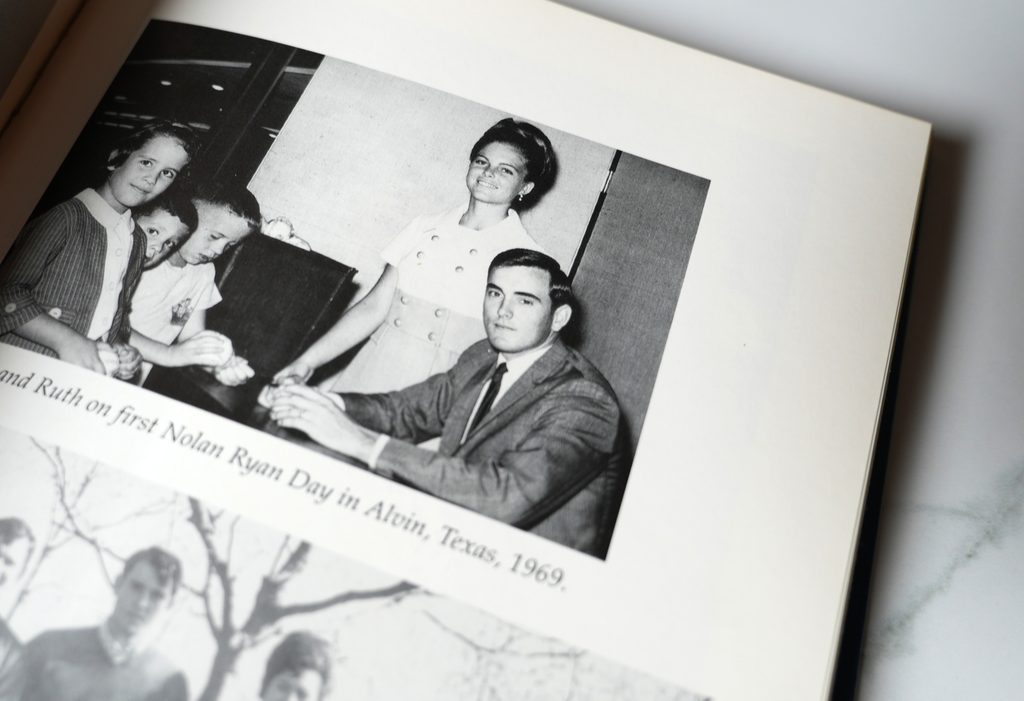
There you go, right there. How did all this start for Nolan? The beginning of the legend, right there. Not sure if he had the desire to play. Not sure if he was good enough. Might just go get a job. But his dad ends up telling him, he says, hey, there's a $20,000 signing bonus. This is a no-brainer. You gotta go and you could use that money to pay for college if baseball doesn't work out. So that's all it took for Nolan. He talked about the influence that his dad had on him. And when he helped him make that decision, that was it. It was over. He signs a contract with the Mets, and now he's off to the minor leagues.
Nolan strikes out 115 in 78 innings in the minors. Those are big strikeout numbers. The Mets invite him to the top prospect instructional league. In three games, he goes 0-2. So he loses two of those three games. But strikes out 35 and 19 innings while walking 12. The strikeouts are too much to ignore. That's where the Mets pretty much have to call him up to the big league team. Just like we talked about, is right in the middle of that no-hitter. He joins the major league team.
So I'm not going to go year by year here, season by season with this story. The main reason why I can't do that is there's 27 seasons. So we'd be here all day if I did that. But I really just need you to see how it all started. Nolan grew up just south of Houston, small town called Alvin, Texas.
He was a worker. His parents worked hard, and so did Nolan growing up. He had a paper route. One of the big lessons of discipline and hard work. This was early mornings, and it was discipline to get those papers delivered on time. His parents led by example. They worked hard to provide for their kids. Not much extra money floating around though, just hard work.
Nolan would carry that example with him the rest of his life. Combine those qualities with a frame and a throwing arm that could deliver absolute gas on the mound. You have the two best words for Nolan. Texas, heat.
Chapter 04 · 8:01The Day Science Clocked The Heat
We gotta fast forward to 1974. Nolan does a few years with the Mets in New York. Then he's traded to the California Angels. He's figuring out how to pitch rather than just throw hard. That's something that the pitchers talk about all the time. They're always learning the mental side of pitching. There's a lot to it, much more than just physical talent.
Earlier I was saying how easy we forget. Even I forget just how damn hard Nolan Ryan was throwing. This was a constant his entire career. All through the book, he's blowing hitters away. After seven seasons in the big leagues, Nolan's throwing hard. He's leading the league in strikeouts three years in a row by now. But up to this point, everyone knows he's bringing the heat, but nobody really knew exactly how fast and how hard he was actually throwing.
Because it's 1974. For the very first time, scientists set up an infrared radar gun to clock Nolan's fastball during a game. This is new. It's the very beginning of the "Juggs" radar gun. Brand new invention right here. So they set this thing up and it's a process to set it up. They didn't just have radar guns laying around like they do now.
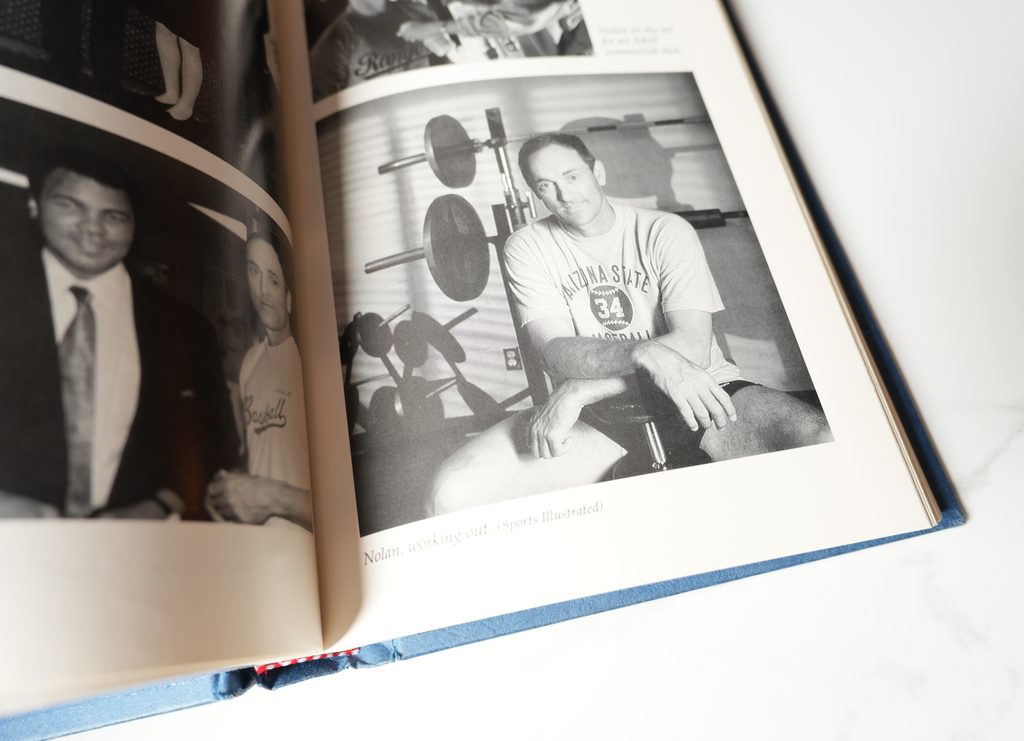
Anyway, in the ninth inning of this game, August 20th, 1974, they clocked Nolan Ryan's fastball at 100.9 miles an hour. At the time it makes the Guinness World Records for the fastest pitch. Now check this out. Back in the day, they measured the speed of a baseball when it was about 10 feet from home plate. That's just how they did it. This was new technology. So once the pitch ball is 10 feet from home plate, it's captured by the radar gun, and there's the speed right there.
However, you got to understand this very important piece of information, something that I just learned about. And I've been a baseball fan since I could walk, but I just read all about this. Check this out. As an object or a baseball travels through the air, it loses speed from air drag, about one mile per hour for every seven feet of flight. It's decelerating. In baseball games today, you see that pitch velocity, the pitch speed, it's posted on the TV screens during the games, and it's in all the stadiums. They post the speed of every pitch. That's just what they do now.
I've always heard these comments about like maybe the stadiums are just cranking up the radar gun, trying to amp up the speeds a little bit, maybe to impress the fans, or just to make it more exciting to watch, like some pitcher out there throwing 98, 99 miles an hour. That's sort of exciting to see these big numbers.
But I just learned about this. Maybe I'm the last one to learn about it, but it's not necessarily Major League Baseball messing with the equipment, trying to ramp up the speeds of the pitches. It's mainly the way the radar guns work and how they detect the speeds of the ball. Back in 1974, they calculated the speed of the ball when it was about 10 feet from home plate, like I said, after the ball had been decelerating for about 50 feet from the pitcher's mound.
Now we call this the "slow gun" era. So in the 1990s, baseball developed a new method to measure the speed of a pitch. A company called Stalker, they developed a radar gun that could pick up the ball closer to the pitcher's hand before the ball started decelerating. Pitcher speeds jumped a couple miles per hour across the board, pretty much overnight. Fast forward about 10 years later, 2006, camera tracking systems were installed in every Major League Baseball Stadium. This system measured speed pitch exactly 50 feet from home plate. So pretty close to right after the ball left the pitcher's hand. Again, before the ball had time to slow down traveling through the air.
Another 10 years after that, 2015. Statcast. This new system was a military grade radar using optical cameras. It could detect the speed of every pitch right at the exact release point. The precise millisecond the ball leaves the pitcher's fingertips. So this is the highest possible speed before any air drag occurs.
Now the reason I'm telling you all this, it's because it just dawned on me while I'm reading Nolan Ryan's autobiography. He's blowing away all these hitters like nobody else.
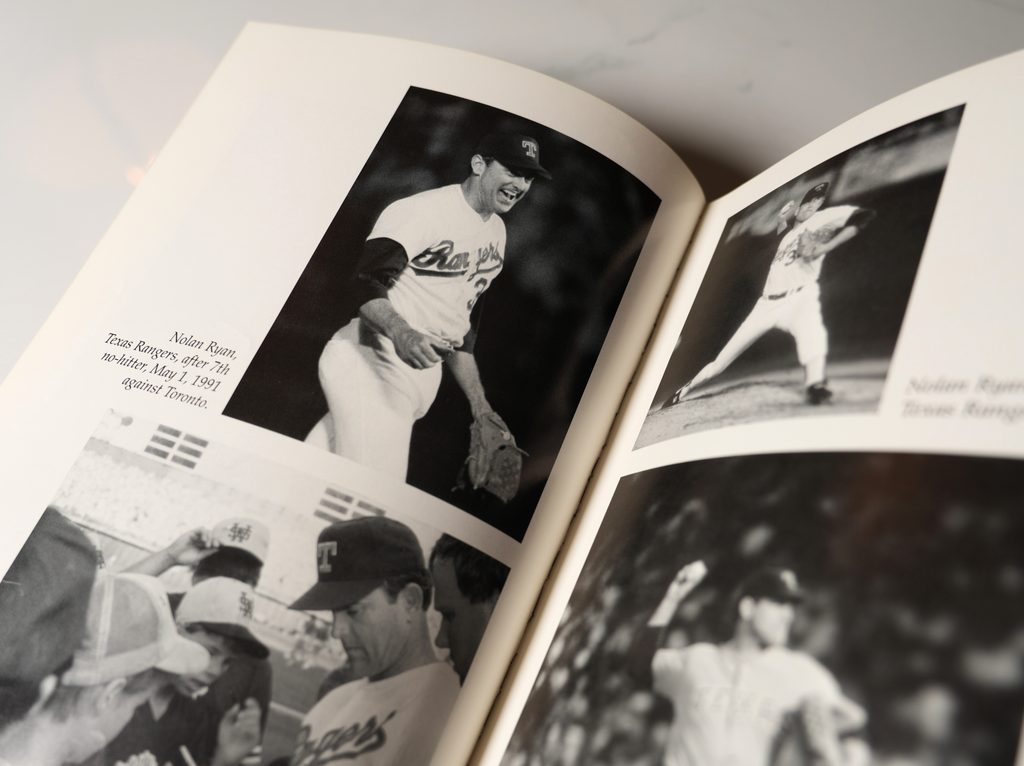
What's going on? I just said they clocked him at 100.9 miles an hour in 1974. That was a record at the time. But nowadays that's like a speed of your average relief pitcher, it seems like. I just saw a highlight of a game a few days ago, a pitcher throwing 100 miles an hour, and some hitter turns on it, pulls it down the line, and he almost hits it out of the stadium. Turns around 100 mile an hour pitch. You see it all the time now.
Turns out, not knowing the changes in the way they calculate speed, so the pitches, Nolan's 100.9 mile per hour fastball in 1974, using today's method of stat cast optical cameras. Now, some people speculate that 100 mile per hour pitch would be today more like 108. It's just an estimate. We're never gonna know the exact speed. But Nolan's 100.9 would be seven to eight miles per hour faster using the radar guns they're using today.
That means that today's 100 mile per hour pitch that you see on the highlights every night back in 1974, those same pitches we now see would all be in the low 90s. What I'm saying is that reading about Nolan Ryan, most hitters were just absolutely overpowered by a big margin for 27 years. And my guess is that many of them would just stand there and hope for a walk and pray not to get beaned or killed. Maybe Nolan was wild at times, but maybe the hitters were just so terrified to swing. Maybe they'd rather hope to get walked than try to hit that pitch.
These poor hitters in the 1970s, they were not taking creatine. They did not lift weights. Some of those hitters were probably still swinging 38-ounce bats. And then they go up there against Nolan Ryan throwing the equivalent of 108. And he can be wild. So watch it.
Can you imagine those poor hitters back then?
Chapter 05 · 14:20The Slow Gun Era Explained
Another thing to understand about the legend of Nolan Ryan that we all forget. He got better as he got older. He was not hanging on at the end of a great career. He was becoming a legend.
At age 40, he led the league in strikeouts. At age 41, at age 42, and at age 43, guess what? He also led the league in strikeouts.
At age 44, he struck out 10.6 batters per nine innings. The highest number in the league that year. 44 years old.
You can see this even with his walks if you look at the numbers. People love to say that Nolan had a lot of walks. Well, he did. However, seven out of the ten years through the 1970s, he led the entire league in strikeouts. Okay, that's insane. He also led the league in walks. Six out of those ten seasons. So going from the 1970s into the 1980s, his walks per nine innings dropped. While his strikeouts per nine innings were the highest of his career in the late 1980s.
Anyway, I'm reading this book, and all I can think about are these two words, the entire book. Texas heat.
Nolan's a proud Texan, born and raised, everybody knows that. So he writes a lot about his love for Texas in the book. It's Texas heat. The heat's for the strikeouts, but also just the force of nature, like I'm saying, as he's getting older and better and the mystique is growing. Every single game he starts, there's a potential for a no-hitter. That's why I started the episode off with this story about his game in the minor leagues, his very last game in the minors. It was scheduled beforehand to go just four innings. Then he's off to the big league club. Gotta get to the airport. And then so he's got that no-hitter going. And then he's just like, here you go, Skip, take the ball. I'm gonna head out. Y'all have been great, but I'm off to the big league team in New York.
One of the best pitchers of all time was Sandy Koufax. He threw four no-hitters in his career. There's four other pitchers in baseball history who threw three no-hitters in their career.
Nolan Ryan threw seven.
He threw his sixth when he was forty-three years old. He threw his seventh no-hitter at age forty four. I already said it, Nolan got better as he got older. You can see it in the numbers. He became this icon and legend because of this very reason right here. It was a great career already if it was over after 20 seasons or even 15 seasons. But to go into his forties and gain momentum, he went legend.
One of the big reasons he talks about in his book for all this was way back in 1972, so just his fifth season in the big leagues. He stumbles onto a weight room in Anaheim. No ball player was lifting weights in the 1970s. Nolan was doing it almost his entire career. Here's what he said in his book.
"Something more important happened in 1972 than that. I finally turned around and had one of my best years as a pitcher. I discovered the weight room at Anaheim Stadium. It hadn't been installed for the baseball players, because back then it was believed that weight training made you muscle bound. It must have been there for the soccer team or something. Anyway, I started slipping in there and working out, being careful not to overdo it and letting my body tell me how it was responding. In my own way, I learned how to work different areas of my body for balance and flexibility, taking a day off now and then to recover."
That's from no one's book right there. So we'll come back to this legend that just picks up steam while he's in his forties. Think about this the no hitters. He had seven. That's a record. When you read his book, it's almost like every other page. He's getting close to another no-hitter. Only to have it broken up in the eighth inning with two outs, or the ninth inning with one out. He gives up a hit, there goes the no-hitter. This happened a lot.
Every single game he pitched was a potential no-hitter when you have a rocket arm like this. He ended up with 12 one-hitters, 18 two-hitters, and 31 three-hit games. So add in his seven no-hitters, and that's 68 games out of his 807 that he gave up three hits or less in 27 seasons. That's almost 9% of all of his starts, three hits or less.
Texas Heat.
Chapter 06 · 19:03Longevity Built In The Weight Room
But one thing we got to get into this, Nolan was a trailblazer in a lot of ways. Playing for that long in pro sports and putting up insane numbers for that long. How in the hell do you actually get paid what you're worth? This will give you an idea of where he's at in the early days when he was with the Angels.
It's a topic in all my baseball stories. So I'll explain, but first, this is what he says right here. He goes,
"Ruth and I came back to Alvin after each season, but we enjoyed our lives in California. It was fun to play for an owner like Gene Autry, who was personable and friendly and loved the game. The Angels increased my salary to $100,000, which was big money in those days. And some people thought I was the best pitcher in baseball. At age 27, I felt like I was on top of the world."
So he's age 27. He's making 100 grand a year on top of the world. This is important though, right here. This isn't all about strikeouts. There's a reason I'm bringing this up because it's a major, major theme in all my baseball legend stories that I've done so far. Maybe the biggest theme. It's in this book too. And I have a feeling it's going to be a main theme in every baseball and athlete story that I do in the future.
Because it's such a major issue in all these books that I've read. It's not just about the money, it's also about a sign of respect and feeling like you're treated right. I just did a story on Honus Wagner playing ball and dominating the league back in the early 1900s. Well, guess what? You'll never guess, but Honus Wagner had to learn the art of the deal. The hard way. Check out that episode and you'll hear what I'm talking about. Every single season, Wagner had to work the deal to get paid the money that he thought he deserved. He's going toe-to-toe directly with the team owner. He's got no agent.
Most of these old timers didn't have agents. And they were all one-year contracts for the most part, way back in the day. So every single season, how am I going to get paid what I'm worth? I'm the best player in the league. I should be making the most money. How am I going to get it? This is a huge issue with every baseball legend.
It's the same thing for Nolan Ryan right here, who did his own negotiating as well, all the way up to like halfway through his career, then he finally decided to get himself an agent. This is a thing with Nolan. That's why I thought about Honus Wagner here, too. Wagner was beloved when he played. He was this gentle giant in the game. He was soft spoken, like a folk hero around town. They loved him, but he also figured out a way to drive a hard bargain to get paid. He had to get creative. Think about trying to get some leverage against a big league owner. That's what it was all about. It was a tough business, even for the best players back then.
Walter Johnson was like this too. I read his book. He was known as one of the nicest, kindest guys to ever play the game. Guess what? He Figured out a way to leverage his skills on the ballfield to get paid. He had to do it.
Nolan does the same thing. At one point, he's the highest paid player in baseball. He's the very first athlete in team sports to sign a contract for a million dollars. 1979. He doesn't get a raise for several seasons, though, after that. Years later, now the Houston Astros end up offering him another contract, and it's a pay cut. It's like 20% less than he was making. That's not gonna fly. Not with a fierce competitor. You can't do that.
So that's when Nolan and his agent, they figure out a way to get some leverage. First, you always need a plan to get some leverage. And then you go out and you want to see what else is out there. Then he could basically tell the Houston Astros owner to go shove it. But there's a process to go through, like a gentleman. And that's what he does. He wants to do it the right way. So Nolan sets up some meetings with other teams. He even considers going to Japan to play for the Tokyo Swallows. He actually almost ends up going to Japan. He's thinking about doing this, but there's a rule in place where a foreign team can't offer more than what a major league baseball team is offering. So he's not going to go to Japan for the same money that he can get in the US, so he stays.
But him and his agent, they shop around and they call the bluff of the Astros owner. He's not taking a pay cut when he knows he can still bring the heat. There's no way. This move, this competitive drive to show the doubters and fight for your value, this is a key turning point in the legend getting created right here. You'd never know it until after the fact. Once it's all said and done. But this decision to leave Houston and get what he knows he's worth, it turned into a master stroke.
Now once you look back, Nolan ends up going to the Texas Rangers to finish off his career. One of the best moves that he'd make. The Astros were banking on Nolan just taking any deal they floated out there, knowing that he's getting up in age and knowing that he loved to play ball in Texas close to home. But he realized that it was the Texas Rangers who were the perfect fit. They knew how to market the hometown hero.
It just seemed to fuel as fire playing for the Rangers and having his legend grow to all-time highs at the end of his career. This was in the book right here, his decision to go to the Rangers. Like I was saying before, it's Texas heat. He wants to play in Texas. He says,
"Money was not the determining factor, I told Stone, Grieb, and Valentine. I'm a diehard Texan, so if we can hammer out a few details, I want to stay in Texas. I told them some of my conditions, and they met alone in the other room. When they came out, we shook hands and we had a deal. They acted happy, but I only found out later that when they left, Bobby jumped and clicked his heels."
So there he is, he's a ranger, Texas Ranger. So you might be thinking right here, after a long career, it wasn't that he was getting better. It was just that all these numbers would start to add up, and then he'd start to hit these milestones. This is like a perfect storm.
I do these episodes with this tagline, "creators and cultural icons." So this opens up a door of like to like an unlimited amount of topics and people that I could do episodes on. Some of my episodes that I've done, they're all about creating the iconic race car or the priceless art. But I love to cover the baseball legends because of this cultural iconic status that they reach.
Like I said before, all in their unique way. Ted Williams, I did that story, and it's like the conditions come together. It's like a perfect storm of like almost impossible events. You should hear that story, the amazing legendary things that he did. There's no way to plan that out ahead of time. It just all comes together.
Chapter 07 · 26:05Fighting For Value And Leverage
Same thing here with Nolan Ryan. When he goes to the Texas Rangers for the last five seasons of his career, it's just a perfect storm of events. Taking a Hall of Fame career already and just launching it into legendary status.
That's why I love to do these episodes. First off, can you imagine that all-time iconic photo of Nolan with blood all over his uniform? He's out there pitching with his lip split wide open. Blood's running down on down his chin and onto his jersey. Can you imagine that photo of him wearing anything other than a Texas Rangers jersey? So if you don't know what I'm talking about, just Google "Nolan Ryan bloody jersey." It's an all-time classic sports photo. Like at the top of the list, all time. This is a great, iconic photo. It was a ball that was hit by Bo Jackson, actually, that cracked his lip wide open.
Anyway, it had to be the Texas Rangers. Now, looking back, when you think of Nolan, you see a Rangers uniform. No hitter number six and seven, career strikeout number 5,000, career win number 300. These all happened in the Ranger uniform, and his pitching was still dominating.
He was as feared as he's ever was on the mound as a ranger, striking out the new breed of superstar hitters. Some of them had dads that Nolan struck out 20 years earlier. These were the new breed of power hitters, Griffey Jr., Mark McGuire, who was 0 for 9 against Nolan with six strikeouts. Frank Thomas was 0 for 12 against Nolan with 11 strikeouts. These were big power hitters. They were all all-stars in their 20s. Nolan's in his 40s. They can't touch him.
Here's one of the big moments for Nolan right here: pitching for the home Texas crowd. George W. Bush is there in attendance, who would become governor of Texas just a couple years later and then president of the United States. They're close friends already. The Texas connection right here. And guess what? It's 101 degrees during this game. The Texas heat again. So right here, he says,
"On August 22nd, with a pitch clocked at 96 miles an hour, I struck out Ricky Henderson for the 5,000th K of my career. People had come from all over to see that milestone, and I had to ignore the 101 degree heat. What made it so special was that when I got to within one strikeout, it seemed everybody in the sell-out crowd flashed their cameras on every pitch. The tension rose and fell with each call. I was also impressed that George W. Bush, our managing general partner, was there for the occasion along with A. Bart Giamatti, then commissioner of baseball."
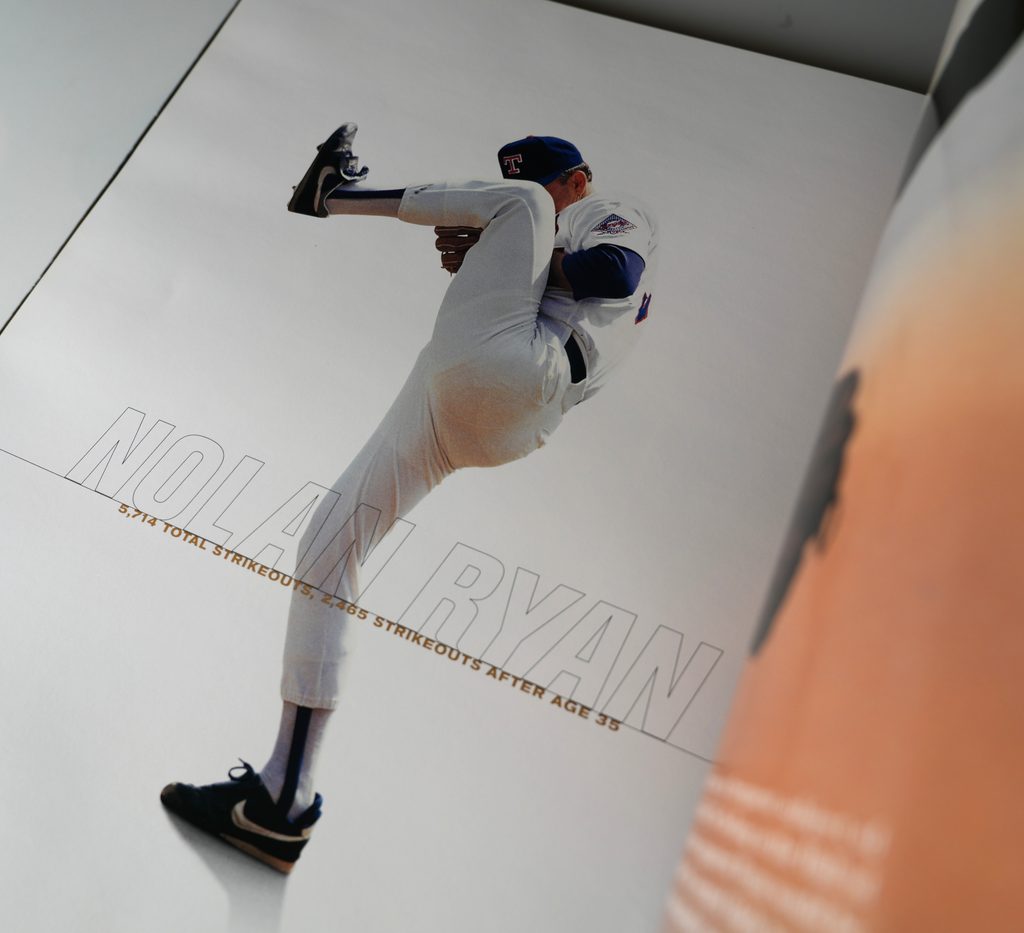
So this was awesome to read about because I watched an interview about Nolan's 5,000 strikeouts. They were talking to another Hall of Fame pitcher, Randy Johnson, who is now second on the all-time strikeout list right behind Nolan Ryan. Randy Johnson has 4,875 career strikeouts. Remember, Nolan wrote his book in 1992 before he was done playing. So he gets strikeout number 5,000 against Ricky Henderson. He goes on to get over 700 more before he's done. 5,714 total strikeouts in his career. So in this interview with Randy Johnson, he goes, "Yeah, I had 4,800 career strikeouts. Second on the all-time list. Nolan has a thousand more strikeouts than me."
That's crazy. So Nolan goes on here to talk about this season with the Rangers. It was a perfect fit, just like I've been talking about. He says,
"I had had a fantasy year, far surpassing all my expectations. My 16 wins were the most I'd had since 1982, and I became the oldest pitcher to ever strike out more than 300 in a season, leading the league for the third year in a row. Striking out 301 in just 239 innings was also a record. And that was the most strikeouts in the American League since I had struck out 310 in 1977. Hitters batted 187 against me for the season."
And that's crazy. 301 strikeouts in 239 innings. Hitters batted 187. He goes on, he says,
"The 1989 season had been one of the most enjoyable of my career. I was as surprised as anyone with my popularity and the attention I received. But the Rangers were the first organization to put me out front and promote me like that. They acted like they truly appreciated my being there. And so I've tried to accommodate them in every way possible. I somehow became more of a phenomenon in Arlington than I had been in Houston because the Astros organization never would have pushed me or appreciated me the way the Rangers have."
Now from 5,000 Ks to the seventh no-hitter, listen to this right here. He says,
"After the walk to Carter in the seventh, I retired the next seven hitters and the place went crazy. I had struck out 16, allowed only two base runners who never got past first, and had pitched my seventh no-hitter. Even I couldn't keep from grinning as the team raced out to the mound to congratulate me. I had been the oldest no-hit pitcher when my sixth came the year before. Who would have ever thought there'd be another one, especially in the condition I was in that day? Ironically, my last out was a swinging strikeout of Blue Jay second baseman Roberto Alamar. His father, Sandy, had been my second baseman for the Angels in my first two no-hitters 18 years before. In fact, I remember little Roberto asking me to help him become a pitcher someday."
That's crazy. Nolan strikes out one of his old teammates' kids, Roberto Alamar, for his seventh no-hitter in 1991.
Fans are driving across DFW, heading to the game in the fifth and sixth innings when they hear Nolan has a no-hitter going. They start streaming into the stadium halfway through the game. They know it could be another no-hitter. The totally unique and original style of Nolan Ryan, he was a fierce competitor on the mound. And then he'd go and shoot a commercial for Advil with this friendly Texas accent, like he could be your next door neighbor.
As easy going as anyone, he just wants to give his team a chance to win. As humble as any pro star athlete could possibly be, just humble and down to earth from the very beginning. He wasn't even sure if he had the stuff to make it in the major leagues. Didn't even know if it was the right path for him. Of course, he goes and talks it over with his father and decides to go for it. He's a Texan. Always has been, always will be.
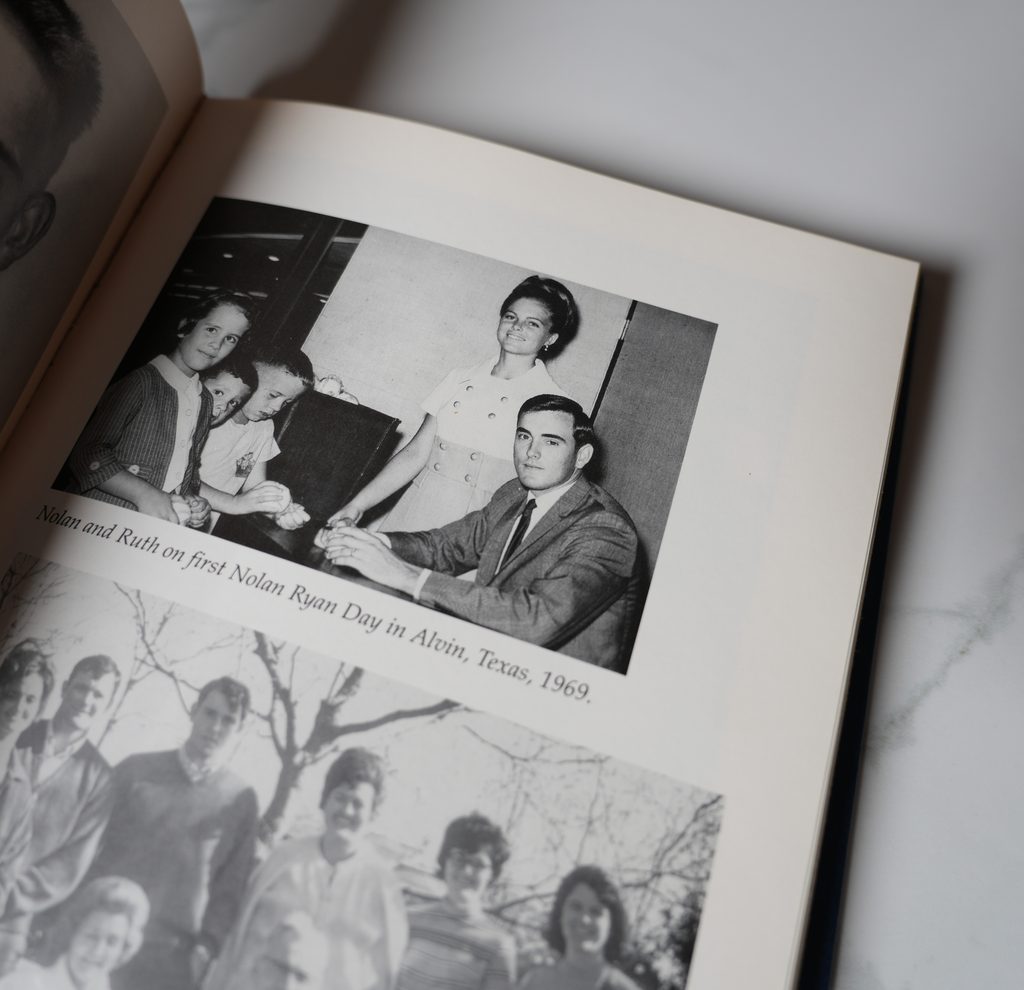
There's a great documentary I watched, just Nolan out there herding his cattle on his ranch, still to this day. Here's what he said back in 1992 when he published this book. He goes,
"The only goal I ever really had was to be successful in whatever I was doing. There were things I wanted to acquire, and baseball has made that possible. I always wanted a ranch, and I still dream of putting together a spread that could run five or six hundred cows in one location. I'm in the process of putting that together, but I'll get serious about it when I can free up some time. I've always been attracted to an area in South Texas where I can spend a lot of time doing what I want to do. Operating a ranch on a day-to-day basis without being required to be there every minute."
The Texas Heat, Nolan Ryan.
Chapter 08 · 33:43Respect, Intimidation, And The Headlock
Don't get it twisted. You can read an entire book about Nolan and watch all these documentaries. He's a Texan. He's got no issue with you as long as you hold up your end of the bargain.
Like I was saying, this unique combination of easygoing Texan with that fierce competitive drive, that determination to bring the heat all the way to the end against hitters half his age.
In the book, there's a few times early on in his career when he wasn't getting the respect that he thought he deserved. One of those times was when the Mets traded him to the California Angels. Later on, Nolan read that this guy, Gil Hodges, the guy that approved the trade, Nolan and three other players were traded for Jim Fergosi. And he reads that this guy Hodges thought it was a good trade for the team because Nolan would be the pitcher that they would miss the least.
That stuck with Nolan. He didn't forget that.
He said in his book, it hurt him to read that, and he didn't forget it.
When Nolan went to the Astros as a free agent, this general manager of the Angels at the time, this guy Boozi Bavazi, they quoted him saying that he didn't need Nolan Ryan because, quote, "He could just replace him with two eight and seven pitchers."
That's another one that hurt right there. That's disrespect.
As nice a guy as he is, you think Nolan Ryan's gonna forget that quote?
That was another one he never forgot. All the great ones.
They take those slights, they file them away somewhere, and they keep them in the back of their mind. Just more fuel for the fire.
We all know you have to pitch inside to be successful. I just did an episode on Bob Gibson. Half that story was about pitching inside. Well, Nolan is from that school of pitching inside. Intimidation. It's part of pitching.
Early on in his career, he threw a pitch to Dave Winfield, and it was too far inside. That's what Winfield thought. So he charges the mound. You can watch this old video. Nolan doesn't really know what to do when giant Dave Winfield comes running out. And Winfield's throwing haymakers when he gets to Nolan on the mound.
That was a lesson right there that Nolan never forgot. He would file that away for later. Like his friend George W. Bush would say, fool me once, shame on you. That famous saying. Nolan talks about it how if anyone ever charge the mound again, he's got to be ready to defend himself and take some action. Rather than just sitting back like he did with Winfield.
He learned not to let somebody come out to his mound and try to knock him out. He never forgot that.
So this isn't in the book that I read because it happened the year after the book was published.
Everybody knows what I'm gonna talk about right now. One of the all-time great sports highlights ever. Nolan beans Robin Ventura. Ventura charges the mound. Nolan puts him in a headlock, pummels him with like seven or eight punches.
He's 46 years old. Robin Ventura's 26 at the time.
There's this movie called True Grit with John Wayne. This was way before my time, but I remember hearing the quote from this movie, from John Wayne's character in the movie.
As I rewatched the YouTube video of Robin Ventura, as he's stumbling out to Nolan Ryan's mound that day, this old John Wayne quote popped into my head -
"Young fella, if you're looking for trouble, I'll accommodate ya. Otherwise, leave it alone."