Ted Williams
Ted Williams, A Special Blend of Baseball Intensity
Episode #49
08.04.26
“Ted was an original, not a traditional modest, self-effacing hero, but brash, profane, and outspoken. Self-taught and inquiring, he excelled as a marine fighter pilot and became one of the most accomplished fishermen in the world. For better and worse, he was always his own man, never a phony. Characteristics that helped him outlast his critics and win widespread affection and admiration as he aged.”
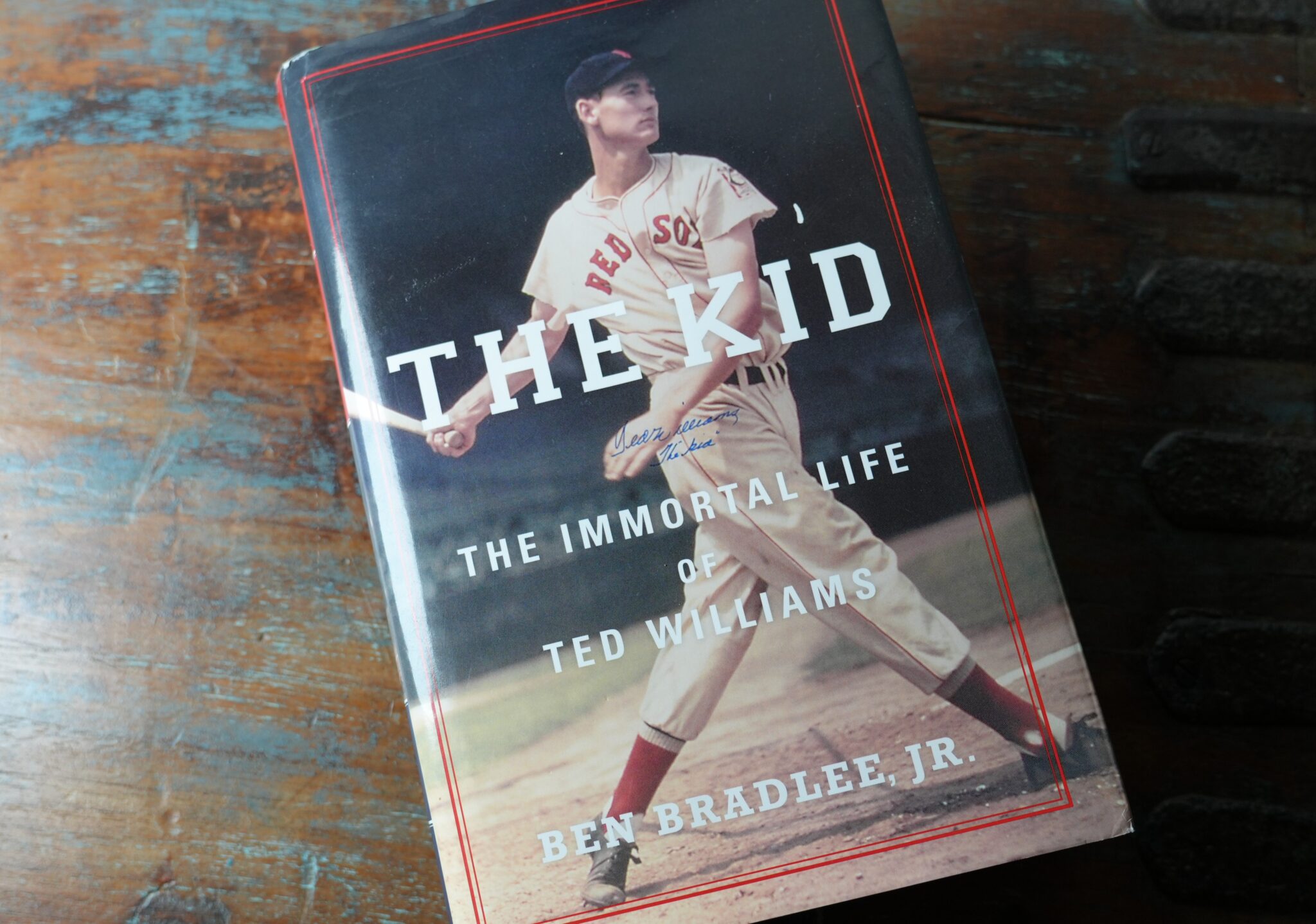
So that’s right out of the book that I just read titled, ‘The Kid: The Immortal Life of Ted Williams,’ by author Ben Bradley Jr.
And he’s right. Ted was an original.
This book is 800 pages, and it covers everything.
Not a traditional, modest, self-effacing hero, like he said, brash, profane, and outspoken. It’s all in this book. I’ll get into some of the proof that he was definitely an original. I can say now there’s never gonna be another Ted Williams. That’s a fact. You’ll see why that’s true in a minute.
But how does somebody even get so much attention to where there’s an 800-page book written on your life?
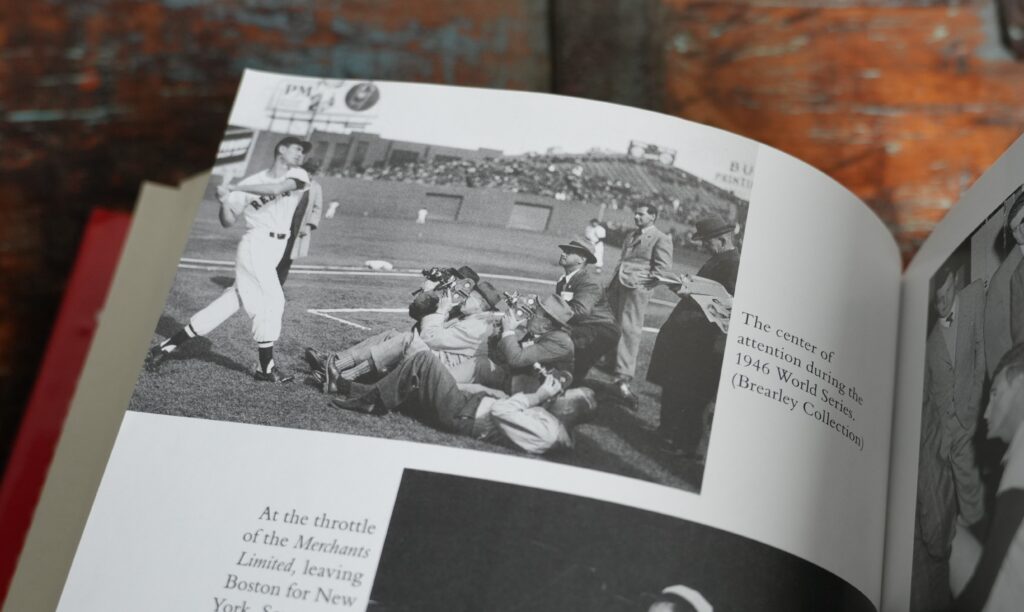
Rule number one, call your shot and then do it. That’s what Ted Williams did. He said, I’m gonna be the greatest hitter who ever lived. Now watch me. He said that when he was a kid, before he even had one at bat in the big leagues. He said it and then he went out and did it. That’s how you get attention. But there’s more.
Rule number two you’re gonna get a lot of attention when you’re the best, and then you let it be known, I’m gonna do it my way. I’m not gonna play games. Take it or leave it.
Just like my Bob Gibson episode that I just did, I don’t care what you think about me. I want to be the best. And being nice and kind to everyone I talk to all day long, that has nothing to do with being the best. So a superstar athlete with that kind of attitude is gonna turn some heads for sure.
Ted Williams Called His Shot And Delivered
That’s like a magic formula for attention, right there. You’re gonna have tons of fans and reporters cheering for you for all the good things you do, and then you’re gonna have tons of fans and reporters rooting against you, trying to find your faults, picking you apart, and even hoping that you’re gonna screw up. That’s just how it works.
And that’s how you get an 800-page book about your life.
But what made him great? Well, you can just ask him, and he’ll tell you.
Just don’t call him a natural because he worked too damn hard to be this good. It didn’t come easy. This is what he says in the book.
“First, Williams pointedly disagreed with Rice’s contention that the greatest hitters were simply born that way, and that working hard left room for only marginal improvement. He also passionately preached the power of positive thinking, reiterating the belief that the reason he didn’t win the batting title his rookie year was because he simply didn’t think he was as good as the likes of Joe DiMaggio, Jimmy Fox, even though he was. That had been, “a big mistake.” Now, he said, it is my angle. You are only going to be as good as you think you are. You’ve got to have that target to aim at. I can tell you I’m shooting at nothing less than a 400 season. I still tell you I think I’m the greatest hitter baseball has ever known. Why? Because I have to think that way to ever be the greatest hitter. Suppose I’m wrong. Then what? I’ll still hit pretty well and I’ll still keep on thinking I’m the best. They can’t arrest me for that. If you’re aiming at a target, why not pick the top one?”
So you can see now, right there, Ted Williams will tell you exactly what he thinks. And he probably sold more newspapers back in the day than any sports writer could have dreamed.
What’s great about the old baseball legends, they were so big in their day. They were larger than life. Every single game, every at-bat, everything they did and said was watched and reported and written about and questioned. The old baseball legends were under the microscope day in and day out, like nobody else. Then if you were great and also outspoken like Ted Williams was, magnify that attention by a thousand.
He was brash and honest, fierce and unapologetic, and sometimes he was profane.
Think about today, can you imagine if you’re like a big time CEO of a company and you get interviewed every single day after work? Can you imagine that? Hey, why’d you send that email like that? What happened in that meeting earlier? Can you give us your thoughts on losing that big account? How did your competitor win that big sale? Why didn’t you get it? They don’t have to go through that, but that’s what famous athletes have to listen to every single day, sometimes twice a day, before a game and after it.
Confidence Over Talent Myths
This was Ted Williams’ life. I said way back in my last Ted Williams episode that I did, I said he had a special blend of intensity because it was so unique and original and raw. After going through this giant book, I realized Williams was much, much more outspoken than I even thought.
I did another episode way back on Ty Cobb, and I said Cobb suffered zero fools. Well, Cobb and Ted Williams had this in common. Ted Williams suffered absolutely zero fools. And at the same time, he completely captivated the crowd. He wanted to be the best, he’ll tell you he was the best, and then he’d go out there and do it.
Listen to this.
“During each Williams at Bat, something between a hush and a buzz suddenly filled the air as the crowd shifted from autopilot engagement to the edge of the seat anticipation. I was looking around for a story one day and someone said there was this blind guy on the first baseline. Remembered Tim Horgan, who covered the Red Sox for the Boston Herald and then the Boston Evening Traveler in the 1950s. I went up to the man and I said, Pardon me for asking, but why do you come to the park? Why not listen to the game on the radio? He said, I love the sounds of the game when Ted comes up.”
That’s a blind guy at the ballpark to hear the sounds of the game when Ted’s at bat.
Are you kidding me? This is real.
On the field and off the field, completely unique. They called him self-made intellectually curious and ahead of his time by turning hitting into a science. Nobody was doing this back then.
Ted cleaned his bats with alcohol every night and used scales to weigh each one to be sure they weren’t getting heavier from the condensation. And then he’d heat up his bats to be sure the moisture content wasn’t too high.
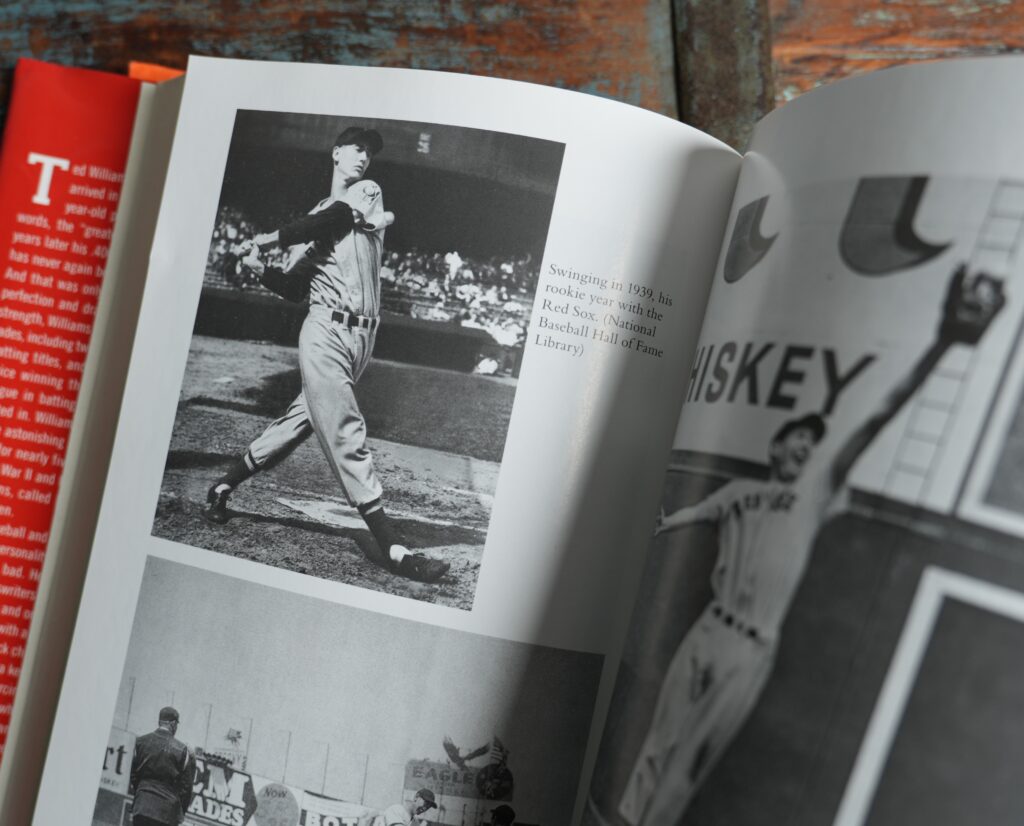
Something that he asked to be kept on the down low because this was a trade secret he didn’t want anyone else doing. I was saying Ted probably sold more newspapers than any sports writer could have dreamed.
Ted Williams, Hitting As A Science
The writers would be standing around, I’m sure some of them were just trying to think of the most ridiculous questions possible, just to try to get them all riled up. And it worked most of the time. It says,
“It was unnatural for the writers to despise Williams and fear him, because he treated them like dirt. But they also knew Ted was great copy. And if they could get him to talk, he was usually a terrific interview because he spoke with unvarnished candor. He was not above stirring the pot with reporters to give him something to be mad at if he felt he was losing his edge. He often said he hit better when he was mad. He nurtured his rage, as the writer Roger Khan once put it.”
So it’s just like Ty Cobb, he did the same thing with his opponents. They said, “Don’t get Cobb mad. Anger made him better.” The fuel for the fire right here, Ted Williams too. The writers, even they would start to guess when Ted was about to pick a fight with one of them. It was if he was in a hitting slump, they’d say, look out.
He’s about to start some trouble, and sure enough, that’s what would happen, and then he’d start hitting again. So it was this unique blend like nobody’s ever seen before. Extreme talent at the plate, and then it was sort of like this Babe Ruth character. Doing and saying anything he wanted, but then with much more of an edge, this feisty edge that just wouldn’t quit.
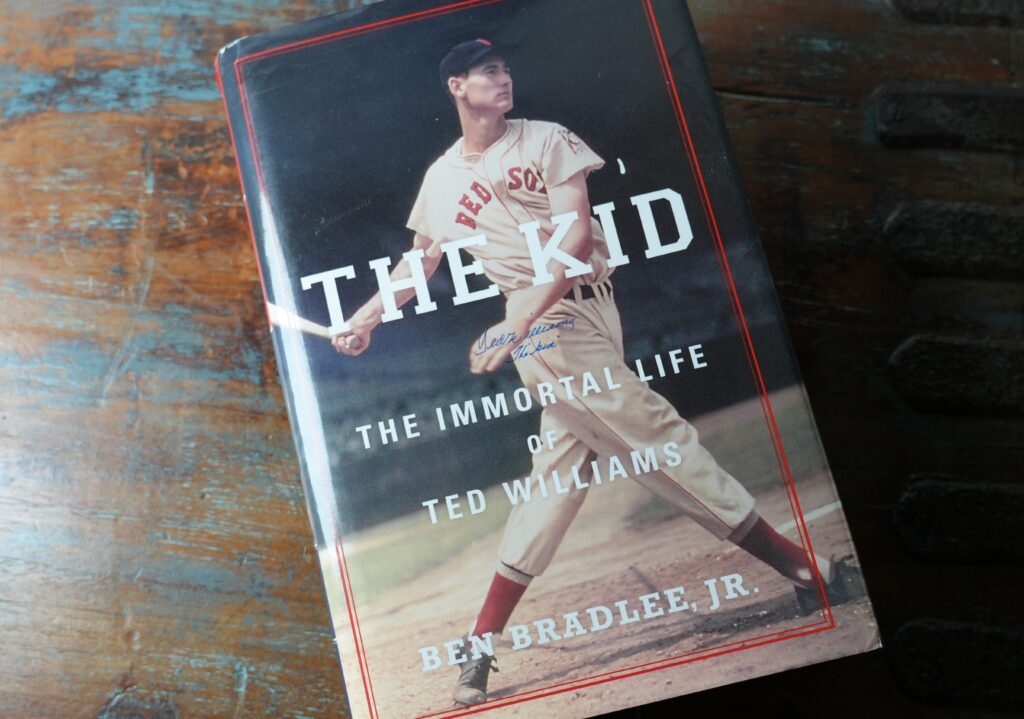
He hated the sports writers and the press. He hated fans that booed him, even as he’s hitting .370. They boo him because some of the fans thought he was too arrogant. Some of his own teammates, they didn’t care much for his attitude. Sometimes he sounded just a little too selfish. And I could see how they might think that about Ted. He’s playing a team game. He didn’t mind talking about his own personal goals.
Check this out right here. Early on in his career, he complained about the distance to the right field fence at Fenway Park, and how the other ballparks might be better for him and his stats. So he can make more money. He told reporters right here.
“He reiterated that he didn’t want to leave Boston. But I’m the guy that counts most to myself. I’m in this game to make a lot of dough, and I want to get it fast. The best way for me to get it is to hit more home runs and drive in more runs than anyone in the game. I won’t do it at Fenway Park if the fence stays out as far as it is now.”
So he’s just putting himself out there with the fans and the reporters and his teammates by being brutally honest. But one thing he never does, he never goes after the umpires. The umpires respected him, which is crazy. You would think the umpires would be number one on his list to take his aggressions out on. He never did it. He never complained about the calls from the umpires or he never showed them up. And this was smart.
Catchers would complain for not getting a call at the plate when Williams was hitting. One time right here, an umpire says, Back to the catcher who was complaining about a call. He says, Hey, “Mr. Williams will let you know when your pitcher throws a strike.” His eye was so good, and he almost has the umpires on his side because of the discipline at the plate.
And other opponents respected him too. The book talks about some of the other star players from his playing days. Mickey Mantle was a big fan of Ted Williams. Even Joe DiMaggio, who wasn’t really a fan of anyone except himself, but he did have some good things to say about Ted. Here’s another one in the book. It says,
“Bob Feller, who once had said that trying to get his blazing fastball by Williams was like trying to get a sunbeam by a rooster called Ted, the greatest hitter I ever faced.”
Now, when somebody writes a huge biography about someone like this, who’s so driven to be the greatest, and then goes out there and damn near does it, with this energy and passion and giant chip on their shoulder, they gotta try to figure out where all this energy and passion and anger is coming from.
War With Reporters And Fans
What’s driving this guy? So as you can guess, Ted Williams’ upbringing was not the most ideal situation.
His mother was on like this crusade almost. She was super dedicated to helping the homeless in the San Diego area through the salvation army, and dedicated to an extreme, to where Ted and his younger brother, they’d be sitting out on the porch. At 10 o’clock at night, at the age of eight or ten years old, they’re hungry and they’re wondering where their mom was.
Well, she’s out trying to help everyone except her sons. That’s how Ted saw it. He’s wondering why his mother can’t tuck him into bed at night. Like, why are all these strangers more important than your own sons? That was the impression that he got as he grew up. So his mother’s not around much. She’s dedicated to her salvation army mission. His parents end up divorced.
And there’s a cool thing that I learned here in the book. I’m a huge Theodore Roosevelt fan, and I didn’t realize this, but Ted Williams was named after Theodore Roosevelt by his father. On Ted’s birth certificate, it says Teddy Samuel Williams. Later on, he goes and he crosses out Teddy and he writes Theodore because he didn’t like the name Teddy. Well, it turns out I read this a while ago in another book, but Roosevelt didn’t like that name Teddy either. So maybe Ted Williams as a youngster heard that and he wanted to be like Roosevelt.
So, anyways, Ted’s locked into this dream as a kid of becoming a ball player. He says,
When I was a kid, Ted would tell the writer David Halberstrom in 1988, I’d see a falling star and I’d say, make me the greatest hitter who ever lived.
Of course, Ted’s out on the playground every day playing ball till his hands are bleeding. He’s working on his dream, and there’s his first mentor. He meets Rod Luscomb, who was 11 years older than Ted, and he was a good ball player. He said, It was my first real hero.
And what’s cool about this, a couple things here. Bob Gibson had an older brother, Josh, who was like 15 years older than Bob, and he worked him hard every day. He made him into the player that he was. Ty Cobb, same thing. He had this guy, this older guy, George O’Leighty, who took him under his wing when Cobb was just 18 years old and he changed his entire career. And that was a great story on Cobb.
Babe Ruth had brother Matthias at this boy’s home that he grew up in, playing ball and coaching him every day for years while he lived at that boy’s home. A lot of the old baseball legends, they point to an older mentor who drilled the game into their heads at a young age. Mickey Mantle, he had his dad every single day after work. His dad would come home from working underground in the mines. He’d come home and play baseball with Mickey every day.
So Ted’s mentor, Rod Luscomb, he worked on baseball with Ted when he was a kid and they stayed friends all throughout their entire lives. As Ted gets into the big leagues, he wrote letters back to Rod and he’d let him know how he was doing. He’d send pictures of the ballparks and he’d sketch out where his hits went in the ballpark. And then he’d send this back to Rod to let him know how he was doing.
Later on, just before Rod passed away, listen to this.
When Rod got Parkinson’s disease in the 1960s, Ted sent him letters of cheer and sympathy. In 1966, while being inducted into the Hall of Fame, he cited Rod’s role in his development. And in 1969, Ted sent his mentor a warmly inscribed copy of his autobiography. Luscomb died in 1977. A letter from Williams taped to the wall near his bed in a San Diego hospital.
So Babe Ruth did the same thing for Brother Matthias. He would go back and visit him when he was a big star, and I think he’d buy him cars and stuff like that. So, and then Cobb, he would credit that guy, George O’Leighty, his older mentor, for saving his entire career. So it’s pretty cool to see Ted credit this guy, Rod Lutscomb. So Ted grows up in San Diego. He’s got a huge chip on his shoulder for not having much growing up. His dad’s not around. Mom’s out doing charity work in the streets.
So he’s embarrassed about his upbringing. And of course, he’s going to use that as fuel all the way through. Many times he brings this up the problem with the idea of being a natural hitter. He says,
“I would never have gained a headline for hitting if I hadn’t kept everlasting at it and thought of nothing else the year round.”
Another thing that was cool as a kid, and this fits perfectly into who he was, he didn’t have any baseball heroes when he was a kid, and he wouldn’t run around saying, I’m gonna be the next babe Ruth. He didn’t even follow baseball when he was a kid.
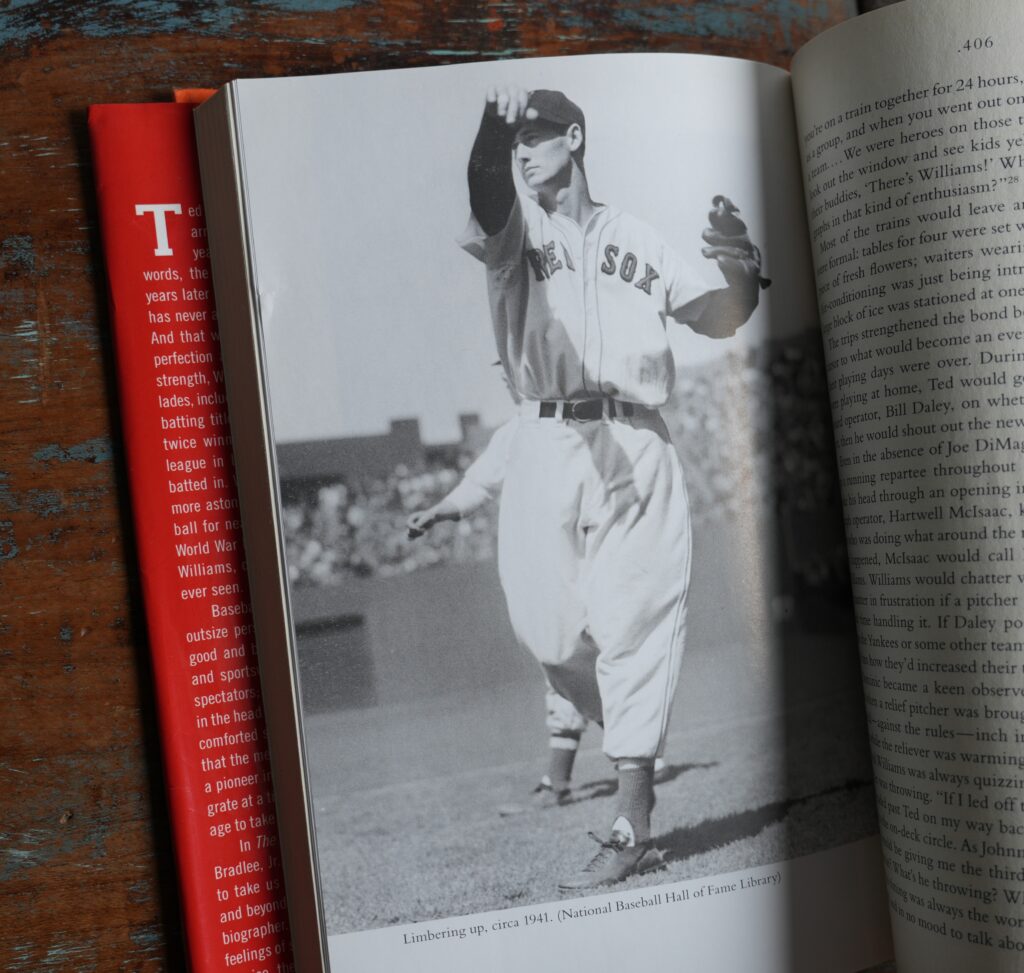
Why? He goes, Because I was out there doing it. I was out there playing. I was too busy to follow baseball. That’s great. Here’s what he did follow, though. He had three heroes growing up George Washington, Napoleon, and Charles Lindbergh. That’s who he was drawing pictures of when he was a kid. Not Babe Ruth or any ball players. He was drawing pictures of Lindbergh’s plane.
A Childhood That Fueled Fire
Remember this Ted was brash, cocky, and arrogant, or whatever you want to call it. He was outspoken from the very beginning. This was not a shy, quiet kid. He was not moving into the Red Sox spring training and into the Minneapolis Millers minor league team as a quiet, hesitant kid. He was not afraid to speak his mind even then.
Someone asked him if he had any trouble with any certain pitch. Ted says, “Can’t tell the difference. They all look like they’re hanging out in front of the plate on a string.” This is in the minor leagues. So just before he reports to Minneapolis, to that minor league team, he’s in spring training with all the guys who just made the big league roster.
There’s three veteran players and they’re giving him a hard time for not making the big league team. As Ted’s heading off to the train, off to Minneapolis, he yells at these three older players. He says, “I’ll be back and I’ll be making more money in one year than the three you combined.” So he gets to Minneapolis, the minor league team.
And of course he’s going to go on a hitting tear eventually, but there’s signs of this temper already. He popped out on a pitch that was right down the middle. It says he flipped his bat end over end, dangerously high, into the air. Then he goes back to the dugout and he just smashes this glass water cooler with his fist. Blood all over.
He nearly cut his hand off. He’s just raging out of control. And he’s super lucky he didn’t hit an artery. Otherwise, his career might have been over right there. This is from the book. It says,
“It would be a year in which Ted would establish himself as a singular talent on the field and almost as big an attraction off it as the press seduced by the kid’s refreshing, persona, touted him as an American original.”
And so they’re already picking up on this uniqueness very early on. There’s a great exchange right here. Ted’s the next big thing now. They move him up to the big league roster, to the Red Sox big league team. He gets there and a sports writer asks him. He says,
“So the roster says your name is Theodore S. Williams. And Ted says, That’s right.”
The writer asks, “So what’s the S for?” So another teammate sitting there, he’s chimes in and he goes, It’s for screwball. And so then Ted goes, “It’s for Samuel.” And then the writer says,
“So you think you’ll hit up here in the big leagues?”
Ted says, “Who’s going to stop me?”
And this is Ted Williams before he even plays one game in the big leagues. No, so big league debut, Yankee Stadium, babe Ruth is there. The book,
“It was damp and chilly, and a crowd of 30,000 had gathered to see the Yankees Ace Red Roughing versus the 39-year-old Lefty Grove. Ted thought Yankee Stadium was just as he’d seen it in the movie newsreels. Its aura perhaps enhanced only by the attendance of Ruth himself. Batting sixth, butterflies running up and down my spine. Williams stepped into the box.”
Now he’s a big leader, and nobody’s gonna stop him. Except for maybe a couple of world wars. But we’re gonna get into that in a second. Another example of the original, totally unique combination of this intensity. Ted didn’t run with the other guys from the team. He stayed in, he was focused, and he didn’t care about the peer pressure to hang out late at night. Here’s what he says.
“Williams had strong likes and dislikes that effectively made him a loner. He wanted to see a certain type of movie when he wanted to see it, get it over with, and get home early and go to bed. Unlike most of his teammates, he didn’t drink or smoke. He couldn’t even stand the smell of tobacco. He liked to hunt and fish, the individualist recreation.”
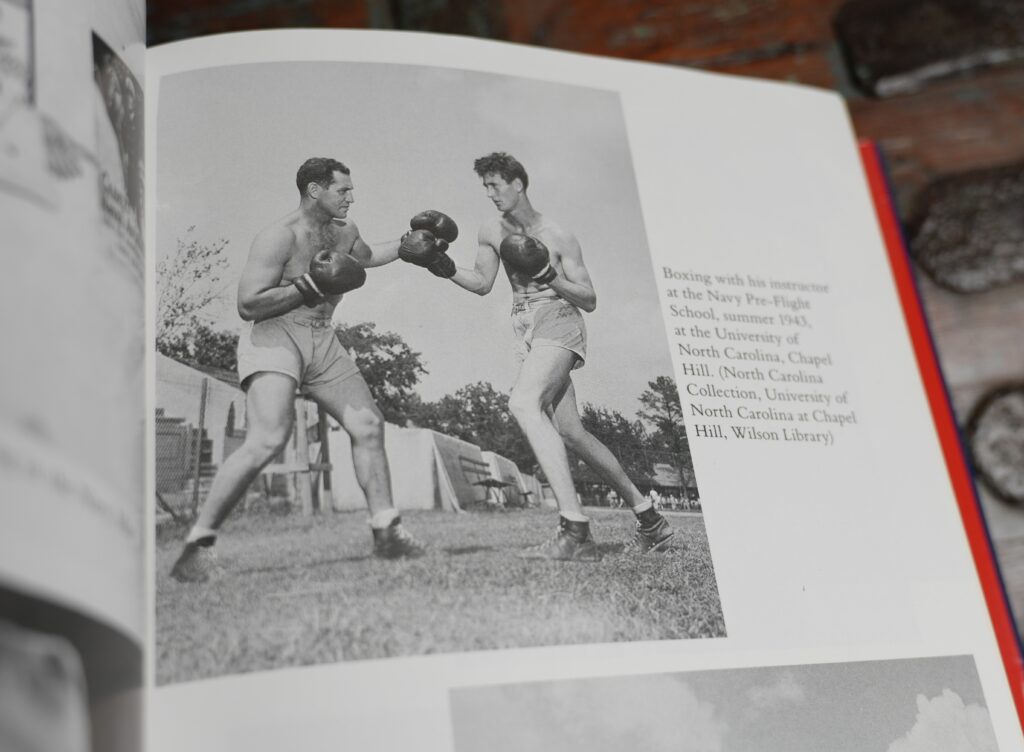
And then here’s a really good reason he didn’t like to stay out late right here. He wanted to get some food and go to bed so he could wake up feeling refreshed and rested. Listen to this.
“Eating is a real sore spot with me, Ted said. I don’t want to hear let’s wait a while, because all of a sudden it’s nine o’clock. And when I eat late, I can’t sleep well and I don’t feel well the next day. I don’t believe there was ever a ball player who ate in his room as often as Ted Williams. I’d ten times rather sit home and watch a good TV program than go out to some phony baloney cocktail party and listen to a lot of bull. I think a lot of people are like that, but are afraid to admit it.”
Right there, that again, Ted didn’t like doing something, he wasn’t gonna do it. That’s it. He wasn’t out there schmoozing with the media or whoever. I’m Ted Williams. I don’t do that. Ted’s first season, he didn’t make the all-star team. It was the only time in his career that he wasn’t an all-star. Of course, as soon as he starts playing in Boston, pretty much the start of the trouble with the press right there. He didn’t like the dimensions of Fenway Park. And he would complain about it.
So they what happens is they move the right field fence in about 30 feet. Some of the writers and the fans had an issue with this new kid making all these demands. So not long after that, he’s hearing the fans heckle him for anything he might have done wrong, and he’s not digging it. He says right there, “I’ll never tip my cap again to the fans.” And of course, the writers are just there eating this up. And it’s the start of this long battle with some of the fans and most of the writers.
One of the things Ted would do with the press, he’d just start venting and he’d go on these rants. And then he’d say, And you can quote me on that. Print it. Exactly what I just said. You print it. Listen to this. He says,
“I don’t like the town. I don’t like the people. And the newspaper men have been on my back all year. Why?”
He just did not care. He would just say what he felt, and then he’d say, Go ahead and you print that. There’s times in the book he’ll go on these rants with reporters. At the end, he’ll say, Now read that back to me. I want you to get it right, what I just said. Now, now you go print it.
Once I hear that you got it right, he was just holding court. It says in the book here.
“It marked the first season of what would become a career-long jihad waged by Ted against the baseball writers, his so-called knights of the keyboard. In fact, this was not a feud as such, but a conflict largely manufactured by Williams to fuel his drive to excel. Though his press was overwhelmingly positive, he would seize on a negative story or column to portray all writers as a contemptible lot bent on invading his privacy and stirring up public opinion against him. The newspapers became a boogeyman that Williams constructed to feed the fire of antagonism that was central to his ability to perform well. He always said he hit the best when he was angry, and that was generally true.”
So that’s out of the book. So there’s a time in the locker room, a Boston writer’s giving Ted a hard time. Ted says, beat it. He tells the writer to beat it and he wouldn’t leave him alone. So Ted picks up a bucket of ice water and he dumps it over the reporter’s head. This guy just turns around and just kind of walks away.
Now he’s swearing at the reporters. Sometimes they can hardly even use the quotes that he’s giving them because they’re just laced with profanity. Another habit for Williams, he brings his gun out to the field, to Fenway Park, and he’ll start shooting. Ted would shoot pigeons with his rifle and they’d just be laying across the field, dead pigeons, all over. Multiple times he does this, it’s in the book.
He was a big hunter. So in the offseason, he heads back to Minnesota where he could hunt and fish.
The .406 Season Choice
It’s the winter before the 1941 season. World War II is heating up. And so he goes and he registers for the draft in Minneapolis. He’s not really concerned about it because he’s supporting his mother with his big league paycheck. So anybody that’s supporting family would be deferred. They’d be classified as a 3A, meaning you could just stay in work. You wouldn’t be drafted. So 1941, a huge year for a lot of things.
The war is heating up. Baseball has Joe DiMaggio, who hit in 56 straight games. And then Ted Williams, he hits .406 for the season. In the All-Star game that year, Ted hits a game-winning walk-off home run. He said “it was the most thrilling hit of his life.” So by early August, he’s hitting .413 and he lets the reporters know why. It’s because of his confidence.
It’s his third season in the big leagues, and now he’s figuring out why it’s so important to have confidence. He’s got a bunch of reporters standing around the batting cage before a game. And he goes, he says,
“I’ll tell you why I’m hitting 400. It’s a cinch. I got confidence this year for the first time. When I came up two years ago, I thought it would be swell if I could have a pretty fair season, you know, hit around .300 and get a homer now and then. Before I knew it, I was hitting .330, but I really didn’t think I was that good.”
So what he’s doing right here, he notices that he was not giving himself enough credit. So he’s like, know what you can do. And now the harder you work, the better you can be. He’s just reminding himself in front of all these reporters right here. So he goes on. He says,
“Last year I missed the batting title by six or eight points, and I found myself wondering if I was as good as DiMaggio, Appling, Greenberg, and those other guys. I told myself I was a sap for thinking that way, and I guess it worked. I don’t believe there’s such a thing as a natural hitter. If that’s all there was to it, a guy could lay off all winter and come back in the spring as good as he was the previous midseason. Nobody can do that. Natural hitter, my ass.”
So he never misses an opportunity to say there’s no such thing as a natural through the whole book. Now six games left in the season, his average is .406. Already he’s saying I’m playing every game all the way to the end. Because people are coming up. They’re asking him, are you gonna pull yourself out of the lineup just to save your average?
He said, Nope, there’s no way I’m gonna play every game. He says,
“If you hit .400, it’s gotta be because you played a whole season.”
So the next day, a double header, he goes 0 for 3, dropping his average to .402. Next game, he goes 1 for 4. Now he’s down to 401. It’s getting close now, and the manager steps in, Joe Cronin. He says he could pull Ted out of the lineup if he’s already hitting 400. So now this way he can save Ted from making that call himself. His manager can come in and he can say it was his idea, and now he’ll lock in that 400 season. His manager’s trying to cover for Ted in case he wants to bail out and just lock in that 400 average.
So his manager, he goes, “You gotta admire the kid for being so courageous about it. But I can tell you one thing, I may yank him in that second game Sunday if he’s got the hits, Cronin told the writers. We go on the new time Sunday, and with the first game starting at 130, it’ll be pretty dark when that second game gets underway. I feel that I have obligations, and I may decide to take him out of that second game, even if he doesn’t like it.”
So another game, Ted goes one for four, and now he drops his average to .39955. So now he’s under .400 for the first time since July. But technically, it’s a .400 season because it gets rounded up. So he could sit out these last two games and he could hit an even .400. There’s no way in hell he’s not doing it. The book says,
“Though the statisticians would have rounded his .39955 average up to .400, and though he could have sat out the last two games, Ted knew that history wouldn’t look kindly on that option. So it was really no option at all. As he said, he would play the doubleheader and achieve the mark by getting his hits, or he wouldn’t achieve the mark at all. That night, Williams tried to quiet his nerves by walking the streets of Philadelphia with Johnny Orlando at his side to offer encouragement.”
Okay, so there’s one more doubleheader left the night before he goes out walking with his friend, the clubhouse guy, Johnny Orlando, for hours and hours. And then they get back to the hotel that night. Late at night, Joe Cronin, the manager, is sitting in the lobby waiting for him. And they talk about this again. Cronin says, You can sit out tomorrow. And Ted says, There’s no way I’m gonna do that. I’m playing.
The next day, first game at the doubleheader, four hits in his first four at bats with a home run.
His average is up to .403. Two more hits in the second game, he goes six for eight in the doubleheader, average back up to .406, season over.
So in his third year in the big leagues, 23 years old, Ted hits .400, walk-off home run in the All-Star game that year, he wins his first batting title. They mentioned this in the book too. The last time that somebody hit .400, it was Bill Terry. He hit .401 in 1930. So that season, the league average, the league batting average was .303. So Terry’s average of .401, that was 32% higher than the league average. In 1941, Ted hits .406. The league batting average was .266. So Ted hit 53% higher than the league average, which is crazy.
The next season, he wins the batting title again, .356 average. And all year now, the World War II is raging on. And because Roosevelt had declared war on Japan and then Germany right after Pearl Harbor the year before. So all this is going on. And now for Ted, he’s figuring he’s going to get the deferment, that 3A classification, because he’s taking care of his mother.
He had to work and he had to play ball and he had his mother to care for. And there’s a big contract waiting for him that spring. So he wanted to finally get that big paycheck. But now he can start to feel the pressure building. There’s no way he wants to be known as somebody who’s going to try to dodge military service. And of course, some of these sports writers start to stir the pot as much as possible. They’re trying to make Ted look like a draft dodger.
The Red Sox owner now, he says, hey, maybe you shouldn’t report the spring training. This is a little too hot. This is a little bit more this controversy is heating up a little too much. Maybe you should stay away from spring training. And this is what Ted’s reaction was to that. He said,
“That was the first mistake the Red Sox made with me. I made up my mind I was going to go anyway.” So he’s going to spring training. He’s saying,
“All I can think about was that big contract and the very fact that I was entitled to be a 3A. And now for the first time in my life, I’d be able to get my mother out of hock a little.” So it really doesn’t take long now.
World War II Service And Return
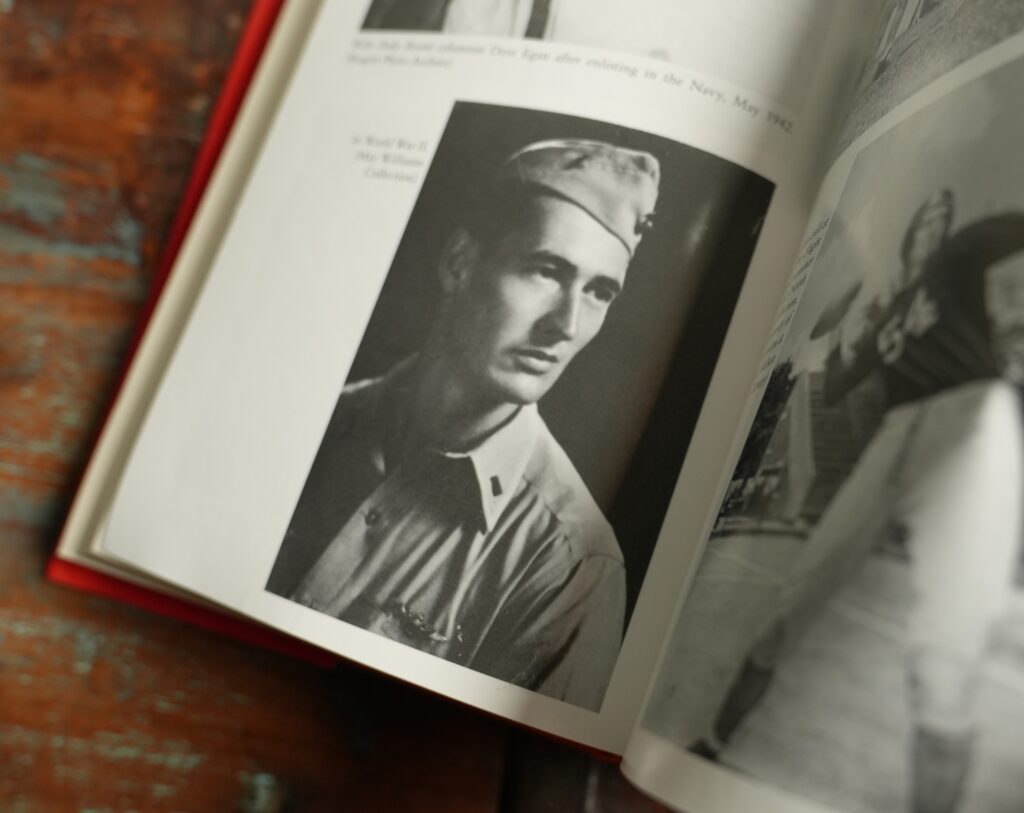
He realizes pretty quick is he’s got to do what he’s got to do. And of course, he just dives headfirst right into it. And he goes and he enlists into the Navy and he’s going to serve his country. He says,
“To hell with everything. I’m going into the Navy right now.” And now, so once he decides to do something, that’s it. He’s going and he takes it head on. His next mission is to be the best pilot he can be. It says right here, “In the service, Williams did not want to get by or trade on his celebrity. Now that he’s started his commitment, he actually looked forward to the challenge of establishing his military bona fides out of the spotlight on his own merits.”
Here’s another quote right here. He went right into the war effort with this with the right attitude. He knew it was the most important thing to do. He said,
“I rarely look at the box score these days. He said, I couldn’t even tell you how much the Yankees are leading by. And you know, when I was playing ball, I had all those things figured out to the nth degree. But I figured I’m in a bigger game now, one that requires my full and complete attention.”
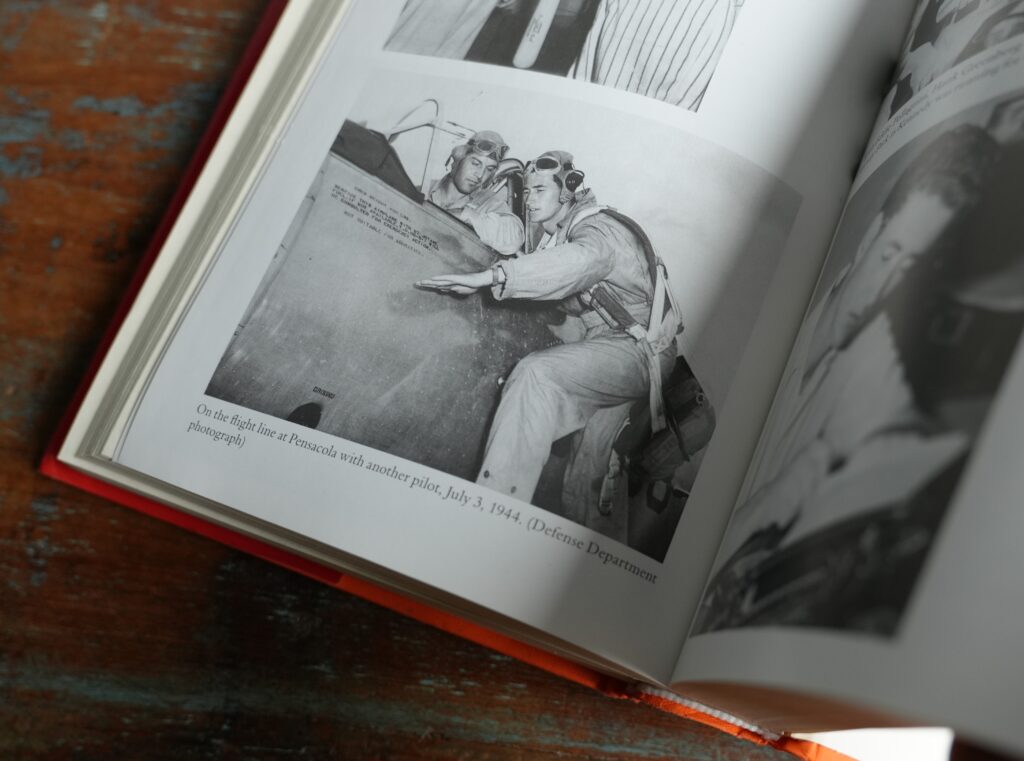
So he does what he thinks he should do, and he gets through his service during World War II. He misses three full seasons. 1943, 44, and 1945, did not play. But like everybody knew at the time, this was just a much bigger priority right here, World War II.
He comes back for the 1946 season. He hits .342 and he wins the MVP award. No big deal, just the greatest hitter to ever live. The next two seasons after that, led the league in hitting .343 average and then a .369 average. 1949, he wins the MVP award again. The legend misses three years of service in World War II and he comes back and dominates like no other.
He also dominated in the locker room with the press. He suffered no fools whatsoever. For example, it says,
“In the clubhouse after the game, Ted was unrepentant. I didn’t mind the errors, he said, but those GD fans, they can go blank themselves, and you can quote me in all the papers.”
This is how he was rolling. Like I said earlier, here’s what I feel, and now you print that in the paper. I do not care. Now winning MVP awards right up there in the batting title every year, all-star every season.
He can’t believe it now. When he starts to hear he might have to go serve in Korea, back in the service. He absolutely cannot believe he might have to go back a second time. But now there’s some papers that he didn’t fill out. He remained eligible after his tour of duty in World War II.
Korea And The Crash Landing
So technically, he is eligible now to go serve a second tour of duty. He talked about the cost of all this as a ball player. And he was right. There’s just a limited number of years here to play and make money before your body gives out. And then you’re all done. Again, it’s a great point that he makes. He’s just saying what he thinks.
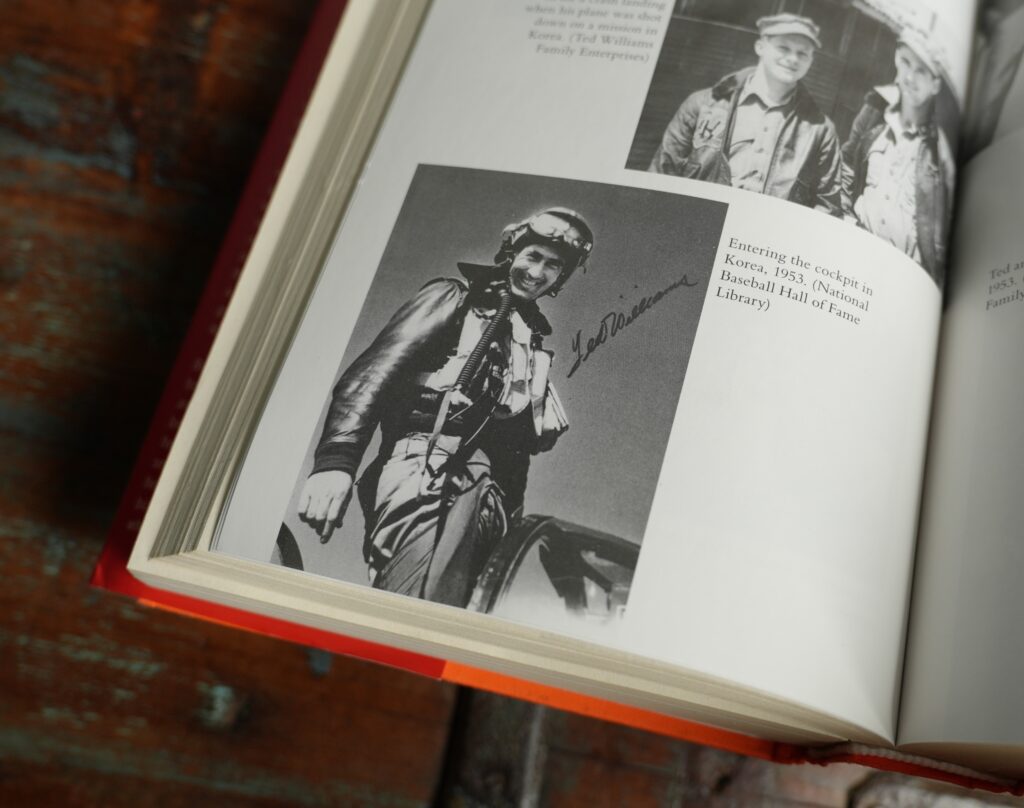
So he’s back in the service and off to Korea as a Marine Corps pilot, but there’s a cost and he wants to make it known. Listen to this. He says he’s going from $250 a day to $2.50 a day. Quote,
“Doughs all that counts, William says. Who’s going to care about me when I can’t swing a bat? It doesn’t take them long to forget you. A big leaguer’s got about 10 years to pile it up. If he doesn’t, nobody’s going to kick it into him when he’s through. I’m not reaching for the moon. But I’ve come down from $250 a day to $2.50 a day. And that’s a sharp drop. I’ve lost years of baseball already, and I might lose more. How do I know I’ll be any good when I get back?”
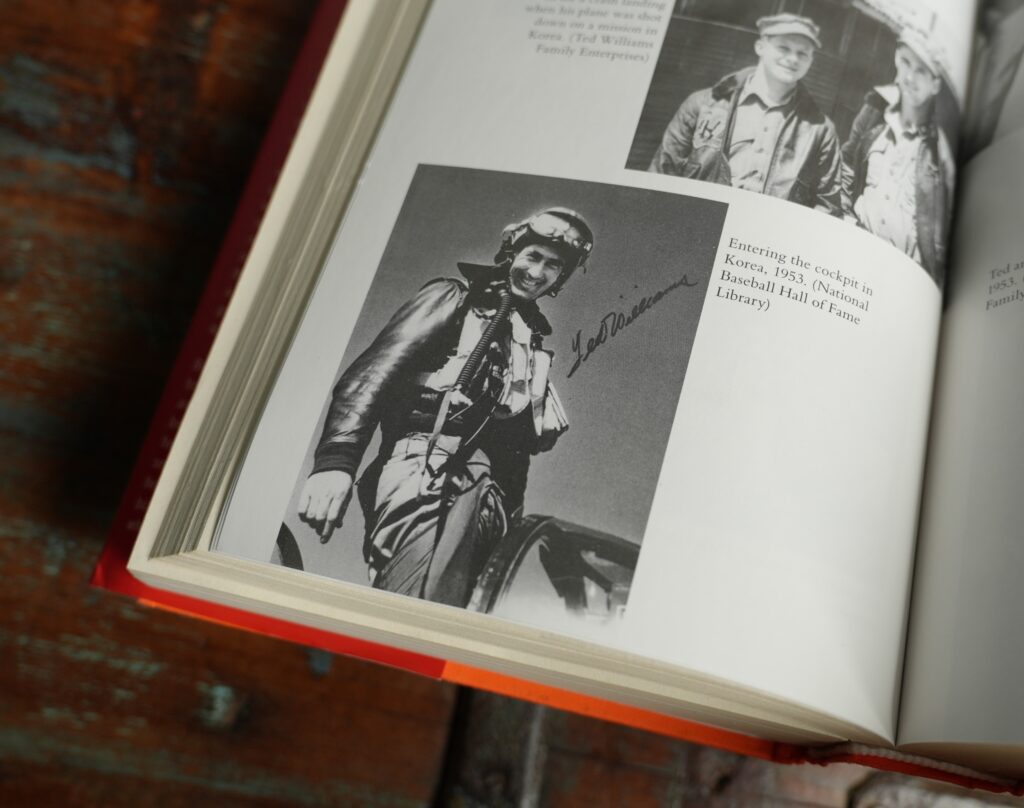
Okay, but so he goes. He’s in Korea, and it’s one of the wildest legendary scenes of any athlete ever, any pilot ever.
Ted’s plane is hit with enemy fire during a bombing run. His radio goes out. Red lights flash across the instrument panel. The throttle’s shaking out of control. Ted’s looking for a place to land. So there’s another plane that guides him towards a runway at this Air Force base. The book says Ted doesn’t want to eject from the plane because he’s six foot three. He just barely fit into this cockpit of the plane. He’s already jammed in there.
He thought he’d break his legs if he ever had to eject. And he was probably right. He gives another reason. He’s not ejecting. And they asked him, like, were you afraid that you were going to get uh taken prisoner for ejecting? Well, he says later on, he goes, he adds this little nugget. He says,
“I wasn’t worried about ejecting and being taken prisoner. He goes, if I was floating down on a parachute and if any of those blankety blank blankers, he’s talking about the enemy, blank blankers, came up to me, I would have said, I’m Ted Williams, I’m a big deal baseball player. How may I help you?”
Okay, so now we’re clear on that. He wasn’t worried about ejecting and being taken prisoner. He’d just tell him that he was Ted Freaking Williams. What do you want? So he was worried about ejecting because he didn’t want to rip his legs off.
Anyways, he’s not ejecting, he’s taking this plane in for a landing right now. The only problem is nothing on the plane was working. No radio, no flaps. His wheels wouldn’t come down. There’s parts falling off the plane as he streaks across this airfield. A metal panel falls off his plane and it lands on the roof of this mess hall at this Air Force base.
And here he comes. His plane’s on fire, smoke is pouring out. Ted shuts down the master fuel switch, and he’s about to land this plane on its belly with no landing gear. So here’s how he describes his landing right here.
“I hit flush and skidded up the runway really fast. No dive brakes, no flaps, nothing to slow the plane. For more than a mile I skidd, ripping and tearing up the runway, sparks flying. I could see the fire truck, and I pressed the brakes so hard I almost broke my ankle. And all the time I’m screaming, when is this dirty SOB gonna stop? Jeez, I was mad. I always get mad when I’m scared, and I was praying and yelling at the same time. Further up the runway the plane started sliding toward a second fire truck, and the truck tried to get out of the way, dust flying behind it. I stopped right at the end of the runway. The canopy wouldn’t open at first. Then I hit the emergency ejector. Boy, I just dove out and I kind of somersaulted and I took my helmet off and slammed it on the ground. I was so mad.”
So he rolls out onto the ground. There’s people there helping him, and nobody knows it’s Ted Williams. So in the book they said
“He wasn’t shaking like a leaf or anything, but you could tell that he was somewhat agitated.” This guy says, “We asked him, Are you okay? He said, Yeah, I got bumped up a little bit. He was not talking a lot at that point. We didn’t even ask him his name. We didn’t even have his name until we got to the base hospital. And then and he still had his helmet on with the oxygen mask hanging to one side. And that’s where we found out it was Ted Williams. We had no idea who he was.”
So I read this book and now I can almost see Ted Williams out there at the end of the runway, absolutely pissed off about his crash landing and getting shot down. Once word got out that Ted’s plane was shot down and he crash landed and he walked away from it, the legend just took off, bigger than any home run. Here’s how the book describes it.
“But fanned by purple pros and numerous breathless accounts of the event, William’s feat of daring dew would settle in the public consciousness as a bookend to his baseball prowess. Although Ted was no Audie Murphy, his valorous, dauntless deed in combat was magnified by his status as one of the most famous athletes of all time.”
So after all that, his service is over. He’s back to the U.S. He hits right about .350 for the next three seasons. No big deal. Just comes back and hits .350. He continues to deal with the reporters asking crazy questions every day of his life. He still has to listen to fans boo him if he strikes out, even when he’s hitting .350, and he doesn’t change a thing in the locker room. Listen to this.
“In the clubhouse after the game, Williams ranted and raved incoherently, vowing to continue to spit to show his contempt for Boston writers and those fans who booed him unjustly. I’m gonna continue to give it to those characters, he said. Nobody’s gonna make me stop spitting. The newspaper guys in this town are Bush. And some of those fans are the worst in the world. What do they want from a guy? I’ve hit over .340 for 17 years in this league, and every time I walk up there, they give me the business. What do they expect me to do? Smile at him?”
So he does make a good point right here. He’s one of the greatest hitters to ever live, and somebody has something to say to me about it. He’s like, so I’m gonna start spitting. And that’s what he does. He’s like spitting in the direction of the press box as he crosses home plate. After he hits a home run and then he’ll and he’ll just spit in the air, like in the direction of the crowd or in the direction of the reporters. And he’s just like, he’s just showing them his disgust.
Legend Status Beyond The Stats
And now this leads right into maybe his biggest season ever. It’s 1957. He hits .388 as a 39-year-old. And he’s absolutely pissed off the entire season at the fans and the reporters. It says,
“I started the season mad and I finished mad, Ted said later. I didn’t say two words to the Boston Writers all year. And in between, I probably had the most amazing season any near 40-year-old athlete ever had.”
He wins a batting title at age 39 with a .388 average. The next year he wins the batting title again at age 40. He hits .328. And he was completely fed up with all the questions and the interviews and all the comments.
Now the big moment right here.
Legends rise up and do legendary things.
You gotta have the numbers. You need to have the stats, but that’s not the thing.
To be a legend, you need more of the numbers. You gotta go beyond the numbers and bring something new.
You gotta say, no, I’m not gonna sit out the last two games of the season to preserve my .400 average. I’m gonna go play and then go six for eight.
You go out fishing in Florida and you see an alligator, and you dive in the water, and you wrestle him into the boat, and you throw him into the trunk of your car, and then you put them in your backyard. That was Ted Williams. That story’s in the book. I’m not kidding.
You gotta walk off home runs in the All-Star game.
You gotta pour buckets of ice water on top of reporters when they don’t leave you alone.
And you gotta crash land your airplane that’s on fire after getting shot down, roll out of the cockpit mad as hell.
If these are some of the things you’ve done, then you’re a legend.
Here’s another one.
Walk up to the plate in Fenway Park in your very last at bat of your career, and smash a home run into the wind.
Round the bases and then go put your jacket on, sit down in the dugout and stay there.
When the stadium won’t stop cheering until you give him a curtain call, you never get up.
Here’s what the book says after the last at bat of his career, the home run. He goes back to the dugout and he sits down on the bench. It says,
“Williams let all the adulation wash over him, and a satisfied smile came over his face. His teammates and Mike Higgins urged him to pop out to the field for a curtain call. Even the first pace umpire Johnny Rice motioned for him to come out. But Ted never budged.”
That was it. His last at bat, it was a home run. Then amazingly, the legend of Ted Williams grows over time. Here’s what it says.
“But in 1983, Ted Williams flowers. His public recognition of his status as a revered elder statesman isn’t the act of a man coming to terms with age, but rather a kind of gracious acceptance of the world’s inevitable surrender to Ted Williams.”
One of a kind. The good and the bad, and all the stories.
If you’re still wondering how you get an 800-page book written about your life, this is it.
“Williams succeeded in bending life to his own prodigious will, as the writer Michael Ghee put it in a precedent 1983 piece for the Boston Phoenix. The spectacle of someone forcing his own terms on the world around him is rarer by far than the sight of any home run.”