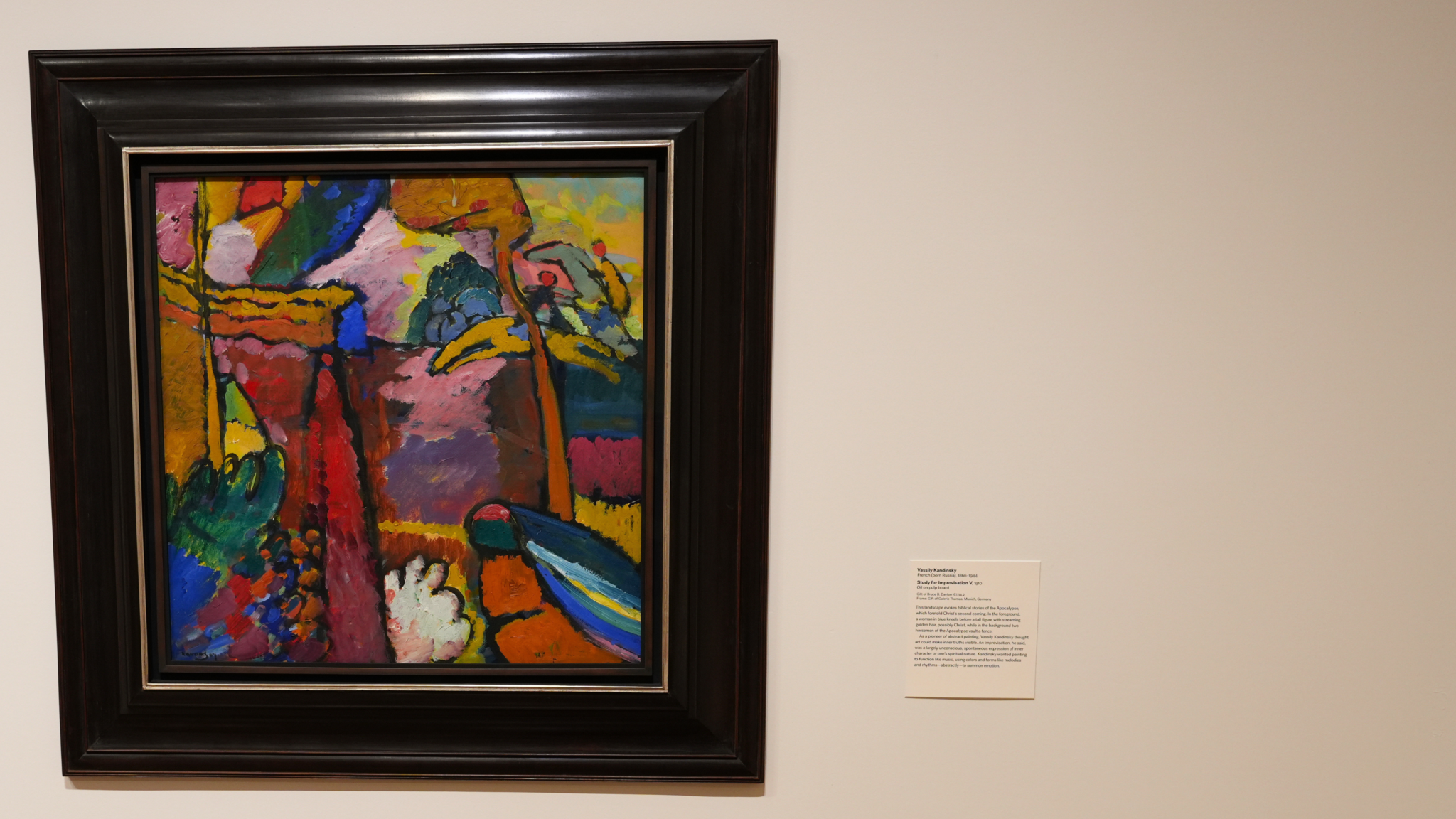
Wassily Kandinsky
Wassily Kandinsky, The Beginning of Abstract Art
Episode #48
07.28.2026
“The artist is not born to a life of pleasure. He must not live idle. He has a hard work to perform, and one which often proves a cross to be born. He must realize that his every deed, feeling, and thought are raw but sheer material from which his work is to arise. That he is free in art but not in life.”
That’s from the famous artist Kandinsky, in the book he wrote titled Concerning the Spiritual in Art, published in 1911. Now that quote, this sounds intense. I thought we were going to talk about art here and painting pictures. We’re definitely going to do that, but hard work across to be born, free in art, but not in life.
What kind of art book did I find here? So what I found here was answers. Answers to questions that were swirling around back in the late 1800s. Not just answers to questions on how to paint with your paintbrush, though, but answers to matters of the human spirit, the creative process, and how to make progress as an entire culture.
Way back in the day, one time I had a boss, he would say, “Don’t bring me a problem unless you have a solution to go along with it.” And this book that I cracked open this week, it reminded me of that.
Back in 1911, Kandinsky saw some issues. He had some problems. And then he offered up solution after solution. Just one after the other. It was amazing. And how can an artist do something like that? Because he wasn’t just an artist with a brush. He was a full-blown aesthetic theorist. Let’s just put it this way he was prolific as hell. This guy could write like crazy.
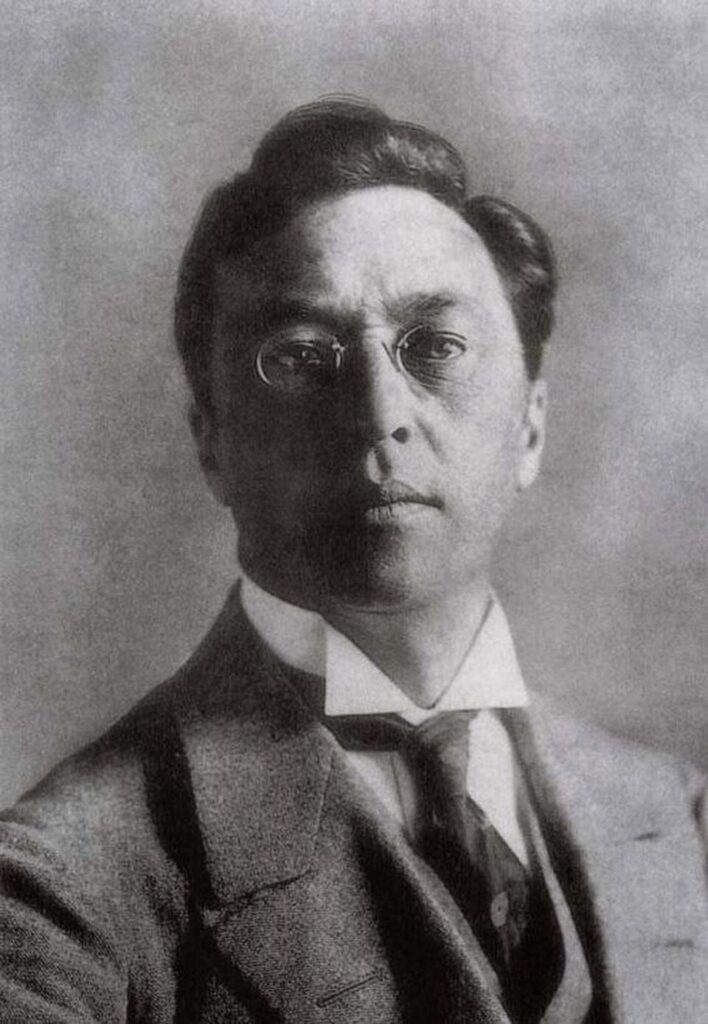
I just read one of his many books trying to absorb the concepts of the creative process from Wassily Kandinsky. He’s the pioneer of the abstract art movement. I didn’t know much about Kandinsky. Then just a little while ago, I did an episode on Claude Monet, and I saw his name pop up again while I was reading about Monet. I read that Kandinsky had an epiphany one day. He was looking at a Claude Monet painting at an art exhibition. One of the haystack series of paintings that Monet did, just by looking at that painting, it shocked Kandinsky and it sent him down this road that led to so many amazing concepts on creating art.
Wassily Kandinsky, Pioneer of Abstract Art
I’ll get into this more on what happened when he saw that Monet painting that day, but what I did was I instantly ordered this Kandinsky book right here, right on the spot. And then a few weeks later, I finally got to read it. So I started reading this book and my brain just grinds to a halt. Last week I read the biography of Marcel Dassault, the great aviation legend, the creator of Dassault Aviation. And his biography, his writing was so compact and clean and crisp. The book almost read itself. You look at one page and these words just flow right off the pages, right into your eyes. It was just such smooth and simple writing from Marcel Dassault.
Well, Kandinsky’s book, what a contrast. It was just totally the opposite. It’s just one complex idea after the other. Like just it felt like walking through quicksand. Every sentence was so complex. I had to go through the book several times. I’m taking notes. I’m trying to get my head around these ideas. But it was totally fascinating. And it was all new to me.
And I gotta be honest with you, I was just totally exhausted after I finished this book.
It was a workout.
What’s crazy, and you’re not going to believe this, but this is the biggest key to the entire thing right here.
The workout.
I read that open quote at the beginning. Kandinsky says, the artist is not born to a life of pleasure. He must not live idle. He has a hard work to perform, and one which often proves a cross to be born. So you’re still probably thinking, like, what could this guy be talking about right here? He’s just standing there painting. What’s so hard about that? Painting on a canvas isn’t that hard.
So let me read something else from his book. I’ll give you a hint of where we’re gonna go here. Kandinsky says,
“The spirit, like the body, can be strengthened and developed by frequent exercise. Just as the body, if neglected, grows weaker and finally impotent, so the spirit perishes if untended.”
Okay, so we’re gonna get back to the workout and the strengthening of the spirit here because it goes deep, trust me. First, though, my goal typically is just to get a sense of the artist’s creative process with these episodes and just how they think about creating art. What’s their motivation? What’s their approach?
I’ve gone down this road now with Claude Monet, and it was a lot of fun to get a sense of this extreme passion that Monet had. He said it himself, he was obsessed with color and light and the perception of it. And so then before that, I did an episode on Jasper Johns, and I was just completely blown away at the insights in the book that I read about Jasper Johns.
And so this is why I love reading these books because I they’re just packed full of ideas that I’d really never thought much about before. Jasper Johns had all these amazing thoughts on originality and his obsession to be unique. He didn’t want to be like anyone else. That was his main goal. He said, “When I could observe what others did, I tried to remove that from my work. My work became a negation of impulses.” And then not to remain the same, he was constantly doing the unexpected in his work. Once he felt some sort of acceptance or applause from the public, he knew then it was time to change it up. And he did that over and over through his whole career. It frustrated some of his fans, as you can imagine, and his art dealer to no end. But that was his style, that was what he was going to do.
Kandinsky, Art From The Spirit Not Decor
So now Kandinsky, he did a ton of writing. He was a prolific author, like I said. This book was a grind, an absolute grind to get through. But I made it through it. So what were some of the main ideas in his process?
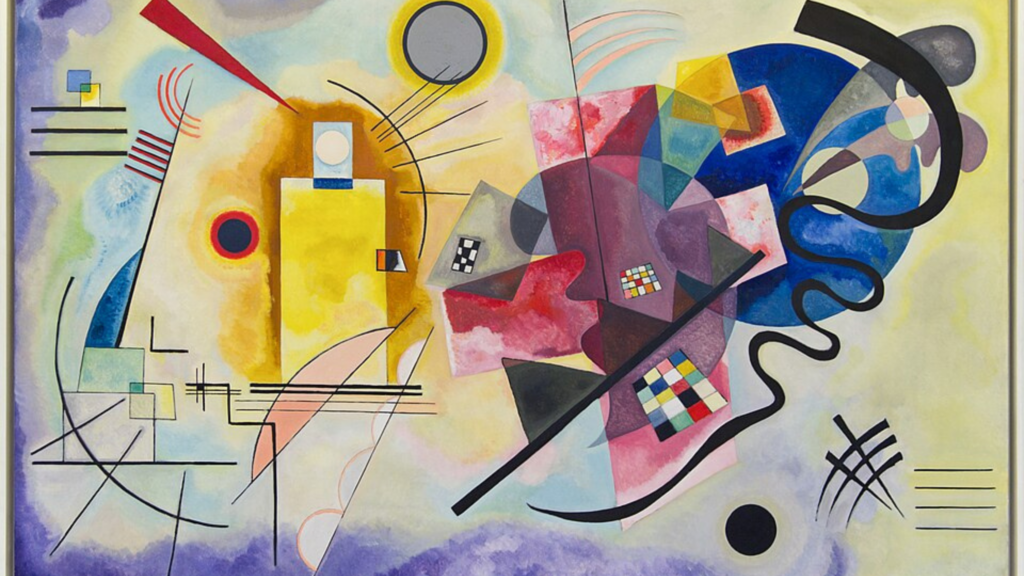
So to get us started here, you’ll have to know that Kandinsky rejected the idea that art is just for decoration to hang on a wall. No. Art should be coming from inside, from the spirit. Hence the title of his book that I read, ‘Concerning the Spiritual in Art.’ But here’s the problem. At the time, almost all art represented something first. So it was realistic paintings of landscapes and portraits of people or known objects like flowers or just things that were recognizable.
Those things were painted in a realistic way, and that was art at the time. What Kandinsky noticed was sort of a decay going on, where art was done just for art’s sake. So it’s not coming from within or from the soul with any sort of meaning. It was just simply like, let’s say, just a painting of a landscape, and then the focus was just about how close the artist was able to represent that landscape.
How accurately could they do it to make it match perfectly? Just basically they’re trying to duplicate what was already there onto the canvas. Kandinsky saw a big problem with that. He wanted to reverse the entire idea and turn this all on its head. But how are you going to do that? Art would have to be zero representation. So you couldn’t paint any object or anything that was familiar. Well, if you can’t paint anything that you would recognize in the real world back then, just that idea alone sounded so absurd because that’s what everyone was doing.
Everything that was already recognized and known. Kandinsky said, nope. It can be anything except what’s already recognizable. So what does that leave to paint? What’s remaining to paint? What’s remaining to paint is purely abstract art. So abstract is a word that you’ve heard so many times you probably forgot what the word means because it’s used in so many different ways. So here’s the definition: ‘abstract, it’s something that exists as an idea, thought, or concept rather than a physical, tangible object.’ So it’s exactly what Kandinsky wants to do. That’s this art movement that he’s pioneering right here, abstract art.
This is what I loved about the book that I read by Kandinsky. It’s about the same stuff that I love to learn about in my other episodes, which is really the human spirit and that creativity that comes from the inside, from the soul. Whatever you do, it’s done from some sort of internal drive in all these different forms. Like in all my different episodes that I’ve done, artists, engineers, car designers, musicians, even athletes. It’s all part of the same creative expression from the inside. And then it’s presented outward in an original idea.
Inner Necessity Versus Dead Paintings
Those are my favorite stories when you see that need to express something that’s new and unique. Kandinsky calls it the “inner necessity.” It’s the law of artistic creation. He says that, only a true work of art can come from the inside or from the artist’s soul rather than from looking around externally and just playing off what already exists. So, for example, like just looking at a beautiful landscape of a mountain with a river and then painting that exact thing.
He says, no, that’s not it. To bring art out from the soul, you have to bypass the commercial market. This is all the made-up rules that would allow your art to be accepted, the commercial market. So this can be commercial or academic, or just the pressure that you’d feel to make art a certain way for it to be accepted. He called that a dead painting if it’s not done internally.
Now this doesn’t mean as long as your art doesn’t have anything representing a realistic scene or an object, that you’re doing abstract art. This is a big distinction that Kandinsky makes. You can’t just do random shapes on a canvas and call it art. Listen to this right here. In his book, he says,
“Just because an artist uses abstract methods, it does not mean that he is an abstract artist. It doesn’t even mean that he is an artist. Just as there are enough dead triangles, be they white or green, there are just as many dead roosters, dead horses, or dead guitars. One can just as easily be a realistic academic as an abstract academic. A form without content is not a hand, just an empty glove full of air.”
So now we’re getting into it. And this is it right here. Just because you use abstract methods does not mean you’re an abstract artist. So how the hell do you know if you’re making a dead painting or not? That’s a fair question. Well, Kandinsky gives a few ways to tell right here, if you have a dead shape on your canvas or not. Do you want to know if you have an empty glove full of air? Well, here’s the first way to tell, according to Kandinsky. Your art must come from strictly the inner need, not from vanity or commercial reward or a current trend.
The inner need has to project the artist’s soul on the canvas. He said, quote,
“That is beautiful which is produced by the inner need, which springs from the soul.”
Period, point blank.
Let me read that one more time. “That is beautiful, which is produced by the inner need, which springs from the soul.” And who’s gonna know that? That’s you. Only you are gonna know if it springs from your soul or not, nobody else. Another way, the second way to tell if you have an empty glove on your painting is if you’re just gonna go, if you’re just going through the motions trying to get famous, or if you’re trying to make a lot of friends with your art, it has to trigger a vibration of the soul, is how he says it.
Kandinsky says true art is never neutral. Even a purely abstract shape has an inner suggestion and a value of its own. So you see there that’s not neutral. An inner suggestion makes it into something.
Now get this, he makes it sound pretty simple, I think, right here. And simple I mean because I reread it ten times and I thought about it for a week. But yes, now it’s simple to me. Here’s what he said.
“The same shape that you just painted is successful if its form serves as the perfect outward expression of an inner meaning.”
That’s it. I told you it was simple. So either it is or it isn’t. Does the form serve as the perfect outward expression of an inner meaning? Again, the artist is the only one who can answer the question about the painting that they are creating. It’s you. Okay, so the third way to tell, Kandinsky writes, if you have something that’s dead or alive, just like we said, a form without content is not a hand, it’s just an empty glove full of air. So the glove must have a hand to clothe, he says.
A lifeless painting is from artists who produce millions of work of art without enthusiasm, with cold hearts and souls asleep. Now we’re getting deeper right here. I was saying at the beginning, it’s the workout. Right here, check this out. So remember, I was talking about that boss that I had back in the day who wouldn’t listen to a problem unless you brought a solution along with it. Kandinsky has solutions.
Right here, he says, he’s saying, I’m seeing a big problem out there, millions of works of art all around me, and they’re produced by artists without enthusiasm, with cold hearts, sleeping souls. Kandinsky says the answer is inner necessity, inner need from the soul.
Training The Spirit Like A Muscle
Remember, “that is beautiful, which is produced by the inner need, which springs from the soul,” he said. Problem, solution. Here’s how you do it. Actively train your own spirit through daily exercise, the workout. Just like you train your muscles, you train your spirit. Teach yourself to look past the physical, superficial impressions. Here’s how he says it right here, Kandinsky from his book.
“We are seeking today for the road which is to lead us away from the outer to the inner basis. The spirit, like the body, can be strengthened and developed by frequent exercise. Just as the body, if neglected, grows weaker and finally impotent, so the spirit perishes if untended. And for this reason, it is necessary for the artist to know the starting point for the exercise of his spirit.”
So actively working out your spirit, the inner need, so you don’t have a dead painting. Like you just said, a form without content is not a hand, it’s just an empty glove full of air. We’re gonna come back to the workout in a minute, but we gotta look at a couple more of these principles first. Again, Kandinsky. Problem, solution. Cold hearts with souls asleep by the millions. We want beauty. Then that’s by the inner need, he says,
“All means are sacred, which are called for by the inner need. All means are sinful, which obscure that inner need.” Pretty easy, pretty straightforward right there. Okay, more principles. And there’s no way I can cover all the principles of Kandinsky without going for four days straight. But this is another key point right here, the triangle.
This is a big part of his book, what he called the spiritual triangle. It’s this idea of human progress, artistic progress coming from the soul. So Kandinsky lays it out like this you have this triangle. Picture this triangle divided into horizontal segments with the wide part of the base of the triangle. That’s the vast majority of humanity at the base.
Most of the people of the world are in this base of the triangle, he’s saying. Then as you move up that triangle to the point or to the apex of the triangle, this is where you’re going to find the true artists. They’re guided by the soul and they’re working to creating from the soul only, not from external forces or influences or rules or laws. Like we just talked about it.
At the base of this triangle, the vast majority of humanity says this is where he called it the soulless life of the present. So anyone who’s concerned with material wealth or physical superficial things, he says, or even commercial success, this would be a painter who’s just painting for the sake of getting rewarded somehow. They’re influenced by outside factors, not from within. This is the majority of the world, he says, the large base of the triangle right here.
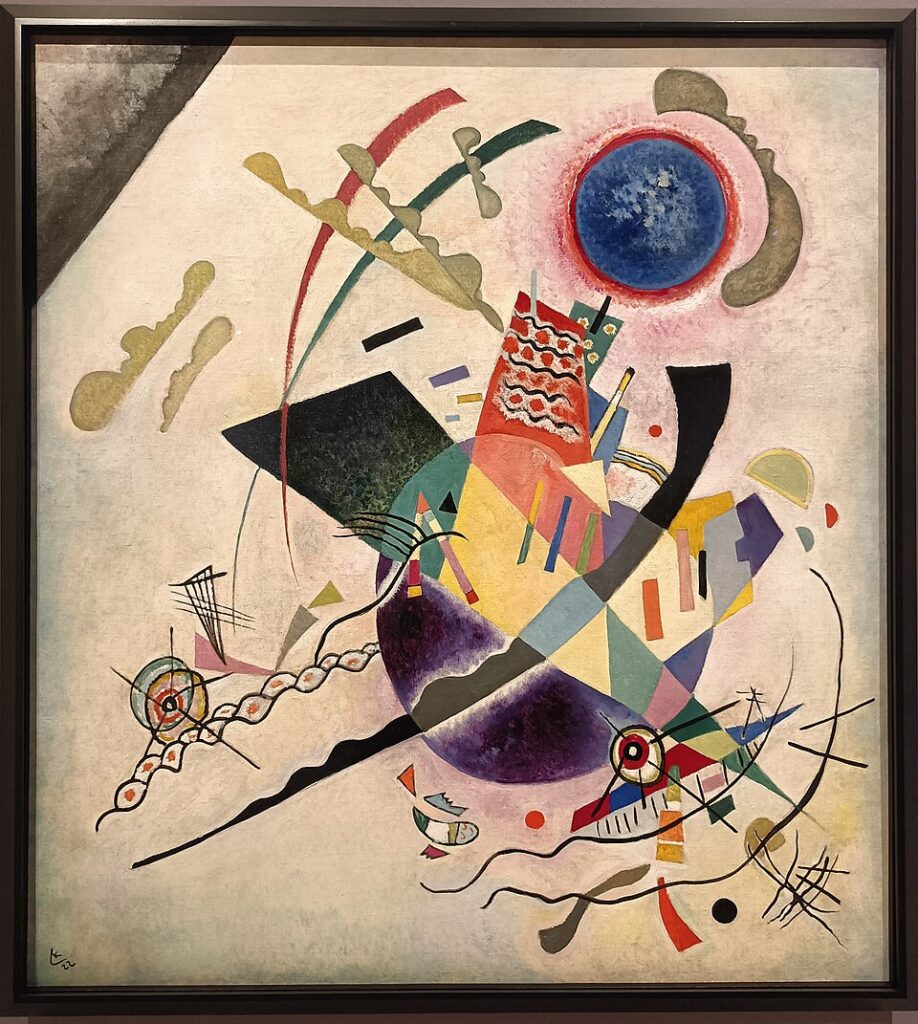
Then moving up to the point of the triangle, there’s very, very few people who can create art from within. He says representational art comes from the lower part, the big base of the triangle, because you’re just remaining stuck in the material world. You’re not really creating anything original. At least it’s based on something that already exists, where the non-objective art, this is what could actually pull the collective consciousness, is what he says, out of the material mindset, pulling up the triangle.
So you got to picture this scene of this triangle to get this idea of Kandinsky. Several times in the book, Kandinsky talks about this movement of forward and upward, up this triangle, he says. Right here,
“The spiritual life to which art belongs and of which she is one of the mightiest elements is a complicated but definite and easily definable movement, forward and upward. This movement is the movement of experience. It may take different forms, but it holds at the bottom to the same inner thought and purpose.”
Okay, so remember the triangle, the spiritual triangle, moving the collective consciousness forward and upward, like he said. Remember this for later.
Wassily Kandinsky And his Color And Music As Soul Language
I’m going to get back to this forward and upward idea. So another big concept in the book, Kandinsky, talks about color and music. He said color can be heard and music can be seen visually. And by using color and music, it’s possible to bypass all the analytical work that people try to do when they see art.
They want to know what it is. What are they looking at? Is it something familiar that they can associate with? So they can identify what they’re looking at. Well, that’s not the point. Remember, Kandinsky’s idea was that you shouldn’t be able to look at art and associate it with anything else. Otherwise, it’s not unique from the soul. So how else do you communicate ideas or art without representing anything from the real world? Well, you can use color, and those colors produce emotions through musical sounds, he says.
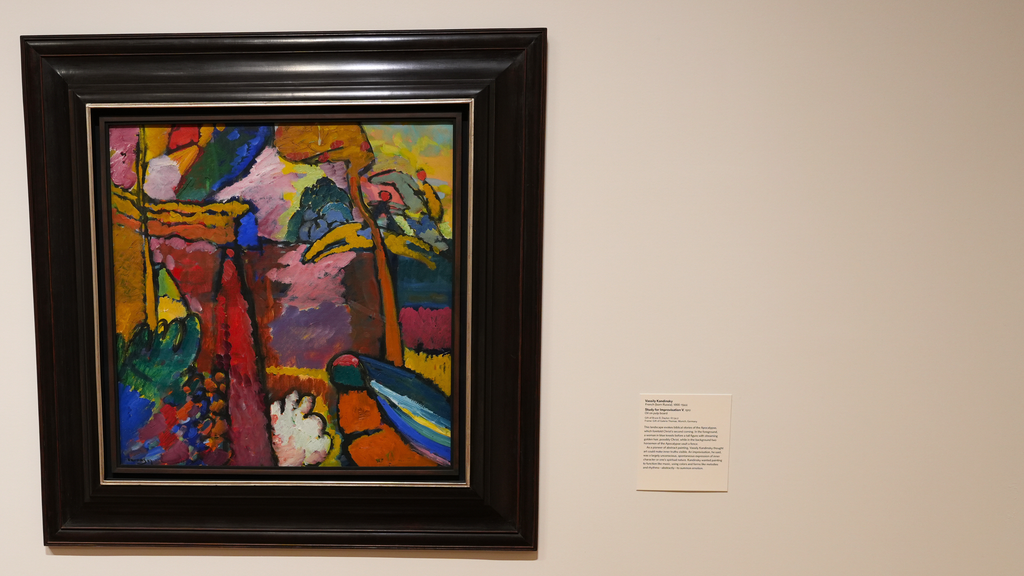
And this is backed by studies that certain colors can produce reactions in the brain when you see them. And then certain music can also produce a reaction in the brain linked to certain color. In the book, he lays all this out with each color, and he talks about what each color and all the different emotions that are proven to come from after seeing each color and all these studies that have been done. He says,
Color is the keyboard, the eyes are the hammers, the soul is the piano with many strings. The artist is the hand that plays, touching one key or another purposely to cause vibrations in the soul.
Okay, so but not just color, but music too. He had a good reason to bring music into the discussion right here, because he thought music was already abstract, not from the material world. And this has been studied too, just like color, the human reaction to certain sounds. He says, music didn’t need to mimic sounds from nature, like the blowing of the wind or the birds chirping, to evoke a profound emotional response.
He wanted painting to share the same status as music, where a composer that could write this incredible piece and this truly unique score, or whatever you call it back then, an ensemble, I don’t know, I don’t know, maybe like just think of like a Beethoven symphony. This is from the soul produced through music, and then it could be received by others with this emotional response. Nothing in that exchange links to the existing world. It’s pure from the composer to the audience, and then reception of it. That’s what he wanted painting to do too. That same exact idea.
So painting had to also come from the soul with original shapes and colors that would then evoke an emotional response visually when somebody looked at it. He experienced this himself at an opera one time in Moscow. He said the music washed over him and he he said he could see the intense colors and lines while he was listening to this music.
This is how Kandinsky said it right here, the importance of music for expression of the artist’s soul, he said, and the natural result of this striving is that the various arts are drawing together. They are finding in music the best teacher. With few exceptions, music has been for some centuries the art which has devoted itself not to the reproduction of natural phenomena, but rather to the expression of the artist’s soul in musical sound.
Now he keeps going on, notes of color, so using music for expression by painting on a canvas. So he continues on in his book, he goes, A painter who finds no satisfaction in mere representation, however artistic, in his longing to express his inner life, cannot but envy the ease with which music, the most non-material of the arts today, achieves this end. He naturally seeks to apply the methods of music to his own art. And from this results that modern desire for rhythm in painting, for mathematical abstract construction, for repeated notes of color, for setting color in motion.
Okay, putting all this together, colors, creating music and emotion without representing anything that was already known from the soul of the artist. You’ve got to confine this color on the canvas somehow. It’s got to have some sort of shape or form. And he came to this idea right here, just like hearing the music and seeing the colors while he was sitting in the opera that we talked about, he had the same deep personal experience with color and shape.
Monet’s Haystacks Spark Abstract Breakthrough
And actually, this is how I heard about Kandinsky right here. It’s the reason I wanted to read his book and do this episode. Because of this right here. I said it earlier, I did my Claude Monet episode. Monet was obsessed with color and light and trying to render what he experienced. When I was reading about Monet, I stumbled on this little story. The Haystack series of paintings that Monet did.
Some of Monet’s most famous paintings, they caught the attention of Kandinsky, but not in the way that you would expect. This was another revelation that Kandinsky had. Just like sitting in the opera and hearing the notes and the music and color, in 1895, Kandinsky attended an exhibition in Moscow. It was a French impressionist exhibition in Moscow, and there was Claude Monet’s haystack painting hanging right there. Kindinsky looked at the canvas and initially he couldn’t tell what the object was in the painting.
He couldn’t recognize the haystack.
He said it gave him a dull feeling, but then he had to admit that the color and the form of the painting, it gripped him. He said it was it with unsuspecting power. So this emotion stuck with him for a long time with this Monet haystack painting. This was over 15 years before he wrote the book that I have right here. Fifteen years before he wrote the book, he had this experience in front of a Monet haystack painting. And then so he started forming these theories that you you didn’t need to represent a recognizable object in a painting to get an emotion because it happened to him. You could just do it with color and form on its own. Like you said, he didn’t recognize that haystack initially, but he was gripped by the color and the shapes and the way Monet put them on the canvas.
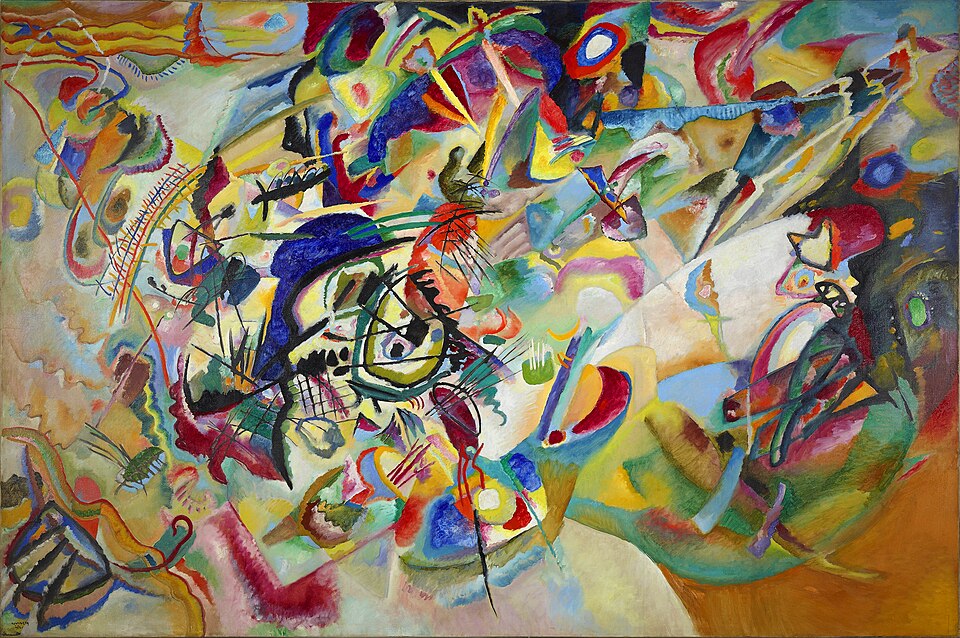
So he took this a step further then. He said, he said, now you don’t need a recognizable object in a painting to evoke emotion. But now he goes, it wasn’t just unnecessary, but it actually hindered the artist’s creation. The emotion was limited by the recognizable object. Anything realistic in a painting hindered the emotion. And what triggered all this was when he attended that exhibition in Moscow, when he saw that Claude Monet painting a haystacks.
That’s how he found out about Kandinsky from reading about Monet. And then learning that one of the pioneers of abstract art was inspired by Claude Monet. It’s pretty incredible. And that’s what triggered this theory. Just the pure arrangement of color and form from Claude Monet. This is so different at the time.
Now, Monet would go on to become one of the most famous painters in France while he was still alive. So it was accepted and it became popular with art collectors. But initially, impressionism was so different from the realistic paintings that everyone was doing. And the critics hammered Monet for it for quite a while on all the other impressionist painters. Until, of course, it became more and more popular. And then the critics were kind of silenced. Finally.
So if people were critical of impressionism back then, can you imagine what they said about Kandinsky? This was just outrageous to the art world at the time. Now, one big problem that Kandinsky had after he saw that Monet painting, he called it a “terrible abyss.” Actually, because if you took away the object, that haystack, in this case, what would you replace it with? So his first fear was that you would just have these geometric shapes and patterns, that it would just be another decoration, like a pattern on a carpet or a necktie, without any emotion from the human spirit.
So that was his big fear. So what to do? Kandinsky outlined three different ways to categorize his shapes or forms in a painting. First, there’s impressions. So it’s sort of like the haystack. It’s absolutely provoked emotion, and he found that out firsthand, but it was also something found in nature. So just slightly connected to a real object. That would be an impression. The second level of form then would be improvisations. So this would be rejecting all external observation, but also this is from a sudden urge of the creative process.
So then that leaves the third form, compositions. And this is where the artist would express an inner feeling over a long time period, which was structured and symphonic and had this intense calculated form. So that’s how he categorized these three different ways that you could use shapes in the paintings.
Artist Duty And The Return Of Beauty
Now, putting all this together, I was talking about the workout at the beginning of the episode. Reading this book was a workout. Trying to grasp Kandinsky’s dense writing was an absolute workout for my brain. But I now believe it was a good workout.
Why? Because I understand workouts.
I understand working out my body. It’s something that I do. I’m really into that.
Now think about abstract art in general. Non-representational art. What’s the first most basic, lowest level question that you might hear about it? They’d say, How do you know that’s art? It’s just a shape and color and lines. It’s not even art. It doesn’t even look like anything. It doesn’t have any meaning. That’s what you might hear. And Kandinsky already answered all those basic questions that we already covered. Those are easy.
The next level, though, the next step from an artist, somebody who wants to improve. They might say, I have an inner need. How can I produce art from the soul? I want to know how can I do this? Well, so Kandinsky, problem, solution.
His solution is by working out. Exercise your inner life with the same conditioning you would use on your physical body. Remember, he said, “the spirit, like the body, can be strengthened and developed with frequent exercise. Just as the body, if neglected, grows weaker and finally impotent, so the spirit perishes if untended.” This is not just a prescription for an artist with a paintbrush next to a canvas. Kandinsky applied this idea to all a society. He explained that idea with his spiritual triangle that we talked about.
Here’s what he said the purpose of the artist. It’s a power to be used and improved, not just for the artist, but the entire spiritual triangle, the entire culture. Listen to this. He says, painting is an art, and art is not vague production, transitory and isolated, but a power which must be directed to the improvement and refinement of the human soul, to in fact the raising of the spiritual triangle.
Now we’re all the way back to the beginning.
The work of the artist. It’s not a glamorous position here. Remember what I read at the start of the episode? The artist is not born to a life of pleasure. You can’t live idle. Hard work to perform, crosses to be borne. Do you remember all this? Free in art, but not in life. Kandinsky’s not done with the answers to the questions right here. At the end of the book, he has even more instructions.
The artist has a triple responsibility to the non artist, he says right here.
“One, he must repay the talent which he has. Two, his deeds, feelings, and thoughts, as those of every man, create a spiritual atmosphere which is either pure or poisonous. Three, these deeds and thoughts are materials for his creations, which themselves exercise influence on the spiritual atmosphere. The artist is not only a king, as Peladin says, because he has great power, but also because he has great duties.”
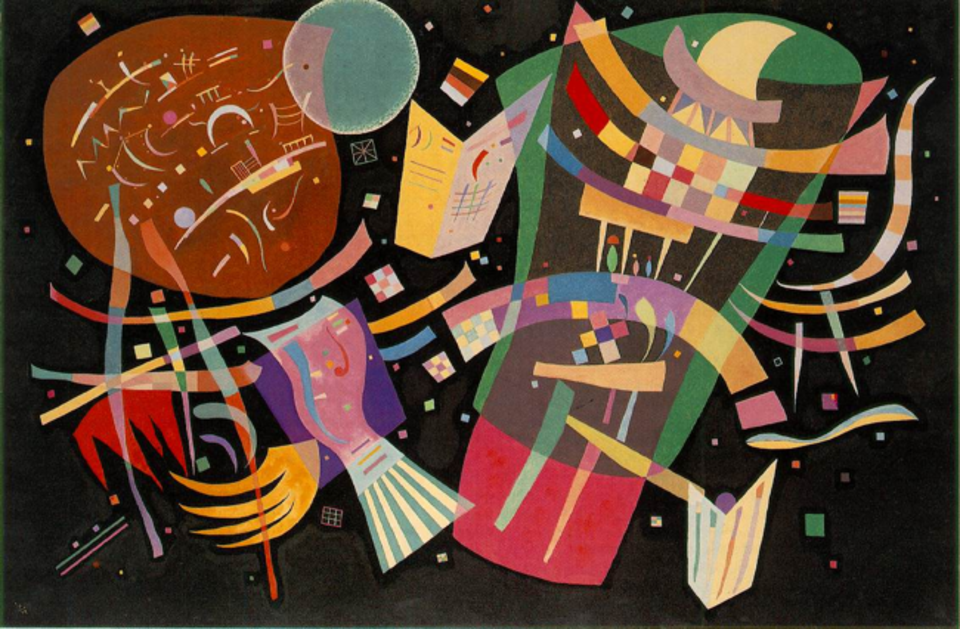
So don’t forget this part. The artist has all this work to do, but with the talent comes beauty, the payoff right here. Remember, he said about beauty. That is beautiful, which is produced by the inner need, which springs from the soul.
Now, Kindinsky, in the end of his book, he quotes a playwright right here, Matterlink. He credits this playwright as one of the first modern artists of the soul. So what did he say? Matterlink says,
There is nothing on earth so curious for beauty or so absorbent of it as a soul. For that reason, few mortals withstand the leadership of a soul which gives to them beauty.
Beauty. I couldn’t help but notice how many times Kandinsky talks about beauty in his book. Now, when the average person off the street is asked about abstract art, I’m pretty sure their first thought is in their mind wouldn’t be beauty. They may be thinking, this is just some random shapes and colors and lines. This is not beauty. They might even say, it’s not anything. I can’t even recognize it. It doesn’t look like anything familiar to me. They might say that’s just not even art. Okay, so now we know after going through the story that they definitely don’t understand Kandinsky at all.
But if I told you right now that I thought abstract art was about beauty, you still might think I was crazy. I read that definition of abstract earlier just because the word is tossed around so much for so many different things. Well, what about the word beauty? Just so we’re clear, the definition of beauty, according to Webster’s dictionary right here, is “a quality that gives pleasure to the senses or the mind, often seen in loveliness, good looks, or great ideas.”
It’s all right here.
Kandinsky has a problem and a solution. He wants beauty to come back.
Why does he want that?
Just like the playwright he quoted, I just read it, “there is nothing on earth so curious for beauty or so absorbent of it as a soul. For that reason, few mortal souls withstand the leadership of a soul which gives to them beauty.”
So this is not not just for one artist here, but for everyone. Anyone who’s up for the challenge, anyone who wants to inspire others to move up that triangle to get to the apex. Kandinsky says you need beauty, by any means.
“And this property of the soul is the oil, which facilitates the slow, scarcely visible but irresistible movement of the triangle, onwards and upwards.”