
Richard Mille
Richard Mille
Episode #44
07.01.2026
“In fact, it’s true. You know, I will always love everything linked to extreme mechanics. Extreme devices. It’s my religion. I cannot live without that. In fact, I didn’t create this brand for ego reasons. My only topic was to say I want to do what I like. And it works fantastically well. And I still carry on doing what I like only.”
And that’s a crazy quote right there.
That was from an old interview I found on Richard Mille. They asked him, would you agree you’ve changed the entire horological landscape as we know it? Since you created your brand? And he says, in fact, it’s true. He launched the brand back in 2001 and almost instantly changed the luxury watch market. There’s this famous story when he introduced his very first model, the RM zero zero one, back at Bazelworld in 2001.
He was getting questions about the durability of his watch. Richard Mille, he threw his watch down onto the hard floor in front of a room full of journalists. And of course, the watch survived just fine. Proving his concept, and silencing the critics. That’s how Mille rolls. He’s rejecting the status quo. He’s doing what he likes only.
He said something, and once I heard him say this, I was all in on this guy. Almost like he didn’t need to say anything else, after I heard this line right here. He’s a successful executive in the watch industry at age 50, but he couldn’t settle for the life of an employee anymore. He couldn’t take it. He had to create. Listen to this, he says.
“For years I felt frustrated. I was a manager dealing with business. For years I couldn’t express this need to create. So since this brand was created, I’ve been letting loose. I’ve unleashed my creative side. And as a result, this is what it creates.”
That’s awesome, right there. That pumped me up when I heard him say that from an interview back in like 2012. But what does it create? What he unleashed was a racing machine on the wrist. That’s the slogan of his watch company. Richard Mille, creates some of the most amazing, highly technical, groundbreaking, heartstopping watches anyone’s ever imagined.
So back in the late 1990s, Richard Mille, an executive for a luxury watch brand. After working his way up in the watch industry for 25 years, he’s right in the heart of the Switzerland, France border. He’s right at ground zero for the watch industry. And he’s working as a general manager. He’s 50 years old and he can’t take it anymore. He’s got to create. His idea is to push watch making to the limit and beyond anything that exists.
Well, what does he want? He wants to build the watch of his dreams. So that means number one, the cost is no factor. So take that off the board. He’s gonna go create the watch of his dreams without a budget. The cost is the cost. So now we know that. Okay, so that pretty much leaves all options out on the table. Well, this is important. Here’s what he said. This is what Richard Mille was thinking at the time. He said,
“For a long time I wished to launch my own brand. I wanted to create a new business model far removed from traditional marketing strategies. Something totally original. My goal was to create a new, ultra high-end luxury segment within the high-end watch business. And I was very eager to know what could come of it.”
There it is, to create a new business model far removed from traditional marketing strategies. Something totally original.
Another key, what he just said right there. My goal was to create a new, ultra-high-end luxury segment within the high-end watch business. Ultra high-end. Without thinking about the cost now, using his decades of experience in the business, he’s gonna combine his love of auto racing with extreme design, extreme mechanics, and engineering, what he calls extreme technique.
That’s his religion, like he said in that opening quote. And now he has the motto for his brand. A racing machine on the wrist. So I listened to every interview I could find from Richard Mille. Some are in French, so I’d have to read the English transcript from the video. There’s a few great interviews from like 10 or 15 years ago. And he gets into this idea, his need to create. But also don’t forget, like I read at the opening quote, he didn’t want to build this giant brand for ego reasons.
That’s not why he started it. He said, “My only topic was to say I want to do what I like.”
So you can start to see this coming together now. His passions for extreme technique and race cars and mechanics. He talked about his love of aviation and boats, so extreme mechanical devices. Now he combines his passions with the idea to create the watch of his dreams without any concern for the budget, any cost, along with an extreme sensitivity to ergonomics and design.
Now we’re gonna start to see this wild combination of ideas that never existed before. This is what he wants. Okay, so what would that look like? Well, here’s what he said: a reach or meal watch is the expression of our love for all things technical and for automobiles and aeronautics in particular.
So you’re gonna hear the word extreme come up a lot. Extreme watchmaking techniques, extreme materials from car racing and aerospace. That’s what he’s gonna use.
So he’s moving away from the precious metals, where he talks about this a lot. He says, he says how the other luxury brands started to rely on heavy metals or precious metals for the value of their watch. So the heavier the watch was, the more gold or the more silver that was in it. So that must make it more valuable and more expensive, the heavier it was. Well he’s going in the opposite direction by using super lightweight material. It just wasn’t something that was done in the luxury watch market till he did it.
He said,
“I have no time for the conventional assessment that links quality with the weight of a watch. On the contrary, our constant pursuit of lightness is one of our priorities, because it is synonymous with comfortable and enjoyable wear. I constantly use very light materials, even if they are not generally held to be precious in themselves. I like working with materials used in other fields, such as aeronautics or space research.”
So we have another creator here with the weight mania. I was thinking about Horacio Pagani when I read that. Horacio once said he had a weight mania. Everything had to be lightweight in his cars. There’s another guy with the weight mania. I just did my episode on Colin Chapman. He had the weight mania as well. He was designing Formula One cars back in the 1970s, and everything had to be light.
So Richard Mille, weight mania. He wasn’t into heavy watches made of solid gold. He’s using carbon nanofiber. And I’m sure Horacio Pagani would be down with that idea. I love all these different creator stories sharing the same principles like this. But not just a weight mania. Richard Mille is gonna go against the crowd, and what he saw in the luxury watch industry being right there on the French – Switzerland border, he’s working in the industry for so long he definitely knew what was status quo.
Even for a super expensive watch, and he didn’t want anything to do with fitting into the existing mold. He said, I wanted to design utterly innovative products that would break the prevailing classicism and adhere to a single principle. Nothing is too good for the result. This is what I’m talking about. To the extreme. Nothing is too good. He’s not messing around when he says that either. You’ll see a few of these extreme techniques in a minute.
But he’s got all these ideas back when he’s starting out, totally unique. Race cars, aviation, extreme materials, and no budget. He’s not sure how much this watch is gonna cost to make. All right, so at this point, he can make one watch. It would seem like there’s a market of one for this watch. It’s him. One customer. He’s gonna make this crazy, insane, extreme watch for himself, the one that he always wanted that didn’t exist.
And maybe that’s it. The guts on this guy to think he’s gonna create a brand from this one watch. What the hell was he thinking? Well, back then he talks about what he was thinking. It’s incredible. He says it right here. He didn’t think there’d be a market for this watch. He was just really hoping that a few collectors would want one at some point. Listen to this.
“So when I started, I had this topic. I mean, this concept, this philosophy in mind. I didn’t know if there would be a public. I imagined that there could be a public. So as I was very and I am still very down to earth. At that time, I was hoping that this brand would be welcomed by a few tens of collectors in the world. And it happened that there were quickly hundreds, thousands. And now I don’t know the limit because what is funny, I am in a segment where I am the only one. Because today the price point, let’s say in US dollars or euro or whatever, tax-free, is above 180,000. Yes, so in this segment, I am the only one. I have no competition. So what is funny then is that I don’t know the limit of this segment.”
That’s Richard Mille right there. And that’s exactly how it happened, right there. Hoping that there were a few collectors in the world, he could maybe catch their eye with this concept. Turns out thousands, tens of thousands want his watch.
And I love this part. says, and now I don’t know the limit because I’m the only one. The price point is so high. The watch he wanted to build was so unique. He created his own segment, and there’s no way to know the limit of the segment. In this interview that I watched, when he said that, he was just like amazed. The look on his face in the video, like actually surprised to see how all this happened. How did it happen? He was just like, I don’t know the limit because I am the only one.
From doing only what he likes. That’s the theme. My favorite idea is right there. I think about that phrase constantly now in my head the last week or so. My only topic was to say I want to do what I like. And it works fantastically well. And I still carry on doing what I like only. I’ve been saying that line to myself now for a week. That’s how he created his own segment. The cool thing about the story, it’s really deep. It’s dense. There’s a lot going on here.
The story has a depth to it that I just love. So many layers. You can zoom into the details of each watch, and it’s just mind-blowing to the extreme lengths. I’m not really even a big watch guy. I have an old watch. It’s my grandfather’s watch that he wore back in the day when he flew B-47 bombers. And it’s just a simple watch. And of course, it’s priceless to me, but with this brand now, I’ve only scratched the surface of all the details over the last week.
And I’m into it now. I could see, like a summer in South France just learning about Richard Mille watches. I would love to do that someday. An entire summer immersion on Richard Mille on campus. And that’s what it would take really just to get a handle on what’s happening here. Anyway, Richard Mille creates this extreme watch brand. He built his dream watch. Remember, cost is no factor.
All these unique things he’s doing against the grain to set himself apart. Here’s another one. He’s going into this thing hoping that there’s tens of collectors out there who might be interested. He finds out there’s thousands who want to buy his watch. And now he doesn’t know the limit because he’s the only one, like he said, but what else does he do? He limits the supply. Ultra low volume, especially back in the beginning. So he produces very few watches compared to the demand.
And then compared to the other luxury watchmakers. And just to give you an idea, so today, Rolex produces about a million watches every year. AP is about 50,000 watches every year. Reach our meal, he’s grown to about 5,000 units now per year. But in the beginning, the first few years, meal production numbers were only a few hundred a year. And that’s risen steadily, but very slowly compared to the larger brands.
And this is an important balance, but the idea is to keep production low, not just to be seen as exclusive. Because listen to Richard Mille right here. He says,
“I think I don’t want to give lessons to anybody because I’m always careful and I don’t judge anything. But to my opinion, many brands have been drastically going into volume too much. I created this brand to escape from the volume business. So volume is not my cup of tea.”
And so he was already in the volume business his entire career as an employee. Remember, back for 25 years before he started his brand. He already knew the direction needed to be low volume. He says it right here. He says, Of course we have growth, and this growth is consistent, but I love to contain the growth. I think with the brand awareness today, I could easily come out with a commercial movement. I will never do that, never, because then I will have to stop everything that I love.
So now remember, this is all part of the same big idea right here to do what he likes. If he’s thinking about ramping up production like the big luxury brands, that takes him away from what he likes, which is extreme technique. You can’t do extreme technique in high volume. Everything we’ve been talking about. Now I touched on this. Cost is no factor. But this is another one of the keys to the brand right here. They don’t start with the budget amount for a certain model.
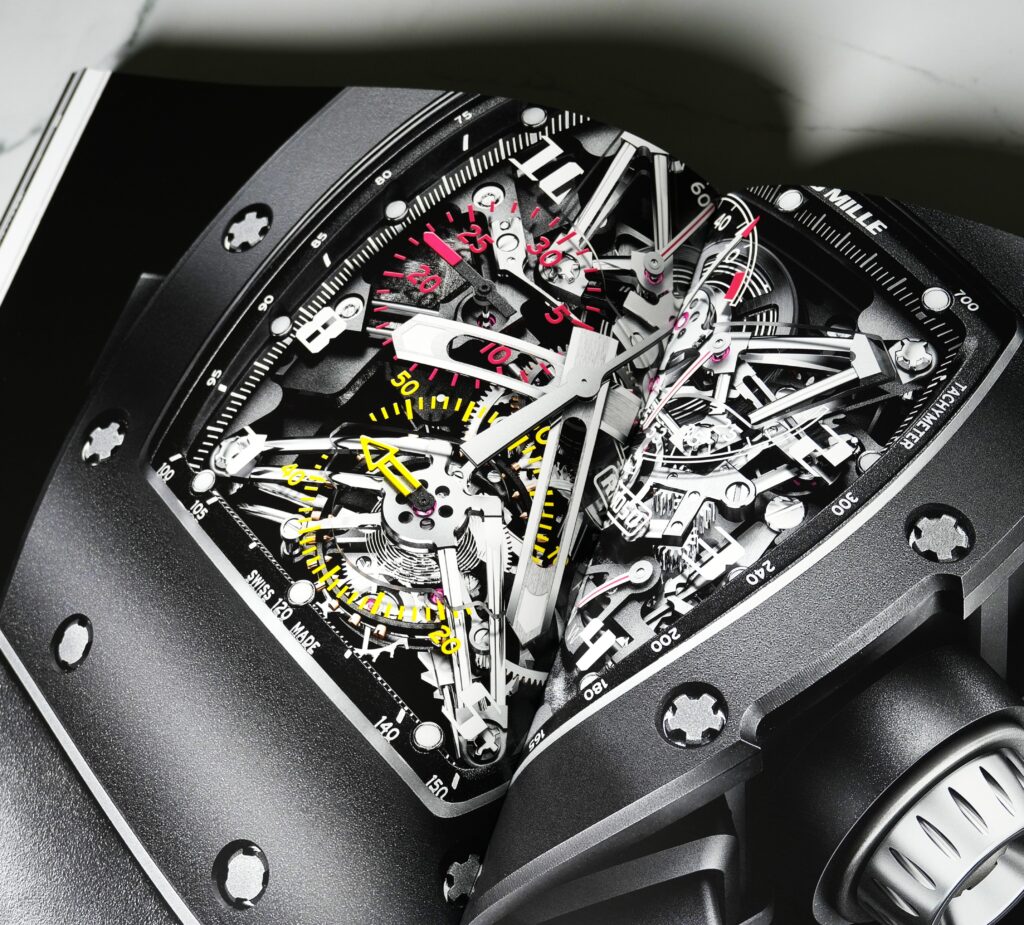
That’s usually where anyone would start, right? Okay, so how much can we spend? What’s the budget? That’s the first question for almost anything you’re gonna create. Not Richard Mille. So this was a crazy thing for me to understand. It’s hard to get my mind to adjust to this thinking. Where first it’s – what’s the concept? Then you start to develop it. That’s it. They don’t stop if it seems to be too expensive to develop. And what I found out, the tougher or more complex or harder or longer development time. That’s almost a sign to reach our meal to keep going. Like he’s almost looking for that crazy impossible challenge with every single watch they develop. It’s crazy.
I thought about Claude Monet right here. As I’m reading about Meal, I just did my Claude Monet episode and he said it. Monet said, I’m pursuing the impossible. Monet was just like Meal, looking for the most difficult thing to do with a paintbrush. Monet said, the motif is an insignificant factor. I’m trying to paint what’s between me and the motif. If you can just let that sink in, what I just said, just let that sink in for a second. He’s trying to paint that atmosphere between him and a subject. Back 150 years ago, standing out in a hayfield, that’s Monet.
And I kept thinking about my Claude Monet episode as I’m reading about Richard Mille because as I’m learning about each model watch they develop, it’s just like, why would you try to do something so hard? It sounds impossible. We’ll get into it, but and I’m gonna give you a few examples, but like, why? And it’s the search for the most difficult thing right here. Just like Claude Monet, out there actively looking for the toughest challenge in painting. Monet created his water lilies series, that giant grand decoration, where they had to build an entire building in Paris just to display these paintings. And why did he choose to paint thousands of square feet of water lilies? Because it was the hardest damn thing he could think to do. That’s why he did it.
Monet’s not just painting the colorful flowers, but the atmosphere between him and the water lilies. yeah, and also everything undulating beneath the surface of the water. Are you getting this now? That’s why he’s one of the most famous painters in history. Not because his paintings are impressionistic or whatever, it’s because Monet was pursuing the impossible until his last breath at age 86. An absolute Parisian badass is what I call him.
Anyways, I love Claude Monet if you didn’t know already. That’s what’s so much fun about making these episodes, though. Getting into the smallest details is everything. Same thing happened to me with the story on Richard Mille. Each model he creates. He’s up to 180 different models over the last 25 years, but each model you could spend hours learning about each one. And all the impossible challenges that they were up against to create each watch and then how they pulled it off. So how do I know all this? I’m not making it all up. You can go to the Richard Mille website. They have an amazing website about their collection. However, I like books.
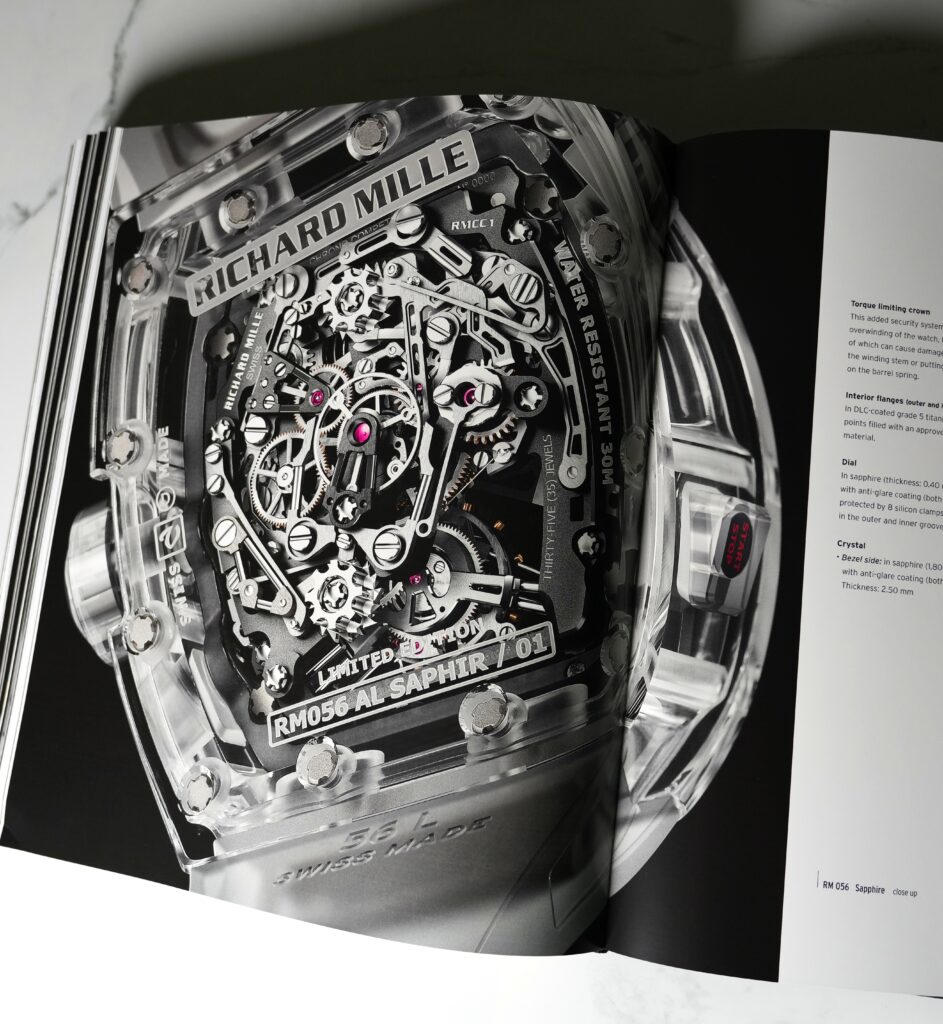
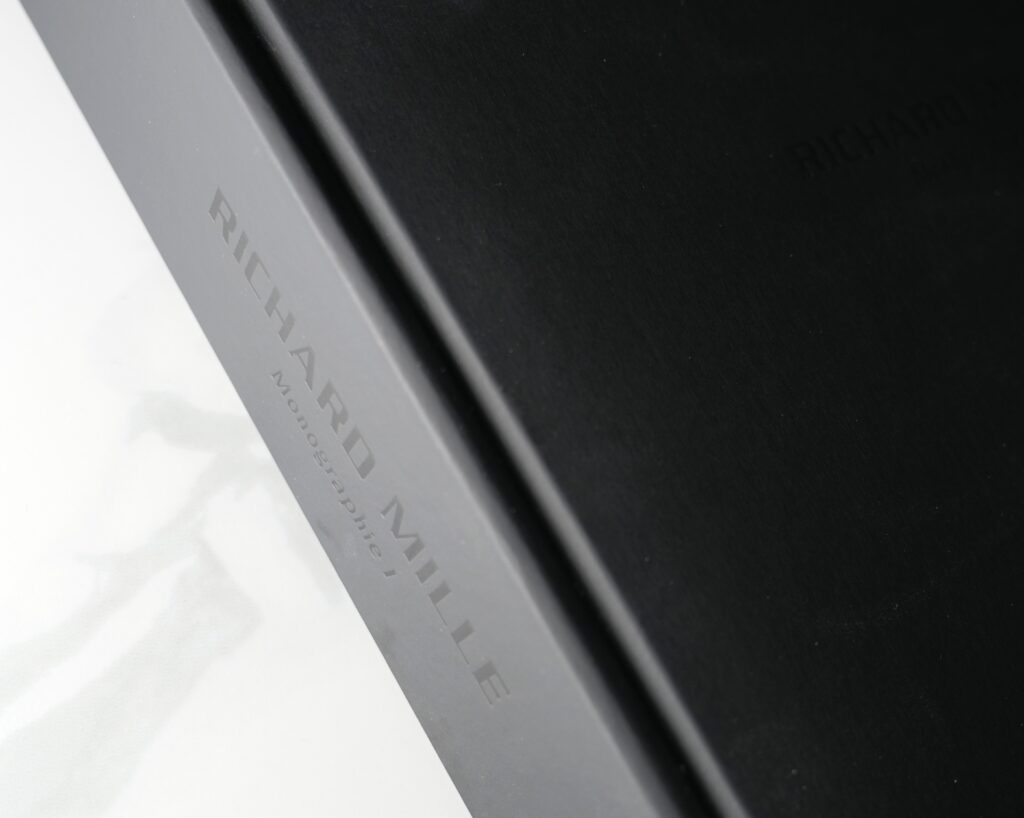
I want to hold the book in my hand. That’s just me. So I bought a meal book. It’s giant and it’s straight from Switzerland from the publishing company owned by Richard Mille. This is volume one and it’s titled Monograph One. It’s the first 59 models in this giant book and with amazing photos of every one of the first 59 models of Richard Mille watches. We’ll go back to the book in a second, but I need you to understand this concept of price.
People hear the price tag for one of these watches, and if they don’t understand what’s going on here at all, they’ll say, I mean, that’s just too much. That’s crazy. It’s a scam. Or it’s kind it’s gotta be some kind of gimmick. Nobody’s paying that much for a watch. Okay, so first of all, they do pay that much, trust me. But it’s not your fault for thinking it it’s some sort of gimmick. You just don’t understand what’s happening here yet. And I can relate, I was kinda like that before. But now I’m converted.
The cost, the idea that cost has no limit, is because they really don’t know what each model will cost until they’re done with it. Here’s Richard Mille on this idea right here. He says,
“I have always been very clear on the price point. When you take huge development, sometimes that can take seven years, six years, four years, divided by a limited number of pieces. The cost is huge. No doubt about that. So the price point is not a marketing philosophy. It is just the result of my philosophy, my love for technique, extreme technique. I still have today between 35 and 40% of spare parts that go to the garbage, that are wasted. So it’s not because I love that, but I have no choice. Because sometimes you have some caliber, some movements that need to be assembled six to eight weeks. And during that time, everything, anything can happen.”
All right, so the cost is figured at the end. Whatever it took to go through this extreme technique, four, six, or seven years, whatever they did for all that time, that’s incredibly expensive. Add that all up and divide it by the limited number of watches made, and that’s the price. It’s not a marketing philosophy. Like he said, it’s my philosophy. He says it’s simple math. Total cost divided by number of watches. That’s the price at the end. If it’s four hundred grand or five million, okay. If you don’t want one, it’s okay.
He found out that there’s already thousands of people who do. And they’ll wait in line for years for that watch. I love it. Another important point in there on that development cost. It’s not just the development for six or seven years. In some cases, that’s a huge cost just to engineer and design the concept for each one of these different models.
But once you start to actually assemble it and start making pieces, every piece is totally new and custom to the concept. So they end up going through a huge amount of waste crafting all these parts. He says 35 to 40% of the parts go into the garbage. And he says, not because I love that, but because they don’t meet the standards. Now if you’re thinking like how can you have that much waste in pieces for a watch? It can’t be that difficult, right?
Just make the mold, make these parts. And we’re gonna look at this, but like I was saying earlier, the depth of this brand. Each model they create is so different and themed in such a unique way. There’s really not a standard part or piece. It’s just all custom. The waist can be as high as eighty or ninety percent for some of these watches. There’s one concept they did, they’re using these rare gems for the actual gears inside the watch.
They’re cutting and dicing rare gems and stones into tiny gear parts. And that turned out to be incredibly difficult. And there was like 80 or 90% failure rate for these tiny gem pieces for that model that they found out once they started putting it together. Here’s where he explains it really well right here. They say, there are virtually no standard pieces in a Richard Mille watch. The concept defines the components. The components do not define the watch.
That’s different right there, but that turns out to be their secret weapon. They start from scratch on every concept. And that’s made all the difference. So back to my giant book that I bought straight from Switzerland. After a couple months at sea, I finally got it. You might be thinking, okay, how crazy could it get? It’s just a watch on your wrist. Well, I gave you an example of crazy, but most watchmakers, when they use those rare stones or gems to dress up their watch. They’re just pasting them to the front face of the watch.
Richard Mille creates the gears inside the watch, out of rare gems. Carve the pieces that make the watch tick from the gems. Nobody’s doing that. He’s playing his own game. He’s doing what he likes only.
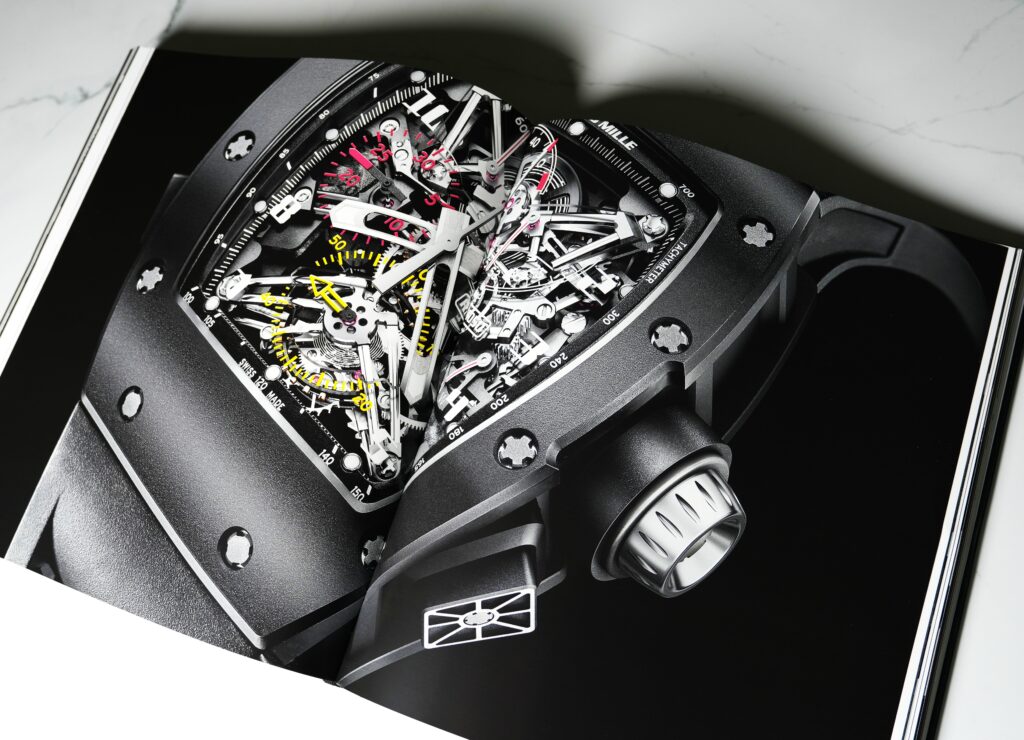
Here’s what happened to me as I flipped through this book, 500 pages of this massive coffee table sized book weighing at least 10 pounds. As I’m working my way through the ultra zoomed in high def photos of all these different watches, they’re so unique and detailed. Like my eyes weren’t picking up the details at first. And about halfway through the book, my eyes sort of started to focus and I could start to see more and more detail as I flipped the pages. There’s just so much going on inside these watches.
It took a while to train my eyes to understand the detail. This makes no sense if you’ve never seen a richer meal watch, but you can actually see inside the watch. So you can see all the parts, the working watch. It’s like looking directly inside a race car engine or a jet engine, if you can imagine that. You’re seeing all these parts. And every piece is totally unique from one model to the next. It takes a while for your eyes to just readjust.
You’re looking at hundreds of tiny watch parts trying to figure out what the theme is and how it all works. That’s one of the coolest things about this brand, I think. It’s so dense. There’s so much to discover. It’s probably really hard to convey the depth of their brand to just anyone. Hence they make this 10 pound, 500 page book that I have right here, which is only one volume, by the way. There’s three or four volumes. Such a cool adventure to try to absorb the extreme nature of these watches.
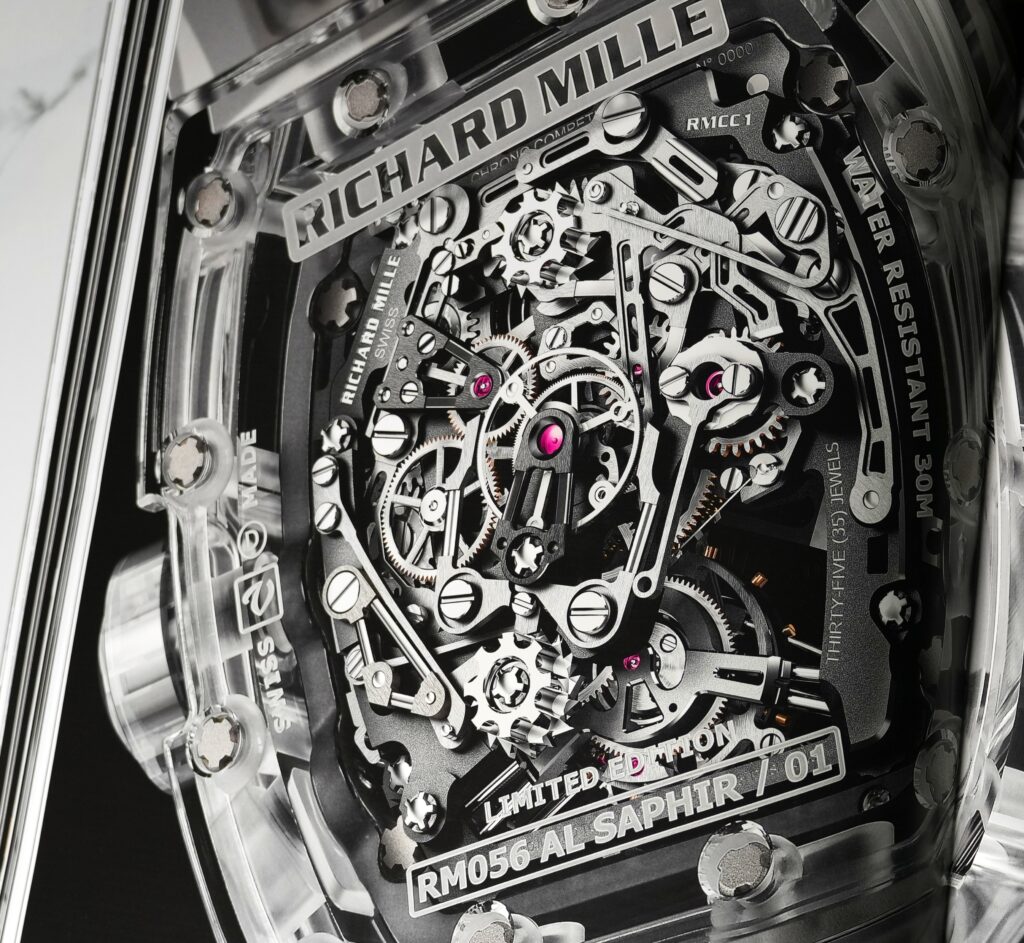
Here’s one, so check this out. RM 56. The split seconds competition chronograph. In a sapphire case. This watch was milled from solid blocks of sapphire. This is not easy. To make one case out of sapphire, it’s like a thousand hours of machining and polishing. So a couple things. Sapphire is one of the hardest materials anywhere. It’s almost as hard as diamonds. So it’s super scratch resistant. One of the problems though, it’s brittle.
So, milling a watch case is insanely difficult. It took three months to do one case. So, this watch is completely transparent. You can see right through the case. Part of this inspiration behind this model was Reacher Mill as a kid. He loved those exploded views of cars and engines and aircraft. So he did that with this watch. Now, most of the watches have the front and the back that are totally clear, so you can see through.
But a solid case around the sides. Well, this one, it’s totally transparent on all sides. And in this book are these amazing photos of this sapphire watch. It’s insane. Listen to this. If our watch cases were already reputed to be the most complex to make in the industry, this one became a feat that was nothing short of phenomenal. It was what I had been dreaming of producing an object that is at once precious and hypertechnical.

To be both seen and used. Again, it’s this crazy combination. Reach our meal right there. He said, at the same time, they’re using the precious gemstone sapphire case along with an ultra-hyper technical watch. Let me just say this: this one example right here, the RM56, this made me a super fan of this brand. I went way down the rabbit hole on this 56 sapphire watch. This is what I was talking about: depth. I spent hours reading about this watch, the split second competition chronograph. And this is a type of watch. If you’re not a big watch person, other manufacturers make this type of watch too, the split second. And it’s known as one of the most challenging watches to build. But what Meal did, he just said, both precious and hypertechnical.
So back like a hundred years ago, the split second competition watch, there were these delicate instruments. People had to be very careful with these watches because they were so fragile, all the fragile pieces inside. So what does Meal do? He designs it for Formula One cockpit environments by making it super lightweight. And then he uses grade five titanium base plates to reduce the split second hands from slipping. And then they suspended the movements with injected carbon nanotubes.
So like he was saying hyper technical and a great example right here, the crazy combination. It’s totally unique. The latest material, but still honoring the tradition of the split second watch. And then they polish and craft this sapphire case for hundreds of hours and they add an anti-glare coating so can see through it crystal clear. He talks about this in one of the interviews, where they use computers, of course, to model all these pieces, but it doesn’t always work out. IRL. And so they have to take out the hand tools. Listen to this.
For this development, because you know you have ideas, for example, of function. You test the function separately. You put everything together. It’s a disaster. So this is why I always say, have one foot in the nineteenth century, one foot in the twenty-first century. Because sometimes, like every brand, we do developments also on computer, but it doesn’t work in real life.
So you have to go back to the old tools to correct, etc. And this is always brings me a lot of emotion. So I love this paradox. So that’s Richard Mille. He says, one foot in the 19th century, one foot in the 21st century. That’s a great phrase right there. And Miel loves the paradox. He just said it’s a disaster. The pieces don’t work like the computer said. We have to take out the hand tools now. He loves it. Extreme technique.
Anyway, this watch is insane. Only five were created. Each one of the limited edition RM56 watches is valued at roughly $6 million today. And remember this when they made the watch back in 2012, the watch sold for $1.6 million. The problem here is not are there any customers out there for a $1.6 million watch? The problem is you can’t buy this watch.
It’s sold out. Before it was even released, all five were sold almost instantly. And then it tripled in value since then. The extreme methods go on and on forever with this brand. My head is spinning just thinking about what it would take to learn every detail of these 180 different male models right now. What this guy has created is almost a library of impossible extreme engineering methods.
One more quick example that I loved, RM006. Way back in 2005, they created this super lightweight and extremely strong watch. And after months of study, they found a material to use for the base plate. They decided carbon nanofiber would be perfect for this watch. Only one problem: they could only buy carbon nanofiber through a military materials supplier to the US Air Force.
Because the material was used for the F-117 stealth fighter jet. That’s how a jet becomes stealth. The carbon nanofiber. The material on the jet absorbs radar energy and converts it to heat. So it dissipates the radar energy rather than bouncing it back off the jet to the radar station for detection. Anyway, see, this is where you end up when you research these watches.

Suddenly I’m learning about a stealth fighter jet and how it avoids radar detection. It’s like infinite tangents of learning. But anyway, like I was saying, Reacher Mule wanted this material for his base plate in the RM006. So we had to sign this strict agreement to use the material only for the watch, since it’s a sensitive military material. Well, he signed it, he got the material, but the problem’s not solved yet.
Once he got his hands on the carbon nanofiber, they found out to attach anything to it. You couldn’t use screws in the typical way. They had to invent an entirely new system to attach pieces to the base plate using threaded sleeves, collars, and washers. That’s one single decision to use one type of material for one part on one model watch right there. There’s five hundred to six hundred.
parts and pieces in each watch. Or more. They have another crazy aviation watch that has over a thousand pieces. Every piece is custom designed for that concept. Don’t forget, there’s no budget set at the beginning. Mille says his technical aesthetic credo is untrammeled creativity. This is from the book right here, he says,
“We allow ourselves as much freedom as we need to produce flawless results. We start from scratch every time. This is our greatest strength. Our new products are always genuinely fresh and different. But this involves questioning ourselves every single day. And it is thanks to our personal investment, to the passionate flames that burn in each of us, that our watches go on to become embodiments of technology, beautiful machines that are restrained yet packed with innovation. Our watchmaking expertise, our desire to innovate, and our creative approach to fine mechanics express themselves in horological components that are always wildly complex. We managed to tame them using the best technological processes in existence.”
That’s a mouthful right there. But this book is loaded with descriptions just like that. They did another watch, it’s the RM018. Like I mentioned earlier, the wheels inside the movement were made with precious stones. Jasper, black onyx, tiger eye, and diamonds were used to make the wheels and gears inside the watch movement. You gotta see pictures of this watch. It’s crazy. Three years of development and testing to figure that out. There’s over 180 different models now, like I said. The extreme detail in each one of these is totally mind blowing.
During one of these old interviews, they asked Richard Mille, why do people fall in love with your watches? What do you think it is? And he says, Well, it’s several reasons. One is probably the indifference to the other brands. So he’s just taking a swipe at his competition right there. He says the other brands are just not doing enough. They’re complacent. And he’s just lapping the competition. Another reason, he says, probably ergonomics and the look of the watch.
Obviously. But then he goes, another reason people love his watches. Because of the risk I’ve taken. That caught my attention right there. That’s so interesting because he’s right. A lot of his customers can relate with that risk and admire the big risk that he took to start his brand. The next thing out of his mouth, now listen to this, he says, it’s his best reward to see his customers’ reaction to his watches. He says,
“You must be really, as I say, you must be really sophisticated to understand that. But it’s a very clinical object and it creates an emotion that is totally unbelievable.”
So you might not believe that, but I just experienced that this week, that same idea. And I don’t even have a watch. I’m just looking at a giant book. Just getting to know this brand better over the last week or so. I can totally understand how you could really get very hooked on these watches. They’re so unique.
I was reading my giant Richard Mille book from Switzerland like I was in a trance almost, just staring at each photo, trying to figure out what I’m seeing, looking at all these details, and each watch is just like a crazy puzzle. It’s so cool. Here’s yet another amazing description from the book, what this brand is all about. It says, Our single-mindedness, rigor, passion, pleasure, perfection, and rejection of all compromise.
Inspire us in every minute of the development stage and result in an accumulation of energy and emotion that can be felt by the owner as soon as they come in contact with the watch. So all their effort results in this accumulation of energy, like they just said, for the customer. So going to the extreme, I’m totally hooked on learning about going to the extreme. It’s probably one of my biggest themes in all my creator episodes that I’ve been doing.
That opening quote that I read, Richard Mille, he was saying, extreme mechanics, extreme devices. It’s my religion. I cannot live without that. One of my favorite phrases lately, it’s at the limit. Every year I love this event, the 24 Hours of Le Mans race. I love that event. It’s just the tradition and everything about Le Mans is just awesome. You’ll hear that phrase over and over in car racing, at the limit.
I didn’t think I’d ever find a watch brand that’s at the limit. But this is it right here. Way back I did an episode on the artist, Jasper Johns, and I was blown away by his creative mind. He was just so different. How he thought about art, he knew the power of uniqueness and originality, creating what he wanted only. But then he actually followed through with that. He stuck with it.
It’s so hard not to bend and cave into the pressures of the status quo along the way. This phrase from Richard Mille, I’ve been saying it to myself all week. It’s stuck in my head and I can’t get rid of the idea. I read it at the start of the episode. He said,
“In fact, it’s true. You know, I will always love everything linked to extreme mechanics, extreme devices. It’s my religion. I cannot live without that. In fact, I didn’t create this brand for ego reasons. My only topic was to say I want to do what I like. And it works fantastically well. And I still carry on doing what I like only.”
And then, like Mille said, his customers get this energy and emotion from the watch. He’s got some of the most diehard fans in the watch business. But it’s not just the watch. It’s also the creator of the watch. Remember, he also said they respect him for the risk that he’s taken.
To get started, to do something so unique and different. I read this earlier, he had to take that risk. He was 50 years old before he started this whole thing. So he could let loose. He unleashed.
Quote:
“For years I felt frustrated. I was a manager dealing with business. For years I couldn’t express this need to create. So, since this brand was created, I’ve been letting loose. I’ve unleashed my creative side.”