Claude Monet
Claude Monet
Episode #42
05.28.26
“For me, a landscape does not exist in its own right, since its appearance changes at every moment. But the surrounding atmosphere brings it to life, the air and the light which vary continually. For me, it is only the surrounding atmosphere that gives subjects their true value.”
-Claude Monet
So here’s what happened to me. I got hooked on Claude Monet a few years ago when I read something that completely blew my mind.
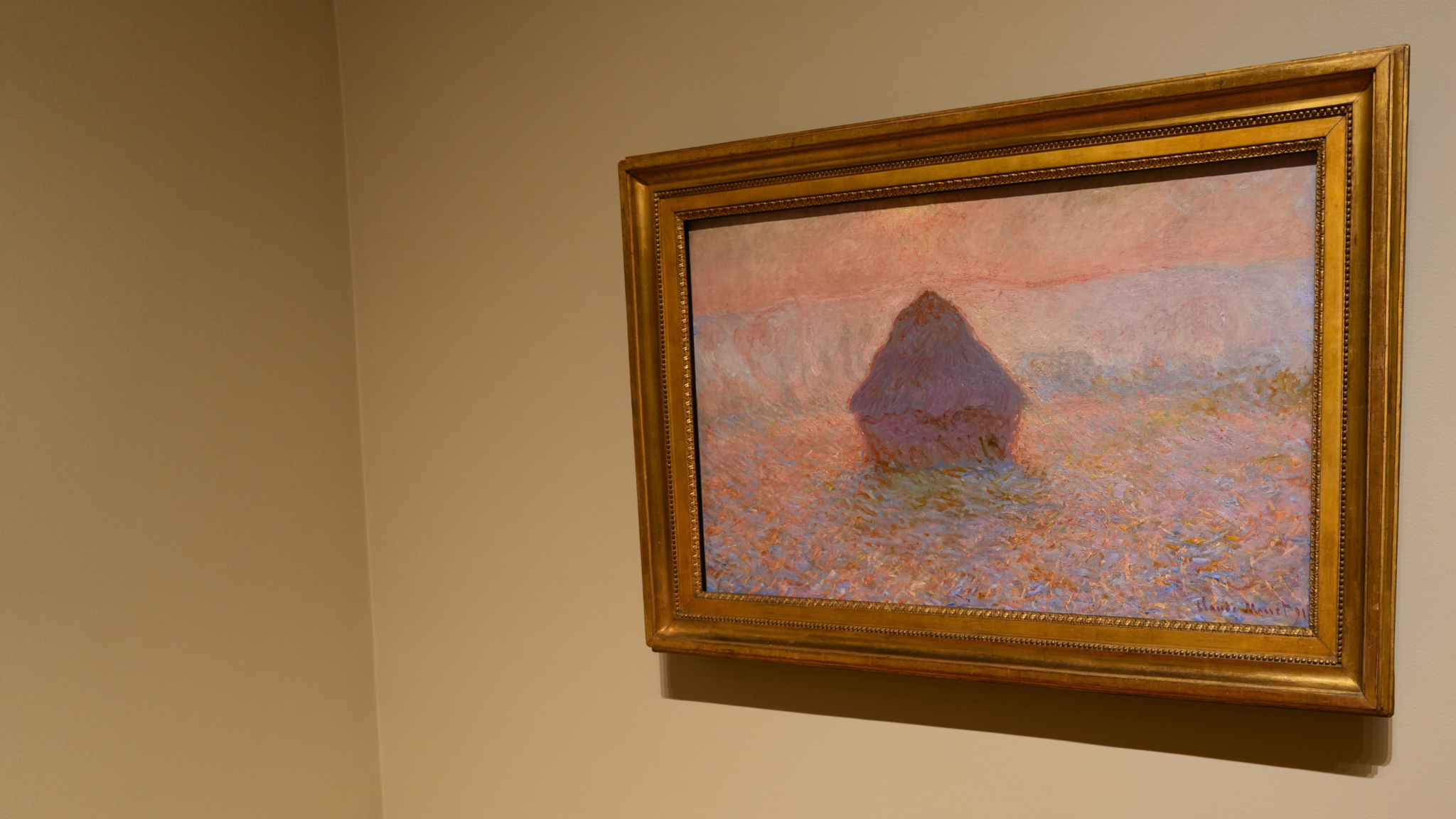
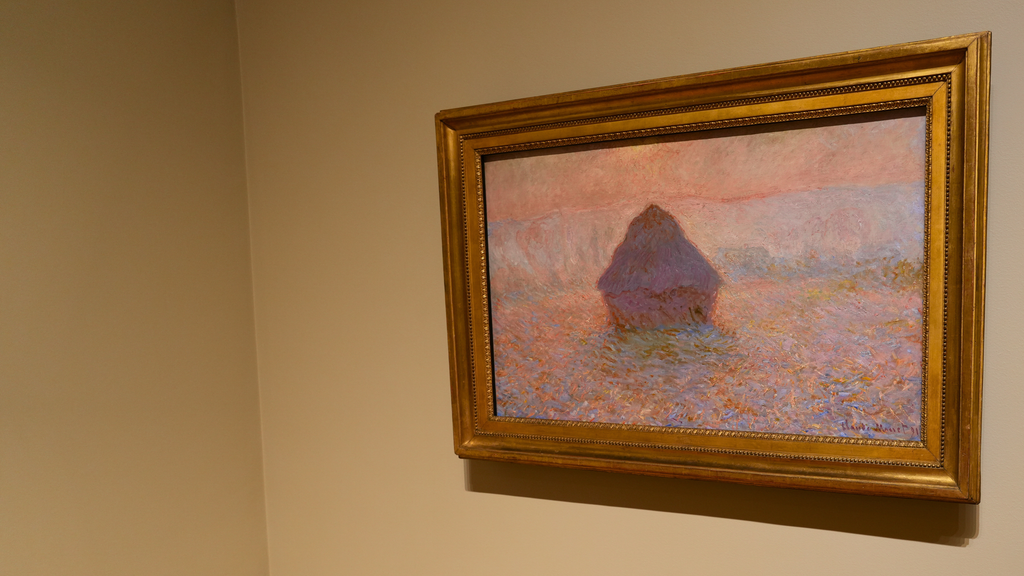
I was trying to figure out why his paintings of haystacks were so valuable. One of them sold for over a hundred million dollars a couple years ago.
So I started reading all about him, and as I’m reading along, I’m like, no way. You’ve gotta be kidding. This is not about a field with a stack of hay. This is so much more than that.
So I keep reading and reading and then I get to this. I read this, Monet said,
“To me, the motif itself is an insignificant factor. What I want to reproduce is what lies between the motif and me. I am pursuing the impossible.”
Claude Monet’s trying to paint what lies between him and the subject. This guy was trying to paint the air, the surrounding atmosphere. It has nothing to do with a stack of hay.
Claude Monet, Pursuing the Impossible
He was going for what’s between him and the motif. He called it the “l’envelope.” And the air itself, particles of dust, soot, light, and the perception of it.
When I read that I was just like, you gotta be kidding me. There’s no way I’m reading this. It just had never occurred to me that somebody would even be trying to do something like this. Paint the air. And Claude Munet’s out there in a field doing this 150 years ago.
He’s trying to paint the atmosphere around a bale of hay. And then he goes, “I’m pursuing the impossible.”
And there’s so much more to Monet than just that. He was captivated by changing light. But he was also totally obsessed with color. He said once, “Colors pursue me like a constant worry. They even worry me in my sleep.”
He was obsessed and driven. He was trying to paint what he couldn’t even see. He was waking up in the middle of the night worried about colors.
The Work of a Colossus
And then at the height of Monet’s fame, he’s seventy years old. He could have just relaxed a little bit and finally just enjoyed some of the success of his incredible life. Of course he didn’t. He decided to paint a grand decoration. The story of how he did it is crazier than the unbelievable paintings that he created.
They said it was the work of a colossus.
So I have a bunch of books about Monet. Once in a while I’ll just go on spending sprees and I’ll just start buying old Monet books because there’s hundreds of books written about this guy.
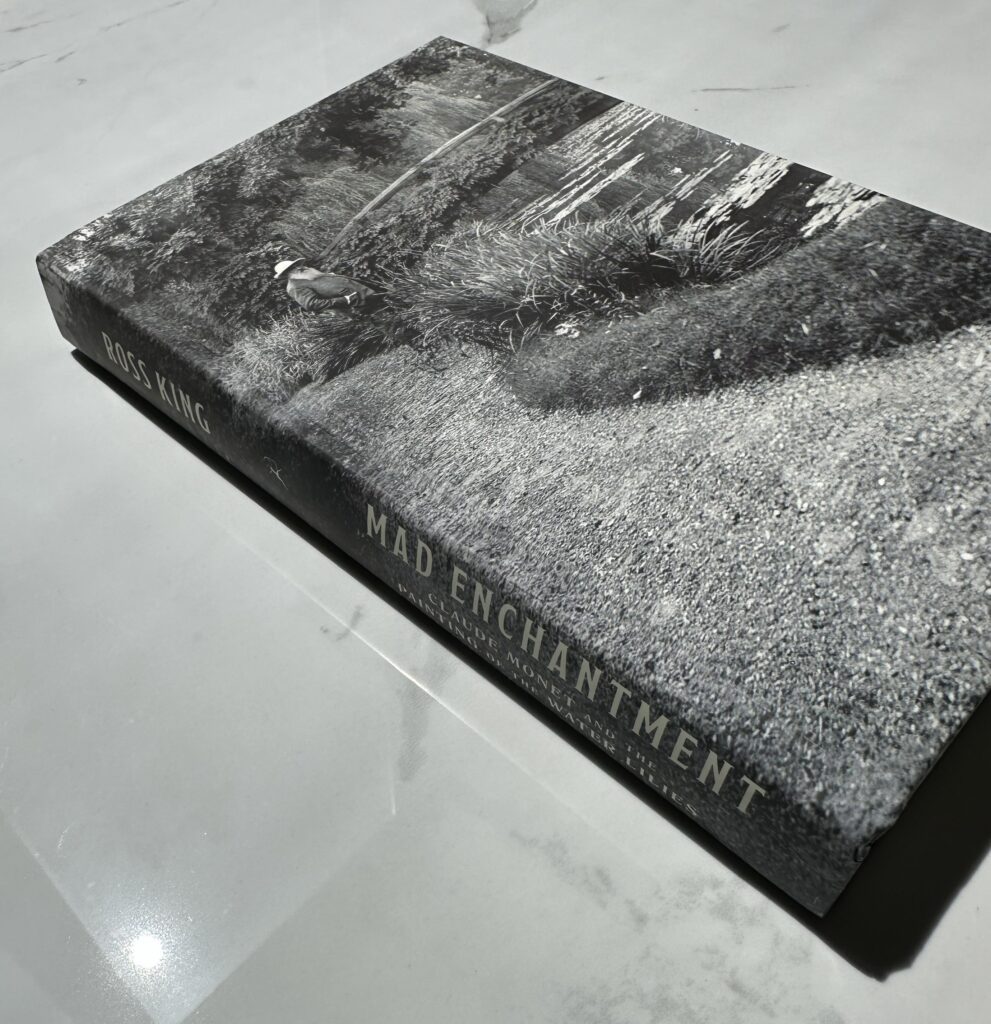
I finally got a chance to read this one right here. It’s called, ‘Mad Enchantment,’ by Ross King. I read the book in a day and a half, straight through. I’m halfway through it a second time right now.
If you’re wondering what the hell is a ‘Grand Decoration,’ well, we’re gonna find out right now. The book I have here, it says,
“Clearly, the gift to the nation had gone well beyond the two paintings selected by Clemensou in November 1918. What had yet to be determined was exactly which and how many canvases would constitute this donation. There was no shortage of candidates, and so it must have come as a surprise to those who had seen some 6,000 square feet of painted canvases in Monet’s studio to learn that the grand decoration was not yet finished, and that incredibly, even more canvases were being produced in a seemingly unstoppable tide of color. Monet wrote to Geoffrey in June, complaining of problems with his eyesight, but claiming that he was conserving his forces and working constantly on the grand decoration. To Thabel Session, he wrote that, “at this time I think of nothing but work. I am at an age where I can’t afford to lose a minute.” Like a shark that would drown if it stopped swimming, Monet seemed to believe that he would die if he stopped painting. By the summer of 1920, it was clear that he would be painting the grand decoration, “until the end.”
That’s Ross King from his book.
I was in Paris looking at these grand decoration paintings not that long ago. I went to see the series of water lilies. But I hadn’t read this book yet.
Claude Monet pretty much came out of nowhere as a young painter.
He started to drift away from what was popular, and his work started to look very different from the way most paintings were done at the time. And the critics trashed him for it. They would say “when children amuse themselves with paper crayons, they do a better job.”
The Struggles of Claude Monet
But he keeps at it. And it only takes a few decades, maybe 20 or 30 years of keeping at it, that he just overpowers the critics with color and light and sheer volume of work.
The critics are finally silenced and then they flip the script. As collectors started paying higher and higher prices for Monet’s work, the value of his painting skyrocket. Now the critics need to get on board, and most of them become big fans of the famous painter.
By the early 1900s, he’s loaded. Monet’s rich. He’s got a stable of collector cars. A big house in France with a huge garden where he can paint outside. He’s always working, always painting. And he’s totally obsessed.
Disaster Strikes
So that’s the first 70 years of the great painter’s life, right there, from trying to make rent, literally, a starving artist to one of the all-time greats.
But at age 70, disaster strikes. It’s a series of disasters. He called it “an endless succession of troubles and anxieties.” His second wife Alice passes away from leukemia in 1911. He says, “I am annihilated.” He’s crushed.
A year later he starts to notice his eyesight’s failing. It’s a cataract in his right eye. The man with the magical eyes for painting color and light and air. He now notices that he’s going blind. It gets worse. His beautiful property, his big, huge house and garden in Giverny is completely flooded by a storm.
More tragedy. His son passes away at age 46.
Monet was so depressed he couldn’t even pick up a paintbrush for a couple of years. They reported that the old man was done, finished, retired, finally knocked out by life, pummeled. Like he said, from an endless succession of troubles.
All that being said, though, Monet had a strong network of friends. He was one of the most famous people in the entire country. One of his friends was the other most famous guy in France. The Prime Minister, a guy named Georges Clemenceau.
The Tiger, Georges Clemenceau
Clemenceau was a big fan of Monet’s, so knowing his famous painter friend was struggling, he went to visit Monet and Giverny. From the letters that Monet later sent, we know that at this meeting, the two friends looked at a painting of water lilies that he’d done. And trying to cheer up his friend, Clemensou says, basically, yeah, those look great. Well little did he know at the time, but those few encouraging words, Monet later wrote about that visit from Clemenceau. He said, he was now, “in good shape and possessed by the desire to paint.” He’s back. The legend is back at it. Just like that.
So what’s up with this guy, Georges Clemenceau? He says three words and pulls Monet out of a three-year depression. Well, I’ll give you a little taste of what this guy was all about. Before he rose up to be the Prime Minister of France, as a teenager, his father was a critic of Napoleon III, and they came for him. His father was arrested by Napoleon III. The book says the rest of Clemensu’s life was spent exacting revenge on his father’s enemies.
Another thing he’d like to say, “I feel very sorry for those people who want to make friends with everyone.” He said, “life is combat.”
So you’re starting to see now how Clemenceau had plenty of enemies.
But they don’t just fight with insults back in these times. He fought twenty-two duels with swords and pistols. They wrote about him, there were only three things to fear about Clemenceau, “his tongue, his pen, and his sword.”
Later on he was shot three times in an assassination attempt. Luckily the bullets didn’t do major damage. He says, It’s nothing. I’m gonna be fine. No big deal.
They arrest the gunman and sentence him to death. Clemenceau says, wait a second. “I suggest he should be locked up for about eight years with intensive training in a shooting gallery.” This guy was a character. He’s insulting the guy that shot him three times for having bad aim. And by the way, his assassin wasn’t put to death. He spent five years in prison.
Anyway, so how in the world did these two guys end up to be close friends? Monet, who’s obsessed with painting, he could care less about politics and almost anything else other than his obsession with light and color. And Georges Clemenceau out in the street with swords and pistols dueling his rivals, duking it out in French politics. Not much in common here, you would think.
Like I was saying, Clemenceau loved Monet’s work, and there’s a series of paintings Monet did at the Rouen Cathedral in the early 1890s, and Clemenceau absolutely loved these paintings.
He wrote a review in the newspaper about how great these paintings were. He said, “I must talk about these paintings. They haunt me.” He wrote that Monet, “possessed a new way of looking, feeling, and expressing.”
Monet’s Biggest Fan
So now check this out. All the way back in 1895, Clemenceau wrote in this article he wanted France’s president to buy these Monet paintings of the Rouen Cathedral for a national monument. He said, “To show for the nation in order to mark a moment in the history of mankind. A revolution without gunshots.”
So while the president at the time he didn’t buy the paintings for the National Monument, but Clemenson never let go of this idea. So now twenty years later he’s at Monet’s house trying to boost his spirits up, and he makes that comment about the water lily painting that we just talked about. That sparks Monet back into action. And out of his depression.
That’s when he wrote that letter, right after Clemenceau left his house, and he said, “I’m in good shape and possessed by the desire to paint.”
So a big turning point right here, and I need you to understand this guy, Clemenceau. Pretty much a force in nature like no other in France. They called him ‘The Tiger.’ And without even realizing what he did, and I’ll just read this from the book, here’s what it says when Monet reported that he’s back and possessed by the desire to paint again. It says,
“These words must have come as a huge relief to Geoffrey, who, as one of Monet’s greatest cheerleaders, had been trying to convince him that, despite everything, his artistic powers remained undiminished. But neither Geoffrey nor Clemence who could, in their wildest dreams, have imagined the artistic odyssey that their exhortations had unleashed. You have launched a projectile toward infinity, Clemens would later write. He also described Monet with this new project as a man who was madly striving for the realization of the impossible.”
This is why I started off the episode talking about the first time that I came across this idea right here. The idea that Monet’s trying to paint the air between him and the subject.
That’s when I was just like, what? What is going on here?
When he says I’m pursuing the impossible, he was just upping the ante his entire life.
Rendering the Impossible
He was already a successful painter when he started his haystacks series, where he says, I’m gonna paint what’s between me and the haystacks, and it’s impossible. And it’s driving me mad.
Think about that word, driven or striving. Some people are striving to do great work, and that’s great, that’s nice. And that but this is not what we’re talking about here. Monet was striving for ideas that were impossible. And then he’d obsessively take on that task of the impossible. It’s very different.
Think about this for a second now. He’s painting outdoors. So he needs good weather. And that’s what people think about when they think about Monet. He’s just out there in a field struggling trying to paint on a canvas. No, that’s not it. Of course, the wind and the rain make it hard to paint outside. That’s not the hard part.
Monet is obsessed with color and light and how those things change by the minute. He said one time he wanted, “to render my impressions before the most fugitive effects.” Well, the only way to show how fugitive effects change on a canvas is to paint a series of canvases.
So he sets up multiple canvases in a row outside and he rotates from one to the next. He paints on each one for a few minutes, trying to capture the changing fugitive effects.
How is this even possible?
This is what the book says about it. “Monet hoped to capture their visual impact in these brief, distinctive, ever changing moments in time. He concentrated not only on the objects themselves, but also critically on the atmosphere that surrounded them. The erratically shifting phantoms of light and color that he called the envelope. Everything changes, even stone, he wrote to Alice, while working on his paintings of the facade of the ruined cathedral. But freezing the appearance of objects amid fleeting phantoms of light and air was no easy task. I am chasing a dream, he admitted in eighteen ninety five. I want the impossible.”
Monet’s Explosive Temper
Monet also had a famous temper that you’re probably aware of. He’d be out in the rain and wind trying to paint air.
And when that didn’t work, he’d go ballistic. He’d rage. He’d throw his bucket of paint into the river, kick through canvases with his boots. He would set fire to his paintings if they didn’t turn out just right. And Clemence used to tease him in back in the day, he’d say, “I imagine you in a Niagara of rainbows, picking a fight with the sun.”
Some of his closest friends would be constantly trying to just talk him down from his tree. They’d be like, relax. You can’t be mad at yourself and call yourself a failure because you’re outside and it starts to rain or the wind blows. One thing doesn’t have anything to do with the other. Just relax.
He was obsessed with painting, but then he’d also say, “This satanic painting tortures me.” He said to somebody else, “Many people think I paint easily, but it is not an easy thing to be an artist. I often suffer tortures when I paint. It is a great joy and a great suffering.”
And his closest friends they all knew how to guide him through all of this. It was just sort of a dance that they had to do with Monet.
The book says it right here. “As Clemency once explained to his secretary apropose of Monet’s dreadful fits of temper, one must suffer, one must not be satisfied. With a painter who slashes his canvases, who weeps, who explodes with rage in front of his painting. There is hope.”
That’s awesome right there. They let him throw a fit. All of his friends knew it was just part of the deal.
Okay, so what’s with the water lilies? You might be wondering why Monet would choose these flowers over almost any other subject he could have painted. Well, you should know by now, he chose to paint water lilies because it was the hardest damn thing he could think to do. The closest thing to impossible. That’s why he did it. Here’s what it says.
“But Monet, beside his lily pond, was in search of more intimate impressions as he registered not only the surface vegetation and reflections, but also the water’s half hidden depths. He had already tried his hand at capturing these subtle underwater effects. I am troubled by impossible things, he complained, as he painted beside the river Ept in 1890, such as water with vegetation undulating in its depths.”
Now you’re not gonna believe this. Just as Monet’s inspired to pick up his brushes again, and reinvigorated by that visit from Clemenceau, just as he’s overcoming these setbacks in his own life, the flood, his wife and son passing away. World War I breaks out in 1914. Germany declares war on France in August.
Just a few months later, German soldiers are 30 miles from Paris. Claude Monet’s home is about thirty miles from the front lines.
World War I
He’s not going anywhere. Some friends offer to move him in his studio. He says no way I’m staying. One month into World War One, German soldiers are on the march toward Paris. Monet says this,
“As for me, I shall stay here regardless, and if those barbarians wish to kill me, I shall die among my canvases, in front of my life’s work.”
So his plans were already underway before the war started. It doesn’t change anything. He’s moving forward. And it’s actually the first time that Monet refers to these paintings as the Grand Decoration.
He writes a letter to a friend and he says, “this is going to be a big project.” He calls it “a flowery aquarium in a domestic setting to provide a tranquil oasis.” So in this same letter now, he says he felt some shame for painting when so many others were suffering and dying from the war. But he says, “Moping changes nothing.”
And then he just says, “as long as my health holds up, he’ll be able to pull off this large project.” And it was an idea that he had in his mind for a long time. He said, “water, water lilies, and plants spread across a very large surface.”
At the time, nobody really understood how very large of a surface he was talking about. I don’t even think he did. But that’s what he wanted. So he fills his studio with these giant canvases on casters so he can roll them around. Six feet high by fourteen feet wide. So these things are massive. His friends stop by to check up on him and they see what he’s trying to do and they’re shocked. The book says they were “stunned into an odd silence at the scale of the old man’s vast ambitions.”
Now he’s bringing in people to show him what this grand project is, and then he adds this he says, “The end was in sight.” He’s almost done. Now remember, this is 1918, he’s saying this.
I’m laughing because if you know the story already, I won’t spoil it yet, but no, he’s not almost done. Not even close.
Vast Ambitions of The Water Lilies
So with the war still all around him right now, one of the big problems was getting enough paint so he could work. And this is crazy. One of the reasons there’s a shortage of paint for Monet right now. French soldiers were installing these giant painted canvases along the front lines to disguise the landscape, to confuse the Germans. So they’re painting giant fake landscapes and landmarks on canvases, and then they would stand them up along the roads as decoys. And in this process, they used up thousands of tons of paint.
So the French troops, of course, they need paint and supplies for the war effort. But now Monet is thinking that he’s kind of part of this war effort himself because they tell him his Grand Decorations are gonna be used, to show the glory of the French culture.
Once again, they tried to get Monet to at least move his studio paintings to Rouen, away from the front lines of the war. He again, he goes, “No, I don’t believe I shall ever leave Giverny. As I’ve said, I would still prefer to perish here in the midst of all that I’ve done.”
This entire time he’s reminding his friends that he’s gotta keep at it because he doesn’t have much time left. He was constantly talking about running out of time in his life, and he needed to get at least something done that was good.
Listen to this.
“Monet kept busy in his garden throughout the spring and into the summer, raging against old age and the bad weather. I haven’t long to live, he told Gaston, and must dedicate all my time to painting, when the hope of finally achieving something good, something that, if possible, might satisfy me. What he achieved during those months was a number of remarkable canvases that reveal a combination of artistic experimentation, mental disturbance, and defiant resolution in the face of age and death.”
And that was out of Ross King’s book right there.
So now Monet’s working away like crazy, and the war’s finally coming to an end. And Clemenceau, who’s right in the middle of it, he’s now a big hero defending France.
Even Winston Churchill wrote this about Clemenceau. He said “He embodied and expressed France as much as any single human being miraculously magnified can ever be a nation. He was France.” That’s Clemenceau they’re talking about.
Now the guy that was France, the hero, Clemenceau, and this I’m just saying this to show you how close these two guys were of friends, exactly one week after the Armistice deal was signed to end the fighting. Clemenceau went to have lunch with Monet. And Monet wrote about it. He said, “The great Clemenceau came to have lunch with me. It was his first day off, and I’m the one he came to visit, which makes me very proud.”
So they have lunch and Monet tells Clemenceau that he saved France. And Clemenceau says, not exactly. “It was the infantry.” And so Monet offers two paintings as gifts for the war coming to an end. He wants to donate them to France, but these two friends then now talk about a bigger gift at this lunch. Here’s what it says. “Monet’s paintings had long been for Clemenceau among the highest expressions of French art and civilization for it’s supreme beauty. The donation, therefore, was no longer to consist of two paintings, but rather an entire series. Geoffrey went on to claim that these immense decorations produced by Monet during the war years were were to be kept together in this way, on the walls of quiet rooms, where visitors could come to seek distraction from the social world, to ease their fatigue, to indulge their love of eternal nature. That is the vow, he claimed, that Monet formulated during the visit in November 1918 with Clemenceau.”
The Hero of France, Georges Clemenceau
So now there’s the vow in place to create a series of paintings for the country of France. Immense decorations, and the country’s hero, Clemenceau, is gonna make it happen. He just needs Monet to finish the paintings. And then he just needs to work out a few details and then it’s done.
If only it was that easy. It’s not that easy. This is the start of an epic drama between legendary painter and his best buddy, the Prime Minister of France. I call it an epic drama. It’s the start of so many ups and downs for Monet.
It’s hard for me to even keep track. Even more than usual. Here’s a sample of what’s throughout this entire book right here. It says “I am unhappy, the painter told his guests, very unhappy. Surprised they asked him why, to which he replied with his customary lecture about the mental horrors of a man’s reach exceeding his grasp, how painting made him suffer, how he was unsatisfied with all his previous works. How each time I begin a canvas, I hope to produce a masterpiece. I have every intention of it, and nothing comes out that way. Never to be satisfied. It’s frightful. I suffer greatly.”
So that’s what he was telling everybody. Here’s the thing. Some of it was physical. Like he felt his eyesight was going. But some of it was just typical Monet. His entire life he would get down on himself like this. Was he playing it up just for attention? Or for money. He needed financial support constantly before he got famous. This was part of the thing. Or was he actually this depressed? Nobody really knew for sure. It was probably all the above, though.
And Clemenceau wanted to help however he could, so he tried to set up an operation for his eyesight. Monet was not into it. He hated the idea. He didn’t want to risk screwing up his vision worse than it already was. And it says right here,
“The thought of a Monet who was blind and unable to paint must have horrified Clemenceau, who could well imagine the madness and mayhem such a state of affairs would unleash. But he could do little to convince his friend of the benefits of an operation. And so began what Clemenceau called the unspeakable drama of the cataracts.”
Unspeakable drama is a good way to put it right here. It’s one of many. And I don’t know how many chapters this goes on, but getting Monet to agree to an operation for his cataracts is definitely a drama.
Monet and his Unspeakable Dramas
Another drama that’s unfolding at the same time. Monet’s turning eighty years old, and he’s losing some of his closest friends. Renoir passes away and then another painter friend of his dies. And his eyesight’s getting worse. He says, “Once again my sight is altered and I shall have to give up painting and leave half finished the work I’ve begun. What a sad end for me.”
And so at the same time, there’s a power struggle in the French Government. Clemenceau has to resign. Now there’s nothing official yet for the donation of Monet’s Water Lily series. Now things are sort of in limbo here. And on what’s gonna happen with these paintings. This triggers a reaction for Monet to lean on some big art collectors to create a little leverage with these paintings.
There’s a big oil tycoon that comes into town and he tries to buy the entire grand decorations. Monet says they’re not for sale. Here’s the start of another drama. The book calls it “the unspeakable drama of the water lilies.” These are the Grand Decorations, and they’re not finished yet. Therefore, I can’t sell them to anyone.
That’s what Monet’s telling all these collectors. He also didn’t want to get rid of them for many reasons. One of them being he’ll lose all of his leverage with France and this half done deal that he made for the donation.
Also, he was never really a big fan of his customers. Wealthy collectors didn’t impress him that much. Especially if they’re from America. If one of his paintings sold in New York for a huge amount, he’d take that money, but then he would say, “This does nothing except prove the stupidity of the public.”
There’s wealthy collectors in Chicago who were one of them owned like ninety Monet paintings over the years. And I’m sure they’d be interested in these grand decorations if he wanted to sell. But that was the last place he wanted to see him go. The book says Monet believed his popularity in the United States “merely proved the stupidity of the public.”
So the there’s gamesmanship going on here. And one theory was that since Clemenceau who was no longer prime minister, Monet didn’t want to lose his deal for this grand decoration that he’d been planning for years. So he needed to entice these rich private collectors into wanting these paintings, but without actually selling them.
So Monet wanted the paintings in France as a donation, but he had these other conditions that he needed to be met. He said, first off, the paintings would stay with him “until the end.” That’s what he always said. So he wanted them in his studio until he was ready.
And then secondly, they would only go to a place of his approval and be hung and displayed exactly how he instructed. Those were his two conditions.
The Grande Decorations
Now they’re trying to figure out just how many paintings are gonna make up this grand decoration donation from Monet. This is where I started off the episode with that passage I read. They go and they find some 6,000 square feet of painted canvases in Monet’s studio to learn that this grand decoration was not yet finished. And then that incredibly, even more canvases were being produced. That’s when they said “it was in a seemingly unstoppable tide of color.”
That was from that opening quote that I read. Also in that quote, the perfect way to think about this story, author Ross King, he says, he has this amazing line where he says, “Like a shark that would drown if it stopped swimming.” And that’s great. He didn’t want to stop working on these massive paintings.
So he adds more canvases. He’s gonna do this until the end. This is the unspeakable drama that’s unfolding right now. The master doesn’t want it to end. There’s this feeling of if I turn over my paintings, the final gift, once I turn these things over, that’s it. No more visitors, no more questions, no more attention. Most importantly, though, no more work to do. It’s over. That’s the feeling here, through all these chapters it goes on and on because Monet doesn’t want it to end. And nobody really understands what that means yet.
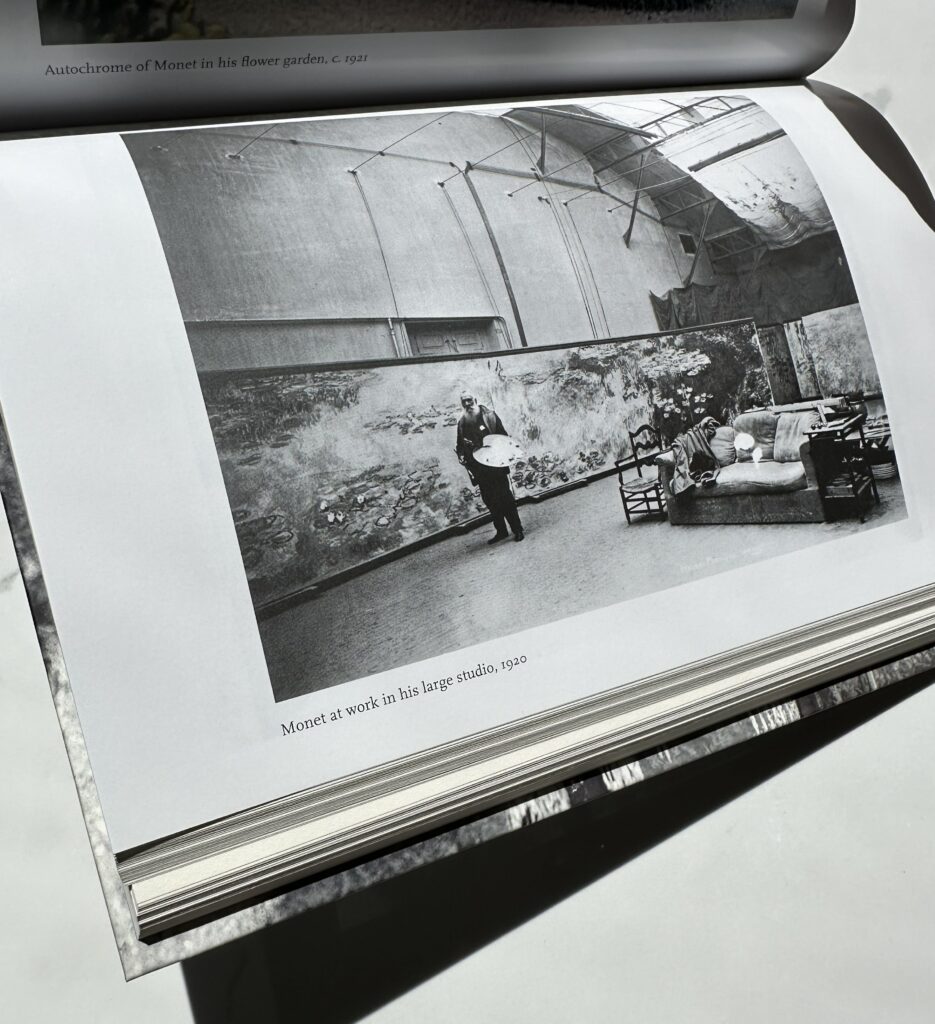
So when I see when I see these old photos of Monet, age eighty, he’s bent over in his studio. There’s a few really great photos in this book, and they show him working with his paint tray in his hand. He’s hunched over and he’s loading up more paint with the giant water lily canvases in the background. It’s incredible.
His entire life in so many different ways came down to this project right here. He wanted to do it, but he didn’t want it to end. There’s a point where Clemenceau tried to get Monet to come visit him at his cottage somewhere on the coast. Monet declined. He said, “I’m at war with nature and time, and I’d like to finish some paintings I’ve started.”
Now, just like all the other dramas going on, there’s the construction drama, the location where these paintings are gonna go and be displayed, that’s one of the conditions that Monet had to approve the exact building and room to display his work. And this is a big deal because there’s a budget to deal with, and architects and engineers, and tons of details to work out, lots of coordination. And of course, if you can imagine, Monet stood his ground. He had the final say.
“When Monet remained inflexible, Bonnier duly set to work designing an oval shape, sending the first rough draft plan to his client within two days of their meeting. However, Monet was not happy and suggested certain revisions. Monet has a new idea each day, Bonier lamented. And so was to begin yet another unspeakable drama, that of the pavilion.”
So that’s from the book. Another unspeakable drama, the pavilion.
Inflexible, Unyielding
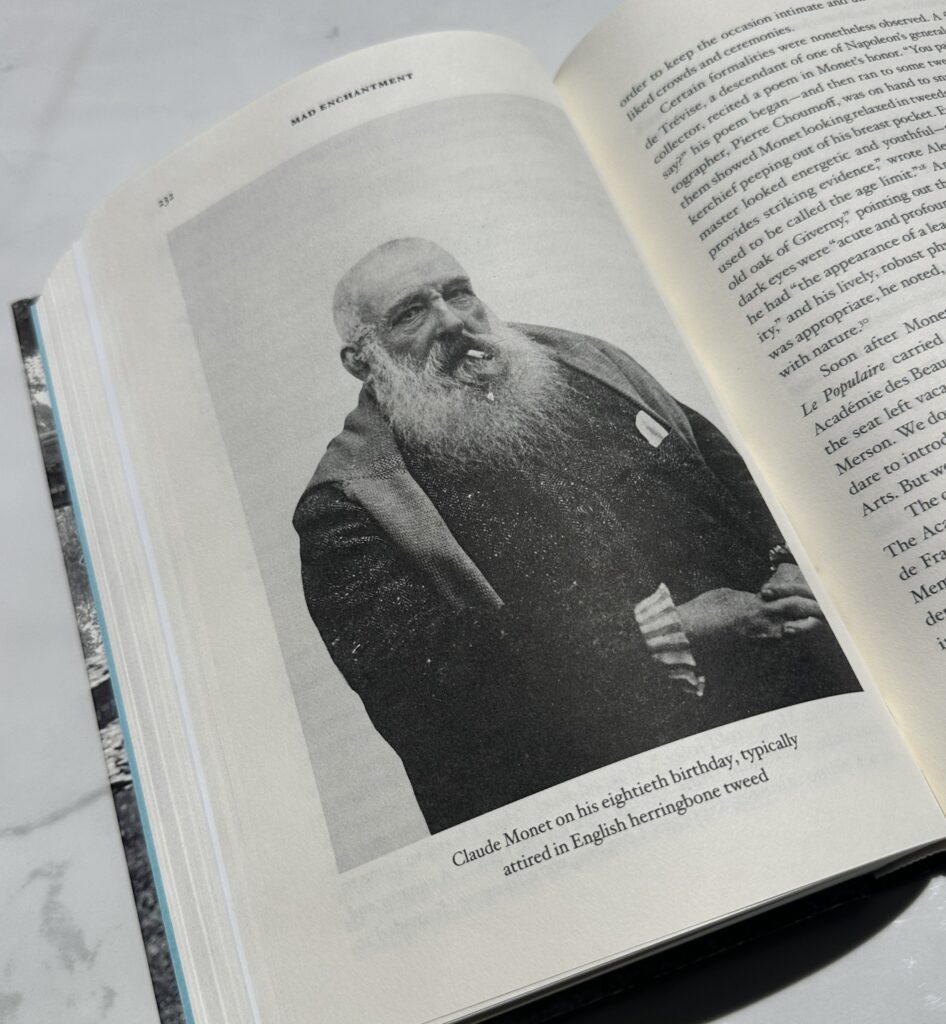
Let’s look at this. It comes up many times in this book, so I gotta read this right here. Just because his eyes were failing, he looked great. That’s how everyone describes him several times in the book. Maybe another reason that Monet knew he needed to keep working on these water lily paintings. Like he said, until the end, because it was keeping him young, and maybe he felt that too. Anyway, listen to this description of Monet at age 80. It says,
“Everyone was agreed that the master looked energetic and youthful, sixty rather than eighty. He provides striking evidence, wrote Alexander, of the inaiety of what used to be called the age limit. Another friend christened him the old oak of Giverny, pointing out that although his beard was white, his dark eyes were acute and profound, and his body unbowed. To Trevise he had the appearance of a leader, full of vigor, implicity and authority. And his lively, robust physique remind him of a wrestler, which was appropriate, he noted, since Monet wrestled with his paintings and with nature.”
So lots of times in the book they talk about how Monet looks full of youth. However, maybe he’s youthful, but we’ve got several dramas cooking all at the same time right now. Like we’ve been talking about the cataract drama, the grand decoration paintings drama. The pavilion drama. And Claude Monet is inflexible. Like the book says, one of his conditions on the donation is the paintings don’t leave his studio until he’s ready. It’s just obvious he doesn’t want the thing to end.
Here’s the problem for everyone else though. He lives for several more years, which is great, unless you’re a contractor building an oval-shaped room for these paintings, or an architect, or anyone else working on this project. They want to please the master painter, the living legend. He’s the pride of France, Claude Monet. But he becomes almost impossible to please.
All these other people involved start to lean on Clemenceau for help because everybody knows Clemenceau’s the only one who might have a chance telling Claude Monet what to do. But we find out that even The Tiger, the great Clemenceau, has his hands full with Monet.
Remember, this grand donation started really the first idea of it was just before World War I broke out, back in 1914. The water lilies, the grand donation, started taking shape just after the war ended, four years later. At this point in the story, we’re in 1921. The book details every single twist and turn of this drama. I read this book in like a day and a half. It was awesome.
But we have to skip past several years of this drama. But trust me when I say this, it goes on for what seemed like forever. I was loving the details of this story though. You have to read this entire book for yourself.
But for now, here’s what I’m talking about. Here’s an example. It says, “Monet, anxious and menaced with blindness, was prey to fits of discouragement. Each day we had to stop him putting his foot through his paintings. He constantly changed plans and dimensions. Putting us in an awkward situation. It was often necessary to appeal to Clemensou for arbitration.”
Like I said, this goes on for years. Clemenceau is still so sweet with Monet, his friend. They really are best of friends right here. Clemenceau knew how to coax Monet along with compliments and encouragement. But then he starts to give a little bit of advice. And then that advice starts to get a little more stern.
And then finally it gets really, really frustrating for Clemenceau who because Monet pulls out of the deal. I lost track of how many times he cancels the donation to the government. He’ll just write a letter and he’ll say, The deal’s off. I’m not donating my work to the state. It’s over. And Clemenceau is just beside himself.
The Orangeire
Over and over this goes on. Here’s a quick example. They proposed the Orangeire building, this historic old greenhouse building. And they propose this to Monet, and here’s what he says in response. He says,
“I have thought carefully about the Orangeire, and I am regrettably obliged to waive the donation that I had wished to make to the state.”
At one point there’s a Japanese businessman who’s interested in that entire series, the entire grand decoration. He wants to buy all of it. He’s playing around with the idea of putting the entire series in a museum in Japan.
And so of course Monet uses this as some leverage in the deal with France. It says “by June 1921, Paul Leon had still not responded to Monet’s letter announcing the retraction of his gift to the nation. His bluff called Monet reopened negotiations through the art critic Alexandre.”
So once in a while they’ll just ignore his threat of canceling the deal, and Monet will reach back out to someone to restart negotiations. Now the number of canvases grows to 22. So Monet needs to paint a few more so the layout of the building would work out. They give him a timeline for these additional paintings. And I’m not kidding you when I tell you this. This is exactly like Ross King said in the book, this unspeakable drama. It says,
“Monet had two years to deliver canvases that in the spring of 1922, with the possible exception of The Setting Sun, were virtually finished. So everything except for this one painting was virtually finished. He should have been relaxed and contented, relieved that his masterpieces had found their home, as he had wished, in the very heart of Paris. But the real problems were only just beginning.”
And here’s why the problems were just beginning right now. After 10 years of dealing with these cataracts, Monet’s eyesight starts to completely go. He says he’s almost blind and he’s got to stop everything. He says, “I’m in a complete fog.” And it gets so bad that he agrees to finally go see a doctor in Paris. And they confirm that he’s legally blind in the right eye. And he had just 10% vision in his left eye.
Monet’s Cataract Operation
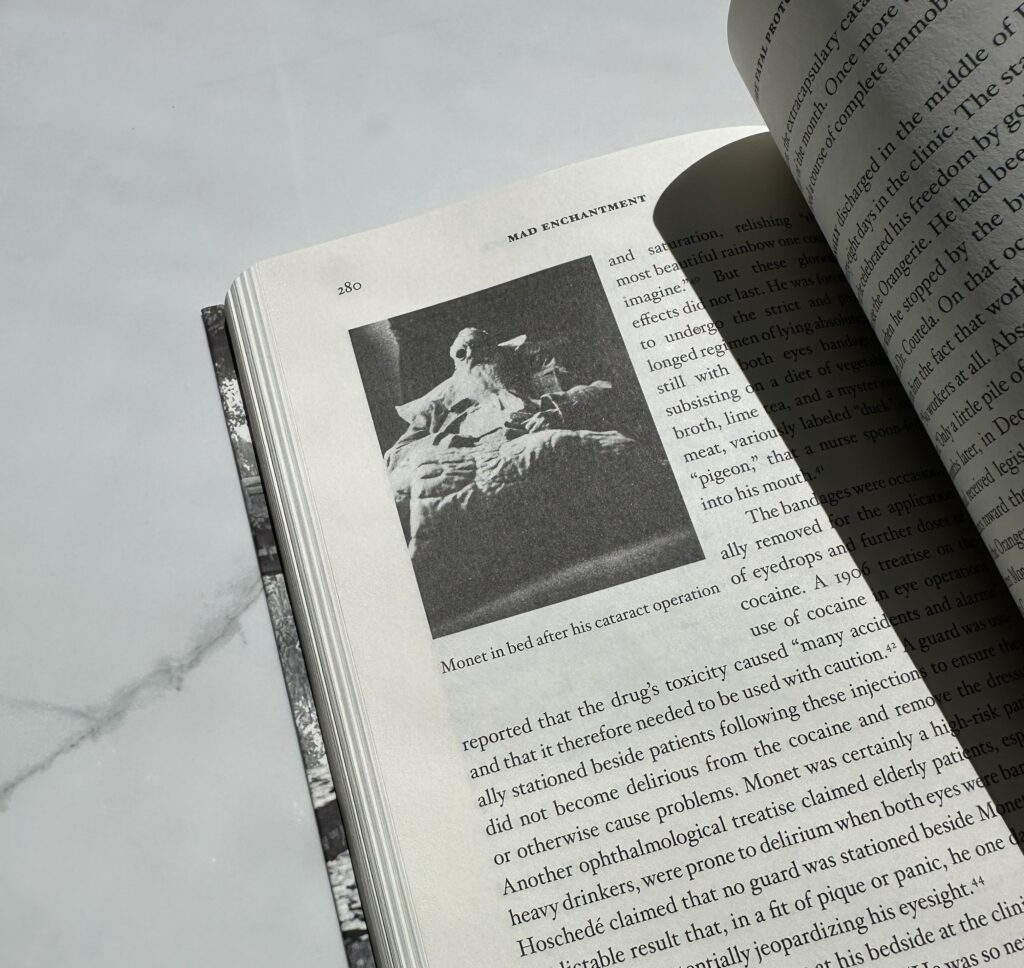
Monet agrees to an operation. Then he cancels the appointment. One month later, he reschedules the appointment. Finally, he has the operation. There’s a photo in the book. And Monet’s laying in bed with his bandaged eye. He had to lay there for days to recover from the surgery, and he just about went nuts laying in this bed. If you see this picture, it looks like he is very, very frustrated about the whole thing.
After the recovery, he’s having trouble seeing color. So they try these tinted lenses, and then they find these spectacles, and they seem to work a little bit better. Now, amazingly, the Orangeire is finally completed.
Here’s what the book says about that. “Clemenceau reported to Monet, I think it’s done. The two oval rooms designed to Monet’s specifications now awaited the canvases. But of course, no panels were delivered.”
So at the at this point now, Clemenceau is still able to keep his patience with Monet. I like this right here because he’s so careful not to be rude to his friend.
He just uses every different trick he can come up with to encourage Monet just to keep pressing on. Listen to this. “He recognized that Monet’s art was bound up with these sort of complaints, and with a tortured state of perpetual self-doubt. Keep up this howling, The Tiger exhorted, because it’s what you need to paint. Or, as he wrote a few weeks later, if you were happy, you would not be a true artist, since it’s necessary for your reach to exceed your grasp. Keep putting yourself in a rage every five minutes because it stirs up the blood.”
That’s awesome right there. This one legend to another, just pushing him on. And now the tone starts to change between Clemenceau and Monet. It gets to become way too much. It’s just enough is enough. Clemenceau reminds his friends that he made a deal with France and that they’ve kept their word this whole time. But Monet’s not keeping his.
And he says, I’ve been supporting you, and if you don’t bring this thing to a conclusion, it’s gonna make not just you look bad, but I’m gonna look bad too. You’ve gotta get this deal done for the sake, he says, for the sake of both art and honor. And here’s what Monet answers back with. He’s canceling the donation. So they go check on Monet, and what’s he doing? He’s still painting. Here’s what they found. Still, the master painter working away in his studio. It says,
“The painter Maurice Dennis who came to Giverny in February wrote in his journal, ‘Astonishing series of large water lilies, the little man of eighty four pulling on the wires of his window blinds, shifting his easels, and he can only see through one eye with a lens, the other is closed up. Yet his tones are more exact and more true than ever.’ The artist and illustrator Henry Sulliner saw the paintings in 1922, then again in 1924, the very moment when Monet was hopelessly floundering in his slough of despond and starting to light bonfires. He wrote in amazement, far from having spoiled them, the old master has developed them further.”
So it’s crazy. Nobody can believe what they’re seeing, what he is doing in his studio. He’s almost blind. He’s eighty-five years old. The book gets into this a little bit, I like it, when a creative genius is getting old, and they continue to amaze people. And they talk about a little bit. Here’s a great passage on this. It says,
“Where did this renewed artistic power come from? The last poem of Edmund Waller, composed in sixteen eighty six, when he was over eighty and nearly blind, contains a couplet about wisdom and vision in old age. He wrote ‘The Soul’s Dark Cottage, Battered and Decayed, Let’s a new light through chinks that time hath made.’ As the body falls apart, in other words, an eternal light pours through, it is difficult to separate discussions of an artist’s late work, from romantic associations of blind seers offering up unutterable visions from beyond the threshold, or of old men raging against the dying of the light. But it is undeniable that as his eye filmed over, and his vision slowly dimmed, Monet, who caught and sang the sun in flight, focused ever more intently on the fleeting rays of light that he had always chased and cherished.”
So Ross King is a great writer. You have to read this book, but he said,
‘As the body falls apart, in other words, eternal light pours through.’
-Ross King
Anyway, like I’m saying before like I was saying, Clemenceau’s done with this, he’s fed up.
He says, You’re making a mess of this entire thing, and I supported you. I can’t support you anymore. I can’t get with this. He says, “Tell him if he does not alter his decision, I shall never see him again.” Then he adds, “we will not be friends anymore.” He was totally insulted at this point with Monet. Over ten years have passed. The building’s complete. To Monet’s exact specifications, he doesn’t want to give up his paintings. Because he knows it’ll be the end.
Monet says he can’t turn over his paintings because they’re in a deplorable state. He wasn’t happy with the work after ten years. Well, they answer him back and they say, Well, you seem pretty proud of them when you invite all sorts of people into the studio to look at them, and everyone’s blown away by the work. You’re not ashamed to show them off. But yet you say you’re not happy with them. What’s the deal here? Well, Monet wanted more time to touch up his grand decorations. He was stalling. He just didn’t want it to end.
Now, of course, Monet gets down from time to time, but he always bounces back. Suddenly, he says, his eyesight is getting better. And he’s back to work on the grand decorations. He says, “for me it’s like a second youth. And I’ve begun to work from life with a strange euphoria.” He’s 85 years old right now. It’s 1925. He’s years and years past the deadlines for this donation.
He wrote that he’s back at it, painting, “as never before, working on these grand decorations with, passion and joy despite uncooperative weather, which on one occasion left him completely drenched.” And that’s in the book. Just like old times, he’s back at it. He’s drenched in the rain. He’s working away now, putting the finishing touches, is what he says, on the water lilies.
The Finishing Touches
He goes, “I do not want to lose a moment until I have delivered my panels.” So listen to this, we’re getting close now to maybe, just maybe these paintings being finished. In one of the canvases here, it’s called ‘The Setting Sun.’ Monet left a corner of the canvas completely blank. This entire time. It’s incredible, really. Just listen to this from the book. “To Barbier, he claimed that this momentous date would finally arrive in the spring of 1926, though his proposed deliveries had always been mirages that shimmered tantalizingly on the horizon before suddenly receding and evaporating like the fog that he had once painted on the scene. Despite his claim about finishing touches, the lower right-hand corner of The Setting Sun painting still remained blank. As if Monet wished to emphasize the provisional and incomplete nature of his efforts, or perhaps because he simply could not bear to bring his labors to an end, and to let the sun finally set on the Grand Decoration.
He’s done now. The Grand Decoration is ready.
Monet invites some friends over to see the creations. Here’s what they find. It says, “Any impression of infirmity was cast aside when Monet took his guests into the Grand Altier. On twelve of fifteen canvases two meters high by four or six wide, Selman wrote, are the magnificent landscapes. We moved the heavy frames around to place them in the order in which they would be exposed in the rotunda. They were, he declared, the work of a colossus. Villiard, himself the painter of large scale decorations, was stunned. Later trying to explain them to a fellow painter, he was struck dumb. It’s beyond words. It has to be seen to be believed.”
So if you’re still with me now through this whole thing, you probably know what’s coming next.
The grand decorations are ready to go, finally, to leave Monet’s studio. He’s ready to give up. And I think everybody else around Monet at this time, they know what this means too. There’s only one thing that could happen when Monet finished the paintings.
So, Clemenceau, for all the jerking around that he had to go through, that he had to deal with from his friend, he knows what to do here. Luckily, they patch up their friendship. They make peace. And it’s just like old times again. The Tiger has a few words with his close friend, the master painter, who finally finished his grand decoration. Like they said, it was the work of a colossus. Here’s what it says Clemenceau knew to keep his friend’s spirits high.
“What more could one ask for? he wrote to him in September. You’ve had the best life that a man could dream of. There’s an art to leaving as well as to entering. Or how he had commanded him a few weeks earlier. Stand up straight, lift your head and send your slipper to the stars. There is nothing like doing it well.”
The Great Send Off
So Clemenceau gives his friend here a proper send off. The bond between these two was as strong as you could have. Two Titans just battling their entire lives in totally different arenas. One guy’s dueling his enemies with freaking swords in the street, the other’s dueling the sun and the wind, and right there together to the end.
“You shall die before the easel, Clemenceau once wrote him, and the devil take me if arriving in heaven I don’t find you with the brush in your hand. In the event Monet died in his bedroom, in the museum of his admired companions, surrounded by the works of Manet, Degas, Pissaro, Renoir, and Cezanne. He died surrounded by other companions too, his son Michael, the devoted Blanche, and Clemenceau, who for the previous few days had been poised to come from Paris at short notice, and who arrived on the morning of the fifth, supposedly barking at his chauffeur faster! faster! on time to take his friend’s hand.”
“Are you in pain?,” Clemenceau asked.”
“No,” replied Monet, in a barely audible voice, and a few moments later with a soft groan he passed away. That afternoon telegrams were sent to the newspaper stating that the painter Claude Monet had died at noon at his property in Giverny at the age of 86, with George Clemenceau at his side.”
Now the book goes on another chapter and it talks about legacy and what Monet meant to the art world and his popularity and how it started to gain momentum and – that doesn’t matter. Monet passed away and the art world was already moving on from Impressionism. Critics and reporters were probably just wore-out from this ten year unspeakable drama that we just talked about, with this grand decoration.
Two weeks later they rolled 22 giant water lily paintings into the Orangiere, almost three hundred feet of paintings. And they said “much of his long life had been nothing but a fight, as he pushed painting to its limits.”
The Work of a Colossus
At the public grand opening of the new Orangiere Museum, there wasn’t much fanfare at all. It was not a large crowd to see this work. Clemenceau was there at the dedication and he was overheard talking about the good old days, back when Monet was too poor to even buy some paint. And then he talked about how Monet wouldn’t part with the grand decorations until he was dead. He said because, “only at that point would he be able to bear their imperfections.”
So I saw these paintings, like I was saying, if you’re ever in Paris, you gotta go by this building and take a look. It’s right across the park from the Louvre. This is the best description that I’ve heard of what you’re gonna see when you go there.
“The compositions are spectacular in size. Wraparound art so enormous they could astonish even a veteran painter of large scale canvases, such as Villard Mirabu wrote in 1889 that Monet’s work sometimes took 60 sessions. But here the quantity of paint, variety of brush strokes, and sheer square footage make it possible to imagine the panels consuming hundreds, even thousands of hours. We can imagine the old man in his vast studio prodding, slashing, and scribbling. Layer upon layer of paint is added as cigarettes burn to ash and rays filtered through the skylight sneak across the floor. He stands back at the end of the day, in eye patch and thick spectacles, to appraise the work with dimming eyes, as Blanche trundles it across the floor, the two of them perhaps slowly promenading, as all visitors do, along the reams of canvases, staring into the florid depths.”
So I was saying at the start of this episode of how I got hooked on Claude Monet when I learned what’s behind his paintings that you see.
It’s not just a haystack or a flower, but it’s this guy that was obsessed. He’s outside trying to paint while fighting the wind and rain. He can’t stop thinking about color even in his sleep. He dreams a color and it torments him.
So yeah, seems like a cool dude. He’s totally hardcore.
Well, no, that’s not it.
That’s when I found out that there’s more to the story, and he’s soaking wet from a rainstorm, he’s also kicking holes in his paintings that took him months. He pulls out a knife to slash it. He hates it so much. Kicking a hole through it isn’t enough. He needs to slash through the canvas with his knife. He’s furious about how badly he failed. He hates his work. He needs to destroy it on the spot. He goes inside to warm up because he’s freezing, and he starts writing letters to everyone he knows about how much of a failure he is.
Painting the Impossible
Because he’s trying to paint the air! He’s trying to render the impossible, trying to paint atmosphere. His entire life he went through this.
I remember learning about that and I was just stunned. I didn’t know there was anyone out there trying to paint air between them and a subject. Just didn’t cross my mind. I just remember thinking this is not at all what I expected from a painting that looks so nice and pretty and peaceful.
Then I see the Orangeiere Monet Museum on a map, right next to the Louvre, and I’m like, well, I’m going there for sure. I gotta see this. I love this guy. This guy that was painting air. I need to see what’s in that building. So I go to the building, and there it is, the grand decorations, the water lilies, all over.
But now it happens again!
I walk through the two rooms in the museum, giant water lilies surrounding both of these oval rooms, it’s incredible. I was standing there just in awe at these amazing works of art by Monet, somebody who I read about who is obsessed by color and light. He was out there trying to paint the air and the dust and the soot between himself and an object.
And it was awesome to stand inside these rooms. All that being said, it turns out I didn’t even really understand what I was looking at.
He did it to me again!
When I was staring at the water lilies in Paris, I didn’t know this part of the story until I read the book.
That Monet’s a rich world famous painter, and it looks like life’s about to finish him off once and for all. A few knockout punches, and that’s a wrap. You had a nice 70 year run, now it’s curtains for the great Claude Monet.
Wife passes away, your son dies. Your home and garden? Flooded.
World War I breaks out, Germans are marching directly at you. Bombs start falling.
He says, I ain’t leaving my studio. If the Germans want to kill me, I’ll die right here among my canvases.
He’s going blind. He can’t see color. He needs to label the colors in his dish because he can’t tell what’s yellow or what’s white or what’s blue.
But now I think I’m gonna do the greatest thing imaginable. I’ll paint colorful water lilies. And not just one canvas. But thousands of square feet of water lilies that if anyone wants to see these things, you’re gonna have to build an entire building to show them.
Here’s the cool part. I had my daughter with me in Paris and we went to the Orangiere Museum to see these paintings. And she doesn’t know the full story yet. And someday I hope that she’s gonna hear it, and then she’ll get to connect this great story with what she saw one day – way back when.
When I see a Monet painting now, when I see his art, I smile and I just straighten my back up just a little bit.
“To Louis Gillet, Monet was likewise still powerful and radiant. Age only added to his majesty, he claimed, comparing him to the Manneporte, the massive rock formation at Entrate that he had painted so many times. “He was besieged by the waves and assaulted by storms, but still defiantly standing.”