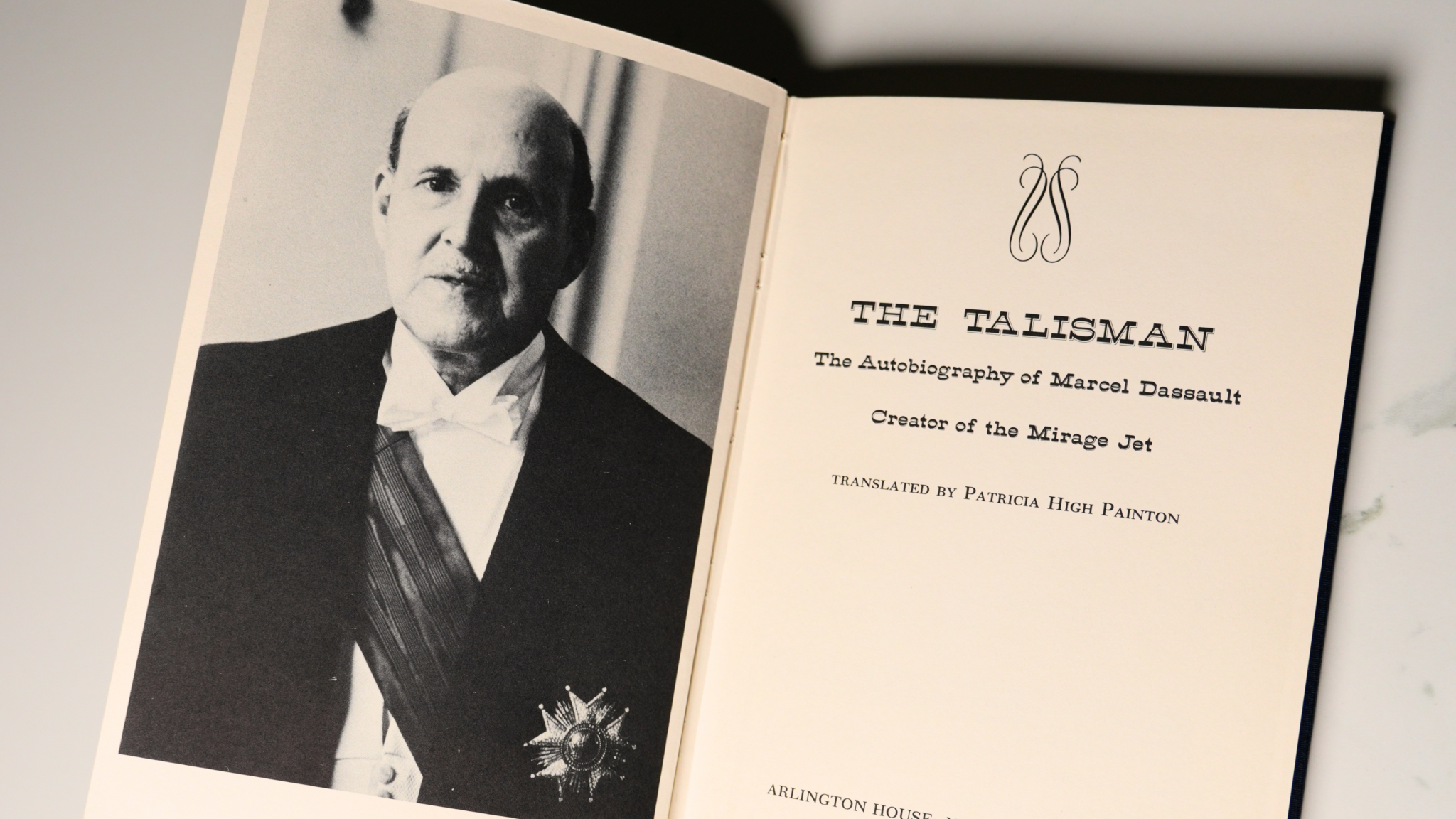
Marcel Dassault
Marcel Dassault, Aviation and the Extraordinary Life of Perseverance
Episode #47
07.23.2026
Marcel Dassault, A Personal Code For Achievement
“Without false modesty, I would say that I’ve always made a special effort to use my imagination. With the team of men I’ve trained, I’ve worked hard. I don’t allow myself to become discouraged by difficulties. I have a passion for my work, and I know how to use my willpower to brush aside anything which might distract me from it. Everything in my surroundings must be geared to the great work I’ve assigned myself. Of course, like every human being, I’ve had my share of pain and suffering. But it is neither in my character nor in my approach to life to allow misfortune to upset my plan. What plan? Achievement. Achievement of what? Everything that my reason and my dreams together have shown to be both necessary and possible.”
That’s the first page of this incredible book that I just read. The Talisman, the autobiography of Marcel Dassault, published in 1969. An unbelievable life of energy and passion and perseverance right here. In this book is the entire life story of Marcel Bloch, who would change his name to Marcel Dassault after World War II. We’re gonna get into all that.
Why Aviation Fits The Creator Series
But why? Why Marcel Dassault for this episode? So I gotta tell you this, I’ve been doing all these episodes on the great car creators. I just did my Ferruccio Lamborghini episode. And before that I did Colin Chapman and then Carl Benz, Adrian Newey, the great engineering minds. So often they turn to cars and racing. It’s the ultimate test to go faster than ever before. That’s what I’ve been learning about in all these episodes.
So what comes up over and over in all these stories of engineering and speed?
They love racing and building cars, but a lot of them also love aviation. It’s like they go hand in hand. Colin Chapman was a pilot in high school. Before he started building his first Lotus car, he had his private pilot’s license. Adrian Newey graduated college with an aeronautical engineering degree, knowing that the principles of flight would be useful for designing Formula One cars. And I’ve been fascinated with aviation my entire life as well. So it’s a perfect fit to combine these great car creator stories with these great aviators. They just go hand in hand.
Alan Paulson And Aviation Obsession
A while back I did a creator’s episode on Alan Paulson. Just like Marcel Dassault, he lived this incredible life of passion and energy, getting hooked on aviation at a young age, just like Dassault. And then he built the airplane empire the rest of his life. Paulson was so passionate about aviation, at one point he’s out there searching for a manufacturing plant somewhere so he could build his plane that he designed.
When Grumman Aerospace decided to sell off the Gulfstream division at the company, because they needed to raise some cash quick. When they decided to sell, you’ll never believe what happened. They called Alan Paulson, asking him to buy Gulfstream. It was exactly what Paulson was looking for, and they called him. He said when he picked up the phone that day, he almost fell out of his chair. He was so excited. He couldn’t believe it. Paulson said he thought he was going to blow the deal because he was so eager to buy it.
Well, he didn’t blow it. He bought Gulfstream Aerospace from Grumman for pennies on the dollar. And then he developed the Gulfstream III, the Gulfstream IV, and then he started working on his own supersonic business jet. And he made a fortune doing it. So why am I talking about Alan Paulson?
It’s because of this incredible life of energy and passion for aviation. That’s what I said in my Paulson episode, and that’s exactly what Marcel Dassault is all about. That opening quote, I just read it from the first page of his autobiography. He just said, “I have a passion for my work, and I know how to use my willpower to brush aside anything which might distract me from it.” And then he goes, “I’m not going to allow misfortune to upset my plan.” He says, “What plan? Achievement. Achievement of what? Everything that my reason and my dreams together have shown to be both necessary and possible.”
This is so cool. It’s a common theme with the great engineers that I’ve been learning about. Here’s another aviation legend who was full of energy and passion, just like Alan Paulson.
The Talisman And A Remarkable Voice
This book was like no other. It’s an autobiography that was first published in French, but then two years later it was translated to English in 1971. So I have the English version right here, but Dassault’s writing style is so unique. It’s just so pure. It’s so condensed. And it’s to the point. But he still tells this incredible story so well. He just sets it up and knocks it down, like just page after page. There’s zero fluff in this book. It really made me think of a great aeronautical engineer’s mind right here. The writing. It’s so crisp and clean and efficient. Like nothing I’ve ever read before.
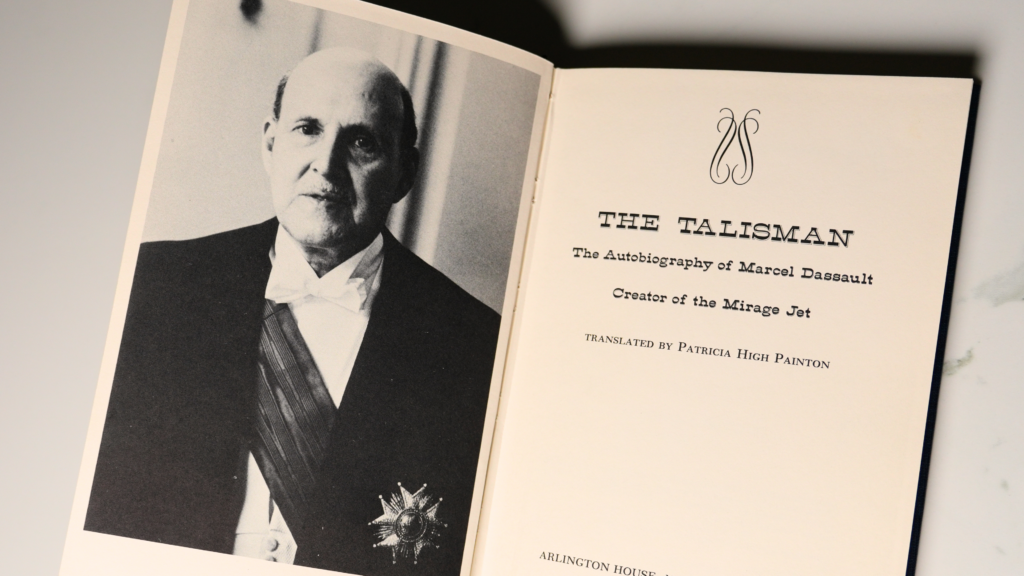
At the start of the book, he’s asking himself a few questions, probably ones that he’s heard over and over. He says, “So what type of man are you, Mr. Dassault? And how have you succeeded?” So he explains what type of person he is. He says, “I have a cheerful nature and tend toward optimism. But I am, I admit, uncommunicative. The basis of my character is reflectiveness, at the core of which is an ability to foresee what might happen in order to be ready for any eventuality.”
So again, this is Alan Paulson, same thing, optimistic. Alan Paulson was so optimistic he passed out copies of a book. When Norman Vincent Peel wrote his book, ‘The Power of Positive Thinking,’ back in the day, Alan Paulson bought thousands of copies of that book and he passed them out to all of his employees. So Marcel Dassault, same attitude right here, positive, focused, what you would call an introvert, just like Alan Paulson, and just like me, and a lot of other people in history.
Working In The Music Of Silence
Here’s why I’m bringing that up. Marcel Dassault describes his ultimate work environment. I’ve never heard anyone describe it like this before, but he works in the music of silence. Listen to this.
“I love the rich silence where, for me, another kind of music is born. The music of great tasks and endeavors in which you can hear the singing of the future. It is in this music I choose, not because I did not know how to appreciate the other, but because my kind of music is necessary to me, while the other is merely a pleasure.”
– Marcel Dassault
That’s insane right there. The music of silence. That’s how he works.
A First Flight Over Paris
So Marcel Dassault, he grew up as Marcel Bloch. The name change came after World War II, and there’s a great story behind the name change that we’re going to get into. But you gotta know, he grew up Marcel Bloch. He has an older brother who died when he was young, another brother who served in the military, and a third brother who was a doctor in Paris, and then he died during World War II.
As a kid, Marcel sees an airplane flying around in Paris, around the Eiffel Tower, and that’s when he knew he wanted to make a career in aviation. He says right here,
“During recreation period one day when I was out in the courtyard of the school, I saw an airplane go by for the first time. It was a Wilbur Wright plane, owned by the Count of Lambert, and it was circling the Eiffel Tower. Although they were Americans, the Wright brothers tested some of their first airplanes in France. I often used to go see those first airplanes fly.”
So he’s in right here. He’s already studying engineering. The miracle of flight is happening right in front of him. He’s hooked. He graduates with an engineering degree at age nineteen. He takes a job at an auto manufacturer. This is where he would learn how factories work.
World War I Propeller Breakthrough
Then war breaks out, 1914, World War I. The French government chooses which model of planes need to be built for the war, and then they award the certain planes to certain manufacturers. Marcel’s working for one of these aircraft manufacturers by now. And they choose him to improve the design of one of these plane models. There’s some problems and they call on him to go help out. He’s already known as one of the best. So now he’s flying up there with the pilots trying to improve the performance of each plane.
During his downtime, Marcel decides to improve the propeller. Because he can clearly see it could be better. He goes to his father-in-law, who was in the furniture business, who sets up Marcel with a carpenter who can cut out this propeller from this block of wood. This design that Marcel comes up with, it’s going to improve the performance of the plane. And everyone notices right away that this propeller that Marcel designed is way better. It’s a big improvement. So they order more of these propellers for other planes. The Eclair is that this is what they called it.
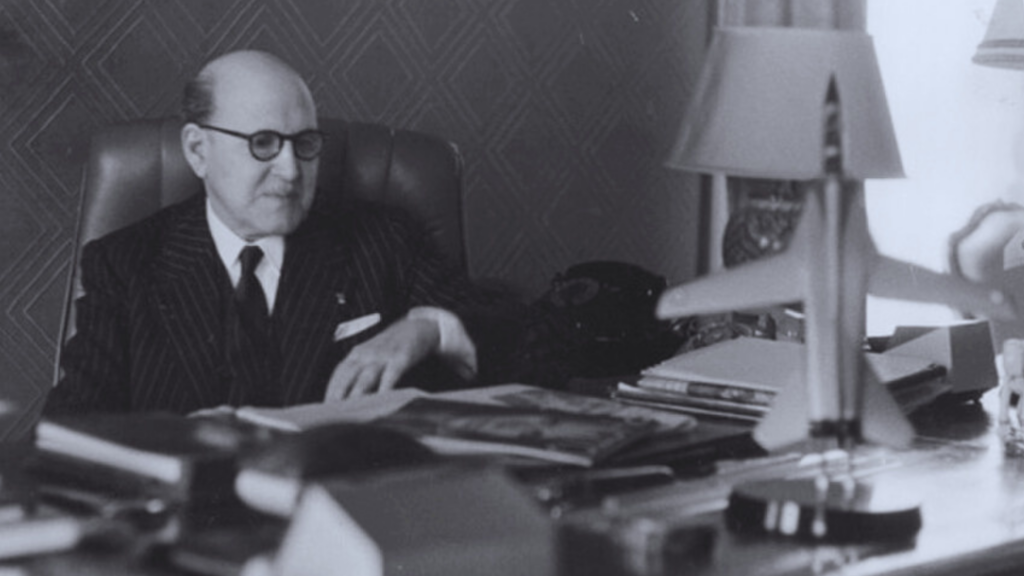
They had so many orders for the Eclair propeller. This is a great way to learn about the entire airplane right here, from building propellers. Because you have to know everything about every different plane to build the exact type of propeller that’s specific to each plane. So that’s really how he became an aircraft manufacturer, just from learning all about every existing plane that’s out there when he was building propellers for each one. Now not only can he improve the propellers, but Marcel’s gonna improve the entire plane.
We’ll just design and build our own airplanes that are better than what’s already out there. He sees all of them, he knows the specs, he knows how to improve each one. The question is now which one should we build? What do we need? Remember, it’s still World War I going on. What’s really needed? What’s really needed is a two-seater. And that doesn’t exist yet, so let’s just build that, he says,
“Having learned which new models succeeded and which ones failed, I was able to acquire a great deal of experience in deciding what should and should not be done to make a good airplane. What’s more, I noted that at the time a good two-seater fighter plane just did not exist. And that’s where I got the idea of building one.”
SEA-4 Orders Then Sudden Peace
Now Marcel has his two-seater airplane, it’s the SEA-4. Once the testing’s complete, it’s 1917. Still World War I, orders come in for a thousand planes for the war. But the next year, 1918, the armistice deal is struck. The war ends.
The government tells Marcel there’s not going to be too many aircraft orders going out for a while. They were only able to build a few of these SEA four planes before the war ends. But the big deal, the war is over, and that’s the main thing. It was brutal, and now it’s finally over. He said in his book, “Everyone regarded World War I as the war to end all wars.” But of course, that’s not how it happens.
So the aircraft manufacturers are looking to diversify into other industries because there’s not going to be any plane orders coming in anytime soon. Some of them started to build boats or cars. What Marcel decided to do was he got into real estate development and housing construction. And for any of you out there who have been in real estate or construction, you can relate with him right here. He says,
“This difficult period in my career taught me a great many things, which many people who have the luck or bad luck to succeed too early and too fast never are able to learn.”
So if you can read between the lines right there, it’s a rough period to adjust to real estate. After going headfirst into airplane manufacturing, that was his passion. But like he said, he learned a lot, but it turns out to be a blessing in disguise right here. Marcel was the only one to come out of this stretch of about a decade after the armistice. All the other big aircraft manufacturers were still struggling to get through this period.
France Scrambles To Catch Up
What he’s noticing going on is Italy starts building planes. And Germany sets up airplane manufacturing in Sweden. Everyone’s building planes, and France isn’t. They realize they need to catch up. So they create the air ministry and they award Marcel a contract to build a prototype for a mail carrier airplane. And that’s just a little ahead of its time. So not many orders for this postal plane. So he builds a flying ambulance.
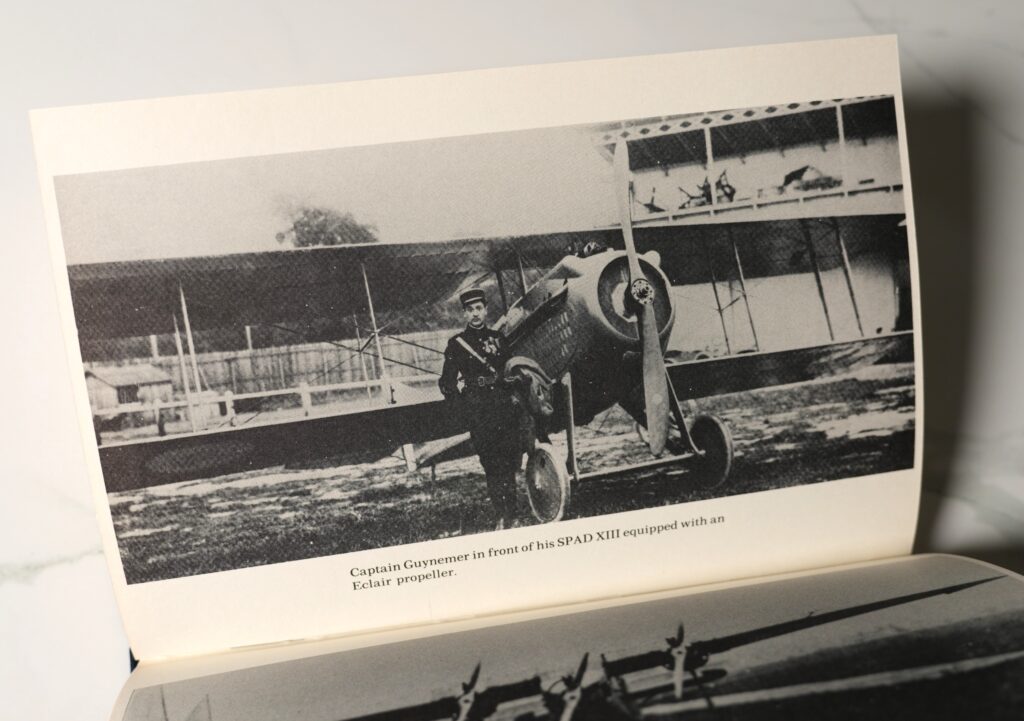
Marcel puts up his own money to build a prototype, and he took in 20 orders of these planes. After that, another model, this time it’s a three-engine plane with orders to build 12. Next, Marcel decides to build a bigger twin-engine civil transport plane that holds 16 passengers and then a twin engine bomber. Marcel develops several other planes, including a fighter and a bomber with 2,000 horsepower engines on them. He gets an order for 200 planes, but he’s only able to build a few of these before it’s 1939.
Lessons About Readiness For War
And war breaks out again. He says, “If these planes had been ordered two years earlier at the same rate of production, there would have been more than a thousand of each type available at the outbreak of the war, and that might have changed a lot of things. But of course, a democracy in peacetime is just not able to indulge in such vast military expenditure.”
So Germany was preparing for this for years. France was not. They were caught on their heels. Germany’s going to take over Paris pretty quick. He says the country which prepares for war, determined to attack at a time and a place of its own choosing, always has the advantage over those countries who can only endure aggression.
Refusal, Arrest, And Buchenwald
German soldiers are in Paris just a few months after war is declared. Marcel heads south to the southern part of France. He’s able to hide out there for a while. He’s already known as a great aircraft engineer, and he’s valuable. During a war you need great engineering minds. So the Germans want Marcel to go to work building aircraft for him. Not happening. Of course he refuses, so he’s arrested and they send him to Buchenwald.
It’s a concentration camp in Germany, and he’ll be there until the war ends. Now as brutal as this is right here, he describes the conditions of the camp. You can imagine what he’s describing. His experience at Buchenwald was gonna impact him for the rest of his life, obviously, in many ways. He first needs to survive it. To get through something like this, you need some luck on your side. A lot of people were not so lucky. Tens of thousands at this camp alone were not so lucky.
I need you to remember this one part right here. It’s a tiny detail, but remember this. We’re gonna talk about this at the end of the story. As he’s arriving at the camp, they give him a uniform. Here’s what he says, “After leaving the assembly ground, the newly arrived prisoners were sent to take showers. First, all packages and clothes had to be left in a room. Then we proceeded into a huge shower room. We left by a different door from the one that we had entered. We were given striped pants and a jacket, and barefoot, we started off toward our new destiny.”
I’m talking about luck right here. Marcel shows up to the camp. He turns in his clothes and everything on him. They take it. Then they give him striped pants and a jacket. The title of this book, the book right here that I just read, it’s called The Talisman, the autobiography of Marcel Dassault. When I found this book, I didn’t know what a talisman was, so I had to look it up. Okay, so this is the definition of a talisman right here. It says, an object, often an inscribed ring, stone, or pendant, believed to possess magical properties that provide protection or bring good luck to its owner.
So I’m thinking, eventually I’m gonna find out why this book is titled The Talisman. Maybe it’s him. Is he the good luck? I like I what’s the good luck here? He’s in a concentration camp. He just got a striped uniform. It’s gonna take some luck just to make it out of here. So as you can imagine, Marcel shares some of these incredible stories and near misses and just fate and luck and instinct trying to make it through this terrible place. While he’s in the camp, he gets a disease that attacks his legs.
Now he’s already suffering from the first symptoms of this disease. And just before the camp was liberated, they line everyone up in a group to march him down the road. Marcel’s in this line, and his legs are not working so well right now, but he’s picked out of the line by a policeman of the camp. He says, Follow me.
He brings Marcel to a different group, and it’s a group that had already been checked over by the Germans. Because of this right here, switching the groups from the line that was about to march into this other group that had already been checked and approved. He gets to wait with that group for three days at the camp. Well, the camp is liberated three days later. If he would have been forced to march, there’s no way he could have done it. With his legs already starting to give out, and in that march, if you couldn’t walk, they didn’t help you walk. He would have most likely been killed on that march, one way or another. Brutal stuff.
Liberation And A Puzzling New Name
Marcel’s at the camp. Allied officers show up. The first thing he does, Marcel grabs a French officer and he says, Do you have any news about my brother? The officer tells Marcel, he says,
“General Dassault has just been named Grand Chancellor of the Legion of Honor by General de Gaulle.”
Now Marcel, he gets to go home. He works his way back to Paris trying to get home. The camp is liberated, the war is coming to an end. 1945. But remember, Marcel Bloc, his original last name was Bloch. His brother’s original last name was also Bloch. What did I just say right there? I just said, this French officer just told Marcel, his brother, “General Dassault, has just been named Grand Chancellor.” So what’s going on here?
I’m going to tell you why they just called his brother General Dassault. But first though, Marcel is free. He gets back to Paris, but he can’t walk. It takes him six months of treatment to fight this disease that caused paralysis in his legs.
Designing From Bed And Rebuilding
While he’s in bed, here’s what he does. He says, “To keep myself amused during this period of enforced idleness, I started designing a new Liessen plane equipped with two 700 horsepower, 12-cylinder engines, which I knew was built during the occupation. Later, this plane was to become the Dassault 315.”
So the war’s over. He’s often running again, building planes. Not actually running. He’s starting from his bed. He can’t move. But he designs the first plane he’s going to manufacture almost immediately after the war. And then again, he gets lucky right here. Most factories, they were completely bombed out during the war. He needed to build a factory quick. He called his contractor who he was working with before the war started. And here it is, I’ll just read it. He says,
“I’d been lucky enough to order the metal framework for a building from a very conscientious contractor. He had managed to hide this framework throughout the occupation and was ready to deliver it to me. So I went ahead and bought some land at this airport, on which I put up this framework and thus found myself suddenly at the head of a modern factory located at an airfield.”
And now he’s got a factory built quickly. Suddenly he’s at the head of a modern factory. They have this design that he made while his legs were recovering, laying in bed. Now he’s back on his feet. Literally, now he’s off and running, full speed ahead, building aircraft, developing new aircraft. He’s right in the middle of the aviation industry now that can grow after the war. But not so fast.
Why The Name Dassault Matters
Right here. The name change.
One of the all-time great name changes, in my opinion, now that I know this story, I looked up some of these other great name changes. And after thinking about this a little bit, Cassius Clay changes his name to Muhammad Ali. Iconic change right there. Just think if he never made that change.
There was a guy named Octavian, and his name was changed to Augustus, which meant “the revered one.” He was the first emperor of the Roman Empire. Pretty good name change right there.
Listen to this. Larry Page and Sergi Brenn’s first company. They called it “Backrub” because it analyzed the backlinks from the internet. They changed the name of their company two years later in 1998. They changed the name of their company from “Backrub” to Google. And that was a good move for them.
Pepsi, the drink, the cola drink. 120 years ago, the creator of that drink first called it “Brad’s Drink.” And then he changed it to Pepsi Cola shortly after. That was a good move, too. There’s a bunch of these, they’re fun.
Sometimes a refresh, a rebranding, it can make all the difference. But here’s another one of the great rebranding name changes right here. And why do I say that? It’s because of the reason behind it. There’s a tribute here, a spirit that Marcel Bloch captures.
So we gotta look at it. What is a name? What’s a brand, really? This is the definition of a brand. I had to look it up. Here’s what it said. “A brand is the total perception, reputation, and emotional experience that people associate with a company, product, person, or organization.”
So, damn, that’s a lot right there. That’s a mouthful. A brand is the total perception, an emotional experience. Here’s what I’m talking about. Marcel is charged up right now, focused. He’s passionate, and he just survived one of the most difficult experiences that any human has ever gone through. I’ll just read this. It’s from a video right off the Dassault Aviation website. Here’s what he did.
“After the war in 1946, Marcel Bloch and his brother Paul began the process of changing their family name. A first decree in November of the same year granted them the right to use the name Bloch-Dassault. In 1949, a new decree allowed them to drop the name Bloch and officially adopt the name Dassault. So why is this so important to Marcel and his brother to file this decree two different times to officially change their name to Dassault?
Back to the website, here’s what it says.
“During the occupation, Paul Bloch, Marcel Bloch’s elder brother, was one of the main military leaders of the resistance. Hunted by the Gestapo, he operated under a number of pseudonyms, including “RAPT,” “Sassy,” and “Dassault.” General Paul Bloch won acclaim for his actions that helped unify all resistance troops into the French forces of the interior.”
So from the website, it goes on right here. It says,
“General Paul Bloch adopted the pseudonym Dassault, meaning attack, because of his specialization in artillery and his interest in armored vehicles.”
So here it is, the meaning of Dassault right here, the name on the company, still to this day, Dassault Aviation, one of the great French companies out there with aircraft flying all around the world. You’ll see them at every airport. Anywhere you go, there’s a Dassault airplane nearby. Here’s what it says.
“Paul and Marcel Bloch decided to change it to one that symbolized combat, action, and the offensive. So in homage to Paul Bloch’s heroic feats, they naturally decided to adopt his former pseudonym, Dassault.”
So combat, action, and the offensive. Go back to that definition of brand that I read earlier. It’s a total perception, an emotional experience. You need to tell the story of your company. Do you think that Marcel has a great story here? Can you think of a better story for a name of a company? It’s tough to beat this one. Combat, action, and the offensive. The code name his brother used to organize and unify resistance troops.
You gotta be kidding me.
And now we’re both gonna change our last names to that code name officially, then build an aviation empire for the next 50 years with that same exact name. That’s awesome.
Building A Company People Trust
Okay, so I could go on and on about the next 50 years that Marcel built up his company. It’s amazing.
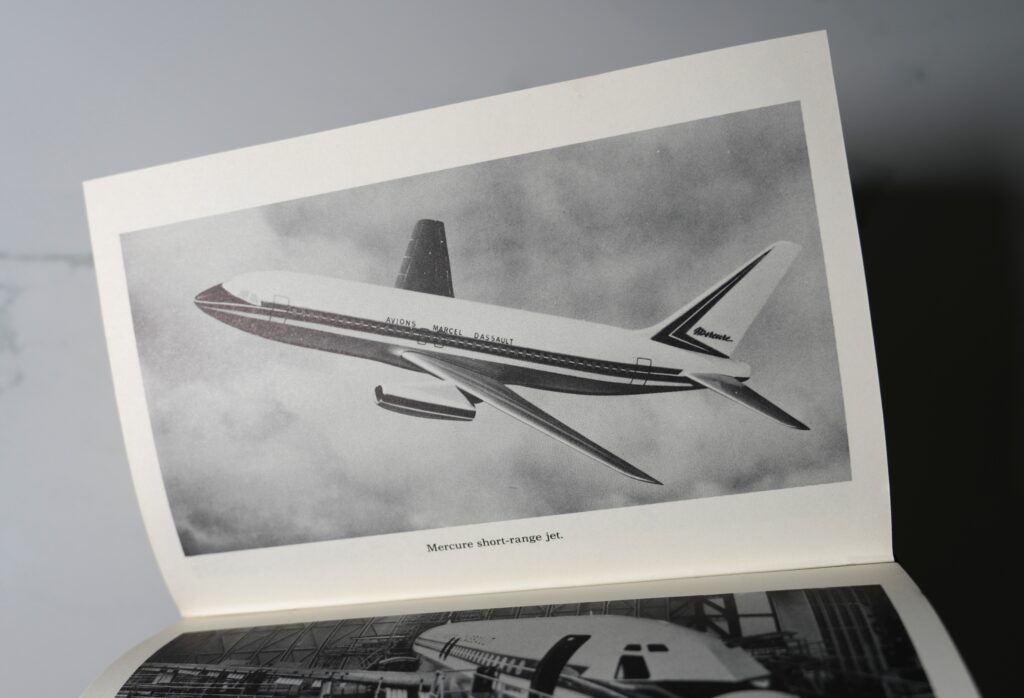
So many innovations, Marcel designed the Mirage Fighter Jet, one of the most famous military aircraft of all time. The Mirage was from Dassault. Marcel said the Mirage was one of the planes he’s most proud of. The history of the company itself, I could go on for hours.
One really cool thing that Marcel does early on, he’s trying to make his company the greatest place to work for his employees. He’s one of the first to give a full week’s vacation, way back at the beginning. And then when laws are passed that all companies had to give two weeks’ vacation, he gave three. New laws pass that require three weeks, he gives four.
He was also one of the first companies to give a percentage of the revenue back to the factory workers as a bonus.
Then check this out. He paid everyone on a monthly basis, even the factory workers. Not paid by the hour, but by the month. He said, “Besides enjoying a month’s vacation, it’s obvious that an employee paid by the month escapes from the basic proletarian situation through finding a greater degree of job security and a closer relationship with the company.”
That’s brilliant right there. I’m gonna pay you by the month instead of by the hour because it feels better. That gives you a closer connection with the company. That’s awesome.
Lindbergh Finds Our Bird
One cool detail right here that I could not leave out.
The great aviator Charles Lindbergh sent the tour of the Dassault factory in 1963. Lindbergh was on the board of directors for Pan Am, the airline in America.
Pan Am wanted to get into the business jet market. So Lindbergh goes to France. He sees the Dassault Mystery 20, the very first Dassault business jet prototype. Lindbergh’s blown away. He sends a telegram back to Juan Trippe, the founder of Pan Am. The telegram from Lindbergh just says, “I’ve found our bird.”
Pan Am orders 160 Dassault aircraft right there. One thing though, they want to rename the plane for the U.S. from the Mystire to the Fan Jet Falcon. It’s the very beginning of the Falcon jet, right here. And now we know that Dassault Falcon line of business jets, they’re at the very top of the line, the absolute best business jets in the world, right up there next to Gulfstream.
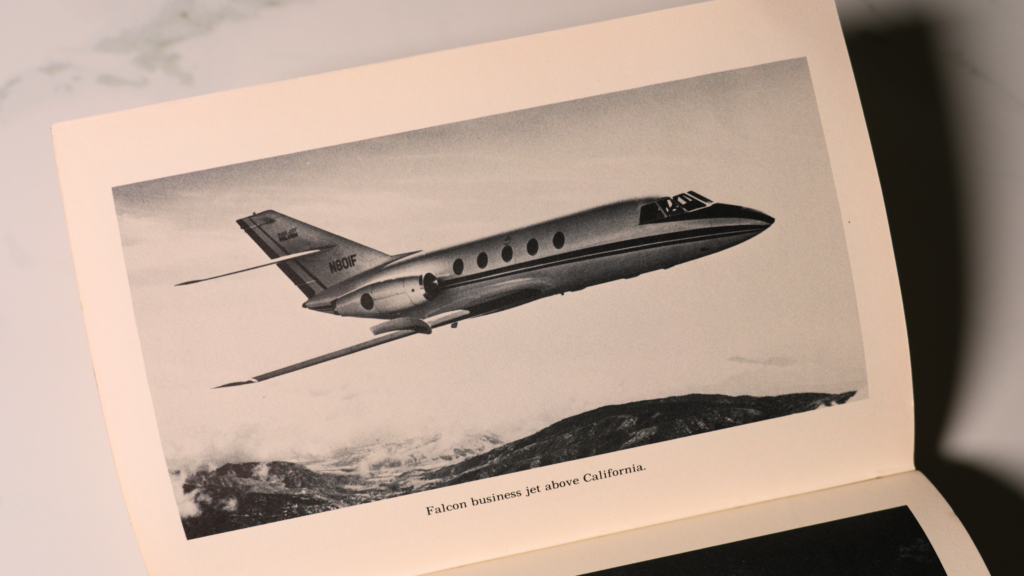
This is the very beginning of Dassault entering the market in the U.S. from that recommendation right there by the great aviator, Charles Lindbergh. And this is one of the planes Marcel’s most proud of, along with that Mirage jet, was the Mysterie 20. This plane becomes the Dassault Falcon. He’s proud of that plane. So in his book he goes,
“So you can also say now that the sun never sets on the wings of a business jet, Mysterie 20.”
The Logo Hides The Talisman
One last thing, the talisman, did we ever find out what the talisman was?
Remember, we’re talking about a talisman earlier. I said it it was something that possesses magical properties that provide protection or bring good luck to its owner. As I was reading the book, I’m thinking, okay, Marcel is pretty lucky. He must be the talisman. But just look at that definition again. A talisman is an object that brings good luck to the owner. It’s an object, it’s not a person.
So what is it? Why is the book titled ‘The Talisman?’ I figured it out by the end of the book. And I’ll give you the answer.
First, though, we were talking about brand. Okay, the great renaming of the brand to Dassault and the meaning behind that word. It’s an incredibly meaningful word for the for Marcel’s company.
Well, the brand is not just a name, but also a logo. The visible symbol of the brand is the logo.
Here’s why I love doing these episodes. First of all, I can just read a book and then just read another book. That’s and that would be great. But by doing these episodes, it forces me to understand the story a lot better. It forces me to struggle with the story for a little while before moving on to something else. I have to go a little bit deeper. That’s a big challenge for me. It’s hard for me to do that. But I really love the process of trying to share these stories in some kind of unique way. It’s just, I really like doing it, because it’s hard to do.
So I’m going through this story. I stumble onto the Dassault Aviation website and I spend hours on their website. It’s great.
The full company history, tons of videos. The new Falcon 10X jet is coming out. And now I know everything about that Falcon 10X, which will be the greatest business jet ever. Once it starts flying in the next few years, they’re doing test flights on it right now. It’s insane. Anyway, spent a lot of time learning about the Falcon 10X.
I’m on the site and then it hits me. I’m staring at the Dessault logo right in the upper corner of the website the entire time.
There it is. The talisman right there.
You can go to the Dassault website right now and look for yourself. Look at the logo. Marcel Dassault’s Talisman. This is from his book.
The Four Leaf Clover Returns
“People tell me sometimes, you have worked very hard, you have succeeded, but you have also been very lucky. People say you have a talisman. I don’t believe in good luck charms, but I do believe in providence. I’m going to tell you what my talisman was. During the summer vacation in 1939, just before the war, I was walking in a field and discovered a four-leaf clover which I put in my wallet. I’ve already told you how on my arrival at Buchenwald we left our baggage, our clothes, and everything we possessed before going into the shower room, from which we emerged with only canvas coats and pants. About three months after my return to Paris from deportation, I received a letter one day from the Minister of War Veterans asking me to come to a certain office to pick up some of my belongings. To my great surprise, I was given back my watch, my fountain pen, my wallet, which I signed for.”
So Marcel’s in Paris. After the war, he gets a letter, come down and pick up your belongings. And he just can’t believe it. All his stuff from Buchenwald returned to him.
He opens his wallet, and there it is.
If you’re wondering what was in his wallet, just go to the Dassault Aviation website, like I did. Remember how it’s spelled. If you’re in the US, it looks like Dassault, D-A-S-S-A-U-L-T, is the spelling, but it’s pronounced, “Duh – sow.”
You’ll see Marcel Dassault’s talisman right in the upper corner of the website.
It’s part of the company logo, the visible symbol of the brand that Marcel created.
Remember that definition of brand, total perception, reputation, and emotional experience.
It’s the last page of his book. It’s his talisman. He says,
“Inside my wallet was still my four leaf clover.”