
Creating Gulfstream
Creating Gulfstream Aerospace (The Jet Powered Life of Allen Paulson)
Episode #36
01.14.26
Allen E. Paulson, ‘The Jet Powered Life’
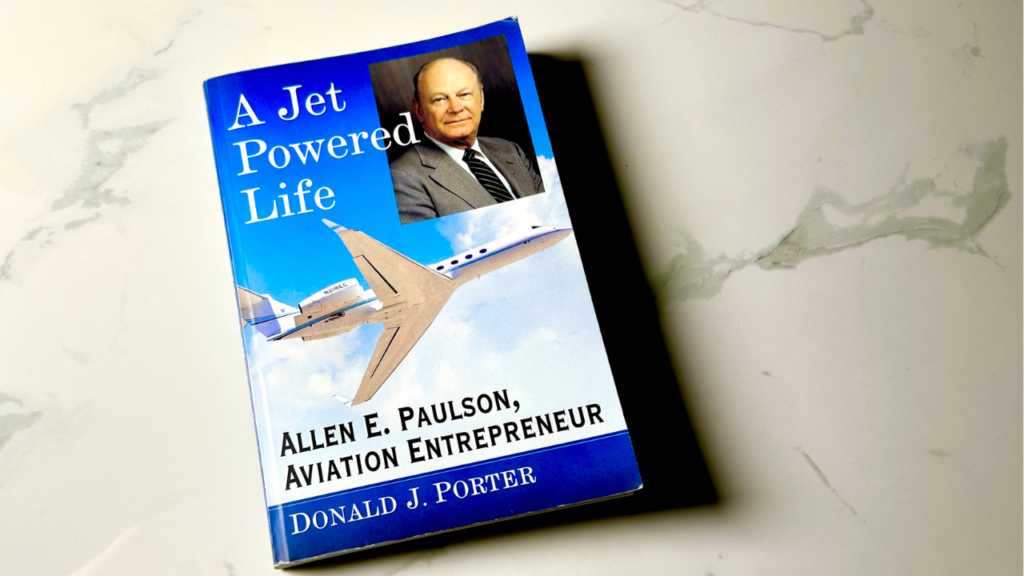
When I stumbled onto this book, I instantly knew I was going to do an episode on this story. It’s got everything we talk about in all my car creator stories, except it’s not about racing cars around a track. This guy races business jets around the globe and sets world speed records.
O’ yeah. And by the way, as he’s racing Gulfstream jets around the world, setting speed records, he also owns the company. And I never heard his name before I found this book, Alan Paulson. I just read the book. It’s titled, ‘A Jet-Powered Life,’ by Donald J. Porter.
This story has everything. From being homeless at age 13, to building a company from scrap airplane parts, to buying the crown jewel of aircraft companies for pennies on the dollar.
A full life lived with passion and energy and big goals.
I wanted to reread this book, it was so much fun learning about this amazing true story. Here’s a teaser. This is from the epilogue on the last page of the book. It says,
“As a young man, Paulson possessed something his peers didn’t. A laser-like vision to target opportunities, take risk, and reap rewards. He conveyed a quiet, shy persona in public, but used that poker-faced demeanor to the greatest advantage in business dealings. He became a symbol of the American dream, an inspiration to all. He was a person who loved life and proved that a strong work ethic with unwavering determination, commitment, and positive thinking can make dreams reality.”
So if you’re like me, you’re probably thinking by now, how do I not know this story of Alan Paulson? After hearing me read that from the book, I just finished my episode on Adrian Newey, the greatest Formula One car designer of all time and a master of aerodynamics. I had so much fun doing that episode that as I was reading the book, I started thinking about doing an episode on one of the great aviators. And just when I thought I knew all about the great aviators back in the day, I run into this guy, Alan Paulson.
He’s not a household name at all. And I don’t care about that. In fact, it’s a perfect reason to do this story. We should all know about Alan Paulson.
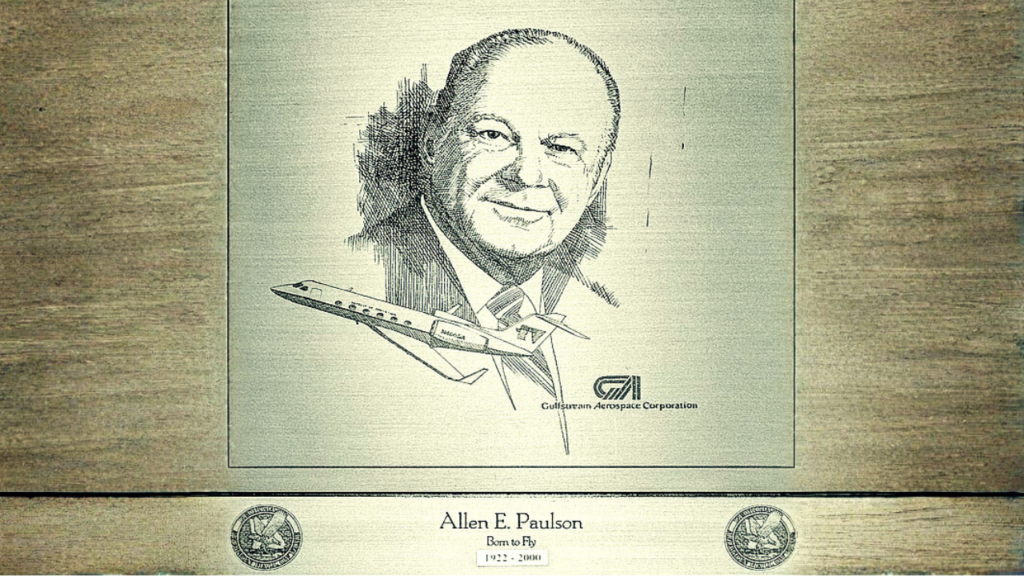
Allen E. Paulson
“He was positive and opinionated, but welcomed a good argument. A flexible thinker, he could be persuaded to shift from what appeared to be an adamant stand. The man possessed the ego of a natural leader, but was blessed with the virtue that many leaders don’t have. Knowledge of his weaknesses.”
Okay. So now when you think of Gulfstream aerospace, the brand, the company, you think about super ultra luxury travel. The best of the best. Superstar athletes and billionaire tycoons. Movie stars traveling the world.
But Alan Paulson, the person who created Gulfstream into what it’s known as today, he started his life out getting dealt a really tough hand. At the age of 13, he was on the street. Homeless. In a small town in Iowa, it was the middle of the Great Depression.
Tough Start For Young Paulson
His parents got divorced. His father lost the family farm. He couldn’t pay the bills and he wasn’t able to find work. So his dad left for California. Paulson’s mother gets sick in his bed, written in a sanitarium that leaves Paulson to fend for himself.
So what does he do? He needs a place to sleep and he needs a job. So he talks to the manager of a nearby hotel and he asked for work. He offers to clean the bathrooms and scrub the floors if he can sleep in one of the rooms. The manager agrees.
Paulson does his cleaning duties at the hotel and then he heads off to school for the day and then back to the hotel at night for a warm place to sleep. This might sound terrible to you, but Paulson, he didn’t see it that way.
His entire life he was known for his positive spirit and optimistic mindset. That’s just the way he was. Here’s how Paulson described his difficult childhood.
“I was on my own when I was thirteen,” he continued. “When I look back, it’s probably the greatest thing that ever happened to me. I was an entrepreneur early in life. I had to make it on my own.”
And so now you can see that Alan Paulson, he’s not going to be working at that hotel cleaning toilets for very long. He’s got the spirit to do bigger things. The book says he was blessed with unshakable ambition and boundless energy. So he has the idea to go work with his dad in California. He just needs to figure out how to get $25 for the bus fare to get from Iowa to the West coast.
Paulson Headed for California
Luckily for him, and two of his buddies, win a $100 cash prize in a Keno contest, which was a ton of money back in the 1930s split three ways. Each kid got 33 bucks. The very next day at age 16, Paulson quits his cleaning job at the hotel. He doesn’t even go to school that day. He heads straight to the Greyhound bus station and he buys a $25 bus ticket to San Francisco to go find his dad. And hopefully he can get a job working with him.
He gets to Northern California, Marin County, just north of San Fran. He gets a job with his dad working on a farm there and he starts to hear about Howard Hughes, who was setting speed records flying airplanes at the time. And that gets his interest. Then Amelia Earhart’s plane takes off from Oakland Muni Airport nearby Paulson. And that gets his attention too. She was attempting an around the world flight and her plane went missing over the Pacific. So Paulson’s seeing all this excitement going on.
Allen Paulson Finds Aviation
After his work’s done on the farm, Paulson would sit in his room and he’d carve model airplanes out of balsa wood. And this was before the days of the plastic model airplane kits. So he’d just carve his own parts out of wood and build these little airplanes. He spends time at the Oakland airport watching planes take off and practice aerobatics. And he meets a pilot there who would take him up on his very first flight. After they land that flight, he agrees to watch the plane for this pilot as payback for taking him up for that flight.
And then not long after that first plane ride, there’s another event that would stick with Paulson for the rest of his life. And the book actually starts out with the story and it goes through the entire ordeal. It was a plane crash that got the attention of 16 year old Paulson as he’s working on the farm in Marin County, Northern California. Over the radio, as he’s working in the barn, he hears of a United Airlines DC3 that went missing not far from where he lived.
The Crash
The plane might have ditched into the ocean, so Paulson jumps in his car and he heads towards the coast. He pulls up to the cliff where the Coast Guard and the Sheriff were already on the scene. He looks down. There’s a giant airplane floating in the water. It’s about a 500 foot drop from the water to the top of the cliff. But Paulson climbs down and swims out about 100 feet to the plane that’s bobbing in the water. He climbs into the airplane to look for survivors, but it’s empty. So he swims back to shore.
There’s a few survivors laying on the beach getting treated by the Coast Guard. So he climbs back up to the top of the cliff and there’s a newspaper reporter there and he takes a picture of Paulson and then he starts to ask him some questions. So this is a big event for the kid who’s already interested in aviation. He’s known now as the brave kid who dove right into the water to try to help out with the rescue of this tragic plane crash. The newspapers right there taking pictures of him after he climbed out of the ocean. But now he knows that aviation is what he wants to do with his life.
Reminds me of my episode I did last week on Adrian Newey. By age six, Adrian knew he wanted to be involved in motorsports. And then by the age of 12, he knew his mission in life was to design race cars. It’s just such a gift to have that focus at a young age, just to be locked in. It’s the same thing here. Alan Paulson has this intense drive and he’s focused his entire life on aviation, almost from the very start. A few years later, Paulson shows up at the TWA office. It’s the commercial airline.
Paulson Joins TWA
Back in the day, TWA, so he goes to the Oakland airport. He asked for a job as a mechanic. All through this book, it talks about Paulson’s gift of dealing directly with people. He was a great salesman, but he was also quiet and shy. So you might be thinking, aren’t great salesmen, aren’t they supposed to be this type A extrovert, the super talkative type of people? Not exactly. Some of the greatest salespeople are also great listeners.
They focus on what the other person wants and then they figure out how to solve a problem for that other person. And that’s Paulson. Although he’s shy and quiet, he knows how to convince people he can help them out. He might seem shy, but in a one-on-one discussion, he knows how to work the deal. Think about that hotel job he got when he was 13. The free airplane ride at the airport with that pilot that he met. This happens all through this book. He preferred to deal with people one-on-one and he closed the deal over and over, time after time.
So back to the TWA office. He wants a job as a mechanic and the requirement is at least a year of work experience. Paulson doesn’t have any aviation experience yet, but he closes the deal. He gets hired as an apprentice mechanic because he told the hiring manager about his time that he worked on cars and washing airplanes for that pilot friend of his he met at the airport and he closes the deal. So TWA, they assign him to Los Angeles.
And Paulson couldn’t be more excited to be in the hub of all aviation that’s down in LA. So he’s working at the Burbank airport. So listen to this. Here’s what you’re dealing with with Alan Paulson. His first real job as an apprentice airline mechanic. And so this reminded me a little bit of Jaco. If you listen to Jaco Willink, I think everybody knows by now, they know who Jaco is. This quote in the book reminded me of listening to Jaco’s podcast right here. Check this out.
Paulson just gets after it right here. This is how the book describes it.
“For 20-year-old Paulson, working at the airport was akin to spending time in paradise. The allure of aviation had become part of his DNA. When an airliner acted up during his shift, he’d rush to help more senior mechanics find a solution to whatever ailed it. Never a complainer, but disliking coworkers who moved in slow motion. He made sure that any job he handled was performed correctly the first time. The can-do style being observed by his supervisors, he earned fast promotions from apprentice to mechanic and then lead mechanic. “I went up the ladder pretty quick from lead mechanic to foreman,” he recalled, about still another promotion. The military draft resulted in a severe shortage of civilian mechanics, creating openings at the airline. He was in the right place at the right time.”
All right. So that’s the book right there. So he wasn’t really in the right place at the right time.
He was kicking ass. That’s exactly what he was doing. Just getting after it all day long. That’s what got him promoted. I’m sure there were tons of other coworkers standing around Paulson who didn’t get promoted and who were also in the right place at the right time, but they went nowhere. Paulson did the work. He earned it. This is that optimistic spirit through this entire book. He didn’t want to hear anyone say something couldn’t be fixed. He would just do it.
Paulson Moves Up the Ladder
It’s a theme in all my car creator stories too that I’ve done, the racing stories, they’re just all about the spirit of problem solving. That’s why I love doing those. That’s really what racing is. It’s just relentless failure and setbacks nonstop and then making adjustments and then fighting on just day after day. And that’s what you’re going to find with Paulson too. So now Howard Hughes ends up controlling this airline that Paulson’s working at TWA. Hughes is around the airport as Paulson’s working there and he’s doing such a good job.
They assigned Paulson to Howard Hughes’ personal plane. He was the one getting Howard Hughes’ plane ready before it took off. He says he was really proud of that fact that he was the one they trusted and they would have a personal relationship over the years, Paulson and Howard Hughes.
Now World War II is heating up and Paulson joins the army. He wants to be a combat pilot, but he’s denied. They had too many people who wanted to be pilots, so they kept him as an airplane mechanic in the army. And then once you get out of the army, your old company has to offer that same job back to you, that same job that you left.
So Paulson goes back to TWA as a mechanic after his time in the service. At this point, he’s trying to find a way to get into the cockpit. He wants to be a pilot, but it just hasn’t happened for him yet. And by now he’s married and he’s starting a family and he’s making a steady income as a mechanic foreman. So he’s doing fine. But this is the big turning point right here. He wants to do more. He doesn’t want the simple life.
Paulson Finds Solutions
Paulson starts buying old cars and fixing them up to resell, making some extra money on the side. He’s just out there hustling. And he’s crushing his daytime gig at TWA, of course. He’s getting a reputation as a super skilled mechanic. Now he’s the go-to guy for troubleshooting some of the big time engine issues the airline was having with their planes. And Paulson wants to do more. Here’s what the book says.
“You might think that a man with a stable job at a leading airline and a loving wife at home with three young children would be enough to satisfy him. Paulson was the exception. Although he enjoyed flying and family life, he was obsessed with doing more to elevate his career.”
Now he starts to work as a flight engineer because he’s so knowledgeable about all these aircraft systems. They want him in the air to monitor these flights. It’s not quite a pilot, but it’s closer.
He’s still he’s sitting in the cockpit with the pilots as a flight engineer and he’s doing a lot of cross-country flying So during these winter months he’s buying cars in the Midwest and he’d ship them back to California where they were in demand and He would resell them to make extra money now He realizes at the same time these the airlines are having issues with their engines. It’s this right engine the r-3350 they would catch on fire during flights, which is a big problem.
Well, this is Paulson right here. This is who he is. He wants to figure out how to fix this issue with the engines. He’s looking around at work and nobody’s really interested in figuring this thing out. And he’s surprised. So what’s he going to do? He’s going to go out and buy his own military engine. That’s what he’s going to do. It’s identical to the airliner’s engine, the Wright R-3350 engine.
He borrows $1,500 from the credit union and he buys his own engine so he can run tests on the thing and figure out what’s wrong with it, why it’s catching on fire. Polson has an idea how to solve it. He was thinking it was a lubrication issue because it was overheating and that’s exactly what fixed it. From the testing that he did on the engine he bought and now he has a solution. He could buy more of these faulty engines, perform the fix, and then resell them at a profit.
And that’s exactly what he does. TWA would actually front him 25 grand to buy old engines and modify them so they would stop catching on fire during flights. Now, Paulson’s still working as an employee, but he’s also working all hours of the day in his spare time to modify these engines and resell them back to the airlines. And quickly this little business, it looks like it could be a bigger business.
If could just make it a full-time gig, but his wife is hesitant, why take the risk? You already have a good job. Well, this is what Alan Paulson is built for. He’s losing interest in his daytime job at the airline, seeing the potential of his engine business. After 10 years as an employee for TWA, Paulson knew what he had to do. This is from the book.
“He couldn’t live three lives anymore. Airline employee, business owner, and family man. Something had to give. He couldn’t wait to devote full time to his business.”
And you can imagine now he’s off and running seven days a week. Paulson starts his company. He names it California Air Motive Corporation. And everyone was buying that fix that he invented for these engines. The entire TWA fleet needed it. And other airlines did too. He wasn’t just performing the maintenance, but he’d buy entire engines and then he’d take the parts he needed and then he’d resell whatever was left for more than he paid for it.
And one of the keys here was the military that had mothballed tons of old planes. And the specs were identical for all the parts. They were just different serial numbers for civilian or military aircraft, but they were all the same identical parts. So he’s out buying bulk military scrapped out engines, and then he just repurposes them for the commercial airlines. And then he resells whatever’s left over for even more profit. Here’s what he said in the book. He goes,
“It was like a butcher selling everything meat bones and fat.”
So then he says from one engine, the business grew to several thousand things just mushroomed. So Paulson he’s working 12 to 14 hour days. He’s just getting after it at all times. He’s locked into growing his business. His family life suffers because he was never home. But the book says in one year sales from his company were a hundred thousand dollars. Then the next year, $1 million.
Paulson says, “From then on the engine parts business just kept building up. That was a little acorn that grew into a big oak.”
That’s what he said about his company. And here’s what I’m saying right here. Through this entire book, this is Paulson. Nobody’s gonna kill his vibe. The positive spirit since he was a kid, he would get his hands now on the legendary book by Norman Vincent Peale, “The Power of Positive Thinking,” and it’s music to his ears.
Now there’s no chance anybody’s going to slow him down. He can’t stop it and he won’t stop. Here’s Paulson in the book. says,
“Early in life, I discovered there’s no such thing as a lazy, lucky guy. He was fond of saying when people would ask him why he worked all the time. Competitors considered him unorthodox, chalking up successes by running a company that benefited from cheap rent, a limited number of employees and luck. They did concede that Paulson had brains and gumption, two attributes he possessed in abundance. His optimism concerning the future could be termed obstinate.”
And then the book goes on, it says, in both his personal and business lives, Paulson avoided discussing anything in a negative vein, always focusing on the positive. And then here he keeps going. says, he’s talking about Norman Vincent Peale in this book. He says,
“Peale’s been one of the biggest inspirations I’ve ever had. On the job, Paulson preached the gospel of Peale, blended with the advice of President Theodore Roosevelt. “Think positively, walk softly, and carry a big stick.”
I love that. He’s walking around quoting Roosevelt and MVP. Paulson was such a big fan of Norman Vincent Peale’s book. He ordered thousands of copies and he’d pass them out to all his employees so they could read the book. So if you can imagine, he’s out there wheeling and dealing airplane parts. He’s flying to auctions all over the country, making deals for entire parking lots full of airplane parts. Now these deals are getting so big that Paulson’s buying entire airplanes.
He’s going all the way, not stopping for anything. check this out, we talked already about his skills as a salesman. even though he was a quiet guy, he could close any deal. the book says it right here.
“If Paulson had embarked on a career selling furniture or fertilizer, he may have failed. It was his consuming passion with aviation that impressed prospective customers and helped close sales. His experience could be compared to an eight-year-old boy running wild in a candy store.”
So business is good. And Paulson expands his operations at the Burbank airport so he could juggle all the planes that he was buying and selling. And he was always making new connections, not just in the aviation world, but celebrities and powerful people. At one point he’s out there playing golf with Eisenhower. And how do you get to become friends with the president? Paulson just worked the deal, like always, with his own style.
And word spread about how he was a self-made guy from nothing, and he worked his way up. He just attracted a very high-quality group of people all around him. Here’s what it in the book.
It says, “For a guy who was so quiet, Al sure made a lot of connections, McCaw added, cementing friendships in high government circles were always done in quiet, circumspect fashion. Never beating on doors to win friends, Paulson developed friendships on a long-term basis, and not with any sense of urgency.”
Paulson’s playing it cool. He knows what people want. They trust him. Now these connections would also play a part to finance his business. Commercial bankers wouldn’t touch aircraft financing back in the day.
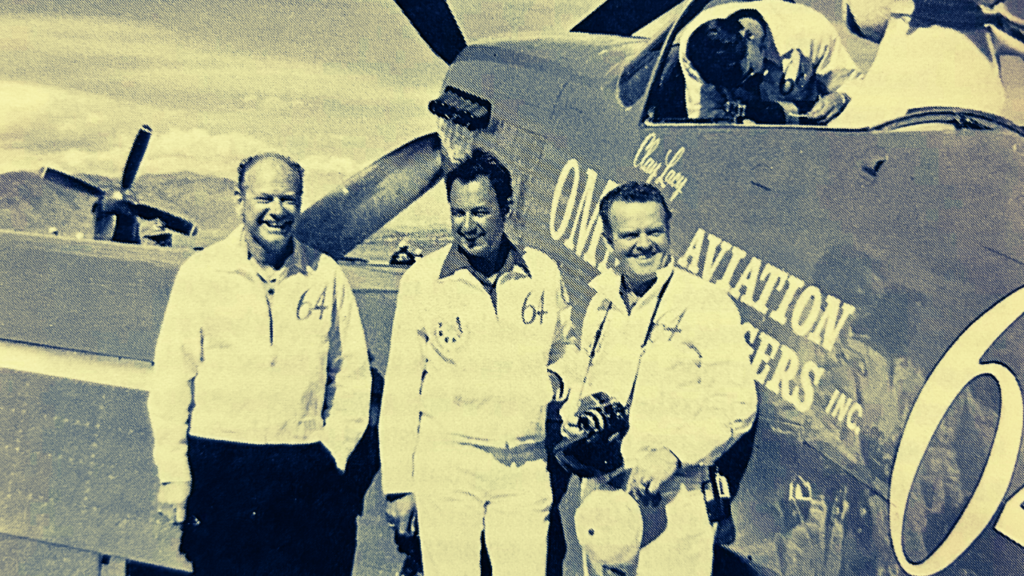
So Paulson’s leaning on some of his wealthy private connections to grow the business. Because of these smaller airlines, they were always strapped for cash. If Paulson can offer flexible and creative terms for these airlines, then he can do even more business. And that’s where his private wealthy friends come in. Now business is good and he’s attracting sponsorships. And this one’s right up his alley. This guy, Bill Steed, he sees a sign for air races in Reno, Nevada, and he asked Paulson if he’d sponsor him in this air race. The only problem is that Bill Steed doesn’t have a P-51 Mustang.
Well, Paulson liked the idea so much, he makes a quick trade. I think he traded one of his Cessnas and some cash for a P-51. And now they’re entered in this air race. So Paulson’s in the stands to watch this race and Stead doesn’t win first, not in this race.
Paulson enters another race, and this time they enter a DC-7, which is this big cargo plane, and they’re racing against P-51 Mustangs. But this was an endurance race. These smaller P-51s would have to stop for fuel, and the DC-7 could go all the way without refueling. And this time, Pulsan’s the co-pilot. He’s finding a way into the cockpit after all. I’m mentioning this here because it’s a preview of things to come for Paulson.
This is just the warm up for racing airplanes, as we’re gonna see here shortly. Anyway, another big turning point in the story is when Bill Lear rolled out his new jet onto the runway, and he flew it for the first time in Wichita, Kansas. The Lear jet changed the game. It was twice as fast as anything out there for business flyers, and Bill Lear, he knows Alan Paulson, and he arranges for a test flight. That second Lear jet ever made.
Paulson’s on that jet to test it out and Paulson was blown away 500 miles an hour and the climb rate of 6,000 feet per minute It was like a jet fighter for civilians the first of its kind. So Paulson becomes a distributor of the Lear jet out of his company headquarters out in California. So Bill Lear and now Alan Paulson they need to figure out a way to entice buyers of this new jet So Bill Lear has an idea. He wants to show how fast that new Lear jet is, so he flies from Los Angeles to New York in five hours and eight minutes. A new world record for a business aircraft.
Then New York, back to LA and he broke that record too. Paulson is seeing all this attention that Learjet is getting from breaking this record. And it’s great for business and for his distributorship. A brilliant marketing move. The Learjet becomes the new “in thing” to do. The book says politicians, business execs, celebrities, they all wanted a Learjet, and Bill Lear knew Paulson had close friends in very high places.
“Bill Lear knew that California Airmotive was the linchpin to close sales on the West Coast. Alan took Frank Sinatra on a demo ride, and he took Kirk Kekorian on demo ride. Recalled Mary Lou, he was a wonderful salesman. He would persevere and close sales. The men learned the value of involving celebrities in their endeavors. In those days, when Bill wanted to make the Lear jet a household word, he thought the way to do it was to get celebrities in it, Lacey remarked. Many were friends like Danny Kay, and Art Linkletter, as well as Frank Sinatra, Dean Martin, and Sammy Davis Jr. Sinatra bought one of the first Lear jets from Paulson. Just about everybody in Hollywood flew in the demonstrator. We got a lot of free publicity, like with Sinatra. Some of those flights resulted in selling a jet.”
So Paulson’s connected with this amazing personal network of friends. His business is throwing off tons of profits and now he’s selling Learjets as an official distributor for Bill Lear. But Paulson’s not stopping. He’s just getting started.
All of my car creators stories are like this. It’s that search for the next challenge. Raising the bar constantly. My Adrian Newey episode I just did, the greatest Formula One car designer of all time. He was always looking for that next challenge in his career, and he ran through the entire formula one industry all the way to the very top.
Well, Paulson’s the exact same way. He’s out there selling Lear jets and then he starts a luxury car dealership in LA. He buys the Rolls Royce and Bentley dealerships to sell cars, but pretty quickly he realizes this isn’t happening. So he sells the dealerships and there’s so many examples in this book about Paulson trying certain things and then they just don’t work. So he changes course. He makes adjustments, but he never stops moving forward.
Here’s what it says about the car dealerships. I thought this was interesting. says, “The real trick in business is knowing when to get out. He said, I had to do that with the car dealerships in LA. If you keep things too long, they can drag down the rest. Gaining the friendship of the right people, such as Murphy, to make deals was crucial to Paulson’s success. Al was very good at surrounding himself with well-heeled people who could help in his business.”
And so there were things driving Paulson to do more than just sell airplane parts. Here’s what it said. He wanted to be known as more than just a airplane parts dealer. The book said, “Typecast as a junk dealer within the aviation industry. Paulson dreamed about doing more than selling used airliners and running a parts warehouse. What he really wanted to do was to notch up his career by manufacturing aircraft of his own design and the Lear jet served as inspiration. If Bill Lear could create an airplane, so could he. He decided to mimic what Lear did by building and marketing his own airplanes.”
Now here’s the next challenge for Paulson. It’s clearly gonna be creating his own airplane and then finding out a way to manufacture the thing. This takes years. He starts by finding old military training jets and then trying to develop those into his own business jet prototypes.
So there’s the Super Pinto project and that just doesn’t work out. And then Paulson starts designing the Hustler. This airplane he designed, it’s got a propeller in the front for short runway takeoffs and then in the back a jet engine for fast cruising speeds. So Paulson gets this prototype created of the Hustler, but then he hits some roadblocks. It’s not stopping Paulson. And Clay Lacey, fellow pilot, he said about Paulson,
“He had nerve and guts to do things that were unusual.”
Now we got to step back a few years now. Back in the 1950s, the Douglas DC-3s were the main business jets. They had two propellers, so they were slow, and those were becoming obsolete. The executives at Grumman in the late 50s developed a business aircraft powered by a turbine engine. They said it’d be a mini airliner. That’s what they called it. And this plane was powered by two Rolls-Royce turboprop engines, and Grumman called this plane the Gulfstream, or the G1.
So this plane had better range, it had an air conditioned cabin and plenty of headroom so that a six foot tall person could walk around inside without bending over. And the G1 now with its turboprop engines could fly up and over storms and bad weather. Business executives loved the smooth ride and they started asking for a jet powered version of the G1. So by the mid 1960s, Grumman started to develop the Gulfstream II, their very first business aircraft with two jet engines instead of the turboprops that were on the G1.
Because of the Rolls-Royce engines and this solid legacy of the Grumman brand, the Gulfstream I and then the Gulfstream II, they became known as the super high quality rock solid airplanes. Here’s how the book describes it.
“Grumman Gulfstream, with the Rolls-Royce image added, had the same cachet as Tiffany or the Waldorf Astoria.”
And what was great about the new Gulfstream 2 was it could still land and take off at smaller airports with short runways, just like that Gulfstream 1, but it had faster cruising speeds and better range because of those new Rolls-Royce jet engines. The Gulfstream 2 hits the market in 1966 and it’s an instant hit, but just a few years later, there’s trouble. It’s a recession and then a bunch of issues at Grumman inside the company.
Their main business is military aircraft. They just built the F-14 Tomcat, the fighter jet. And one of those first flights for the F-14, crashes. Grumman also built the Apollo lunar module that landed on the moon. But now that mission’s over. The 1970s were rough for Grumman. They tried to win the contract to build the new space shuttle, but they lost that deal to Rockwell. Grumman builds planes for the Navy and they started asking for payment in advance. They were saying they’re almost out of money and they’ll go bankrupt without a cash advance. And then there’s some scandalous behavior.
And Grumman’s a public company and the SEC opens an investigation over some illegal payments to foreign buyers of the F-14 fighter jet. At this exact same time, they’re trying to develop the Gulfstream 3 because it’s the bright spot for the company. But with all these other issues, they end up canceling the entire program. And that’s after they spent $120 million developing the Gulfstream 3. They pull the plug. They got to cancel it. They just can’t get it together.
They already had 40 orders for the new Gulfstream 3, but they have to refund all the deposits. So Grumman’s floundering. And the most valuable part of the company is this division making Gulfstream business jets. This division, was called Grumman American Aviation Corp. So the chairman of Grumman, they’re looking at this Gulfstream division as kind of an annoyance almost, just because it’s such a tiny part of the company. They decide if they can sell off this business jet division.
They could really use that money and then they could refocus on their military plane efforts and they’d like to sell off that division. If only there was a buyer. It’s the late 1970s. It was a tough decade for the economy. There were recessions and an oil crisis, stagflation. There’s just not many buyers out there thinking that business jets are going to be hot sellers coming up in the near future. But there is actually one very interested buyer out there.
Back to Paulson. He’s got this great established business going that’s throwing off tons of cash profits for years, selling used aircraft parts. But he’s been on a mission to manufacture his own plane ever since he saw that Learjet. He needs a factory where he can build. He almost had it with the hustler concept, but he’s not there yet. So Paulson’s out there searching for a company to buy. He’s trying to buy a commercial airplane division from Rockwell, and he actually makes an offer but he was rejected by Rockwell’s board.
So they turn him down, but he’s still out there on the hunt. At the same time, things are getting worse for Grumman. They need to raise cash and it just makes sense for them to get rid of this business jet division, Grumman American. But like I said, not many people are feeling optimistic about business jet sales at the moment. So there’s just not many buyers out there. Here’s how the book says it. Facing the threat of investigations coming at Grumman from all sides.
“54-year-old Chairman John Bierworth told his executives, I think the best thing in the world would be if somebody would buy the Gulfstream business from us. The Overseas Payment Investigation appeared to be the impetus for unloading Grumman American. But slow sales of all business jets intensified the pressure to move in that direction. For another take on why Grumman decided to sell, Bierworth surmised, I suspect that one factor was a desire to avoid a risk of tarnishing the parent corporation’s reputation for integrity. Anticipating a disastrous outcome for the company. Possible bankruptcy. Bierworth and his fellow board members seldom got a good night’s sleep.”
Alright, that was from the book. They’re just stressed to the max right now. Remember, Grumman is a publicly traded company. They don’t want to spook the market. So, Weemeister keeps this deal quiet. But he starts searching for somebody to buy this division of the company in private. He doesn’t want to look desperate and cause the stock to plummet.
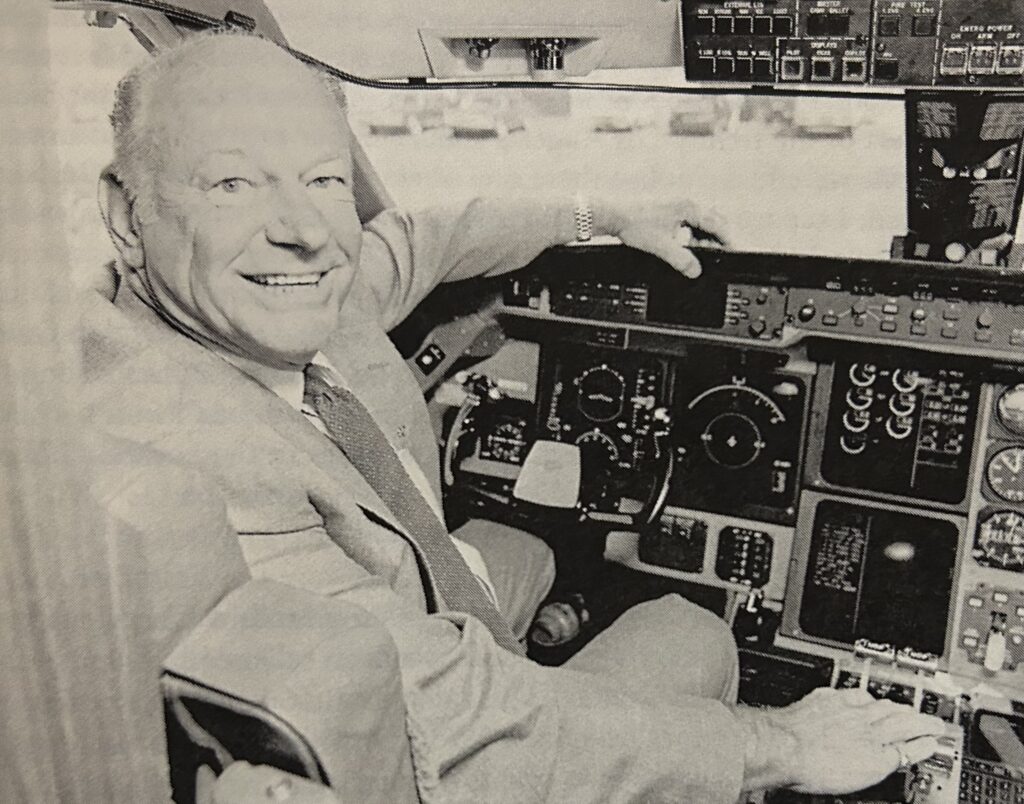
And now so here it is. It’s the lucky break. This random event, whatever you want to call it. But if you’re pausing back when he was starting his first company and working 14 hour days, you might remember back then what he said. He said, “Early in life, I discovered there is no such thing as a lazy lucky guy.”
So it’s hard to call this luck, but here’s how it played out.
“The good news was that weeks past with no rumors finding their way into print about selling the company. The bad news was that there was no viable leads. As fate had it, Carr, Vemeister’s boss, spotted a small news item in an aviation magazine. It turned into the only serious lead. The article reported that Paulson was considering buying the Sabreliner program from Rockwell.”
Okay, so now listen to this, here it is. It says,
“Carr reasoned. Why would he buy the Sabreliner if he had a chance to buy the Gulfstream? He called Vemeister to his office. Carr told me that Mario Barone, a managing partner of the Grumman auditors, knew of a man who was looking for an aircraft manufacturing facility. Vemeister immediately picked up the phone to call Paulson in Van Nys. An hour long conversation paved the way for a person to person meeting in New York.”
So the rest is history. Grumman goes out and finds Alan Paulson and calls him, and they ask him to buy the Gulfstream division from them. And Paulson’s just like, what is going on? You’ve got to be kidding me. But he’s trying to keep his cool. He doesn’t want to seem too eager, but he just couldn’t believe it. It was exactly what he was looking for.
Here it is from the book again. It says, “Clay Lacey watched the drama from the sidelines in Van Nuys. Vemister called Al out of the blue and asked him if he’d like to buy Gulfstream. Al said it would be great, but he could never raise enough money. He was told not to be so sure. Al needed to go to New York. For Paulson, it took on the feeling of a dream too good to be true. I couldn’t believe it, he said of the opportunity presented to him. More than anything, he wanted a modern, well-equipped plant such as the Grumman facility in Savannah. He assumed that it would be the perfect site to begin production of the Hustler 500.”
And the book keeps going on. says, “Lacey recalled how fast the deal making progressed. Al called me right away and said he’d take the Lear to fly back to New York on Friday. At least that was the plan. But in fact, Poulsen moved even faster. “I got in my Learjet and flew there immediately,” he said. “I never dreamed Gulfstream would be put up for sale. I was like a kid in a candy store. I was afraid I was going to blow it because I was so eager to buy it. He pointed the Learjet’s nose eastward from Van Nuys and clicked off the miles to Long Island.”
Paulson’s on his Learjet almost immediately headed to New York and they hammer out a deal. They questioned Paulson a little bit on how he’s going to pay for the company and Paulson says he’s got a backer with about a hundred million dollars. Which was true. It was this guy Henderson who was a friend of Paulson’s who turned out to be a big shareholder in Avon stock. Not only that, he had a sheep ranch in New Zealand and millions of dollars in gold coins.
So Grumman actually takes a look at this guy and everything checks out. He was totally legit. So this guy Henderson with a hundred million dollars was Paulson’s big backer to buy the Gulfstream unit from Grumman. And actually there was a bank also involved in the deal. It was Citibank who put up some money for Paulson as well, which is another crazy story. Paulson’s credit was basically as good as gold with Citibank, because of something that happened way back years before.
There was a tragic plane crash in Peru and the plane was sold to this airline in Peru by Poulsen. Well, it turned out to be pilot error. They flew this plane right into the side of a mountain tragically, but it turned out to be nothing mechanically wrong with the plane that Paulson sold. After the crash, this airline was grounded for a while and Poulsen made a deal to help out the airline, who owed both Paulson and Citibank millions of dollars.
So Paulson stepped in and he helped out this airline out of a jam and word got out that he had no obligation to do it. And that actually saved Citibank from losing a bunch of money in that deal. And so people remembered what he did. He had no obligation to step in, but it seemed like the right thing to do after that plane crash. So years later now, when it came time to buy Gulfstream, guess who’s there to help out? Citibank had his back, because of what Paulson did years before.
Back to the book here, says, “He got enough money to offer a down payment, Glenn said. Jack Beirworth was so anxious to sell the program that he agreed to give Al what was in effect a loan for the first 200 Gulfstream 3s that were to be built and sold.” And it keeps going. says,
“We’ve got a deal. After telling Mary Lou the news, his next call was to Lacey. Paulson’s friend and close associates were impressed with his adroit deal making. He worked out a deal that was way cheaper than what the company was worth, Lacey remarked. Glenn said he thought it would be a great place to build the Hustler. Bruce McCaw offered an interesting perspective. I’ve always said that the Hustler was the most successful business airplane ever built, because without it, would have never ended up with Gulfstream.’
Alright, so 13 weeks after the first meeting between Paulson and Grumman, the deal was closed. It is so funny because there’s this whole time Paulson’s planning to build his Hustler plane that he designed at this new Gulfstream plant. But that plane never goes into production, which is what Bruce McCaw was just saying. It was the most successful plane never to get built, the Hustler, because Paulson’s dream to build his hustler plane is what steered him right into the Gulfstream deal.
The book says the transaction bought Paulson all the company’s commercial aircraft product lines and facilities on the Savannah airport. It also required Grumman to design, develop, and FAA certified the G3 version of the Gulfstream. $35 million worth of work to be paid for by Grumman.
So Paulson’s got his aircraft manufacturing facility just like he wanted now, finally. And much, much more than that. He now owns the company that’s about to build and sell the Gulfstream 3, and it’s fully developed in paid for already and basically all set for production.
Then listen to this, as part of the deal, Paulson bought the rights to use the Gulfstream trade name. Knowing that name had a certain ring to it and the value of that name, he didn’t want to just call each plane a Gulfstream. He wanted to rebrand the entire company to Gulfstream. Right after the deal closes, he immediately changes the name of the entire company to Gulfstream American Corporation.
And shortly after that, he changes it to Gulfstream Aerospace. So the Grumman top brass, after this deal closed, a few of them are scratching their heads and they start looking around like, what the hell did we just do? The book says a group of shareholders were irate after seeing the deal that was done. The chairman and Grumman was like, we needed the money! The shareholders were like, you just gave away our best asset you buffoon. The crown jewel of the company, you just gave it away.
But the deal’s done and Paulson gets to work. He moves to Savannah, Georgia, where the manufacturing plant is building the Gulfstream three. There’s 2000 workers and there’s 600,000 square feet of space, but the company was still losing money. He said his little airplane parts company in California was only doing about $40 million a year in sales, but had profits of $5 million a year. While Gulfstream was doing over a hundred million dollars in sales when he took it over, but they were losing money, zero profit.
People didn’t understand how he could buy a hundred million dollar company with his smaller $40 million a year company. And it’s pretty simple. The bigger company didn’t have any profits and his parts company was profitable and stable. And that also made it a giant risk. If you couldn’t turn this thing around in a hurry, in the book, said,
“It was like a mouse taking over an elephant.”
But here’s what happened. The Gulfstream employees noticed this change immediately in ownership. Paulson was down on the assembly line in the factory trying to help solve problems. And people noticed. He was down to earth. Frank. Simple and soft spoken. But he wasn’t easy going. Once they saw Paulson in action, they realized he was there to get things done. So it was this unique combination of skills.
He would say, “A camel is a horse designed by committee.” That’s a great line. He wanted advice from others, but he’d be the one making the quick decisions on his own. He wanted one-on-one communication. He hated useless meetings that weren’t critical and he hated worthless memos. So he’s just streamlining this whole thing. And here’s a great summary of what Alan Paulson brings to the table right here. This amazing summary,
“Says Jasper Dorsey, a columnist with the Rockmark Journal, offered his opinion concerning Paulson’s achievements in a 1990 column. Alan Paulson is incredible, possessing a rare and overwhelming combination of a super salesman who has a sick sense of what customers want, plus design and production skills to create it profitably, he wrote. He also has a keen sense of timing, can do any job in aviation from mechanic to designer to engineer, to test pilot, to production, and can do it at the summit of the art, yet still maintain an informal, low-key style.”
That’s crazy right there. That’s high praise. If I’ve ever heard it, he said, rare and overwhelming combination of a super salesman and can do any job in aviation. Are you kidding me? That’s him though. That’s Paulson.
The turnaround at Gulfstream is underway now with Paulson running the show from 1980 to 1981. Sales doubled from $217 million to $442 million. At the same time, there’s inflation and high interest rates. The U S is trying to get out of recession, but Paulson escapes most of that with sales to overseas customers for the G3, the Gulfstream three.
At the same time, the economy’s not doing so great. Paulson’s doing better than ever. And they credit this to his leadership style and his positive attitude on the turnaround at the factory. Says, “He was a grassroots type of guy,” said Georgia Southern coach, Eric Russell. “Despite his millions, he acted just like an ordinary guy.” And so that’s they’re saying about him. They noticed this unique style that he had. Of course, the thought in Paulson’s mind, the same thought that we see over and over again in the car creator stories that I’ve done too. As soon as there’s success, instantly the thought is what’s next? Obviously it’s going to be the Gulfstream 4 and they need money to develop it. Lots of money.
So Poulsen takes the company public in the largest IPO since Ford Motor 30 years before. Paulson and Gulfstream raised $640 million in the stock market in their IPO. His share of company went from 96% down to 77% in that IPO. But that 77% of shares now that he owned was worth about a half a billion dollars.
And now the company has the cash to develop the next generation aircraft, the Gulfstream 4. And maybe his most brilliant move yet, Paulson starts to plan the sales and marketing for the release of the Gulfstream 4. And it’s not by printing an ad in the Wall Street Journal either. It’s by breaking around the world speed records, flying his Gulfstream jets. And he’s the pilot.
“Aside from enjoying unprecedented sales success, there were flight records to set. Paulson believed that setting records was the best publicity tool for causing potential buyers to take note of the Gulfstream’s globetrotting capabilities. He remembered watching Bill Lear back in the day sell Lear jets.”
And we’ll get back to this in a minute, but I got to talk about the big sale right here. They sell the Chrysler. It’s an opportunity that comes in from Paulson that’s just too good to pass up. There’s a few things going on here at the same time.
The economy starts to recover and then competition is also heating up from Dassault and Challenger. And these competitors of Paulson’s, they had close ties to their governments, Canada and France. Giant governments were backing Paulson’s competitors. And that was just an unfair advantage. And it’s something that Gulfstream didn’t have. So Paulson knew he was out gunned there. As the economy’s picking up steam, Lee Iacocca is at Chrysler, and he approaches Paulson to buy the company. Lee Iacocca had a Gulfstream and he used it.
And at the same time, the big automakers were also trying to diversify into other industries like aerospace. And Gulfstream was at the top of the list for an acquisition. The book says, “By selling Gulfstream to Chrysler, Paulson figured he could have his cake and eat it too. There came a period when I figured it was a good opportunity to sell and still be involved in Gulfstream. So I sold it. My deal with Chrysler was that I would continue to run the company for five years and be chairman and chief executive officer.”
So this was a no brainer to sell the Chrysler, but he’s still going to run the company as CEO. So now he can get back to the racing. Paulson wants to sell Gulfstream 4s and he knows what will do it. Breaking speed records. The book says,
“He hoped that setting them in the Gulfstream IV would garner publicity as the earlier adventures did. Proving that his $22 million machines could fly faster and farther than competitive jets was a matter of pride for him.”
And check this out, Paulson’s in the captain seat for much of the flight to set the record for fastest around the world jet. And they do it. Here’s how the book lays it out. It says,
“The jet had circled the earth in 45 hours, 25 minutes and 10 seconds. Two world records and 22 city to city records were set in a new FAI category dedicated to the westward around-the-world flights. We did it to prove that an aircraft with a high Mach cruise number can go against a 100-knot headwind from Paris to New York. An elated Paulson told reporters, we are the only transport aircraft to go for this globe-circling record, and we challenge anyone else to break it. In 1987, a total of 44 G4s were sold, with 42 more scheduled for delivery in 1988. The volume of business had never experienced such an upswing. The publicity for setting this and other records may have helped close some of those deals.”
So of course those records are going to help sell aircraft. And then check this out. A friend of Paulson’s, this guy, Bill Lacey, would quickly break that speed record in a Boeing jet. And Paulson’s not having any of it. He gases up the Gulfstream again. And of course now he’s got to get the permission from the board at Chrysler first, which he does, then goes out and beats Lacey’s Boeing jet record by 45 minutes, flying around the world in a Gulfstream 4 in 36 hours, 8 minutes.
And he goes, “The Boeing record made us knuckle down and do everything possible.”
And it says, “Among the workers in Savannah, the world record turned into a big deal. This had a big impact on the morale of our employees, Paulson said, about setting this and other records. The people who bought our airplane have their decision confirmed that they bought the best.”
So this was the plan all along. Paulson knew the deal and he made sure he kept that record with a Gulfstream jet. And that record wouldn’t be broken until the Air France Concorde broke it with its supersonic flight in 1992.
So later on now, Chrysler would actually sell Gulfstream to a Wall Street guy, this guy Teddy Forstmann. And this was a deal that Alan Paulson actually made happen. Forstmann knew Paulson was the key to convincing Lee Iacocca to sell to them before anyone else. So Paulson agreed to help Forstmann scoop up the company before Chrysler could get a higher price for it. So again, Paulson’s in there making the deal happen.
And then what happens after that? It’s just not as interesting. Once this wall street hedge fund gets their hands on the Gulfstream, they basically run Paulson out of the company and to go along with it, they call them like an old washed up good for nothing. Nobody, something like that, which it’s pretty pathetic actually, but that’s just the corporate game here. It’s they just clean house and they bring in their own people. And that’s what happens. And then actually a force man would, would eventually sell the General Dynamics a few years later and he’d make a bunch of money from that deal too. Good for him. But Alan Paulson is in there mixing it up all the way.
I freaking love this story.
A totally unique guy. He’s soft spoken, but he just outworked anyone and everyone. He had no fear and he knew he could figure out any problem that bounced in front of his face. What a life.
Paulson did get into horse breeding and horse racing as he made his millions over the years.
He was the breeder of a horse named “Cigar,” the horse that won 16 straight races and won over $10 million in prize money. And by the way, Paulson did not name that horse after the cigar that you would smoke. The name “Cigar,” was a waypoint, a term used on aeronautical charts for air navigation. You need to go get this book. I would strongly recommend you read this book called ‘A Jet-Powered Life,’ by author Donald J. Porter.
It’s such a great true story. Like I said earlier, it’s a life lived with energy and passion. Here’s the author.
“By any measure, Paulson led an unusual life. He pursued opportunities other entrepreneurs didn’t appreciate or lacked the gumption to tackle. The super Pinto, the Hustler and the Peregrine jets emerged from his drawing board, but none succeeded in the marketplace. Undeterred, he bought Grumman American and shaped the Rolls Royce of business jets into an enduring legend.”
“Equipped with a gambler’s instincts, he took chances more cautious executives avoided. He was a self-effacing man, not at all comfortable being in the front, Cathy Osako remembered. He knew he had to be, but he didn’t like it.”
“He wasn’t so egotistical as to believe that Gulfstream could achieve greatness solely from his own abilities. He succeeded because the people working with him became infused with his enthusiasm. He sought innovators, not imitators. He epitomized the self-educated man, with much of his education absorbed from the knowledge and skills of other people.”
And there’s so much more in this book about Alan Paulson. It’s amazing.
So, and if you’ve listened this far, all the way to the end, I should tell you a quick personal story and what was so interesting about this book for me.
The company that I worked for had their own private jet. The owner of the company, it was always his dream to have a jet and finally he’s able to get one for the company to use. It wasn’t a Gulfstream, it was a Cessna Citation. It was brand new at the time, so if you know that Citation 10, it was a 10 plus actually. So if you know that plane, it’s plenty fast.
We could get up to about Mach 0.9 in that plane and you’re up there at about 50,000 feet and you can see commercial airliners down below you as you’re just blowing past them. You’re just whizzing right by all the other traffic. So that was a real treat to be able to experience that airplane.
And here’s the worst thing about flying private.
Like I was, I was just riding along. I didn’t own the thing. I got to use the jet plenty of times, but the day came when the owner decided to sell his company.
And guess who bought it? A private equity fund came in and bought the company, kind of like Teddy Forsmann coming in to buy Gulfstream from Chrysler when they ran out Paulson out of the company. But this PE fund comes in and they buy out my old boss. And that’s when it happened. It was a dark day for me because they buy the company…and they sell the jet.
And now I’m back to flying Delta Airlines.
If you want to talk about heartache… if you want to talk about pain… going back to flying commercially after flying in a Citation 10 for a few years… this is something I wouldn’t wish on my worst enemy.
Anyways, that’s what really got me interested in this story of Gulfstream and Alan Paulson.
The private aviation world is wild.
And I guess now as I sit at the gate waiting for my group five to board at the commercial terminal, babies are screaming and the lady next to me is not even wearing shoes…
I just kind of stare off into the distance, and I start thinking about the English poet, Lord Tennyson.
A few hundred years ago, he said,
“It’s better to have loved and lost, than never to have loved at all.”