The Rise of Ferruccio Lamborghini
Ferruccio Lamborghini
Episode #45
07.08.2026
“Ferruccio often recounted. One day the commander ordered us to go and collect ten Fiat 626 diesel trucks. None of us knew anything about the diesel engine. And I saw that they’d also given us the instruction manuals with the trucks. Then I thought, if everyone learns about this engine, I’ll be one of the few. But if I’m the only one who knows how to operate them, I’ll gain a position. That same night, trying not to be caught. I took the instruction manuals, studied them carefully, then buried them. When the commander came to ask who knew about the diesel, obviously I was the only one. I often ended up handed over and had to spend the night in prison. The door was left open to provide escape and shelter in the event of air raids and bombings. And since I had the key to the workshop, I took advantage of the situation at night to tamper with the engines so they couldn’t start again in the morning. The next day, the commander, finding no one capable of identifying the fault, turned to me, and thus I regained my freedom.”
-From the book by Tonino Lamborghini, ‘Ferruccio Lamborghini I Tratori’
Ferruccio Lamborghini
That’s a wild story right there. It’s at the very beginning of this book. That was Ferruccio Lamborghini. And from this day forward, when I hear the word aura, I’m gonna think of Ferruccio. That was him. He’s telling his story from his days back in the military during World War II. It’s from this really cool Italian book I have. And it’s authored by Ferruccio’s son, Tonino.
So Ferruccio notices nobody understands these diesel engines. And I have the manuals right here in my hands. Now, if everybody learns of what’s inside these manuals, I’m gonna be one of the few who knows how to repair the engines. But if I can read the manuals before anyone else, then bury the books. I’ll be the only one with the knowledge. So he buries the manuals.
That’s the first time I’ve heard that story this week when I read this book. When I read that, I was just like, you gotta be kidding me. This is the rise of Ferruccio Lamborghini, right here. As an Italian soldier in the military, he was drafted into the Italian Royal Air Force in 1940 at age 24. Then his unit was annexed to the island of Rhodes. And the aura of this guy, it’s off the charts, right from the very beginning of this book. Ferruccio’s father was a farmer and he wanted his son to go into the family business like his other sons did. Ferruccio was more interested in farming equipment than the actual farming. He attended a technical school, but then was drafted in 1940 when World War II broke out.
This is that story that I just read. He’s stationed in Rhodes at the military base on the island, which was Italian territory back then. As a mechanic on the island, he’s known as Corporal Ferruccio Lamborghini. He’s part of the 50th Mixed Maneuver Vehicle Unit. He figures a way to gain a position, like he just said. What’d he do? He buried the manuals. Ferruccio capitalized on the opportunities presented to him over and over. After reading this entire book after I translated it, all through the book, he’s got this energy. He’s got a vibe, a swagger. People could feel it.
They were attracted to it. And he just made things happen. Here’s what the book says right here.
It says Ferruccio Lamborghini’s greatest strengths as a technician and industrialist were his ability to foresee the evolution of daily life and to make the most of the opportunities offered to him. He demonstrated this on many occasions, but his most significant invention was undoubtedly in the tractor sector. The idea of switching from gasoline to diesel engines was crucial, and he built his fortune on this intuition.
Postwar Chaos And A Clear Bet
So this is the story right here. There’s no Lamborghini without tractors. After this amazing run in the tractor business, switching gasoline engines so they could run on diesel fuel. Most of his life was spent doing that. Then he created a few cars at the end of this incredible run. If you want to know about Ferruccio, it’s creating this amazing tractor business, serving his people with a product they desperately needed to rebuild northern Italy after World War II.
He spends years on the island of Rhodes, even after the war ends. He’s working there as a mechanic, learning all about the military equipment, especially diesel engines. He’s saving as much money as possible, and he’s asking to get paid in gold coins. Because he doesn’t trust the paper money. So he sews fake pockets in his pants, and that’s where he’s going to keep his gold coin stash. It’s a turbulent time for all of Europe and the entire world right now, after the war ends, there’s craziness going on all over. So Rhodes, this Italian territory, it goes back to Greece. Italian soldiers return home. But what they find back in Italy is pretty much carnage everywhere.
The quote that I just read, this is what they were saying. Ferruccio could foresee opportunities. When he got back to Cento, this is the little town north of Bologna, his home in northern Italy. There’s a massive challenge ahead. They had to rebuild the country from the war. And it seems like an awful situation, but it’s a massive opportunity right in front of them. So, like I was saying, Ferruccio’s interest is in the tractors, the mechanical equipment, not the family farm. And now he’s back home from the war with this experience working on diesel engines in the military.
The book says Ferruccio had a modest education, but excellent technical training. Now with actual experience from the war, and then what it says, his far-sighted outlook. This goes back to his ability to foresee opportunity. This is it right here. It says, the disorganization was total. Everything was lacking, but there was complete freedom of movement for those with worthy initiatives.
Building The First Tractor From Scrap
Ferruccio immediately immersed himself in this magical and tragic Italian atmosphere following the liberation. And the war quickly became a distant memory for him. So I learned this about Carl Benz back when I did that episode. Nothing’s gonna happen without this optimistic spirit. Carl Benz had the same spirit. Even in what looks like a hopeless situation all around, magical and tragic Italian atmosphere is what it said. Everything was lacking after the war. But Ferruccio just digs right in. The war’s now a distant memory. He’s looking forward.
So he gets married to his girlfriend that he met in Rhodes and he brought back with him to Italy. She gets pregnant and then his wife dies from complications during the birth when his first child was born, Tonino, who’s the author of this book, Tonino Lamborghini. So Ferruccio just pours himself into this big idea that he has. One that was with him through his service in the war when he was exposed to the diesel engine. Now he’s known as the best mechanic in the area, and the diesel engine is something Italy could really use for this massive rebuilding that’s coming up. Farmers in Italy were not exposed to the benefits of the diesel engine yet, but he knew that’s the way it was going to go.
There’s less maintenance on diesel engines compared to gasoline. They were more rugged and reliable, more powerful in low gears with better torque, so perfect for tractors. Diesel engines were also more efficient because they had higher compression ratios over gasoline. So more energy output from the same volume of fuel. Diesel fuel was safer to store because it was less volatile than gasoline. So it was safer with less risk of explosion. Diesel fuel required less steps to refine it compared to gasoline.
And so here’s the big one high tax on gasoline at the time compared to diesel. Countries were incentivizing diesel over gasoline for the rebuilding efforts after the war. It was seen as this fuel for work, for productive uses rather than luxury or consumption uses of gasoline. So all these reasons, it was crystal clear to Ferruccio, diesel fuel for tractors. It’s just a no-brainer. So problem number one now, there were not many diesel engines just laying around northern Italy at the time that he could use to build tractors.
Many of the smaller farmers were still using hand plows and horses. Not a problem. Ferruccio is going to take existing gasoline engines and modify them by first starting the engine using gasoline, then converting it over to run off a diesel fuel once it started. The book called it a vaporization heating system that he patented. It’s something no technician before him had succeeded in doing. This is what it says right here.
Even large groups were studying projects of this kind. And as soon as the first Carioca’s were marketed, they immediately concentrated on copying the miracle achieved by the brilliant mechanic from Cento.
So they just mentioned the Carioca’s in that quote. That’s the very first Lamborghini tractor model he’s going to build, using his patented engine system with the gasoline fuel to start the engine, then after ignition, switching over to the diesel fuel. That first model, the Lamborghini Carolca. And this is not a name of a famous bull. So Lamborghini cars that they’re now famous for naming their models after bulls from the famous bullfighting days. Well, they didn’t do that yet. The Carioca is not a bull. The very first Lamborghini tractor, Ferruccio named his first tractor, the Carioca, after his favorite song. He was constantly singing the song, named this the title of the song was Carioca. That was a really popular song at the time.
But I’m getting ahead of myself right here. He hasn’t built the Carioca yet. I can’t skip ahead. How the hell is he gonna build this tractor? He’s got basically nothing right now, other than just a plan. So don’t forget this. After the war ended, northern Italy was completely torn apart. Bombings and Allied troops and German troops and northern Italy was just heavily damaged by the war. And anything that was useful, any type of equipment was taken or stolen or just completely blown apart.
So there’s almost nothing useful laying around for Ferruccio right now, as far as the engines and equipment that he wanted to modify for his tractor. So he knows he needs a shop first, a place to work. So he partners with a friend of his and he opens a small repair shop in Cento and business starts to grow. Pretty soon they’d need a bigger shop. Ferruccio finds a new shop with the house attached to it, so he can live right there next to his work, and he’d basically just work around the clock seven days a week. So now with some of the money that he saved from those gold coins that he was making back in Rhodes, they can buy some tools for the shop and then he starts to modify cars. The Fiat Topolino. Customers were asking him to modify cars, so he would do that, but his big idea was still this tractor.
And this wasn’t gonna be a giant tractor. This is the key. He wanted an economical and powerful tractor using diesel fuel for the farmers. There were so many farmers who worked small plots of land. So they wanted a small tractor, it’d be perfect. So a year goes by and now he decides to officially form the company with three other partners. He gets remarried to this girl, Anita Borgati, who turns into the bookkeeper of the business. So here’s what it says in the book about this new married couple right here. It says,
“They were both young, but the war experience had profoundly affected them, shaping their characters and giving them a previously unknown drive. Verruccio was a volcano of ideas. Anita acted as a natural containment force. Their sentimental and industrial union, founded on this unique balance, would be crucial to future events. Ferruccio, even more determined, reassured by this woman’s presence, had no doubts, made important decisions, and implemented them without delay.”
Now that quote made me think of Carl Benz right there. I did an episode on Carl and Bertha Benz. I did an episode on each one of them. Those two definitely fueled each other just like this, their entire lives. Anita and Ferruccio right here reminded me of Carl and Bertha Benz back 50 or 60 years before this. It’s like this synergy right here, where one plus one equals 500, is what I said about Carl and Bertha. Anita would be the bookkeeper in the tractor business for decades, starting right here. But now check this out. Ferruccio hears about a scrapyard, this recycling and disposal company. It’s packed full of random war material and equipment for sale at discount rates. He checks it out and he finds an English Morris van with an engine that’s in good shape. It’s the same engine he knew from his days in the military.
He brings the van back to the shop and that night in front of the workshop, sort of a legendary scene right here, if you can picture this. Ferruccio grabs a stick and in the dirt draws his plans for his tractor. How he’s going to use the parts from this van to build his first tractor. He’s drawing it out with a stick in the dirt. So he cuts the van apart, and with that Morris engine, it’s a gasoline engine, but he’s going to use his modification, that invention. The engine starts using gasoline, and then as soon as that manifold hits a certain temperature, it switches over to diesel fuel. And this works so well. This is what I was saying before. It was instantly copied by many once they saw this idea. Here’s what it says.
“Once the power supply problem was solved, the tractor was quickly rebuilt in its entirety using salvaged parts. Even the gearbox, the differential, and the wheel hubs were Morris made. Only the very simple chassis was homemade. Thus, the first Carioca was born.”
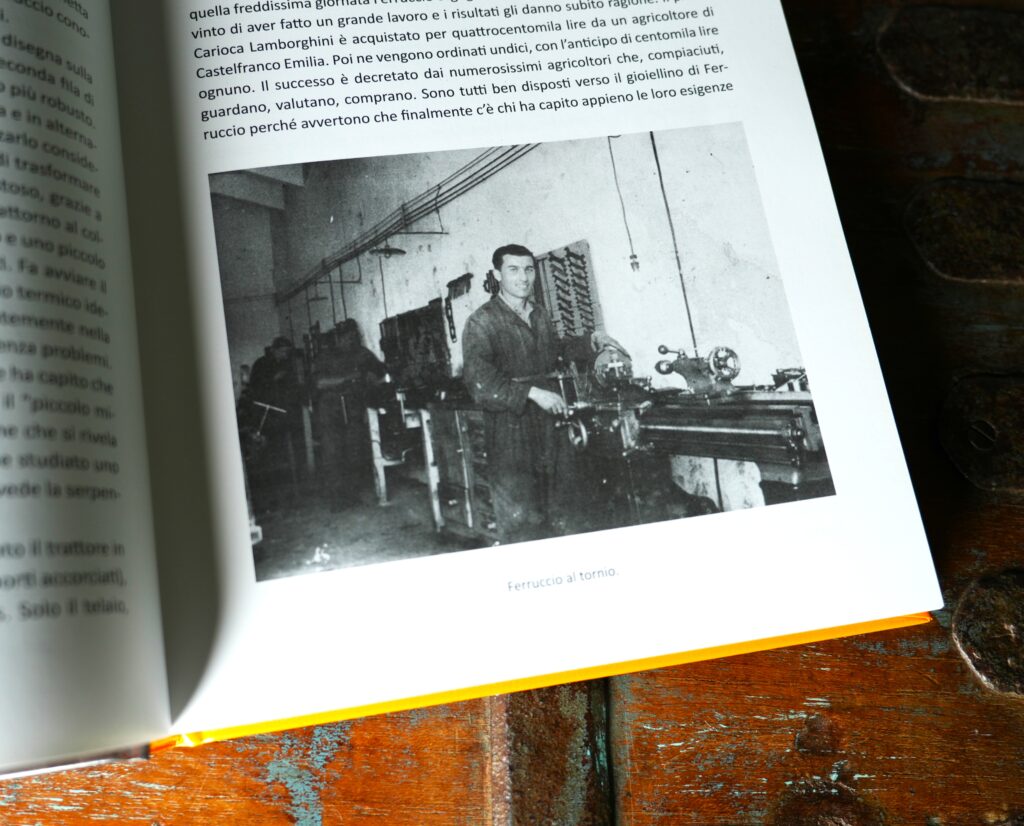
So we have the first tractor right here. This is it. This is the first one, the Karaoke. And here’s that song where he got the name for his tractor right here, Ferruccio’s favorite song. The book says Karaoke was the title of a famous song, very popular at the time, and Ferruccio loved it so much that he sang it nonstop. So you gotta check out this song. It’ll get stuck in your head. I’ve been humming it all week. And this is what Ferruccio was singing for years, constantly, nonstop. He named his first tractor after the song. But so now he’s got his first working karaoke. He decides to unveil it on San Biaggio Day. So this is a day of great celebration in Cento. And in the town’s main square, Ferruccio rolls out his karaoke tractor. He sells one on the first day. He quickly sells 11 Carioca’s with a down payment for each one. The small town farmers are pumped because they can clearly see someone finally understood what they wanted. It was a small, powerful, and economical tractor that used mostly diesel fuel, which was cheaper than gas. It’s affordable.
These farmers just survived the war. They’re not wealthy. They were trying to just survive many of these small farmers, and now they can afford this tractor that will save their backs. Some of them were still working the fields with an ox and a plow. It says it right in the book. They were no other good options at the time. Fiat tractors were weak because they used only gasoline. Another big brand was Landinis. Those tractors were big and heavy, and both of those brands were expensive. Only the big farmers could afford to buy them. Ferruccio found the niche with all the small farms who needed something that didn’t exist yet. He knew what they needed, and that’s what he built.
Another cool thing about this area right here, he’s serving the small farmers around Cento. In northern Italy, it’s a small town, but it’s not far from Bologna, where there’s some of the best technical schools teaching mechanics. So there’s now going to be a highly skilled workforce from these students coming out of Bologna. Toolmakers and mechanics and manufacturing. This was the big key to the war recovery in northern Italy. The top-level technical training schools were teaching kids real skills for manufacturing to rebuild the country. It was the source of skilled workers that Ferruccio and a lot of other companies in the area were going to be hiring to grow their businesses.
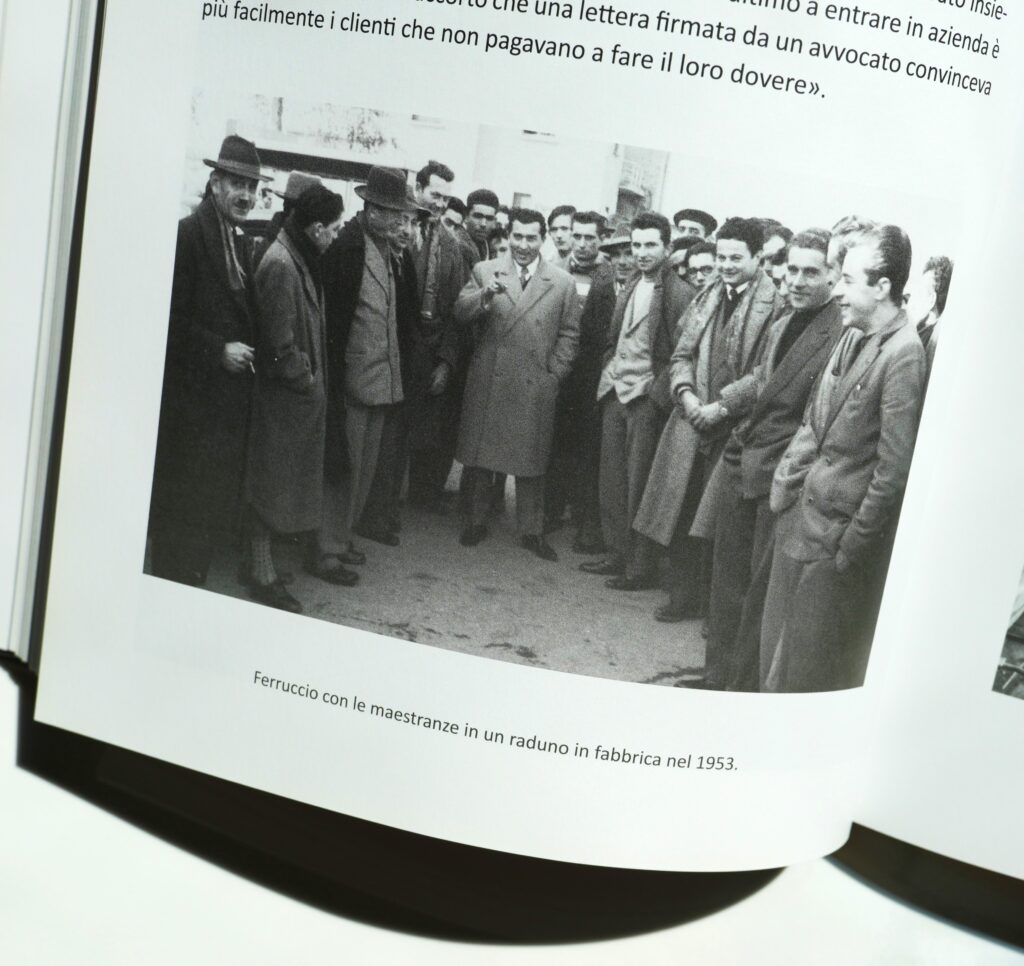
Another thing right here, the small town farmers also love Ferruccio’s tractor because it was designed and built by one of their own. The local guy that already had a reputation as one of the best mechanics in town. Now Ferruccio’s off and running. And this is cool, the local mechanics start to meet up at the cafe on Sundays. And guess what they’re all interested in? They love their tractors, but they also love racing. They’re speed enthusiasts. Listen to this, all the way back in 1948. Ferruccio, along with a lot of his friends, they want to race. It says, but Ferruccio does not forget his old passion, speed.
While the days are dedicated to building tractors, the evenings are reserved for cars. At home, he’s rarely seen for months, completely absorbed in the preparation of a Fiat 650 Sports Barquetta, a derivative of the Topolino, with which he intends to participate in the 15th edition of the Mila Migla.
So now Tonino in his book, he finds a few of his father’s old friends, and they he includes the letters about certain memories from way back in the day. This guy Baglioni, he wrote about it in the book. He wrote a letter and he told the story of this race that him and Ferruccio entered. So he wrote the he wrote in this letter, Baglioni, he said,
“I looked for Tonino Lamborghini. I wanted to remember the highlights of a life lived intensely, with great commitment, imagination, hard work, and success by his father. All of us having emerged unscathed from the tragedy of war were full of unwavering enthusiasm and a wealth of interest, both intellectual and physical, making us open to any kind of technical and sporting endeavor.”
Speed, Racing, And Early Setbacks
So now Baglioni tells the story of him and Ferruccio racing in this little Fiat 650. They souped up the engine, he says, they modified it into a true racing car, even just a modest one.
And then he goes,
“We were filled with enthusiasm and dreams that he later succeeded in realizing. We felt like important pioneers of a sporting endeavor that was reclaiming an ancient role, also connected to the allure of risk.”
So they loved racing. They enter this race. Even in the small classic cars, they’re just thrilled to be a part of this event. Baglioni and Ferruccio are in this little car. The race starts at three in the morning, and he describes this race. The two of them, he says, they reached this curve in the road. Baglioni’s in third gear. Ferruccio yells at him. He says, Second gear. So he the so he downshifts. The car slides and slams into the curb. He looks out at the car to see if it’s okay. He says,
“It seems fine, as if nothing happened. So I drive off. Then he goes, A mechanical disaster has occurred under the beautiful red bodywork. Closed. It’s over. The engine is still running fine, only it. They move our car and we find ourselves mingling with the crowd on the bend, waiting for the big cars.”
So they’re out. They’re wrecked. They’re out of the race. It’s all over for them. It’s funny that he says the Fiatinia has become a tricycle. He crashed a car, but then they’re watching the race and he says, then the big cars come through. Because they’re doing this race in the smaller category. So now he says, the big cars come through. He goes,
Nuvolari arrives in a Ferrari or Maserati, I don’t remember, at full speed. He hits the brakes, kicks the heel, and accelerates in a textbook Christian way I’ll never forget.
Okay, so remember, I’m translating this all from Italian, this whole book. But from what I can tell, right here, Baglioni’s telling the story of when Nuvolari, this famous race driver, he comes through in the big car. They’re off to the side of the road, they just wrecked their little fiat. And from what I can tell, Nuvolari comes through and just roars through at full speed. Accelerates in a textbook Christian way I’ll never forget. What a quote right there. Their minds are just blown as Nuvolari comes through in the big car. So Ferruccio enters another race, he modifies a Fiat Topolino, and they call that the very first car that Lamborghini built. And it says from remarkable mechanical skill. So after that unsuccessful race, Ferruccio quits the racing dream for now. But of course, he’s not going to be done with his passion for beautiful cars.
His cars need to wait, though, right now, because he’s busy. This is a big moment for his tractor business right here. He needs to expand the factory and he needs to find money to do it. The book says it right here. It says he trusts his instincts, and his peasant wisdom and cunning certainly do not abandon him.
So they go on a honeymoon, him and Annita, they go to Naples on a honeymoon, and he finds a thousand Morris engines for sale in Naples. He buys one of them right away and he brings it home that night to study it to see if it works with that modification, his invention that he used on the karaoke, changing the gas to diesel. It works perfectly on this engine. So now he knows instantly. He’s got to go back and buy these 1,000 Morris engines so he can build a thousand tractors with them.
But he doesn’t have the money to buy a thousand engines. So his father ends up stepping in right here and he puts the family farm up as collateral to the bank. So Ferruccio can buy those thousand Morris engines. The engines are delivered to Cento to the bank. And everybody’s gossiping about this big gamble. Everyone in town, they’re just like, this guy’s crazy.
There’s an entire parking lot full of engines at the bank. What’s going on here? Here’s what happens. It says in the book, this was a decisive step forward for Ferruccio. The L33 tractor was produced, an evolution of the karaoke, with a 3,500cc Morris inline 6 engine, fueled by petrol with a Lamborghini patented vaporizer. In the early days, one karaoke was built every week, but by 1950, production had already risen to 200 a year. So right there in a couple just a couple years, they’re up four acts in production.
They run through a thousand Morris engines. They build the L33 tractor and they sell all of them. Business is booming. Now they need more engines. Ferruccio turns to Germany and they start importing MWM engines from Germany to put into their Lamborghini tractors.
Scaling The Factory With Family Culture
They need more space now, so they expand. In 1951, they move into this new factory, and there’s a larger house for Ferruccio’s family right next door. And this factory has a modular design now so they can easily expand again as soon as they need more space. Which they do about every two years after that, they add on to this existing plant because sales start to skyrocket. Now you might be thinking right here, they’ll hit some growing pains in the company with all these sales and orders flooding in. Not exactly. And listen to this. Here’s the culture inside Lamborghini Tractors. It says, quote,
“The impact of corporate life could have been traumatic, but numerous personal experiences confirm the opposite. The company atmosphere is typical of a large family. And for those who came from farming families, it was ideal. The awareness of total participation in the creation of the product is still strong and fundamental in everyone. The relationship with Ferruccio and Anita is direct. She, above all, is remembered as a fundamental point of reference for the very life of the company. Mrs. Anita wasn’t just someone you turned to for work or salary reasons, but also for family, children, and romantic issues. She was a point of reference for everyone. She wasn’t just in charge of administration, she practically ran the entire plant.”
Remember what I was saying about synergy right here. Ferruccio and his wife Anita, it’s a family atmosphere inside this company that they create. Anita’s there basically managing the people side. Ferruccio’s all over the product side. And he’s out there selling like no other. They set up the sales network where agents travel around the country to the small farms and they sell tractors. Ferruccio tackles the bigger, more difficult customers himself personally.
Then they hit the trade show circuit and they start pitching their products all around the country. Another thing they do is they set up tours of their factory to the high profile customers and they show off their latest equipment and the machines inside their new factory. And then they whine and dine these big customers. Listen to how they explain this era of the company. They’re just crushing it right here. Listen to this.
“It’s a very close-knit group, and everyone is committed as if the products on display were made by their own family. Lamborghini tractors are the best, the most Italian-made, and this undoubtedly helps and provides an incredible boost. Competition is fierce, but sales are always high because everything is needed. Ferruccio manages everything, has the right word for everyone, and many valuable salespeople are attracted and convinced to work for Lamborghini precisely on those occasions. Won over by Ferruccio’s sales prowess and expertise.”
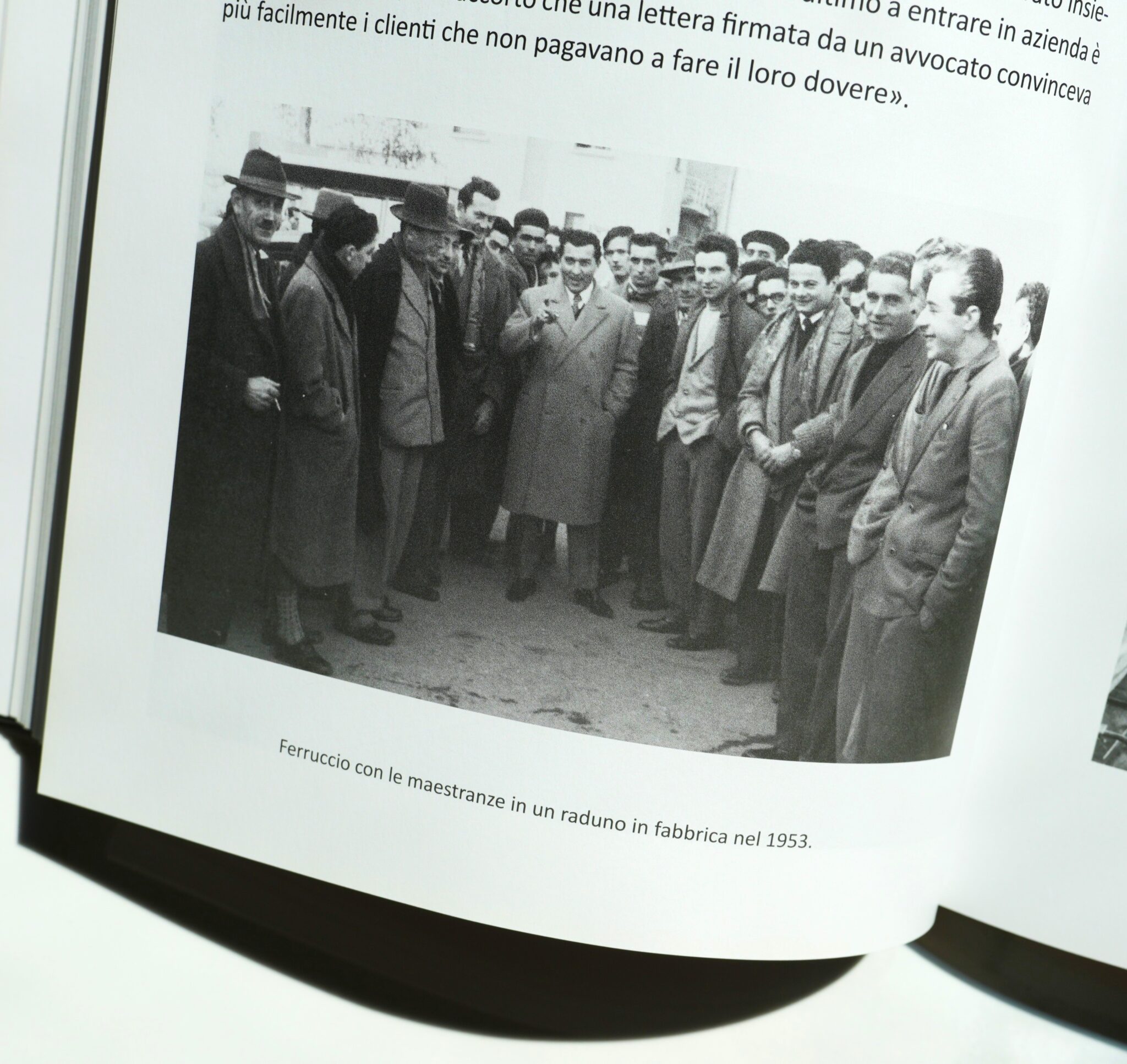
So farmers want his tractors. The best mechanics want to work there and build them. The best salespeople want to go sell them for Ferruccio because they all know he’s the best. He has the right word for everyone. They’re won over by Ferruccio’s sales prowess and expertise. Listen to this description. Everything’s working in his favor because he could see it. He knew what people wanted before anyone else. Listen to this.
“These were the years that heralded the economic boom. Italy was hungry for innovation, pursuing ever increasing prosperity supported by secure employment contracts. And Ferruccio once again seized the opportunity and knew how to capitalize on it. He had the ability to understand what people wanted moments before the competition. And this was a key factor in the success of his products. For several years he had already launched the production of diesel engine tractors, and the results proved him right.”
So always one step ahead. Check this out now. Earlier I mentioned the German engines. These were the diesel engines, they’re super efficient, inexpensive, and they go for thousands of hours without maintenance. They were far superior than any engine he could buy in Italy. So what does he do? He started importing these engines for his Lamborghini tractors. There’s such a hit with his customers, though, he travels to Germany to make a deal. Listen to this. Quote, he had clear ideas and pulled off a major coup in exchange for a paltry royalty.
He was granted permission to build the MWM engine in Italy based on MWM’s design and license. And the benefits and profits immediately skyrocketed. So Ferruccio pulls off a major coup with the Germans. Right there in the book, there’s a really good reason he wants to build these super reliable German engines in Italy, though.
Lamborghini Tractors for the War Recovery
The next step is the Italian government wanted to push loans for farmers at low interest so they could buy equipment and upgrade the old machinery and tractors that they had. One sole condition was that everything they bought with the low interest loans must be produced in Italy.
That’s Lamborghini right there. Another huge boost to sales, and he’s right there for it. And now he’s making MWM engines that his customers are telling him are far superior. He’s building those German engines at his shop in Italy. And he’s paying just a small royalty back to MWM. Aura. Not just as an international deal maker, though, but sales prowess.
So, the best mechanics wanted to work for him. The best salespeople wanted to sell for him. The biggest customers wanted to hang out and tour his plant. His sales skills were off the charts. Ferruccio would personally visit farms and finalize the sale. And then he’d broker the loan for the farmers going through that government program.
Remember that low interest loan program the government was pushing. Well, Ferruccio would take care of all the paperwork for the farmers to get that loan in process. All he wanted was 25% down payment. And then he’d wait for the money for that loan to go through before he could get paid. But the customer could take delivery of the tractor immediately. And then if he really wanted to impress a potential customer, he’d show up at the farm. Listen to this. I can just picture this right here, Ferruccio out on the farm. Here’s how the book describes his sales prowess.
Ferruccio and his Sales Prowess
“He would show up in the farmyards, armed with a slide rule, and there, in the midst of everyone, he would begin making incredible calculations. First, he’d ask the farmer how many children he had. Then, how much land he worked. And finally, what the average annual harvest was. In total silence, he calculated these figures for a while, mumbling numbers and scrolling the slider while more and more people gathered around. Finally, he declared that he had a tractor that, according to his calculations, could definitely increase his harvest. Also because the slide rule confirmed this. Almost always the farmer, fascinated by this performance, buys the tractor with great enthusiasm.”
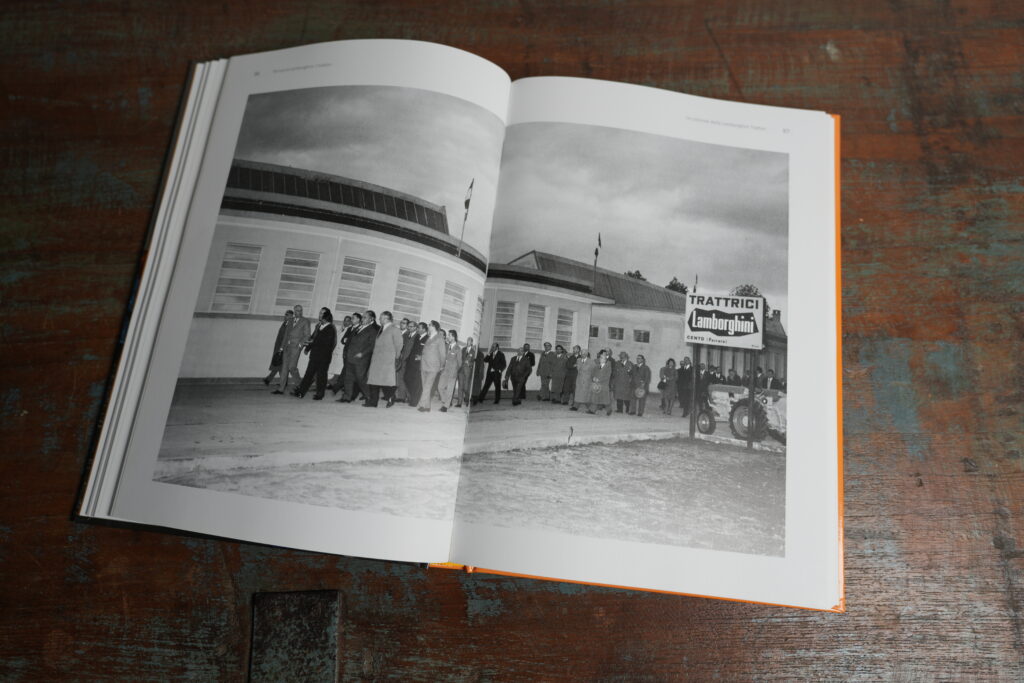
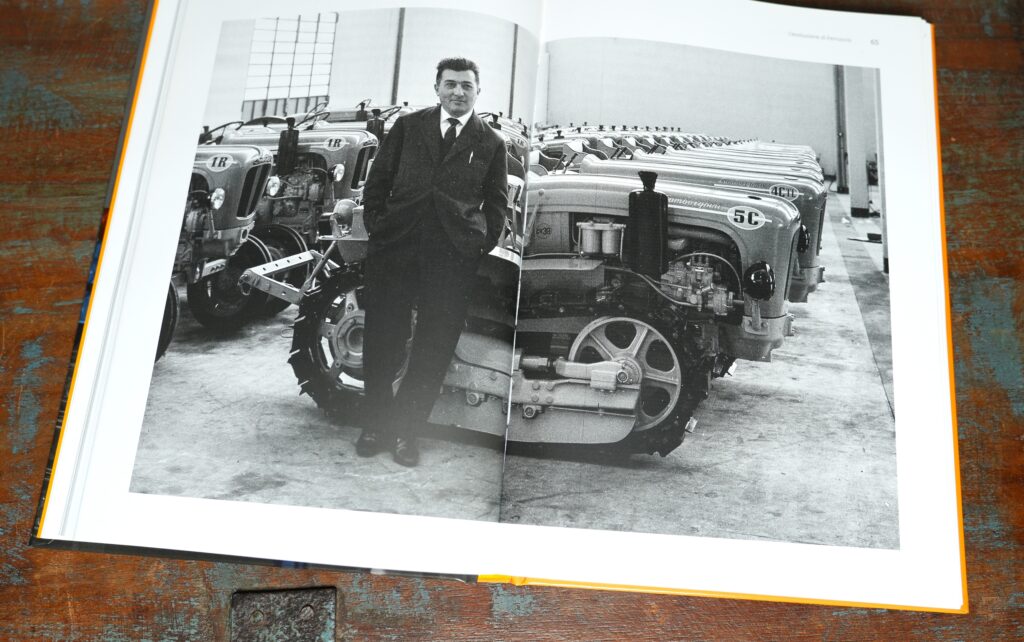
I love that. He’s just out there selling like crazy because he knew he had the best product, the best engines, the best employees. Sales prowess. Later on, the book mentions that Ferruccio loved to learn magic tricks. And he’d show off his latest magic tricks when he was entertaining. He studied magic and how to perform it. By 1960, Lamborghini tractors up to 400 employees, cranking out 25 to 30 tractors a day. They’re making breakthroughs in gearbox design, expanding into different types of tractors.
One model is created just for French wineries. A small tract machine that could fit between the rows of the vines. The French didn’t have anything like that. And so Ferruccio’s walking through a vineyard one day with a group of people. Someone mentions they were complaining how they still had to use mules between the rows of the vines. Ferruccio stops. He says, My representatives will go to the farmers right away and tell everyone that Lamborghini is building a tractor specifically for their needs.
He turns to one of his guys right after that and he goes, Can we really make one of these? Is this even possible? And so, but not long after that, sure enough, they designed the Vigneron, the super narrow tractor made just for vineyards. So they expand into France with billboards. Listen to this quote. Once again, Ferruccio proved himself a forerunner with respect to certain trends.
Why Lamborghini Cars Were Inevitable
Only a few years had passed since he went to farmyards to sell tractors, and the economic boom was now established and irreversible, causing an extreme acceleration of everything and changing the nature of every relationship. So now things are just going crazy in the 1960s. The economy’s booming in Italy as the recovery efforts from the war, now it’s moving at full speed.
In the book, it talks about television and how it became a central role in advertising. And then it adds, it says, it was now no longer demand that determined the product, but the product that determined the demand. So people had money to spend. What should I buy? This is the new trend.
So this is really cool. I keep saying aura. Ferruccio had this aura. He could see the trends. He could attract the best people, and he can change with the times. There’s Lamborghini tractor billboards now, and then the TV’s invented in another new way to market. Listen to this from the book, The Pioneering Spirit. He never considers himself highly educated. He didn’t come from a wealthy family. So all these amazing skills that he had, they just seemed that much more authentic. It says,
“He was a protagonist of the economic boom. His complete lack of entrepreneurial culture led him to an unconditional acceptance of everything innovative and to constant research.”
That’s a great quote right there. This is another great description right here from the book.
There’s a bunch of these in here, but I gotta just read this one right here. It says, quote,
“First, he possessed great intuition. He has the ability to understand at the right time which weapons and tools to deploy, and he always has a clear strategy to implement, depending on the person he’s speaking to. Second, his extraordinary intelligence unfailingly allows him to anticipate situations ahead of others. This compensates for the complete lack of managerial culture that comes from a specific educational background. At times, his peasant solidarity, a legacy of a not so distant past of sacrifice and hard work, resurfaces forcefully, astonishing his colleagues.”
So that is awesome right there. He’s a protagonist of the economic boom. So he’s driving it. Charisma, aura.
There’s so many different ways to think about this. He was the man. His name was on the company, on the building. But he’s connecting with everyone. Sometimes they’d be hanging out at the cafe in Cento. Ferruccio proposes a challenge to his old mechanic friends.
He says, Let’s take the Maserati and the Ferrari. I’ll go in reverse. You go forward. Let’s see who can get to the tavern first. So he wins the race and then he buys everybody a drink once they get to the tavern.
Like I said, he was the man.
Ferruccio builds a villa by the ocean with a pool and a tennis court and an ocean going speedboat. And in that boat, a custom engine. Two Lamborghini 4000 engines that he built for that boat. His love of speed hasn’t gone away. The book says Ferruccio symbolized the Italian miracle of the 1960s with all its profound contradictions. His tractor company’s so big right now, but it’s run by managers. So he doesn’t have to be there constantly.
Boom Years Then Crisis And Resolve
Now there’s time for other ventures. So obviously, there’s time for his need for speed and his love of car racing. He already owns and drives the best cars in the world. He’s been modifying fiats his entire life. He knows his way around a car. So let’s start a car company and build the best car of all time. It’s not even a question.
This is the most obvious next step.
There’s this famous story about him marching into Enzo Ferrari’s office, complaining about the clutch that always breaks in his Ferrari. Everybody knows that story. I’m sure you’ve heard it a hundred times. And then people are going to say that argument that day that launched Ferruccio into building Lamborghini cars. Well, that’s a great story to tell.
The book even says, I think he says, like, yeah, Ferruccio never denied that story about him and Enzo having an argument, but he didn’t really talk about it. He didn’t need to. It didn’t matter. Just look at this entire scene right now. Ferruccio is the man.
He’s got plenty of money and the ability to make shit happen. Whatever he wants to happen. So starting a car company at this point is a no-brainer. I’m gonna go out on a limb here, but I’m guessing it didn’t take Enzo to fire up Ferruccio to start a car company. Lamborghini cars were inevitable. Listen to this right here. Quote:
“He lacks the typical spirit of many northern industrialists, devoted exclusively to the cult of work, rigorous and dry. Ferruccio is fiery, instinctive, open, receptive to all that is new. And it is with this spirit that he created Lamborghini Auto in 1963. This explosive mix found a natural home in what would become one of the decade’s status symbols, the Mira, a striking manifestation of the climate experienced by that generation.”
My point is he didn’t need Enzo to give him a reason to build cars. He was already crushing everything he put his mind to his entire life. He loved cars, he loved racing, he loved speed. Now I’m gonna build the greatest car I can imagine. So if you know all about the Lamborghini Mira already, you know it was designed by one of the greatest car designers of all time, Marcello Gandini. I did an episode on the Lamborghini Countach, and I learned a lot about Marcello Gandini. He was a legend.
So Ferruccio didn’t design and build the mirror himself by hand in the back corner of a workshop. He owned the car company that created it. You’re gonna need to build the best team to build the world’s greatest car. He knows that, and he’s been building teams of the best already in his tractor business. So when he decides to create the car company, he goes out and he gets the best designers and the best engineers. He can recruit anyone he wants. We know that by now. Everything we’ve been talking about, it was so natural for him. All these skills that he had attracted the best talent who wanted to be around him. Aura.
Ferruccio Lamborghini and the Car Company
So the Lamborghini Mira. After reading this book now, how I look at the mirror when I look at a photo. I see the mirror, and it’s really a car that captured Ferruccio’s extreme aura. The mirror is a lifetime of one guy’s aura. Put on wheels. So you might have clicked on this story and you wanted to hear all about Lamborghini cars. Like just go through the mirror, the Countach, the Diablo, and all these great, awesome cars. And then the argument with Enzo and how it enraged him. And so he vowed to create a car better than a Ferrari.
No, stop.
The story has been told a million times. It’s played out. And it doesn’t really explain what happened here. If you love the Mira and the Countach and the legend of Ferruccio Lamborghini, you need to understand tractors and the diesel engine and charisma and panache and digging a hole and bearing instruction manuals. Ferruccio’s entire life was this energy, intuition, and attraction. I love that quote that I just read. It said it perfectly. Fiery, instinctive, open, receptive. It was an explosive mix.
So sales at the tractor company, they’re soaring. The Mira is unveiled at the 1966 Geneva Motor Show, and it was instantly iconic. Ferruccio starts a business manufacturing air conditioners. They developed several new tractor models, two and four-wheel drive models. All this takes a ton of investment to develop. They’re building 35 tractors a day, employees double from 300 to almost 700. Then a year later, a thousand employees building 55 tractors a day.
Lamborghini in the 1970s
The Bolivian government puts in an order for 5,000 tractors. And then suddenly there’s a coup in the government in South America. They cancel the order. 1970, almost all of those 5,000 tractors that were built are sitting at the factory yard still, unsold. Major crisis at the company and around the world. Now I read something earlier. Ferruccio symbolized the Italian miracle of the 1960s.
It’s a great line because, of course, this is not a fairy tale. It comes to an end. The miracle of the 1960s turned into a big, big challenge for everyone. The boom in the bus cycle, the 1970s were rough. So by 1972, Ferruccio sells the tractor company. He had to. There’s a lot in the book that I didn’t get into. But Ferruccio was traveling the world, touring factories at Ford and Caterpillar and General Motors in Detroit. He went to Japan and met Mr. Honda. He was amazed that Honda was down on the factory floor with a white jacket and a cap on his head, just like all of his other workers.
He was a learning machine. On his travels to other countries, he said, I saw new things and met technicians who were better prepared than ours. I returned home with the wealth of knowledge that I tried to apply to my factories. And more often than not, I succeeded with results that left my competitors speechless.
Ferruccio traveled to Egypt and he saw how the Nile River was huge and it covered so much land and then it left this fertile mud everywhere. He gets back and he starts sketching out what this looked like on the drawing board in his conference room at his company, and he’s telling his managers, we need to think about building a tractor for this mud in Egypt. One of his closest friends, this guy, Luigi Vecchi, he says, at times his desire to learn, to understand, was almost touching. We’re talking about aura here. Listen to this. They said, quote,
Ferruccio Lamborghini was a sociable person who knew how to communicate his thoughts at first sight. When you had verbal contact, he was frank and open. You might or might not like him, but you certainly knew immediately who you were talking to.
Definition of Aura
Aura right there. Confidence, leadership. You might say aura is just when somebody knows everything’s gonna work out because they always come through, and nobody’s gonna do a damn thing about it. At the end of this book, there’s another letter from one of Ferruccio’s top guys who was with him almost this entire way. This guy named Belletti. He helped start the company back at the very beginning.
He’s remembering his friend Ferruccio and the great friendship they had and all the great memories from when they were just starting out with almost nothing. They were trying to find scrap material for that first karaoke tractor. Belletti was talking about they’d visit scrapyards looking for equipment that they could reuse. They hardly had any money. And how excited they get when they found useful parts and pieces. He says,
“The results were truly encouraging, and we often got carried away when it came to purchasing. More than once, I said to Ferruccio, “We’ve overdone it. We’re beyond our means. If we don’t sell all the tractors right away, we’ll go bust.”
He always smiled, didn’t flinch, and reassured me.
“We Don’t have a cent.”
“What can they do to us?”
“What can they take from us?”