
Bertha Benz
Bertha Benz (The Mother of the Automobile)
Episode #37
02.13.26
“I left society and retreated back to my workshop. The new two-stroke engine. There I stood, initially alone, undaunted and unwavering.
Like a seasoned pilot, I held the helm of my little ship of life in the dark night, set on the beacon of my ideal.
Only one person stayed beside me in the little ship of life during those days when things were heading towards ruin.
That was my wife.
She didn’t tremble before the onslaught of life.
Bravely and courageously, she hoisted new sails of hope. And not in vain!”
– The Memoirs of Carl Benz
That’s Carl Benz right there, The Father of the Automobile. That’s straight out of his memoirs. He’s talking about his wife Bertha. Carl was the engineer and the inventor who created a horseless carriage with an engine attached to it. He was the very first person to sell his automobile to the public back in the 1880s. What I just read, he’s talking about a really difficult time in his life when everything seemed to be lost.
That passage is from his memoirs that Carl Benz wrote when he was 80 years old. My copy is in German, so I had to translate the entire thing. And once I translated his writing, I realized that Carl Benz had many, many struggles all throughout his life.
But he also had a secret weapon.
He just said there was only one person by his side during the days when the little ship of life was headed towards ruin and she didn’t tremble before the onslaught of life, but bravely and courageously hoisted new sails of hope.
And like he just said, it was not in vain. He’s talking about Bertha Benz.
Bertha Benz, The Mother of the Automobile
So I knew I wanted to do an episode on Bertha Benz a long time ago. The very first time I read about Carl Benz actually is when I discovered how equally incredible and amazing Bertha was. And Carl Benz through all his writing, he did an incredible job writing about his wife and what she meant to him, and what she meant to the journey that they were on together.
It’s safe to say there would be no Carl Benz or Mercedes Benz as we know it today, if it wasn’t for Bertha, The Mother of the Automobile.
So let me tell you a little bit about the first time I heard about Bertha Benz, I was reading this old book published in 1950. It’s a really cool book. It’s titled, “From Engines to Autos.” The book tells the story of four different pioneers of the automotive industry.
Carl Benz’s story is in that book, so I’m reading through it and it says something that just stopped me dead in my tracks. I just stared at this page for a minute because when I read this, I had never read anything like it before. Here’s what it said. Carl Benz was talking about bouncing around a little bit when he was a young guy. He was kind of floundering from one job to the next. He was trying to figure out how he was going to set up shop.
Carl and Bertha Benz, the Early Struggle
He wanted his own workshop so he could figure out this engine problem he’d been thinking about for years now. He wanted to solve this problem of a smaller, lighter, and more efficient source of power than the steam engine. So anyway, I’m reading along. I’m not knowing much about Carl Benz yet at the time. And I read this. He meets this young woman while he’s working at one of these very first jobs he had right after university. And it doesn’t take long and then they’re married.
And so I’m reading along and then he starts to describe what this meant to him. Looking back all these years as an old man, he’s describing what it meant to him to meet his wife Bertha when he was starting out. And he says this, he goes,
“It was like a second mainspring for my creative drives, giving me a constantly renewing source of energy with which to overcome frustrating obstacles.”
So that’s a pretty amazing phrase to read right there for Carl Benz.
His wife was like a second mainspring for his creative drives. Are you kidding me? That’s giving him a constantly renewing source of energy to overcome obstacles. So I was just like, what the hell did I just read right there? This sounds pretty important to Carl Benz. So I underlined that sentence as I’m learning all about Carl a few years ago. If there’s anything a young inventor needs, someone chasing a dream to invent something totally new.
I mean, what else would you want more than creative energy? And not just creative energy, a constantly renewing source of energy to overcome obstacles. And so that’s when I knew I needed to do a full episode on Bertha Benz, who was the driving force right beside Carl his entire life.
The Shared Dream of Carl and Bertha Benz
She’s right there working on this invention of the horseless carriage powered by an engine. These two were equal partners and they were just chasing this dream they had from the very freaking beginning while they were building a family of five kids for 60 years together. That’s how she became the mother of the automobile.
Now I had a big problem though. There’s not a lot of stories on Bertha Benz. There’s just not many books out there about her incredible life. There’s a children’s book that I found in English with some colorful pictures and just a few words. That’s about all I could find. I wanted the entire story from start to finish, but it just wasn’t out there.
So I found a book in German. It was published back in 2010 by author Angela Ellis. So I got that book. I had to translate the entire thing from German to English, 345 pages worth. But once I did that, I also grabbed the memoirs of Carl Benz. And along with this translated book by Angela Ellis, I was able to piece together this incredible story.
So i was just talking about Carl meeting Bertha back when he was just an employee. He was working for this bridge construction company, Beckinster Brothers. And so Carl was a young driven engineer and he had a head full of ideas. I said earlier, he’s totally focused on figuring out how to set up his own workshop someday, but he needed to work and make some money so he could figure out how we could do it, how to get out on his own. By now he was already locked in on this idea of a more efficient engine.
Something that wasn’t powered by steam, but by another fuel source. This is a big problem and his professors at his university were focused on this problem. And so Carl’s thinking about this more than anything else as a young guy. And that means of course he doesn’t have much time for girls up to this point.
Bertha, in the Beginning
He’s 25 years old by now, but then he meets Bertha, who’s a few years younger and they just hit it off immediately because berth is super interested in carl and his ideas that he has for this engine and how that engine might someday power a carriage so there’d be no more need for horses and they were calling it a self-driving carriage think about all the talk we hear about these self-driving cars now carl benz was talking about self-driving cars back in the 1870s when he was meeting his future wife only he’s talking about a carriage driving itself around without horses on it which sounded completely insane and ridiculous at the time.
Almost as crazy as when we started hearing about self-driving cars just a few years ago. That sounded completely ridiculous too. And now my car just drives itself around town while I sit there and watch. Anyway, you can imagine how this sounded back in the day with Carl and Bertha. They’re talking all about these crazy ideas about a self-driving car, but she’s completely into it.
And like I said, they knew pretty quickly they were going to spend the rest of their lives together working on this dream. Here’s straight from Carl. Here’s how he wrote it in his memoirs. He said,
“I married in 1872 with him, an idealist came to my side, someone who knew what he wanted from the small and narrow to the great, the bright, the expansive, what until then had been a plan and a dream now had to take flight and soar into action.
All belief and hope, all struggle and wrestling, but also all fulfillment and completion now became a passionate, shared experience.”
-Carl Benz
That’s Carl Benz in his memoirs. He’s writing these words when he turned 80 years old. And by the way, if you want to read some amazing writing, maybe it’s the way the translation comes across from German to English. I don’t know. But from everything I can tell, Carl Benz
was an amazing writer. Anyway, now they’re married. Bertha was from a middle upper class family and her father had a successful career in the construction business as a contractor.
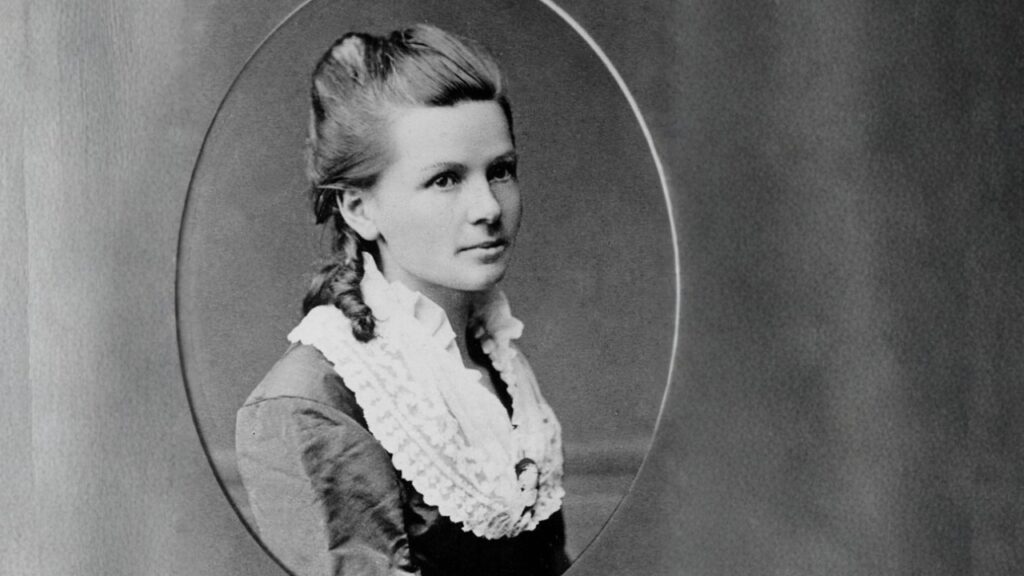
And Bertha’s family is just kind of looking at Carl like, I don’t know about this guy. He didn’t really have anything. They knew he was super smart and he had all these big ideas about technology and engineering. He just didn’t seem like he had much to offer their daughter at the time. But that didn’t matter. It didn’t take long. Carl and Bertha were married.
This was the start of a great partnership, but it’s also the start of struggle.
Carl knew he had to open his own workshop. He didn’t want to be an employee and he had to take the plunge at some point. And since he didn’t have much capital, this meant he needed partners. So the first partner, the young couple hooks up with this guy, August Ritter. And then almost as soon as they entered this partnership, they realized they need to get out of this deal with a Ritter.
The Young Benz Family, the Need for Partnerships
With no money of their own to buy out Ritter, Bertha turns to her father and she asks her father for an early advance on her dowry. So back in the day, a dowry is money or assets or something that a bride would bring into the marriage at some point from her family. And so Bertha uses this money to buy Carl out of the deal that wasn’t so great. They had a joint ownership of a small property in Mannheim and they used Bertha’s dowry to buy their way out of the property.
Bertha’s father was not thrilled about this at all, but Bertha was very convincing. She knew this had to be done, and she made it happen.
After that though, it goes from bad to worse. The economy is about to tumble, there’s the Vienna stock market crash, and Carl has trouble bringing in money from his work. He’s looking for almost anything that’ll bring in money, but times are now tough for everybody. By now they already have three kids, and Bertha just turned 27, and they’re having trouble just trying to feed their family.
Here’s the theme though, all through the book about Bertha. She’s pushing her husband to keep going. They try all these different ideas in the shop just to pay the bills. Anything they could invent or come up with that they could sell. Bertha’s not gonna let Carl off the hook. She knows he’s just as talented as anyone else out there. She knows it’s just a matter of time. They just need more time. Bertha’s not gonna be the one who gives up. She’s totally committed to what they wanna do. And even though Carl’s at a really low point, right here. She just stays on him.
The Two Stroke Engine Dream
He’s working on the two-stroke engine that could replace the steam engine and might someday power a horseless carriage. They stay committed to this idea. So that’s the dream. But this goes on for years.
Finally, there’s a big breakthrough. It’s New Year’s Eve, 1879, and this is the exact moment that I started off an episode that I did on Carl Benz a while back. One of the first episodes I ever did actually was this moment, because it’s detailed in one of my favorite books. That book I was talking about earlier, ‘From Engines to Autos.’ Here’s why this is just as big of a moment for Bertha as it is for Carl. You can just see how involved Bertha was this entire time. She’s right in the middle of it.
I said earlier, when I read that quote from Carl, how he said it was, “his mainspring for creative energy,” which was his wife, and how that quote just kind of stunned me when I read it. Not long after I read that line from Carl, I read about this scene on the night of New Year’s Eve.
Once I found the memoirs of Carl Benz, after I translated it, the same moment is in his memoirs. So I’m going to read straight from Carl right here. This is how it translates. It’s a little bit different translation than the other ‘Engines to Autos’ book that I was talking about.
Here’s how Carl Benz describes it when he was 80 years old in his memoirs. This is the moment he says,
“I remember it as clearly as if it were yesterday. It was New Year’s Eve.
We had poured our last penny into the protracted attempts to develop the embryonic two-stroke engine. And the worry was looming.
However many times we had started the machine, our high hopes and expectations were destroyed by the tactless one. After dinner, my wife said, “We really must go back to the workshop and try our luck once again. Something inside me is calling me and won’t let me rest.” And once again, we stand before the engine as if before a great, difficult to unravel mystery. My heart pounds with strong beats. I turn the key. The machine answers. In a beautiful, regular rhythm, the bars of music of the future alternate.
For over an hour now we have been listening, deeply moved to the monotonous song. What no magic flute in the world could accomplish, the two-stroke engine now achieves. The longer it sings, the more it conjures away the oppressive, hard worries from our heart.
Indeed, if worry had walked beside us on the way here, so joy walked beside us on the way back, we could do without the world’s good wishes on this New Year’s Eve.
For we had witnessed happiness itself at work in our humble little workshop, which on this evening became the birthplace of a new engine. We stood listening intently in the courtyard for a long time, and still the promise of a sound trembled through the silence of the night. Suddenly, the bells began to ring. New Year’s bells. To us, it seemed as if they were ringing in not just a new year, but a new era.
A time that would receive its new pulse from the engine.”
-Carl Benz
That’s Carl Benz in his memoirs. He’s talking about this awesome scene. If you can just imagine this, it’s a tiny little workshop. Berth and Carl are just sitting there listening to this engine run for over an hour and how it translates from the book. It’s, they’re listening to this, the engine just cranking away and it’s music to their ears, like he’s saying.
So they now have a working engine, but they still need another partnership to make any money. So they run into this guy, Emil Buhler, who he notices this engine in the workshop and he immediately wants to get into business with Carl. And he does. Over the next few years, everything goes smoothly with the new partner Buhler. But then of course, more trouble. It’s a pattern with these partnerships. It’s so hard for Benz. Buhler and Benz exit this partnership.
And Benz is left with nothing again. And this is when things are looking really, really bad right here. Bertha and Carl hit a really low point. They have kids to feed, zero money coming in.
More Struggle for Bertha and Carl Benz
They had this two stroke engine running, but they couldn’t figure out a way to sell it. And then the theme that keeps popping up in this story, what do you know? Another partnership pops up just in time. These two guys walk into this tiny little shop of Carl’s. It’s Max Caspar Rose and Frederick Wilhelm Esslinger.
These two guys have a bicycle shop and they heard the hard time that Carl and Bertha were having. And so they were thinking this engine business would fit perfectly alongside their bike shop that they have. And so now they’re back in business. 1883, the Benz Company Gas Engine Factory is established in Mannheim. And then the business takes off almost immediately with this gas engine from Carl.
And then the marketing and the business side of things from Rose and Esslinger. So money’s rolling in now finally, and the kids are fed all as well. And Carl turns his sights onto the horseless carriage. He wants to build a motorwagon.
And so this is something that Rose and Esslinger, they knew it was coming. They always said, yeah, sure. You can mess around with a carriage. Just basically they were saying, go fool around with whatever you want as long as these engines are bringing in money. That’s the focus.
Well, Carl has a really hard time focusing on an engine when there’s so much more to be done with this carriage idea that he wants to create. Even after Carl designs the plans for the carriage and he pitches this idea to his partners, it’s still so crazy sounding. They just want him to focus on the engines, but things are going so well and money’s pouring in. The partners finally agree. They say, we’ll chip you off a little bit so you can go full around with this crazy idea. That’s fine.
They’re just hoping he could get this out of his system once and for all and then just get back to the engines where it’s profitable. Of course, that’s not what happens at all. Carl becomes completely obsessed with this project of his new carriage that he’s creating and Bertha is in the shop with a sewing machine. She’s doing whatever she can to help make these parts for this new vehicle. Will they actually get this thing built? They roll it outside and there it is. Here’s Carl.
From his memoirs, here’s him describing this motor wagon that they just created. He says,
“Thus, the year 1885 became the birth year of the motor vehicle. As early as spring 1885, my lifelong dream, as if by the grace of a momentous occasion, had taken on tangible form and a viable shape, lifted from the world of thought and placed into the world of reality.
The latest child of technology stood one fine day in the factory yard.”
-Carl Benz
So by May 1885, Bertha turns 36. Carl calls the family out to the workshop with a surprise and it’s finally ready. They wheeled the motor car out into the yard. It’s ready for testing. It’s never been driven yet. Carl asks Bertha to jump into the driver’s seat so he can turn the flywheel. The engine cranks up and Bertha releases the brake and that carriage starts to roll.
This is the very first drive and it’s about 20 meters long. The four kids are standing there watching their mother drive this carriage for the very first time. She stops and they get out. They got to push this thing back into place because they haven’t tackled the problem of a reverse gear yet. So they’ve got to push it backward.
And so, and just eight months later, they become the very first in the world to receive a patent for a vehicle with an internal combustion engine for transporting people, 1886.
Creating the Motorwagen
Now they have a self-driving road vehicle. Something that’s going to shock and confuse and baffle people for years when they see it for the first time. Bertha was the first person to set this carriage in motion when she released the brake that day when she turned 36. This is an incredible day for the Benz family.
However, there’s still years and years of struggle. You would think that such a giant breakthrough like this, a working automobile, once it’s rolling around this would mean almost instant worldwide success and fame and fortune. Not at all. That’s just not how it works with something that’s so different and shocking.
If you think about all the struggles that Carl and Bertha went through to get to this point, it’s crazy to think about this, but the hard part’s really just beginning for them to have their invention. First of all, they have to get it to run well. But then they gotta have it understood and accepted. And then people have to actually want to buy one and use it. And that’s the hardest part here.
Would anyone actually pay money for a horseless carriage? Carl and Bertha are not even close to achieving anything yet. As much as it feels like they just did, there’s a lot of work to do. My first episode I did on Carl Ben’s way back a few years ago, as amazing as the story has been so far, with Bertha and Carl struggling their way through the first half of their lives. And now they have four kids, perfecting an engine, then building their motor wagon piece by piece. As crazy as that was to learn about, this might be my favorite part of the Bertha and Carl Benz story right here. It’s the public reaction to the Benz motor wagon.
It’s so cool, even though neither Bertha or Carl really kept any kind of written diary about all this at the time.
Perfecting the Benz Motorwagen
What’s out there now that the motor wagon is seen on the public streets, there’s newspapers that are writing articles and then they’re reporting on what’s going on and what Carl and Bertha are up to with this invention. And it’s so cool to see these old newspaper articles that describe this crazy scene. And it’s day after day and these newspaper articles are dated. So you can really track all of this happening as it progressed, as they’re rolling the motor wagon out into the public streets to try to test it.
You can read all these newspaper articles. As they’re rolling their motorwagon out into the public streets, they’ve got to test the thing. They got to try to improve it and get it to work without stalling or crashing. And this is drawing all the local citizens out into the street to see what this loud, crazy looking thing is. And then of course the reactions, it’s mostly shock and just disbelief and astonishment. But then what comes after that? It’s also anger and just straight mockery.
They think that Carl and Bertha have both lost their minds. And it’s all recorded in these newspaper articles. This is from the Angela Ellis book. This is what she said.
“How are people supposed to know what this newly developed motor vehicle is about? Which is neither a carriage nor a locomotive. She could still vividly remember the time before she met him. Back then, she too had been unable to imagine such a mobility machine. But the unknown provokes resistance, sometimes even fear.
How could he expect to be greeted with applause? Rather, the point now is to sweep up the trailing crowd and convince them that this vehicle is the carriage of the future.”
That’s out of the Angela Elis book. So now Carl is realizing this is going to be a big problem. He’s got to get this car out into the public streets to test it and improve it. And this is a big ordeal. There’s a lot written about this because the local newspapers are all out there watching and seeing what’s going on in public. And this is what I’m talking about right here. Here’s a great example.
And here’s another book that I have. It’s from author, John C. Nixon, and this great old book published back in 1936. The title of this book, ‘The Invention of the Automobile.’This is what Carl and Bertha are going through trying to test their motor wagon out in public. Check this out.
“A number of the older people, less agile than the others, fell down on their knees as he approached and made a sign of the cross on their breasts.
Horses took fright and either bolted or performed circus tricks in the middle of the road. One young man fled in terror in front of them, shouting to all that the devil had come.
Men repairing the roads threw down their tools and made off across fields as fast as their legs would carry them. In other villages he passed through. The inhabitants took up an aggressive attitude. Large numbers of stones were thrown at Benz.
And on one occasion, after a youngster, greatly daring had struck the front part of the vehicle with a large stone, Benz pulled up, sprinted after the culprit and pulled him, terror stricken, back to the vehicle to see the machinery working.”
– Author, John C. Nixon, ‘The Invention of the Automobile’
That’s insane right there. That’s from John C. Nixon. Another great old book that I have on Carl Benz. He wrote that 90 years ago.
People want Benz arrested. They’re outraged. The police show up and they’re like, “what the hell are you doing?”
Carl and Bertha, they’re just like, this is good. Just let us develop this invention. This is going to be good for everyone. They’re just trying to proceed with what they’re doing. Police actually threatened to arrest Carl and fine him. It’s incredibly frustrating for Carl and Bertha.
And at the same time, their partners, Rose and Esslinger, they’re pressuring Carl to just get back to work on his engines and just stop wasting time with this crazy motorwagon.
This goes on for over a year, but throughout the entire charade of dealing with the public, Carl and Bertha are actually making huge progress. They’re fixing the problems. They’re making improvements to the motor wagon.
Now the breakdowns are becoming more and more rare. They’re perfecting this rig to where they’re driving it around town now. And it’s kind of an enjoyable thing for the family to do.
Finding Buyers for the Motorwagen
One big thing though, it’s still missing. And that’s a buyer. They need a customer. Otherwise they’re going to go broke if they can’t sell this invention to somebody. Nobody’s interested.
Carl and Bertha, they need to get the word out of their invention. They need to drive it to more cities. They need to show this thing off, but they can’t. There’s strict rules in place for Carl by now. He can only drive his crazy invention within certain areas of the city. They defined these areas and it’s definitely not going outside of the city.
But that’s a big problem. How is anybody going to see this smooth running machine that they’ve been perfecting over the years if they can’t go anywhere with it? This is a huge moment of the story right here. Another major, major event for Carl and Bertha.
Once I read the translated book, that Angela Elis book, we have conflicting stories about one of the biggest events in Bertha’s life. And this is the now world famous very first road trip in an automobile, which was by Bertha Benz.
One of the reasons she’s the mother of the automobile, it’s this story right here. Let me tell you about how Angela Elis tells the story in her book first, and then we’re going to look at the Carl Benz memoirs too.
Elis writes this, Bertha and Carl, she says they know they need to drive this motor wagon out of the city to show the potential and they want to let people know they could travel long distances without it failing.
The Great Benz Roadtrip
And so knowing that Carl is strictly forbidden to leave these very specific areas of the town with this motor wagon, he’s already been confronted by police and townspeople many times and they’re threatening him with fines. They know that Carl just can’t go for it. He can’t do a road trip. He might get thrown in jail.
So what do they do? In the book by Angela Ellis, she says that they talk about it beforehand and Bertha has the idea if she just takes the motorwagon, and pretends she took it without Carl knowing. If she does get stopped, she’ll just play crazy. She’ll just play dumb. She’ll just pretend she went rogue and took the vehicle without any permission.
She’ll say that she was out on a joyride and she’ll just plead insanity. And what could they possibly do to the crazy wife who just took the car without her husband even knowing about it? So that’s the plan right there in the book by Angela Elis.
That’s how she says it, and they talk about it beforehand and they say, Carl, if anybody asks you about this, you’re going to deny any knowledge of this road trip. And that’s going to keep Carl out of trouble if he’s ever confronted about it later. So that’s the story from this book that they conspired before the famous road trip. So Carl’s going to pretend that he doesn’t know anything about the road trip that’s going to happen. He’s got to play dumb and that’s going to save him from any legal trouble down the road. And that’s exactly what happens here.
Bertha and the World’s First Roadtrip
Bertha and her two oldest sons go on this epic road trip and it’s over 60 miles with this motor wagon. Now that’s a known fact, but what’s disputed now after I read this book by Angela Elis is if Carl ever knew about it before they left.
And this is crazy because I just translated Carl’s memoirs to English so I could read them. the 80 year old man, writes about this exact same time.
Now you would think we could believe everything an 80 year old Carl Benz has to say in his memoirs, right? Why would we believe a book written by Angela Elis in 2010 over Carl Benz’s own memoirs? Why would he be making up anything at that point in his life? He’s 80 years old.
Well, if they did decide that Carl was to deny knowledge about their secret plan for the road trip, Carl maintains that same secret throughout his entire life, because in his memoirs he says Bertha took the car out on the road trip with his two boys without him knowing about it.
It’s a crazy part of this story that I just figured out with these two German books that conflict each other. Let’s see what Carl has to say about this directly from the man himself. As an 80 year old writing about his epic life, here’s what he says on the record about his wife’s world famous road trip. He says,
“The first long-distance journey was undertaken behind my back, without me. And this is how it happened. Traveling scholars hijacked my wagon.
There were three of them, and they were perfectly in sync, like the strings of a plucked violin.
They loved my wagon as much as I loved it, but they demanded more of it than I did.
They wanted to know if the new wagon had ushered in a new era for itinerant travelers and to what extent it could be used for such journeys.
The hijacked wagon was to demonstrate its capabilities and limitations on a 180 kilometer stretch going uphill and downhill. The three leaf clover with the vagabonds blood in its heart consisted of my wife and my two sons.”
– Carl Benz
This is incredible because I’m reading directly from the translated English copy of Carl Benz’s memoirs. And if this was a secret plan they put together prior to this road trip, the plan that Carl was to say he had no knowledge of the road trip so they could test this first vehicle ever built. That’s what Angela Ellis’s book says.
There was fear Carl might be jailed or fined or in big trouble if he knew about it because he’s already been warned several times. This was already a big problem.
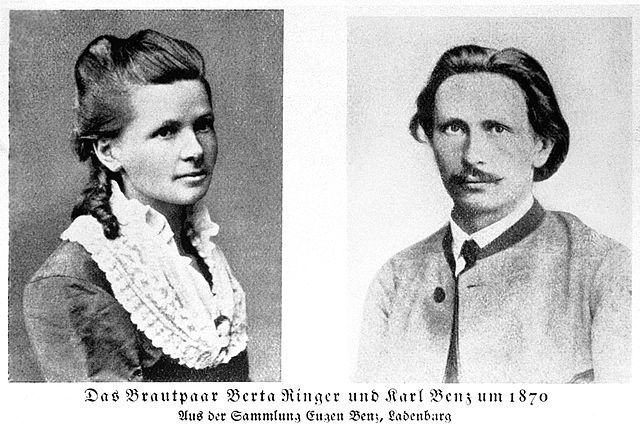
So if this was the plan, Carl’s maintaining that secret pact that he made with his wife all those years later when he’s writing his memoirs.
Now let’s just imagine for a second that he really didn’t know about the road trip, like everybody says now. Do you really think that Bertha and his two sons would really take this motor wagon, this invention that took a lifetime?
Do you really think they’d take it on a joy ride?
That’s even harder for me to believe, be honest with you.
The Great Benz Family Secret?
Just starting this thing up early in the morning would have woken Carl instantly and it only moved a few miles per hour. He could have easily walked down the street once he heard it going and caught up to the carriage and his rogue family, who would only have made it probably halfway down the block before Carl could just wrangle them back into the garage.
So after thinking about it and reading these two different accounts and reading the book by Angela Ellis, I’m kind of just leaning more towards Carl and Bertha talking about this trip beforehand and planning the whole thing out.
And I kind of like the idea of them just agreeing to never admit to this conspiracy and maintaining this story all the way through their lives, even in the official memoirs.
I don’t know if it’s true or not, but I could see these two just kind of smirking at each other over the years, every time they’re asked about this story. I just love thinking about the possibility that they maintain this thing all the way through their life.
And now all the official accounts, if you go to like, the Mercedes Benz website, or if you go to the Mercedes museum in Germany, the official story is that Bertha and the boys took the motor wagon out without Carl knowing. That’s it. Straight up. That’s the official story that’s out there today anywhere you look.
The Benz Roadtrip Mystery
So I’m really glad that there was this other account that Angela Elis wrote about in the book. It’s just a possibility. But even the way Carl talks about it is a little suspect now once I start to doubt it. It’s like he’s a little too proud of what they did. It’s how I read it now.
Anyway, I got to keep going in Carl’s memoirs because it’s so cool to listen to this.
He continues on about the road trip, but as I read this, just imagine for a second that there’s a small possibility that he’s actually in on the secret. I mean, it is possible.
Here’s what he says, listen,
“Together they form only one pendulum swing. And indeed the plot was hatched. Mother and sons conspired against their father.
Mannheim to Pforzheim was chosen as the route to visit relatives.
Secretly, the boys prepared the car, which stood unused in the shed. And one evening, they reported to their mother, the car is ready to go. We can set off tomorrow.
When ordering the household chores, she pretended she was about to embark on a multi-day journey the next day with the first train. The ruse worked.
The unsuspecting father was still asleep when the three of them roared off, ingloriously at the crack of dawn.
Everything went well until Weislach, too. But then, as the roads became hilly, the trouble began. The power transmission wasn’t yet designed for such steep inclines. Eugene and his mother had to get out and push the car while Richard steered.
But even downhill, his mother had pangs of conscience. What if the simple wooden brake with its leather covering suddenly failed? Fortunately, that didn’t happen during their entire journey. However, from time to time, new leather pads had to be bought from the village shoemakers and nailed on again.
“The journey continues, but the leisurely carriage ride is over. As the chains stretched and jumped off the sprockets, the truck stopped in front of a village blacksmith.
The villagers came and admired the vehicle as if it had just fallen from the sky.
After the chains were tightened, the journey continued until the next breakdown. The truck stalled because the fuel line was blocked. Mother’s hat pin was just the right surgical instrument to quickly repair the damage.
In another breakdown, when the ignition failed, the first female long distance truck driver even sacrificed her garter as insulation.
The wagon stops in W. as the hot August sun has made the drivers thirsty. Once again, the wagon attracts the villagers and poses them the most perplexing riddles.
How a wagon could move without horses or any other draft animal is a complete mystery to them. Some speak of witches and sorcerers, others of a clockwork mechanism.
The three magicians, however, climbed on and rode off laughing.
Soon the black forest road became so steep that they had to push their bikes for hours.”
All right, so the book by Angela Ellis goes into a lot of detail about this too on this road trip.
Confused Villagers, Shocked Onlookers
The villagers were just completely beside themselves. They’re not even in a big city. They know a lot less about current events than anybody else. They’re just completely amazed. Some of them thought that Bertha was a witch. They thought it was an evil spirit or some kind of crazy magic trick.
To see this, he said earlier, the villagers came to admire the vehicle as if it had just fallen out of the sky. It was like an alien spaceship.
So Carl keeps going here in his memoirs about this epic road trip. Here he goes, he says,
“They sped down into the valley, into Pforzheim, and although the boys looked like moors in student caps and their mother was also covered in dust, the journey ended as it had begun. A triumphal procession, a crowd gathered and the triumphal chariot was gazed upon like a modern day wonder of the world on wheels.
Proud but exhausted, the mother wires the safe arrival into the world: Arriving happily in Pforzheim.
After the few days the father, who after the initial shock had developed a secret pride in the achievements of the secret escapees, sent a new chain as a replacement.
Thanks to this chain, the return journey could be then made in automotive glory and joy, apart from a few minor mishaps.
And the moral of this story was, the engine is too weak for mountain tours.
Therefore the father later readily accepted the reform proposal of the three empiricists to install a third gear ratio for mountain driving in the car.”
That’s Carl Benz, right there talking. He just said that he “accepted the reform proposal from the three empiricists,” to put his third gear ratio in for mountain driving. That was the moral of the story he just said. That’s what he wrote.
He learned a lot. They learned a lot from that road trip. They knew they had to do it and they knew that Carl couldn’t do it. They wouldn’t let him.
‘The First Female Long-Distance Trucker’
And in my opinion now, it might make sense to me that they knew about it the entire time. This was the plan all along. That Bertha was gonna do it so they could test this thing out once and for all and see if it could make it on a long distance trip.
Of course, the official story is that they did it in secret. That Bertha and the boys stole the vehicle. They didn’t tell Carl. Just like Carl says in the memoirs, maybe we just believe him. But there’s a chance that they were all in on this conspiracy.
And the awesome thing is that Carl maintains this family secret all the way to his death, which would come just four years after he published his memoirs. He was 84 when he passed away.
And I just love the details of Carl, he’s calling his wife the first female long-distance trucker as she’s using her hairpins and her garters to keep the motor wagon running.
So they return safely from this road trip and now the word is spreading about the new Benz motor wagon. It’s still a struggle. They need to sell one. There’s no buyers still.
It’s 1889 and the Paris World’s Fair starts. Carl brings his vehicle to show it off and it goes almost totally unnoticed.
Gottlieb Daimler is there too with his vehicle. Now he has his own and still nobody’s paying attention. There’s a new French word that comes from this World’s Fair to describe the invention though and they bring it back from Paris. It’s now called the automobile and Bertha and Carl are still really hopeful that somebody might be interested in buying one.
But the partnership right now is getting pretty intense with Rose and Esslinger because all this time spent on the motor wagon, it’s years of work, zero sales. They’re just seeing it as throwing good money after bad right now.
New Partnerships for Carl and Bertha
The engine sales were great, but it’s all interrupted by all this time and money spent on this crazy motorwagon, automobile, whatever you want to call it. And there’s nothing to show for it at this point. So yet again, the partners are just fed up with this carriage business. There’s a new partnership for Bertha and Carl now. Rose and Esslinger, they’re out.
But there’s now two merchants that come in. Julius Gnass and Frederick von Fischer. 1890 and Bertha just had her fifth child. Daughter Ellen is born and there’s a new deal in place. These two new partners are really excited about the potential of the motor vehicle. They believe in it. They knew it was the future and they found the right family to hook up with. It’s absolutely perfect timing for the new partners.
Sales start to take off and the factory expands. Carl and Bertha are now selling vehicles. They’re getting new patents for improvements to the steering systems. They developed the Victoria model. The new Velo models rolled out. Sales are going crazy in France and money’s pouring in for Bertha and Carl and the new partners in just a few years.
The Benz brand is spreading all over Europe to wealthy customers who want the best quality vehicles.
This is from the book by Angela Ellis. Here’s how she writes it. She says,
“Business was booming at the Benz factory around the turn of the century. Carl and Bertha experienced a golden age. Soon there were Benz dealerships all over the world, from New York to Africa. Carl knew he owed this global fame to his wife Bertha, and she was certain that if Carl hadn’t always focused on quality craftsmanship, his cars wouldn’t be so highly regarded worldwide.
For a time, Benz and company became the world’s largest automobile factory, a public limited company with increased share capital from the inventor’s once modest workshop grew an industrial enterprise that achieved global renown. And Carl Benz who loved to personally inspect every car before it left the factory was relegated to the background. Now we could no longer manufacture and oversee everything himself from the screw to the finished automobile.
Cars were increasingly produced by machine and they were getting faster and faster. The fascination with risk racing became popular entertainment and a symbol of performance and progress.”
The World Famous Benz Brand of Quality
And so this is pretty cool. The turn of the century, the pace of innovation. just seems to be really speeding up and not just with these vehicles. This is through Angela Ellis’s book here. She says, the race for technological achievement, it starts to extend to the skies, just after they have the automobile. Then all of a sudden they have airplanes right after that, she says,
“A new era begins, one in which humanity is driven by a madness for world domination. And Carl Benz becomes rich, very rich. For the first time he invests money outside his company. He buys several properties in neighboring Leidenberg and he loves driving past them on his Sunday outings. Bertha also enjoys these trips which remind her of her childhood, only the scent of pine trees in the black forest is missing.”
So Bertha and Carl, they grow old together. They’re married 60 years before Carl passes away at age 84. Bertha lives another 15 years after that. What an epic freaking partnership.
Carl says finding Bertha, “It was like a second mainspring for my creative drives, giving me a constantly renewing source of energy with which to overcome frustrating obstacles.” I read that
at the beginning of the episode, here’s something that I didn’t read yet.
Carl explains it wasn’t only his efforts, but Bertha was right there the entire time. And she wasn’t just passively supporting. She was playing a major part. Listen to this. Carl says,
“To gain experience in bridge construction, I joined the Bekenster Brothers company in Pforzheim. But I learned more than just bridge building there. I encountered happiness there, young and beautiful.
The happiness that would later become my life’s happiness, acting as a second driving force against the hem in my creative struggle and work.
She repeatedly gave new impetus to the resistance.
Bertha Ringer was the name of the spirited child from Pforzheim, who henceforth joined the circle of my ideas and interests, contributing her own ideas and advice.”
-Carl Benz
That’s Carl Benz. I love that because he says, “The spirited child from Pforzheim,” is giving ideas and advice to the great inventor. They were ideas and advice that made him into the great inventor. And Carl knows it.
There’s just not a lot of writing that Bertha did that we can read. Well, why is that? She was too busy working. She’s out there with Carl. She was just doing things.
That’s why the memoirs from Carl are so amazing, because he knew there wasn’t much that Bertha wrote down over the long amazing life that they had together. So he made up for it.
Here’s one last quote from Carl Benz from his memoirs that I translated. The story of Bertha and Carl gets better every time I read about it. He didn’t hold back honoring his great partner, the mother of the automobile.
Here’s how Carl said it –
“The driver dismounts, kneels down, tinkers and patches things up.
People gather, smiling and laughing. The amazement and admiration turn into pity, mockery and derision. Just as it did the first time, every time the vehicle got stuck in the city or later out in the villages, a debate of the most devastating criticism erupted.
“A toy that’s nothing and will amount to nothing,” some said.
“How can you sit in such an unreliable, pathetic, noisy machine when there are plenty of horses in the world, and the most elegant carriages and cabs to boot?”
Others said, “what a shame about this man.”
The experts said, “he’ll ruin himself and his business with this crazy idea.”
And a good-natured bieliner gave me the well-meaning advice. “If I had such a stinking contraption, I’d stay home.”
That was the public’s response to all the quiet struggle and tireless work of decades.
To the mature solution to a deeply felt life’s work.
A flat-out rejection.
But though everyone denied and rejected it, I remained steadfast.
No one could steal my courageous belief in the future.
There was only one person in the world who believed and hoped as bravely as I did. It was my wife.
The house of my dreams.”