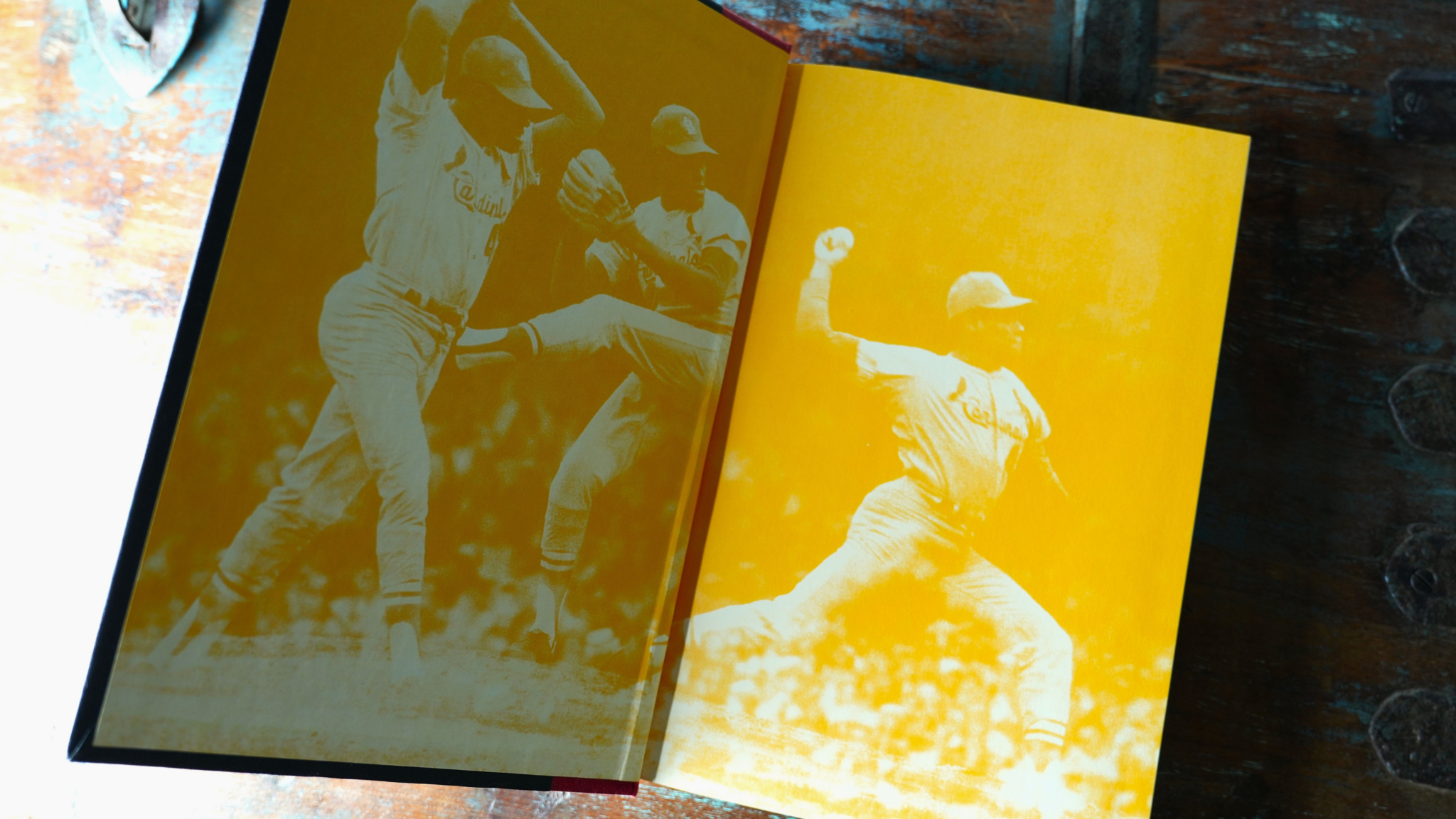
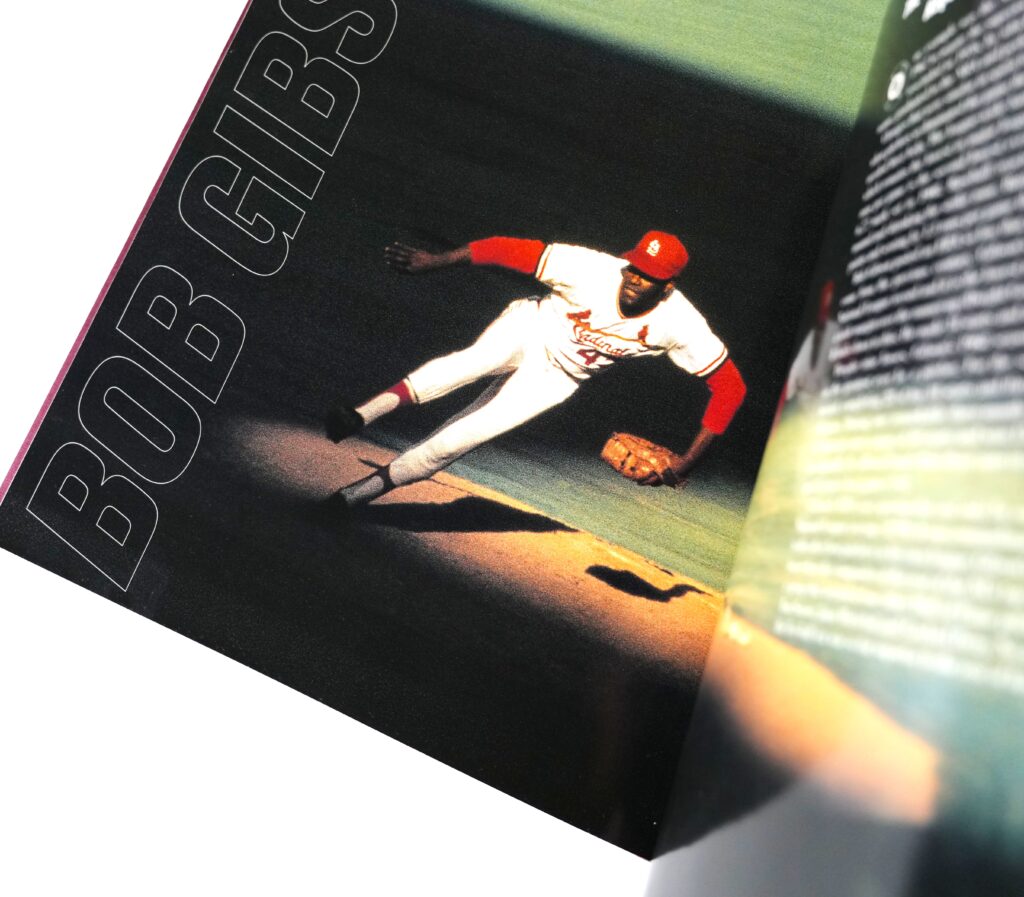
Bob Gibson
Bob Gibson, Baseball’s Ultimate Competitor
Episode #46
07.08.2026
The Major League Baseball that I knew and loved was a battle between the pitcher and the hitter. Hank Aaron, for instance, despised pitchers nearly as much as I despised hitters. I wouldn’t even say hello to hitters on the other teams because I didn’t want one of them to get the idea that I liked him or something. Or that, since I’d given him the time of day once, I might not buzz one under his chin. Hitters were the enemy, and the inside pitch was my warhead. My mission was to win. And the only man who could keep me from completing that mission was the son of a bitch in the batter’s box.
Bob Gibson, Baseball’s Ultimate Competitor
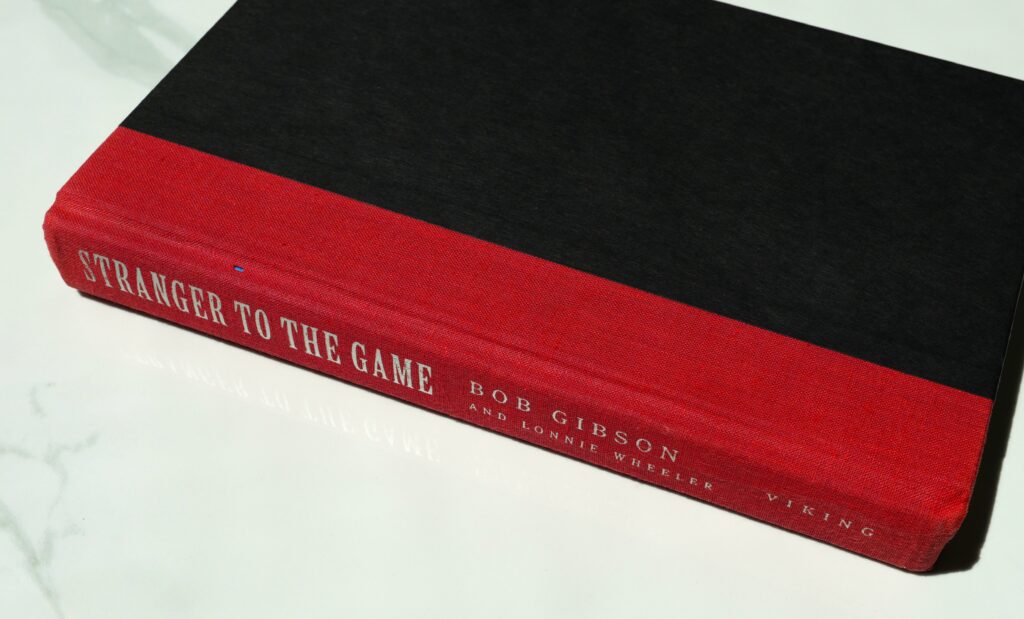
Alright, well, I just found out this week that there was the ultimate competitor before the ultimate competitor. And I just read his book, Stranger to the Game, by baseball legend Bob Gibson, published back in 1994. And the book was awesome.
There’s a lot of labels for Bob Gibson that I’ve heard over the years, and now I know why. I did an episode on Ted Williams a while back, and I said he had a special blend of intensity. That’s exactly how I think about Bob Gibson. He created his own unique blend. He created the ultimate competitor.
They called him angry, a jerk, mean, even hateful. That opening quote that I just read, he said it himself. He despised hitters. He despised his opponents. But if you’re confused about his motives, Gibson lays it all out in his book, Crystal Clear. Like he just said, his mission was to win. Period, point blank.
This is why I said before the ultimate competitor, there was Bob Gibson. And it’s almost like blasphemy to just say that. Now, to even go here. I’m going to go there. That there was anyone more competitive than Mike. Michael Jordan. I think now ask anyone who’s the most competitive athlete of all time. Everyone’s going to say Michael Jordan. We all watched that Netflix series a few years ago, ‘The Last Dance.’ But ask me that question now, after I just read Bob Gibson’s book. I’m going to say, just hold up a second. Before there was Mike, there was Bob Gibson. Listen to this.
“I’d like to think that the term intensity comes much closer to summarizing my pitching style than do qualities like meanness and anger, which were merely devices. Intensity to me was a matter of focus and desire and energy and power, all packed into nine hellacious innings. When those innings were over, my intensity shifted toward winning the next one. Intensity was never letting up. Between pitches, between innings, between starts, or between seasons. Intensity as I knew it was the will to win.”
Focus, Desire, Energy, Power
That was Bob Gibson right out of his book. So this is not just an act on the field to look intense. This was a matter of focus and desire and energy and power. I love that line right there. All packed into nine hellacious innings. And this is where the acting would stop for most people who just wanted to create some sort of facade or just an image. It wasn’t an act because after the game, that same focus and desire and energy and power, it shifted toward the next game.
He never let up. He wanted to keep that will the wind burning on and off the field at all times. So this creates a little conflict, as you can imagine, on the field. And we’re going to talk about that conflict in a second, because when you despise your opponents, you have conflict on the field. There’s no doubt.
But why Bob Gibson is such an original, unique, ultimate baseball warrior is because exactly what I was just talking about carrying the will to win between starts, between seasons, everywhere you go. That’s where most of the big time competitors would say, no way. It’s not worth it. I’m going to dial it back now when I’m off the field just a little bit. Why? Because I don’t want people to think I’m mean or angry in real life. I have an image to worry about. I just want to be liked, right? Everybody wants to be liked. Gibson knew none of that nonsense would make him a better pitcher. Being nice and acting fake are just playing the part of a good guy, none of that’s going to help him win. So he wasn’t interested in it.
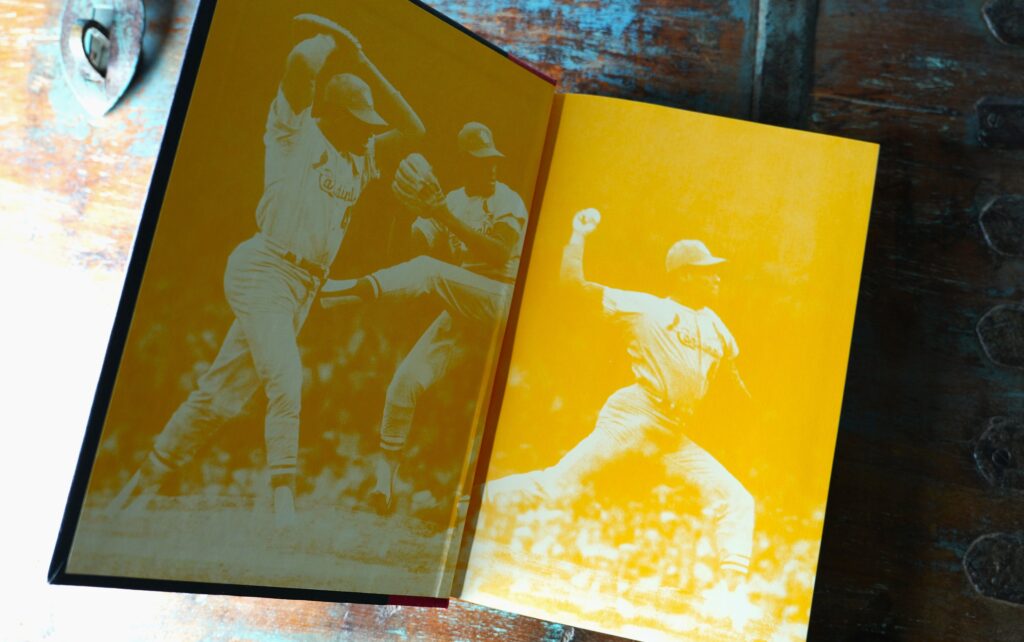
He said, “My thing was winning. I didn’t see how being pleasant or amiable had anything to do with winning. So I wasn’t pleasant on the mound and I wasn’t amiable off it. I never hit batters for the sake of hitting them that would have nothing to do with winning.” All right, he just mentioned hitting batters. We’re going to get into that. Trust me, but I got to stay with this idea for a second. In the book, Gibson talks about how being pleasant and amiable on or off the mound would have made it more difficult for him to win. By the end of the book, I think he’s right. It’s a pretty convincing argument that he makes.
So why isn’t this the approach that most people take? Because it’s much, much harder to do. Like I said, most people just want to be liked. You got to throw that idea of being liked right out the window. And that’s not easy. Gibson didn’t want to be friends with anyone on the other team. If you were on his team and you were traded, well, now you’re the enemy. Everyone knew this. Not because he explained it and he talked all about it. He lived it. He sent the message. So now just hold up for a second.
Winning Versus Being Liked
You’re probably wondering, isn’t life all about relationships? And being this great person, this great guy? Don’t we all want to be remembered like that? You know, hey, this guy, he was really a great guy. He was just a good dude. Sometimes it feels like we’re going through our whole day and we’re making decisions all day long just to get to that point.
A long life of just, yep, he was a great guy. I mean, I can feel that pressure once in a while. I’m sure you might too. You don’t want to ruffle any feathers out there, right? You gotta be nice over here and you gotta say the right thing over there. Smile and be friendly. And you don’t want to give the wrong impression that you’re a great guy. You’re a good person. Most people will put that right up there as the most important thing in their entire life overall.
It’s constant, and we get so used to this idea. We’re all just going around making sure that we’re being nice. Do you ever feel like that? What’s the one thing a great person doesn’t ever do? Well, they would never want to offend anyone. In a game or in daily life. He said,
“First and foremost, I was a pitcher who did whatever he could to win. I was just a pitcher who took his work very seriously.” For Gibson, everything is focused on what it takes to beat. Like he was saying, “that son of a bitch in the batter’s box,” where most people would draw the line and they’d say, No, I need my reputation as a great person. That’s just too important.
Okay, so I instantly thought about Jordan right here in that Netflix series, The Last Dance. Everyone watched that series about Michael Jordan. Why’d we all watch it? We were in awe of the competitive fire, how fierce Jordan was, his intensity. We all love to watch this because it’s so rare. To do whatever it takes to win, you’re removing that desire to be a nice guy or to be liked. That goes away completely. It’s gone. It doesn’t work. So the last dance.
There’s a scene in there. Everybody knows this scene. The interviewer asks Mike, he says, “Through the years, do you think that intensity has come at the expense of being perceived as a nice guy?” And this is the last dance. It’s exactly what Bob Gibson is explaining almost through his entire book, 25 years before the last dance was made.
But this interviewer, he’s asking Michael Jordan that question. And Mike gets emotional because it’s this decision, the mindset right here that Bob Gibson is describing. Here’s what Jordan said. He said, “When people see this, they’re going to say, Well, he wasn’t really a nice guy. He may have been a tyrant. Well, that’s you. Because you never won anything.”
Bob Gibson, The Ultimate Competitor
And that’s what Jordan said right there when he was asked that question. He’s talking about the exact same thing that Bob Gibson went out and did his entire career. I don’t care if you don’t think I’m a nice guy. My thing is winning. That’s Gibson. And you’re not out here on this mound facing these hitters like I am and striking everyone out because you’re worried about being a nice guy. Well, that’s you. Because you never won anything. Here’s the end of that Jordan quote from The Last Dance.
He goes on with this idea. And this is what he says. He goes, “I wanted to win, but I wanted them to win and be a part of that as well. Look, I don’t have to do this. I’m only doing this because it is who I am. That’s how I played the game. That was my mentality. If you don’t want to play that way, don’t play that way.”
So this is so that was like the big scene from the entire series right there. Jordan gets emotional when he’s talking about this. And now that I read the book on Bob Gibson, I understand it so much better. He was emotional because it’s not an easy choice, even for him. We all want to be known as a great guy, a good person. That feels so good. It’s not easy to know that you made a choice to put winning above all else. There’s some second guessing going on with Gibson and maybe Jordan too. Was I too tough? Was I too mean? Nah. Screw all that.
Being a great guy, how you’re perceived, what everybody says about you, if you’re nice, none of that matters because you’re committed to winning. That’s it. And there’s very, very few people who can make that commitment. This entire book from Gibson explains why it’s so hard. It sucks. There’s a giant cost to commit to winning.
But if you don’t like it, if you can’t get with that, well, that’s you. Because you never won anything. It’s crazy. Gibson published this book in 1994. Michael Jordan and the Chicago Bulls just won their third championship in a row in 1993. The year Michael Jordan was born, it was the same year Bob Gibson made his first All-Star game, 1963. That’s why I said earlier, before Air Jordan, there was Bob Gibson.
The Daily Work Of Winning
So how do you do it? You can’t just talk about this. You can’t just hope and want and have the desire to win. You have to do it. Action, day in, day out, on the mound and off the mound. Everywhere you go, everything you do, it’s all geared toward winning. A serious attitude focused on winning at all times.
Gibson said this. He says, “Everything I did on the field was calculated to gain the upper hand. And I always figured that the other guy had the same agenda. Nobody got the benefit of the doubt from me in the heat of a ballgame. So he said, when I was on the mound, I didn’t believe in screwing around. I wanted only to get the ball and throw it and win the game and go home.”
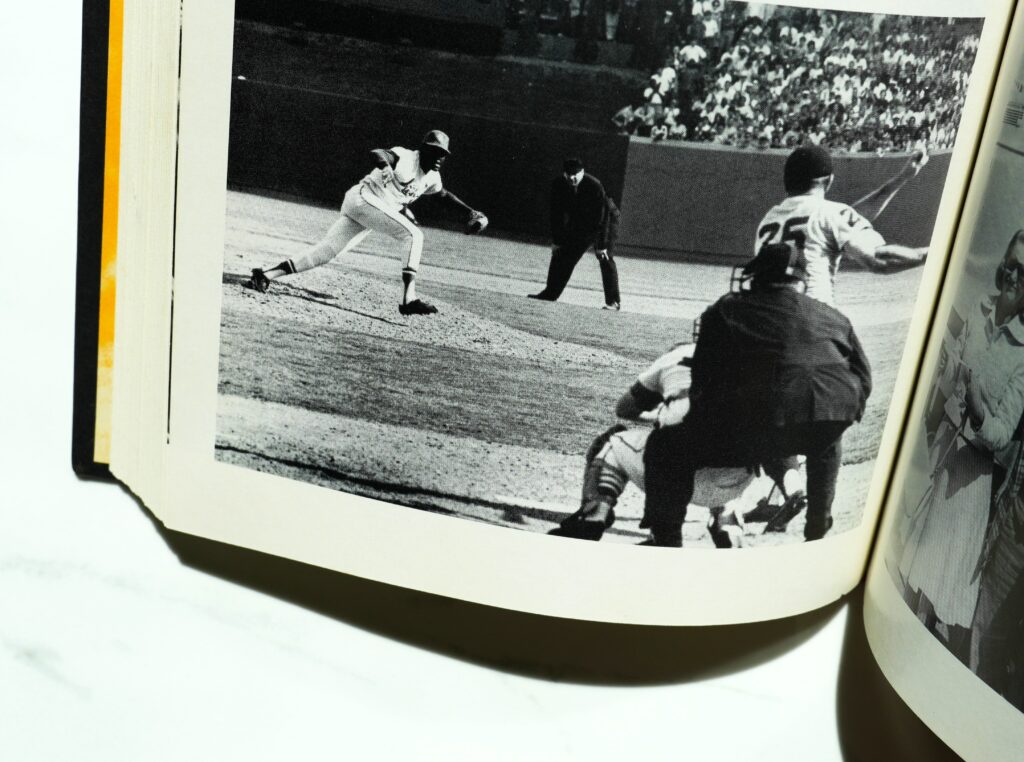
And one thing that creates a lot of conflict in baseball is pitching inside. But it’s a key part of being successful on the mound. And if you’re brave enough to do it, it shall be done back to you and your teammates. The other pitcher is sure as hell is going to throw inside too, and there’s going to be plenty of conflict going on. Gibson says in his book, he says,
“The idea of pitching inside is not to strike fear in their hearts, but to make them think about and respect the inside pitch. It was a matter of doing what was necessary to get the batter out. And if that made me mean, then what the hell? I guess I was mean.”
So one of one of Gibson’s teammates, Tim McCarver, he was a catcher for Gibson for a long time. He says, I never saw anyone as compelled to win as Bob Gibson was. Gibson hated to lose. And because of that, he hated the competition, hated them. And that’s not just during the game. All the time, he hated the competition. During All-Star Games, Gibson didn’t talk to the other all-stars. Of course, Gibson’s there every year. He refused to talk to any of them. They were the enemy. He didn’t care if they were on the same team for one game, one all-star game. They were all the players who were trying to beat him in the regular season. So he refused to talk to any of them.
Joe Torre was a teammate of Gibson’s. He says, “I wouldn’t say that Gibson was unfriendly when he pitched. Hateful is more like it. On the field he tried to intimidate you. Gibby wouldn’t let anyone in.”
Bob Gibson, Mystery As A Weapon
There’s a good reason why he wouldn’t let anyone in. Gibson really believed there was the power of mystery on the mound that helped him win. He had the advantage if the hitter didn’t know what he was thinking. And it makes perfect sense, but again, most people can’t pull this off because it takes total commitment. You can’t be fishing buddies with any of your opponents now. You can’t go to dinner. You can’t joke. No stories, no smiles.
Listen to this, Gibson says,
“The basis of intimidation, as I practiced it, was mystery. I wanted the hitter to know nothing about me, about my wife, my children, my religion, my politics, my hobbies, my tastes, my feelings, nothing. I figured the more they knew about me, the more they knew what I might do in a certain situation.”
So this is not easy to do. You think anyone wants to become a superstar athlete and then be a complete mystery? For most people, it’s the complete opposite. They get famous, now they want to do interviews. They want to tell their story and let everyone know how great they are. Not Gibson.
He talks about the psychology of pitching and messing with the hitters mentally. What separated the greats from everybody else was the mental side. Gibson thought that 90% of his success was from this mental aspect that he’s talking about right here. One great method that he came up with was creating this mystery. He was such a mystery nobody knew what he was thinking, and that intimidated the hell out of all the hitters.
“I was so intent on remaining mysterious that I carried it to the extreme. I refused to let the coaches or anyone clock the speed of my pitches, for instance, because I didn’t want the information going around. I refused to talk to our team psychologists because all he could do was find out more about me, and I didn’t want anyone knowing more about me.”
So this is what opponents started telling their teammates about Gibson, the mystery and the legend of Bob Gibson. His opponents were out there spreading the word on how dangerous he was, how unpredictable and mean and nasty he was. This is exactly what Gibson wanted him to do. It worked.
Here’s an example. Hank Aaron told one of his teammates before he faced Gibson this was his advice. He says,
Don’t dig in against Bob Gibson. He’ll knock you down. He’ll knock down his own grandmother. Don’t stare at him, don’t smile at him, don’t talk to him. He doesn’t like it. If you happen to hit a home run, don’t run too slow and don’t run too fast. If you want to celebrate, get in the tunnel first. And if he hits you, don’t charge the mound because he’s a golden gloves boxer.
-Hank Arron
That was Hank Aaron’s advice to his teammate, Dusty Baker, on facing Gibson. You see how this works now. He created this mystique. He’s got you beat before you even step into the batter’s box. Don’t dig in, don’t stare at him. You’re a big league hitter and you’re totally mental now. Trying to hit this guy who even Hank Aaron is running around warning people about.
So to keep this mystery going, Gibson carries it off the mound everywhere he went. Right into the clubhouse and into interviews when the reporters and the press start asking him questions. Listen to this.
Bob Gibson, the Mystery
“It was to preserve my image that I was never particularly friendly with the press. If I revealed too much of myself to them, it would tear down the wall of mystery I had carefully built up. My relationship with the press might have hurt me in the long run, but it helped my pitching. And that was all I cared about at the time.”
So now when you combine this mystery of Gibson out on the mound with the tactics, someone who wasn’t afraid to follow through. This is what I’m talking about when I say ultimate competitor. This was calculated and deliberate. It was intimidation that was both physical and psychological. He knew he was in the head of the hitter, like no other. So he played his cards perfectly with his opponents.
But don’t forget this. There’s only one way this all works out. He also had to have the physical skill to back it up. He’s got to be able to bring the heat. If you can’t deal nasty stuff on the mound, none of this works. One didn’t go without the other. He says,
“While I went the extra mile to gain every psychological advantage I could muster, I realized at the same time that my ability to intimidate, to use intimidation as an effective pitching device, was in direct proportion to the speed and movement of my fastball. There was no way I could have built up the reputation that I did by throwing junk. In fact, it worked both ways. I could not have intimidated anybody with bad stuff. And at the same time, intimidation made my stuff a little better, my fastball a little faster, and my slider a little sharper.”
Now Gibson’s got the mental side working. He’s got this mystery around him. He’s got the tools and the skill and the filthy slider and fastball out on the mound. So how do you make all that work in your favor? Over and over. There’s a great explanation in the book that he makes on the method to the madness.
Bob Gibson’s Nine-Pitch Intimidation System
I guess you could call it that. Gibson says he didn’t just have the five pitches that people say that he had. They said he threw a fastball and a slider, curveball changeup, and then a knockdown pitch. That’s five. Not true, Gibson says.
He didn’t have just five pitches. He goes, he actually had nine different pitches that he used. He says it was two different fastballs, two sliders, a curveball, a changeup, then a knockdown pitch, a brushback pitch, and then the hit batsman. That’s nine different pitches right there. Now he says, hold on, let’s take a closer look at those last three, because they’re very strategic.
And then he starts in, he goes, the brushback, he says, was the most common and the least severe pitch that he used. And that was just to reclaim the inside of the plate. So if a hitter’s getting too close to the plate, which means he wants to reach the outside pitches where he can extend his arms, that’s where they’re most powerful when they get those arms extended. So he says he needs to brush them back just to keep them honest about getting too comfortable and too close.
Now there’s the knockdown. And this was, he says the knockdown was basically a brushback pitch with an attitude. So the biggest difference between the two, the knockdown pitch meant that the batter should not still be standing on his feet when the ball hit the catcher’s mit. That’s the knockdown. It was a statement of retaliation and intimidation.
So remember, I was saying there’s constant conflict if you’re taking this path of winning at all cost. So you have to retaliate because the other team is now doing the same thing to you. That’s the knockdown pitch.
Now finally, there’s the hit batsman, which was rare, he said, but sometimes he had to do it. He says, I want to emphasize this. It was rare, but there were times I had to discharge a hitter by plunking them. And never in the head. He says, he did hit a few guys in the head, but never on purpose. He would only hit guys in the body.
Now combine all three of these pitches the brushback, the knockdown, and the hit batsman. And there you have this intimidation strategy that he worked hard to create. He says, quote,
“In my estimation, it wasn’t so much the prospect of the ball in the batter’s box that did the job in this respect, but the fact that the batter never knew what the hell was going on in my mind. The basis of intimidation as I practiced it was mystery.”
Humble Beginnings And Historic Dominance of Bob Gibson
And this is one of the most common themes now, in all my baseball legend stories that I’ve done. Gibson grew up with very humble beginnings. As a kid, he had a great mentor. His older brother Josh was 15 years older than he was, and he worked him out hard as a kid. He shaped him into this super competitive youngster.
Gibson said his older brother, he said, “As much as I hated him sometimes, it was impossible not to admire and believe in Josh because he led by example.” So Gibson’s father passed away a few months before he was born, and they didn’t have much of anything. His mother was strict and tried to keep him out of trouble, and so sports was the way to do it. It was basketball and baseball would be those two sports growing up.
I did an episode on Ty Cobb, and in this book I read on Cobb, they said he was a bare-knuckled battler when he was a kid. There’s some of that in Gibson as he’s growing up. He had to stand up for himself from time to time, but he battles through. And he ends up playing basketball for the Globetrotters for a while. And he’s making $4,000 in a season.
So he’s approached by a scout from the St. Louis Cardinals baseball team, and they find out how much he’s making playing basketball. And the scout says, Well, if I pay you four grand, would you quit and come and play baseball? So Gibson agrees. He says, it was the best deal he ever made because now, for the first time, he’s heading into one direction only to become a big league ball player, which he does, and he becomes an all-star pitcher and a World Series champion in 1964, and then again in 1967.
He dominates the World Series. He’s known as one of the great big game pitchers of all time. And then in 1968, one of the greatest pitching seasons ever, Bob Gibson dominated the entire season. He had an ERA of 1.12 for the entire season, which was the record lowest ERA since the dead ball era ended back in 1919. Here’s what he said about that 1968 season. He said,
“At the All-Star break, my earned run average was 1.06. For weeks and weeks, I was always ahead in the count, which can’t be underestimated, and seemed so completely immune from mistakes or from the best efforts of the men I faced that at times my biggest problem might have been keeping my teammates interested.”
Bob Gibson and the Dominating Season of 1968
So he’s out there just mowing down everyone. There’s a stretch in that 1968 season where he went 95 innings and he gave up only two earned runs for an ERA of 0.19. He called it the most amazing eight weeks of my life. In that season, Gibson completed 28 of his 34 starts, and he only failed to get to the eighth inning twice. And during this period, there’s a streak of 56 starts where he never was relieved in the middle of an inning, which is crazy.
So this is what legends do right here. They change the game, they create a lasting memory and legacy. Not that there isn’t enough legend with Gibson, the knockdowns and the intensity and all the stories and the mystery. There’s plenty of that here already. I’m talking about achievements that change the game and shape the culture of the sport. After this dominating performance in 1968, baseball changed the rules to help out the poor hitters, who looked completely overmatched.
There were other pitchers who had great seasons in this 1968 year. Gibson wasn’t the only one, but he dominated like no other. They lowered the pitching mound from 15 inches down to 10 inches after the 1968 season. They were hoping to give the hitters more of a chance at the plate. They shrunk the strike zone, trying to force pitchers to throw the ball right down the middle so it could be hit a little more easily.
And the worst change that they made, as far as Gibson was concerned, umpires started to warn pitchers of throwing inside. He was not happy with that change. He said the commissioner’s office was reaching straight into my pocket on that rule change. They didn’t want the high-paid superstar slugger hitters to risk getting hurt with a beanball. And they knew the fans wanted more home runs and excitement.
Now, as he gets into his last few years of his career, it happens to Gibson just like almost all the other baseball legend stories that I’ve done. I said in my last Mickey Mantle episode, and I say it in most of my episodes, this is not a fairy tale. It’s real, painful, tough, hard things that these old ballplayers had to go through, just like everybody else.
The 1960s Press And No Image Filter
Gibson goes through a divorce that left him almost broke after 20 years of marriage. He’s got two kids that he loves, and he’s trying to figure out what he should do after baseball. And this is where the comparisons between Jordan and Gibson kind of stop.
Bob Gibson was playing almost in a different world back in the 60s. There’s civil unrest, there’s racial tension, political violence, there’s assassinations. Gibson wanted to win. That was it. Let me just put it this way: he didn’t have any handlers or coaching trying to create this marketable image for the public. He didn’t even have an agent. It was just him out there in the 1960s America. Listen to this. He said,
“I arrived at the stadium and a television reporter inquired if he could ask me a couple questions. I said, sure. Presuming he was going to talk about Horton or Cash or McLean. Instead, he said, “What do you think of the black people demonstrating under the arch?” I stared at him for a second. I said, “I don’t give a – blank. I’ve got a ballgame to pitch.” I don’t believe that interview made the air.”
Now, this is what I’m talking about right here. It’s by the 1990s with Jordan, there’s an understanding about how to deal with the press. Because over the years there’s so much money riding on the image. Remember what we were talking about? Are you a good dude? Are you a good person? Do the kids love you? Are you generally a nice guy? Is that the image? Can we market that? Can the brands get with that and partner with it? And you can generate millions of dollars, billions now, just by fitting into that mold and not rocking the boat too much. Remember, I want to be like Mike. That good guy appeal is worth millions if you’re a star athlete.
That was why we were all stunned when we watched that last dance series. Because they kept that under wraps for decades. And then they finally unveiled what Mike was actually like behind the scenes. In 2020, that’s when that came out. This was decades after Mike had to watch his image. So yeah, Gibson was before any of that. His attitude was very simple. It was to win. Quote: In the order of priorities, I regarded myself as a ball player with a personal point of view, not an activist with a fastball.
My idea of clubhouse ideology was the button I stuck over my locker before the series. It said, I’m not prejudiced. I hate everybody. And this is why he was great. It was that mentality right there. It’s crazy back in the day. The 1960s and 70s, they’re so different. And I so I was talking about Mike, I call him Mike, talking about Michael Jordan and his intensity.
Remember, he cared about winning. If you thought he was a bully or a mean guy, well, that’s you because you never won anything. Remember, Gibson was the same way. But the big difference between Jordan and Gibson, Bob Gibson was reminded the hard way, that he didn’t make many friends during his playing days.
Retirement And The Cost Of Reputation
While he was out there pitching, he wasn’t thinking about setting himself up for a job after baseball by networking or schmoozing, trying to craft a public image. Fuck all that. He wanted to win. That was his mindset. Then he gets out of baseball and now the phone’s not ringing. So in the book, it’s a lot of the book.
He talks about, of course, it’s because I played the game hard, is what he’s saying. Maybe I was a jerk. Maybe I was mean, but I wanted to win. And he says, “So what’s so hard to understand about that?” So when Gibson’s career ended, nobody wanted to hire the tough competitor that was known as a mean guy. No, they were going to go hire the players who got along with everyone, who were known as the good people, the personable, manageable, reasonable players, not somebody who only cared about winning at all costs.
And this hurt him, and he wanted to work. He wanted to stay in the game after he retired playing. He said,
“When I’m not working, I’m not satisfied. I’m restless, unfulfilled, even nervous. As a pitcher, I experienced a hell of a lot of pressure and thrived on it. But even then, even in the heat of the pennant race, and in the ninth inning of a seventh game of the World Series, I never felt stress that was anything like the stress I feel now, trying to earn a living for my family. It’s an anxiety that doesn’t ever really go away. And it’s compounded by the fact that it doesn’t make any apparent sense.”
And he struggled to make sense of what happened. And he writes this book and he’s trying to work it out really through this book. After being one of the top pitchers to ever play the game, he just couldn’t figure out why he didn’t have more choices to coach or to work in the game after his playing days were over. Hence the title of his book, Stranger to the Game.
Bob Gibson and Life after Baseball
He sort of realizes as he’s writing the book that his persona, his intensity, and all the actions that he knew he had to take to win and become the best, all those actions really hurt his reputation once his career was over. He said,
“When I made my career choice, it was to join the St. Louis baseball organization. And now, having followed that choice, I am without a career. To support my family and retain my self-respect, I need a career. I need to work.”
Here’s what I mean right here. This is how he says it in the end of his book. He knows what happened. He says, the goddamn irony of it all is that the very things that made me the pitcher I was 25 years ago, my intensity and total devotion to the job, the effects of which made me nasty in the eyes of outsiders, might, in a twisted way, be what’s keeping me out of the game today.
Like I said, he goes a lot into this in the book. But one thing right here, I gotta say, this is actually a big theme in all my baseball legend stories that I’ve been doing. I’ve read all of these books, and at the end of the books, they’re almost always the same. It’s just like this. The game moves on without the star player. And they’re left wondering what happened. Babe Ruth, he wanted to manage. He wanted to manage the Yankees. And the Yankee owners, they were like, forget it. You’re not going to be the manager. Are you nuts? And the babe was just crushed by that. He just couldn’t believe it.
Honus Wagner, Ty Cobb, even Ted Williams, who tried to manage a few years after his playing days were over. It didn’t go very well for him. Mickey Mantle struggled after his playing days were over. So Gibson he talks about it a lot. He says again,
“To an extent, I think my reputation as an intimidator obscured a lot of other things I had going for me as a pitcher. It was almost as if the real me, or the real pitcher that was me, had been devoured by the monster that I created.”
So it’s just a combination of a lot of things right here. It’s an extreme case when Gibson was already known as just such a competitor and a difficult guy to deal with when he played. But also it’s just pro sports in general. When the owners are looking for the next big thing, when you’re getting older, no matter how great you were, the game is moving on. So he says it again. Like I said, he talks a lot about it. Listen to this.
“I don’t appreciate being introduced. As I often am these days, as the world’s meanest ball player. I don’t think that’s necessarily a compliment. It’s as if my tombstone’s going to read, Here lies the meanest son of a bitch who ever towed the rubber. I really don’t want to be remembered as a bad son of a bitch who pitched a little. That diminishes my game and trivializes the fact that I set World Series records, won two Cy Young’s and nine straight gold glove awards.”
So I was talking about that Netflix series, The Last Dance, when Michael Jordan was explaining what it took, what he thought he had to do to win. And it wasn’t always pretty. He felt like he had to call people out, be mean, tough, sometimes a jerk. That’s what it took.
Stories That Built The Bob Gibson Legend
He knew that. He believed it. Bob Gibson passed away in October 2020 at age 84. Four months after that Netflix series came out on Michael Jordan, The Last Dance. I said earlier, Michael Jordan was born early 1963, four months before Bob Gibson made his very first All-Star game. Gibson wasn’t able to pitch in that first All-Star game because just two days before that, he pitched a complete game shutout for the Cardinals team. So I’m sure he sat in that dugout at the All-Star game silent, maybe even glaring at his All-Star teammates, knowing that they’re the enemy that he’d have to battle against the rest of the season.
They said Gibson was especially mean to the rookies, trying to strike fear in them and crush their spirits. There was one rookie who asked him to sign a baseball for him before a game. He was a big fan of Gibson’s growing up. “I took the ball and tossed it over my shoulder into left field.” That’s what Gibson said he did when he was asked for an autograph from a rookie player.
There’s another story that Gibson tells about Ernie Banks, the great Cub player. He says,
“One day at Old Bush Stadium, he came by during batting practice and he said, “Gibby, you pitching tomorrow? We gonna beat you. We gonna beat your ass tomorrow. Hey man, we gonna beat you.” I said, “Ernie, you better leave me alone.” It wasn’t in his nature to do that, though. And the next day I answered him. The first pitch got him in the ribs. I ended up with a three-hitter that day. And afterward I watched the Cubs box score every morning for about two weeks until I saw Ernie’s name in it again. He didn’t have much to say to me after that.”
So that’s a Jordan-esque story right there. “And I took that personal.” He beans Ernie Banks for talking smack, and then he checks the box score every morning in the newspaper for two weeks to make sure Ernie wasn’t in it from his beaning in the ribs.
Everything was personal with the two most competitive guys out there.
Here’s another one. Real quick, a rookie hitter, Jim Ray Hart. He tells a story in the book. He says,
“It was my first day in the big leagues in 1963, and in the opener of the doubleheader, I had a good game against the Cardinals Bobby Chance. Between games, Willie Mays came over and he said to me, “Now in the second game, you’re gonna go up against Bob Gibson.” I only half listened to what he was saying, figuring it didn’t make much difference. So I walked up to the plate the first time and started digging a hole with my back foot to get a firm stance, as I usually did. No sooner did I start digging that hole than I hear Willie screaming in the dugout, “Noooooo!” Well, the first pitch came inside. No harm done, though. So I dug in again. The next thing I knew there was a loud crack and my left shoulder was broken. I should have listened to Willie.”
So Jim Ray Hart was out for a few weeks with that injury. And in the book, in the book, Gibson goes, the umpire, Al Barlick, he didn’t say anything when I hit Jim Ray Hart in that second inning. He goes, “I guess he understood that Hart had in a way hit himself,” because he was crowding the plate and he dug in. And that was a big mistake, and he should have known better.
Can You Respect That Mindset
So now you might be thinking, right now, this is just over the line. That’s a mean thing to do. You might say, “man, okay, that’s just too far.” This guy Gibson was just a big jerk. Screw this guy. I’d rather root for a great ball player who was always kind to the fans and treated his opponents with more respect than that. And there’s plenty of successful people who are also kind. And that’s true.
But Gibson knows he wouldn’t have been one of them. This was the key to his success. For him, he knows that’s a fact.
You still might be thinking, “I just can’t get behind this at all. Forget this guy, Gibson.”
That’s fine.
It’s okay.
Like Mike says.
When people hear this, they’re gonna say, “Well, he wasn’t really a nice guy. He may have been a tyrant.”
Well, that’s you. Because you never won anything.