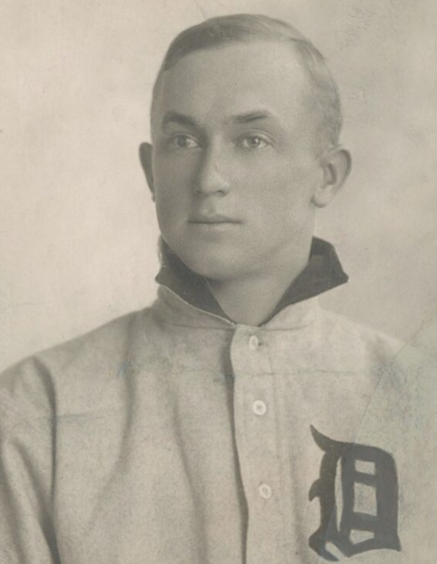
Ty Cobb the Legend
There was a time when Ty Cobb was completely lost. He was 18 years old, a super talented minor league ball player, but he had no focus. Until a fateful meeting with an older teammate of his named George O’Leidy, and then everything changed.
In this amazing book I just read on Ty Cobb, the book quotes Cobb as saying that this meeting was a turning point. So there’s no better place to start the Ty Cobb story than with this meeting right here.
The Big Moment for Ty Cobb
And this is the moment that changed everything. It’s when Cobb gets benched by his coach for snacking on popcorn in the outfield and he missed a fly ball because he was screwing around eating popcorn during the game. So here it is right here from the book titled, Ty Cobb, a terrible beauty. Here’s how author Charles Leershen explained it.
“Leidy wasn’t angry, just disappointed. Cobb recalled baseball, he said was a great game. It had unlimited opportunities for a boy who knew how to play. Eating popcorn in the outfield was alright if you thought the game was just a joke. But suppose you were too ambitious for that kind of horseplay. Suppose you kept your eye on the ball, studied, practiced, learned to make the most of what nature had given you. You could go to towns that would make Augusta look like a crossroads. You could be famous. You could make a fortune. And every boy in America would idolize you. Your name would go down in the history books. That night was the turning point, Cobb said. I made up my mind to be a big leaguer if it killed me.”
So there it is, that’s the turning point. And we’re going to get into the story in a minute, but just to give you a teaser, Ty Cobb is 18 years old and he’s playing in the minor leagues. Like we just saw, Cobb is out there daydreaming in the outfield. He misses a fly ball because he’s going for some popcorn.
Cobb’s Mentor, George O. Leidy
He’s benched by the coach, but most importantly, this guy named George Leidy, Cobb’s older teammate. He’s watching the whole thing and then he approaches Cobb, almost like an intervention. And just like Cobb says it, that conversation changed everything. Now this journey actually began from my fascination with the Ty Cobb T206 baseball tobacco cards.
There’s a few I’ve had my eye on and they’re worth hundreds of thousands of dollars each, but then I realized Cobb is rising to fame in the big leagues right at the exact same time that these T206 cards were rolling off the printing presses.
The American Tobacco Company
There’s no bigger year than 1909 through 1911 for Cobb and it turns out that these were the exact same years that ATC, the tobacco company, created the T206 cards. So that led me directly to James Buchanan Duke and if you’re not familiar with James B Duke, let me read this excerpt I found from an interview about Duke, because what I found was, the guy who formed the biggest tobacco monopoly to ever exist in the history of the world, there were lot of similarities between him and Cobb. So check this out,
“Here you got this boy raised in the rural South by at the time of his death in 1925 was one of the richest men in the country. And he got that way through sharp business practices, but that was accepted. I mean, that was very much the Darwinian business world, the survival of the fittest. That’s how John D Rockefeller created Standard Oil. And that’s how Andrew Carnegie created United States Steel. And that’s how James B. Duke created American tobacco. It was not by being Mr. Nice Guy.”
And that was an excerpt from a documentary about James Buchanan Duke.
From Poverty to Power, The James B. Duke Story
It was titled, “From Poverty to Power, The James B. Duke Story.” And the quote was from a historian who was talking about just how tough you had to be to rise to the top of the business world back in the early 1900s.
And then of course he adds the great line that sums up a lot of things that we’re going to talk about in this story. But he says, “it was not by being Mr. Nice guy.” That’s a key phrase right there. And we’re going to revisit that theme in a few minutes.
Cobb and James Duke
So these two southern gentlemen, I guess you could call them, these two characters had a lot of common ground. One battled his way to become one of the most legendary ballplayers to ever play the game.
And the other fought all the way to the very top of the business world and built an empire with his American Tobacco Company, or ATC is what they called it. So there’s a lot of common ground here with these two iconic figures.
Not only did they rise to the top of their game right at the exact same time, but James Buchanan Duke, his company ends up creating the baseball cards, the T206 famous baseball cards. This is where they came from.
The amazing Ty Cobb T206 cards that are now worth millions of dollars. So I read another awesome book and when I was referred to this book, I was told that I would definitely come away with a different point of view after reading it. And that’s exactly what happened.
The book I read, like I said earlier, was, “Ty Cobb, A Terrible Beauty by Charles Leershen,” and I was blown away at what I found. If you’re a baseball fan, you need to read this book.
But before we dive into the incredible book on the legend Ty Cobb, we have to look at the amazing T206 tobacco baseball cards. I wanted to learn more about these legendary tobacco cards that have become so valuable over the years.
The Rise of James B. Duke
So we have to look at James B. Duke and I think you’re going to find this timeline of Cobb and the American Tobacco Company really amazing. And with these two icons, I noticed a certain unconventional mindset, a fearlessness and a drive to be the best. A mindset that created the largest tobacco monopoly in the world and a mindset that created one of the greatest baseball players to ever live.
And at virtually the same exact instant, these two forces collide creating the iconic Ty Cobb T206 tobacco baseball card. So back to Duke and I have another book here titled, “The Dukes of Durham,” written by Robert Franklin Durden.
The book was first published in 1975 and it chronicles the entire Duke family, father Washington Duke and his two sons, Ben and James Buchanan Duke as they began from basically nothing after the Civil War ended to growing the largest tobacco company in the world.
So James B. Duke taking over his father’s company working for him since the age of 14, he’s looking to grow the business at the same time There’s a race to build a machine that can roll cigarettes without the need for hand rolling, saving labor costs.
The Bonsack Cigarette Machine
That’s exactly what James Duke knows he needs and that’s what he finds. It’s called the Bonsack cigarette machine. So Duke finds this machine and the company that built it, it’s called the Bonsack Machine Company.
And the way they set it up was they invented the cigarette rolling machine and then they would lease the machine to tobacco companies and collect royalties on the cigarettes produced by their machines.
The royalties they charged worked out to about 30 cents per thousand for plain cigarettes. And then the Bonsack Company charged 33 cents per thousand for printed work is what they called it.
So those were the rates they were paid from tobacco companies. And then the Bonsack company would also supply an operator to run the machine. And I bring that up because the book says the machine didn’t work very well in the beginning.
Duke Makes a Deal of a Lifetime
But what James B. Duke did is he found a mechanic, a guy named William T. O’Brien. And this guy was somehow able to keep the machine running. So you can see Duke has an insight here and he figured something out before anyone else. He’s got this ace up his sleeve, William T. O’Brien. And so now I’m sure Duke has a light bulb going off in his head.
He knows the Bonsack machine is the future, but he had a few business partners who didn’t agree with the direction of the company and weren’t really seeing an eye to eye about the automation and the growth of the company. So Duke gets rid of those partners really quickly.
So he can get busy with this Bonsack machine and now he can focus on making a deal and what would turn into a deal of a lifetime. So here’s a great quote from the book about the risk here that Duke was about to take with his company on this Bonsack machine. says,
“The ambitious partners of the Duke company, especially James B. Duke, were nevertheless ready by 1885 to take a large gamble, and give the cigarette machine invented by James A. Banzack of Virginia more than just a casual try. W. Duke Sons and Company would be the first manufacturers of cigarettes to take such a step, and it would pay off handsomely, even if no one could know that for a certainty in 1885.”
Exclusive Use of the Bonsack Machine
So now Duke makes a deal for the exclusive use of the cigarette rolling machine. Exclusive being the key word here. Listen to this. The Duke’s of Durham book lays this out perfectly. It’s the incredible deal that Duke strikes up with the Bonsack machine. The deal of a lifetime basically. Check this out.
“Strauss, for his part agreed that the rate of royalty on the machines at the Duke factory should at once be reduced, from 33 cents per thousand for printed cigarettes and 30 for unprinted ones to 24 cents per thousand on all cigarettes. Furthermore, when and if all cigarettes produced by the Duke firm were made by machines, the rate would be reduced to 20 cents per thousand. And finally, if the Bonsack rate of royalty to any other manufacturer should ever be reduced below the standard rate of 33, and 30 cents respectively, W. Duke Sons and Company should have its rate proportionately reduced so that it would always be charged 25 % less than any other manufacturer.”
So hopefully you caught that right there. These are the terms Duke just negotiated for the Bonsack machine and their good rates. 24 cents and 20 cents. But here’s the key. Listen to this. It’s, if any other manufacturers use the machine, they’ll pay at least 25 % more for it. It says right at the end, if other manufacturers rates go below the standard rate of 33 cents, Duke will always have a price 25% less than anyone else.
So Duke just makes a deal that will set up his company to crush every single one of his competitors. He can now slash his prices as low as he wants, knowing he’ll always have the lowest costs.
The Duke Monopoly
So Duke can undercut his competitors’ Now, the cost for machine-rolled tobacco fell and consumers started buying more of it. Other tobacco companies began using the machines and competition was fierce. But remember, James Duke’s costs were less than anyone else’s by a big margin. But it’s still competitive for a while and to compete for sales in the late 1880s, tobacco companies began printing colorful advertisements and portrait cards to insert into cigarettes as marketing.
So this sets up James B. Duke for huge growth in the business and the ability to buy out his competition. He starts buying out every other company because he’s making more profit than anyone else. And that creates this huge conglomerate. He convinces the big competitors to join his trust, the American Tobacco Company or the ATC. Now there’s no need for marketing budgets, no need to print expensive cards, they have a monopoly.
The cards went away as the profits poured in during the first years of the 1900s. And now you can see the toughness of Duke who ruled this tobacco world. There were actually tobacco wars that broke out. They were called the Black Patch Tobacco Wars. This was civil unrest and violence.
Small tobacco farmers and companies that were protesting the monopoly of Duke and the ATC, and they were protesting how they were undercutting all the other prices. Farmers resorted to violence. had nowhere else to turn, but Duke is tough. He crushes the backlash. He snuffs out this revolt and he’s as tough as anyone out there. You have to be tough to run a tobacco monopoly. It’s not for the faint of heart.
And Duke’s not only tough, but he’s as smart as anyone and insanely ambitious and creative and always looking for an edge.
Cobb and Duke
And that starts to sound a lot like Ty Cobb, our main man Ty Cobb. Before we go too far with James B. Duke, we need to go about 400 miles south down the road from Durham, North Carolina, where Duke was from to Augusta, Georgia. And we find a young Ty Cobb in the year 1901. Just as James Duke was becoming the biggest thing in the tobacco world, Ty Cobb is 15 years old.
So now we can get into this amazing book titled, ‘Ty Cobb, A Terrible Beauty,” by Charles Leerhsen. The book is a complete biography of Ty Cobb, but at the same time, it dispels many of the rumors and the made up stories written over the years about Cobb. Many of them by this sports writer guy named Al Stump. So Stump helped Cobb on his autobiography just before Cobb died, but then, decades later, Al Stump wrote another book that painted Ty Cob in just about the worst light imaginable.
Setting the Record Straight on Cobb
Many of the stories from that book have been proven false, and Stump himself later admitted to making up many of the details for his book just to dramatize it as much as he could.
So you might say, big deal. A crazy old sports writer makes up a bunch of stories just to sell his book. Who cares? Well, the problem is that second book written by Al Stump, the one with a lot of made up stuff in it. It also happens to be the same book used by a Hollywood producer, Ron Shelton, who made the 1994 movie called, “Cobb,” starring Tommy Lee Jones.
Many of you remember that movie. So this book by Charles Liersen, he’s trying to set the record straight on Ty Cobb. And there’s a lot of things that Leerhsen disputes in the book and then backs it up with facts.
He’s saying that Cobb was not the monster Al Stump in the Hollywood movie made him out to be, and he has a ton of research that makes his case. But he does make it very clear in the book, even though Cobb might be the victim of a bunch of lies and rumors, he was no angel either.
The Young Ty Cobb
So we gotta take a look at this. I love the description of a young Ty Cobb. This is from Leerhsen’s book, “A Terrible Beauty.”
“The skinny lad who always seemed to be tossing up stones and whacking them with sticks, had become known as a bare knuckle battler. You saw it the minute you set eyes on him, said a childhood friend of young Ty’s hair trigger temperament.”
And so it helps to see where these guys are coming from, all the old baseball legends and how they grew up. So right away, the book is not trying to paint Cobb out to look like a saint. And even Cobb knew he had a bit of a temper. The book says this, quote, but even Cobb admitted in one interview to having,
quote, “A vying nature and in a seemingly heartfelt memoir serialized in newspapers in 1914, he allowed that he had quote, a terrible temper in my younger days. And it got me into a lot of trouble.”
The book lays out the early years about Cobb. Here’s one more amazing passage from the book describing Cobb’s personality as a youngster. It says,
“There’s no denying that Cobb was a born battler. Just as some seem to come into the world as jokesters, wimps, loners, or boars, this quality was striking to those who knew and liked him. As his friend Grantlin Rice wrote in his memoir, ‘The Tumult and the Shouting,’ when I first met Cobb, I found him to be an extremely peculiar soul. Brooding and bubbling with violence, combative all the way, a streak, incidentally, he never lost.”
The Feistiness of Cobb
So we have a temper and a stubbornness and the feistiness of Cobb. From way back in their earliest days that anyone could remember. A friend described him as brooding and bubbling with violence. Just so you know who we’re dealing with here, but young Cobb is figuring out the game of baseball and he’s finding out he’s getting really good at it.
And here’s a line that we just talked about in the Ted Williams episode I just did, but in this book, it talks about where people were starting to call Cobb a natural ball player. And then Cobb would correct him and he’d say, he’s anything but a natural, meaning that he worked hard at it. wasn’t easy. And you have to check out my Ted Williams episode. There’s a few similarities with Cobb and Ted Williams that I found out here.
The Intensity of Cobb
There’s a certain intensity that they shared and this was one of them right here. Ted Williams also corrected writers and reporters when they called him a natural. So you’ve got to check out that episode if you want to hear all about Ted Williams. But so this is the feistiness of Cobb. This is a common theme in the book, but he’s got confidence and that’s all he needs.
Cobb always talked about how confidence was the most important trait for any ballplayer. So this is similar to a young James B. Duke who was working in the tobacco factory when he was 14 years old. Both of these guys are getting after it and learning the ropes from a very young age in their early teenage years. And now Cobb grows stronger. He battles, he’s figuring out the game, and then he runs into an unlikely mentor while he was in the minor leagues.
Cobb’s Mentor, George Leidy
He crosses paths with this guy named George O. Leidy. And this guy Leidy is someone that Cobb later would credit with keeping his career on track. He says it saved his baseball career from a premature demise. And this is the same story that we started this whole episode with. It’s the big moment for Cobb running into this guy Leidy. And this is pretty crazy. Nobody really knows anything about this George O. Leidy guy, even Charles Leerhsen in the book.
It sounds like Liersen tried to dig up some of the history on Leidy, but he couldn’t find anything about this guy. They just know he was a career minor leaguer and he never made it to the big leagues. But one thing Leerhsen mentions is that Leite was described at one point with “gnarled knuckles.” And he thought that maybe that was what attracted Cobb to the guy because he looked like a fighter. But anyway, during a minor league game now, Cobb’s screwing around in the outfield.
And he missed a fly ball because he’s snacking on someone’s popcorn. So like we talked about already, this guy, Leidy saw it and he wanted to sit Cobb down. So George Leidy made this intervention with Cobb. And this is from the same passage I started the episode with. It’s the turning point for an 18 year old Ty Cobb when he decided to go all the way. Here’s the passage from the book quote,
“Leidy had his first talk with Cobb on the evening of the day that Roth benched him for snacking in the outfield. The wonderful old man, as Cobb remembered his 36 year old teammate, took him on a streetcar ride to an amusement park on the outskirts of Augusta where they strolled the gaslit grounds and talked.”
Leidy’s Intervention with Cobb
Okay, so that was from the book and then this is where I started the episode, the big moment right here, and I’ll read it again. Here it is. It says,
“But suppose you were too ambitious for that kind of horseplay. Suppose you kept your eye on the ball, studied, practiced, learned to make the most of what nature had given you. You could go to towns that would make Augusta look like a crossroads. You could be famous. You could make a fortune. And every boy in America would idolize you. Your name would go down in the history books. “That night was the turning point,” Cobb said. “I made up my mind to be a big leaguer if it killed me.”
The Big Turning Point for Ty Cobb
So there it is, that’s the big moment. The turning point, as Cobb just said, when he made his mind up and the book describes how this was just the beginning of Cobb starting to practice really hard and focus his energy into becoming great. And this guy, George Leidy, right here was working with Cobb on the side and he was helping him along and encouraging him to work on these drills. He’s even telling him stories about how Christy Mathewson is putting in extra work with his pitching and how Honus Wagner was out there practicing field and ground balls at shortstop.
I mean, it wasn’t obvious back then. You couldn’t YouTube any tutorials and you couldn’t figure out the best drills to run from anything other than somebody just sitting you down and explaining it to you. You had to get lucky and have somebody like George L basically just spell it all out for you. When you’re young, like Cobb is, he just didn’t think about it until Leidy sat him down. Then, he started working with him on the side and Cobb credits his career to this guy, George Leidy. It’s pretty incredible.
And it’s really funny in the book. says some of the drills didn’t even really didn’t make much sense to Cobb. “Even if some of the lady’s lessons left Cobb scratching his head, the moral of every tale he told was you got to keep pegging at one certain thing until you got it down pat.” And so that’s what Leidy was telling Cobb. You got to just keep pegging at one thing until you get it down. And he was drilling Cobb on this idea. So I love this part in the book.
Creating the Legend
It’s definitely a defining moment for Cobb at 18 years old and he’s still in the minor leagues, but he bumps into this guy, Leidy, and it just totally changed his whole career. And then there’s talks about how Leidy really worked on bunting with Cobb and that’s how he discovered the magic of the drag bunt and how to use his speed to his advantage. And that would become a huge part of Cobb’s entire career is that bunting and is using his speed to his advantage.
So now with Leidy pushing Cobb along and helping him out, his career just takes off from there. Not long after he’s in the major leagues and not just barely hanging on by a thread, he’s making a big impression. Maybe too much of an impression. So other players are now really jealous of this new phenom and Cobb doesn’t fit in as one of the guys. And there’s a bunch of hazing and bullying now that Cobb really struggles to deal with.
Cobb Deals With Hazing and Bullying
He didn’t just struggle to deal with it. He just goes straight to throwing hands, and he’d use his fists. So plenty of stories in the book about his early days in the big leagues as a rookie, but he learns and studies other players and he’s taking cues from them on how to play hard. He wanted to be great. There’s a great story in the book about when Cobb is on the base pass, there’s a close play and he’s sliding in. This guy McGuire on the opposing team.
He’s putting the tag on Cobb with the ball. He also drops his knee right down on the back of Cobb’s neck and Cobb’s face goes straight into the dirt and tears his skin right off his forehead. It’s a pretty nasty play. And as Cobb remembers it, he just took the pain. He said he didn’t come up swinging. He said his feelings were hurt more than his face and neck. And here’s what Cobb said in his memoirs about the hard tag by McGuire. He said,
“When I got to my feet, I was much subdued. I had run into a real big leaguer. I realized that he knew much of what I would have to learn.”
And that’s amazing right there. That’s just goosebumps. When I read that quote from Cobb, the exact opposite of what you would expect. You’re thinking he’s going to instantly go after this guy McGuire, but he was much subdued. said just like mesmerized. Like this was his new idol. He wanted to play like this now.
Fast Learning Cobb
So look out. Cobb is a fast learner and he’s just soaking up all these new tricks from the opposition and he’ll take it to a new level. There’s no doubt he wants to be the best. But at the same time, he’s in constant conflict with most of his teammates. There’s the hazing just because he’s a rookie, but then there’s an extra large bullseye on Cobb because he was so talented. We see this with other baseball legend stories that have done.
There’s a lot of jealousy by older players. Anytime a star rookie shows up, Babe Ruth had to put up with it, Ted Williams dealt with it, but the veteran players resented Cobb and Cobb made pretty much zero effort to fit in like one of the guys. The book says he was off reading biographies on Napoleon and Thomas Jefferson. He did not really fit in with the boys. So it got pretty intense in the Detroit Tigers clubhouse.
There’s clicks forming and just really mean things going on. There’s one story about how the veteran players just blocked him off from the batting cage for batting practice before the game. They told him not today, no batting practice for you. So it was constant bowling and this really wore Cobb out. He’d talk about it in his later years. It was still really painful for him to talk about how he was treated in his first few years in the big leagues. His teammates would start fights with him and then they would just make stuff up.
Intense Bullying by Teammates
They’d straight up saw his wood bats in half and leave him laying at his locker. They’d even steal his clothing, mess with his uniform nonstop. And I’m sure they could see they were getting under Cobb’s skin. So of course they just poured it on even more. Here’s Charles Leerhsen. He lays it out perfectly right here. He says,
“One didn’t have to be as emotionally fragile as Cobb though, to be hurt by what Maddy McIntyre and his ilk were doing. The hazing he received in 1906 was long and brutal. Cobb thought about it night and day and later recalled that it left him with a heavy burning inside. They sort of formed a gang which kept aloof from me, he wrote. They clearly made me feel my position, that of a recruit. I had no place in their councils. I had to go about alone. He was still technically a teenager, newly fatherless, far from home. Other players have gone through struggles as hard, he wrote, but none harder.”
To make it even worse too, now you had other players trying to justify their actions. Some of his teammates said that he was just taking it the wrong way. Here’s how one guy, this guy, Sam Crawford, here’s how he justified the whole thing. He said, “He came up with an antagonistic attitude, which in his mind turned any little rousing into a life or death struggle.” That’s a teammate explaining how Cobb was just overreacting by the whole thing.
Cobb the Fighter
But Cobb’s a fighter and one of my favorite phrases for Cobb, he just refused to suffer fools, even as a rookie. And if you listen to my Ted Williams episode, again, this might sound familiar, but Ted Williams was as intense as anyone on the ball field. And he did not suffer fools just like Cobb. And Ted Williams didn’t have as much of a fight with his teammates. With him, it was more, it was with the media and the sports writers in Boston who just drove him nuts.
But much like this situation that Cobb is dealing with here, once they see you fighting back and they notice that they can get you all riled up, they just pour it on. Like I said with Ted Williams, the reporters just had a feeding frenzy because he didn’t suffer fools. He was not going to put up with anything just like Cobb. And you can do that, but you’re going to have constant conflict. And that’s what they both had. It’s really amazing to see these two personalities.
Now, just like I said in the Ted Williams episode, he just mouthed off and jabbed back at the media, but Cobb would drop the gloves. He would go. Cobb was not afraid to get physical at all. And the book has plenty of stories, but here’s a great summary of Cobb and his hazing. Liersen asks, he says, “Did Cobb thrive because of the turmoil? Is that what fueled him to be even greater than ever?” And we’ll never know the answer for sure.
But I love this quote from Leerhsen. Here’s what he says.
“It is impossible to talk to people who knew him and come away with the sense that he ever slipped and rolled with life’s punches. Rather, he led with his chin.”
Amazing description there. Cobb led with his chin. That’s a perfect way to describe it. That’s just the way he was. He overcame the bullying and the hazing in the early years, but he carried that attitude all along.
The Fuel for Ty Cobb
So here’s a little bit more on the toughness and the feistiness of Cobb. In Leerhsen’s book, it says, “Cobb was learning something about himself that spring. Despite his Irish bloodlines, he was the kind of person who would rather have the wind in his face than at his back. I like opposition, he would observe several years later. The many extra challenges he endured that spring and beyond seemed to help bolster his will and focus his mind. His great talent was not blocking out adversity, but letting it come through, unfiltered, and turning it into fuel. As Cobb’s favorite historical figure, Napoleon Bonaparte said, adversity is the midwife of genius. Connie Mack once put it another way, don’t get Cobb mad. Anger made him better. When the hazing players would get me angry and upset by some petty act, Cobb said. I often gritted my teeth and declared to myself that I would get a base hit the next time up or die in the attempt. In this way, he made his enemies and his worries complicit in his quest for greatness. Whatever did not kill Cobb would make him a 350 hitter and some years a .400 one.”
And end of quote that was from the book by Charles Leerhsen. Amazing book. So if this doesn’t give you a clear sense of the intensity of Ty Cobb, this was all just fuel for the fire. So Cobb would quickly become a star and soon he’s hitting over .400 in three seasons. And as he rises to the top of the entire league, his hazing troubles just kind of go away because now he’s a star.
Ty Cobb, the Superstar
But Cobb is off like a rocket. He’s just dominating the league almost from the very start. And as he rises to fame, he’s forced to sharpen his business skills at the same time.
And you should check out my Honest Wagner episode because right at the same time as this Wagner’s going through the same thing. He’s starting to work the business side of becoming a famous baseball player. So Cobb is investing in car dealerships. He licenses his signature. He’s buying stock in newspapers. He’s got product endorsements. It’s all starting to happen really quick. He’s just 22 years old and Liersen says in his book, “He’s becoming a cultural and commercial juggernaut.”
So from star baseball player to superstar status, just like that. Cobb becomes friends with the CEO of Coca-Cola and he’s buying stock that would eventually become worth millions of dollars in his portfolio. He’s got followers in rival cities. And I love this part in Liersen’s book. He’s talking about Cobb the superstar. And here’s how he describes it.
“Cobb was playing with panache now. Trying to explain why such a fierce opponent could have followers in rival cities, Hayward Brown of the New York Morning Telegraph said it was, because he gave them more for their hard-earned ticket than any man alive or dead. In Detroit, he was as big a celebrity as Henry Ford and much more exciting. At home against St. Louis in late April, he stretched a single into a double with a pretty fadeaway slide. Then when second baseman Jimmy Williams bounced the ball hard in frustration for missing the tag, he scampered onto third, where he again slid in safely and drew a standing ovation. By mid-May he was hitting 365.”
So Cobb is a superstar now. His desire and his obsession to be great is gaining steam. During the long train rides, he’s just staring out the window plotting his next move, the book says.
Here’s how Cobb described his mindset on long train rides between the games. Here’s what he says.
“I would think I haven’t tried to score from second base on a bunt in a while. Maybe they think I’ve given up trying and I would try that the next day.”
Cobb Rising to a Whole New Level
And now Cobb is taking things to a whole new level of greatness and he’s not letting off the gas. He’s punching and fighting the entire way.
So there’s so many stories of altercations and confrontations in the book. It’s just nonstop feistiness. And I love these quotes from the old ballplayers that played against Cobb back in the day. Check this out. Here’s the great pitcher, Walter Johnson, breaking it down on the feistiness of Cobb. Here’s what he said.
“While it is true that he seldom, if ever through the first punch in a brawl, I don’t believe Cobb ever picked a fight just for the sake of a row,” said Walter Johnson. “But start something unfair and you’ll get a fight, whether you’re a ball player or a taxi driver.”
And then Charles Leerhsen goes on in his book, he says, “He did have an exquisitely short fuse. Today he is often tis, tis for the quality, yet many in his day found his explosiveness entertaining. To a degree it humanized a virtuoso who played baseball spookily well and because he provided such a dizzying array of examples to choose from. Fights with complete strangers, fights with teammates, fights with rival players, fights with hotel employees, shoekeepers, and rowdy cranks and such. It also made him, as the expression goes, larger than life.”
End of quote right there, Charles Liersen.
Ty Cobb, Larger Than Life
You can see now exactly how he was just larger than life. Cobb had it all, the ego, the greatness, of course, lots of crazy people he’s got to deal with all of the above. This is just an incredible story, the Ty Cobb story.
And Cobb would just do things just because he could. There’s an amazing story about his wedding. He gets married in Augusta, Georgia, which that’s completely fine. There’s no problem with getting married in Augusta, Georgia. No big deal. Except the fact that he gets married at the end of August. His team’s right in the middle of a pennant race trying to make the playoffs. He goes off and gets married. He’s the best player on the team and he just heads out for a while to get married. Why? Because that’s what he wants to do. That’s why. And even his wedding was a controversy.
But he was the greatest of all time. By far, he just dominated the game back in the early 1900s. Over 23 seasons, his lifetime batting average of 366 still to this day is the highest of any player ever. Cobb figured out a way, whatever it took, to be the best. And I call him a legend. And that’s a term that’s so overused today, but I don’t mind using it when I do these episodes.
The Legend of Ty Cobb
These are the real legends. We’re talking about Cobb now and in a hundred years from now, we’ll still be telling Ty Cobb stories. I’m sure of it. That’s a legend.
And I have another definition of a legend, but I say a legend is just somebody who does something totally bonkers and insane, even when you’re expecting them to do great things, even when you’re expecting greatness. So they do something just completely unheard of that kind of just makes people shake their heads and they do it over and over.
That’s one of my definitions of a legend. And Charles Leerhsen has a great description of exactly this. Check this out. Here’s how he describes that extra creativity and will to win that Cobb had. Here’s what he says,
“His bag of tricks contained actual tricks. Cobb sometimes slid into second, howled in pain, asked for time, limped around, winced, howled some more, and then lit out for third on the very next pitch. More essential to his maddening running style though were his powers of observation, which could be employed from a stationary position.”
And then that’s awesome. So then there’s praise from his teammates and his opponents. There’s a ton of examples in the book. Everyone didn’t hate Ty Cobb like the infamous Hollywood movie would try to make you believe. He was respected in the game. Here’s one example from the book and there’s a lot of examples, but here’s one. Check this out. Quote.
Praise From His Teammates and Opponents
“Cobb was the roughest, toughest player I ever saw. A terror on the base pass,” said Shotten. He was not dirty though. I never saw him spike a player deliberately. But if you ever got in the way of his flying spikes, brother, you were a dead turkey.”
Amazing quote from one of Cobb’s opponents back in the day. Some guy named Shotten, he says, Cobb didn’t do anything dirty on purpose, unless you were in his way.
That’s classic. love that. He says, brother, you were, “a dead turkey.”
So now Cobb hits a career high for 19 in 1911. And that brings us all the way back to the cards, the world famous T206 baseball cards. And guess who else? James Buchanan Duke. And this is something I love to do in these episodes. I’m coming back all the way around to where we started the episode. And these stories absolutely collide in 1911.
Ty Cobb, the ATC, and the T-206
It’s a big year for the superstar Ty Cobb. He’s got a career high .419 batting average. He won his first MVP award. He led the league in hits, stolen bases, RBIs, doubles, triples, and runs scored. And in the same year, James B. Duke and his American Tobacco Company, they’re cranking out T206 baseball cards.
And then they’re dealing with a few really big challenges. Duke’s company, the ATC, is broken up by the Sherman Antitrust Act of 1890. And this is something that was in the works since 1908, but it’s now official in 1911. The same day the US government ordered Standard Oil to dissolve, they broke up American Tobacco Company into four competitors.
The 1909-1911 T-206 Baseball Cards
So Duke, as he’s going through this entire antitrust process for a few years, they fire up the printing presses and they crank out the legendary T206 series of tobacco baseball cards just as they’re on their way out. And then they split into four smaller companies and guess what? They’re going to have to compete again for sales and those T206 baseball cards, their plan is to get those cards going again so they can sell tobacco because they’re no longer on easy street with this big monopoly.
And with baseball as popular as ever, with the help of superstar Ty Cobb, ATC has been printing baseball cards in 1909, knowing that the breakup was coming.
So now let’s stop for a second. You might be wondering, what happened to James Buchanan Duke? Well, Duke did just fine. So you don’t have to worry about him. After getting his monopoly busted up by Theodore Roosevelt, he went on to start Duke Energy, an electric power conglomerate.
And then he also leaves a massive financial gift to a Durham, North Carolina school called Trinity College. And that school would later be renamed to, “Duke University.”
Ty Cobb T-206 Tobacco Baseball Cards
So the cards now, we have to look at these amazing tobacco cards. There’s four different fronts on the Ty Cobb cards produced in the 1909 to 1911 T206 set. One featured a Ty Cobb portrait with a red background. Another features the same portrait with a green background.
There’s a third variation of the T206 card called the Bat on Shoulder and that shows Cobb in his batting stance and the fourth card showing Cobb in his batting stance with the bat off shoulder. There’s one more T206 Ty Cobb card and it’s fitting that it’s a controversial card just like the man himself, but it has the same Cobb portrait on the front with a red background. But the back of the card says, “Ty Cobb, King of the smoking tobacco world.”
And this card is the most rare of all the Cobb T206 cards and even more rare than the Honus Wagner card which has about 80 known examples. Only about 20 are known of this Cobb card. It’s the only card of all the players with the “Ty Cobb Tobacco” advertisement on the back. The front has a glossy finish and there’s no other T206 cards that have it. It’s a bit of a mystery why the card was made.
Many hardcore T206 collectors are not even sure it belongs in the same T206 classification. The case for including the card as part of the T206 set is that they used the exact same portrait photo as the regular Cobb cards, and they were issued at the exact same time as all the other T206 cards, and the card was issued by ‘FR Penn’, which was a tobacco company that was acquired by the ATC in 1903, part of that conglomerate trust.
The Million Dollar Cobb Card
But there’s only one single PSA 4.5 graded card and it’s worth about a million dollars. So, and then in 2016, seven of these cards were discovered and then an eighth card was discovered by the same family two years later. So here’s Cobb in his later years trying to summarize his life and his career. Here’s what he says, and this is from Leerhsen’s book, quote,
“The good book says, turn the other cheek,” he said, trying to sound chipper, but you know, I never believed in that much. It doesn’t prove out. I happened to have believed more in an eye for an eye when I played baseball, he said with a forced chuckle. He was playing a role and I could forgive him for this. The truth was complicated and he was a very tired man. Truth wasn’t necessarily what people really wanted anyway. Cobden lived long enough to see the man who shot Liberty Valance, but he understood the most famous line from it. When the legend becomes fact, print the legend.”
The Rise to Greatness, Fighting All the Way
And this goes back to what I read earlier about James Buchanan and Duke and his rise to the top of his industry. And the author who said it added at the end of his quote about Duke, it was not by “being Mr. Nice Guy.” And that’s a great theme of this episode. Two guys who ascended to the top of their game, fighting, scraping, and clawing all the way. The Duke quote that I read, says, “Duke rose to the top, through sharp business practices.” And it was survival of the fittest.
You could say that same thing about Cobb and not necessarily charming everyone they came in contact with, but still leaving a massive legacy. Definitely doing things their own way. Success, no matter what it took. So I strongly encourage you to read Charles Leerhsen’s book, ‘Ty Cobb, A Terrible Beauty.’
Leerhsen Setting the Record Straight on Cobb
Throughout the book and especially in the end, Leerhsen completely dismantles the credibility of Al Stump and his books, and Ron Shelton, that director of the film Cobb, who Leerhsen actually traded emails with. And this director admitted to completely making up scenes for his movie that had no basis or truth to him. So Cobb and James Duke, two guys who were uniquely original and out there in the arena, battling it out and leaving their mark.
So have a great rest of your day wherever you may be. I’m really looking forward to more episodes on Ty Cobb. I’ve only scratched the surface with this awesome book by Charles Leerhsen.
Cobb would go on to have an amazing career and an amazing life after baseball. I learned about Cobb’s investments he made along the way and he might be one of the greatest athlete / investors of his time. He built up a real estate and stock portfolio worth millions over his lifetime.
Can you imagine doing a business deal with Ty Cobb or trying to negotiate a lease with him for one of his buildings? I’m sure there’s a few amazing stories in there somewhere and I can’t wait to do my next episode. And hopefully just like Leerhsen does in his book, do my part to set the record straight, and keep the legend story alive.