Mickey Mantle
Mickey Mantle
Episode #43
06.08.26
I wish I had some inspiration for you with this story, but I don’t.
The one thing I’m learning about all the old baseball legends, I’ve been reading all their biographies, and I’ve been finding out it’s not a fairy tale. I’m learning it’s a whole lot of struggle and ups and downs and just trying to figure it out, and it’s just raw, real life, and it’s painful.
Even the worst kind of regret.
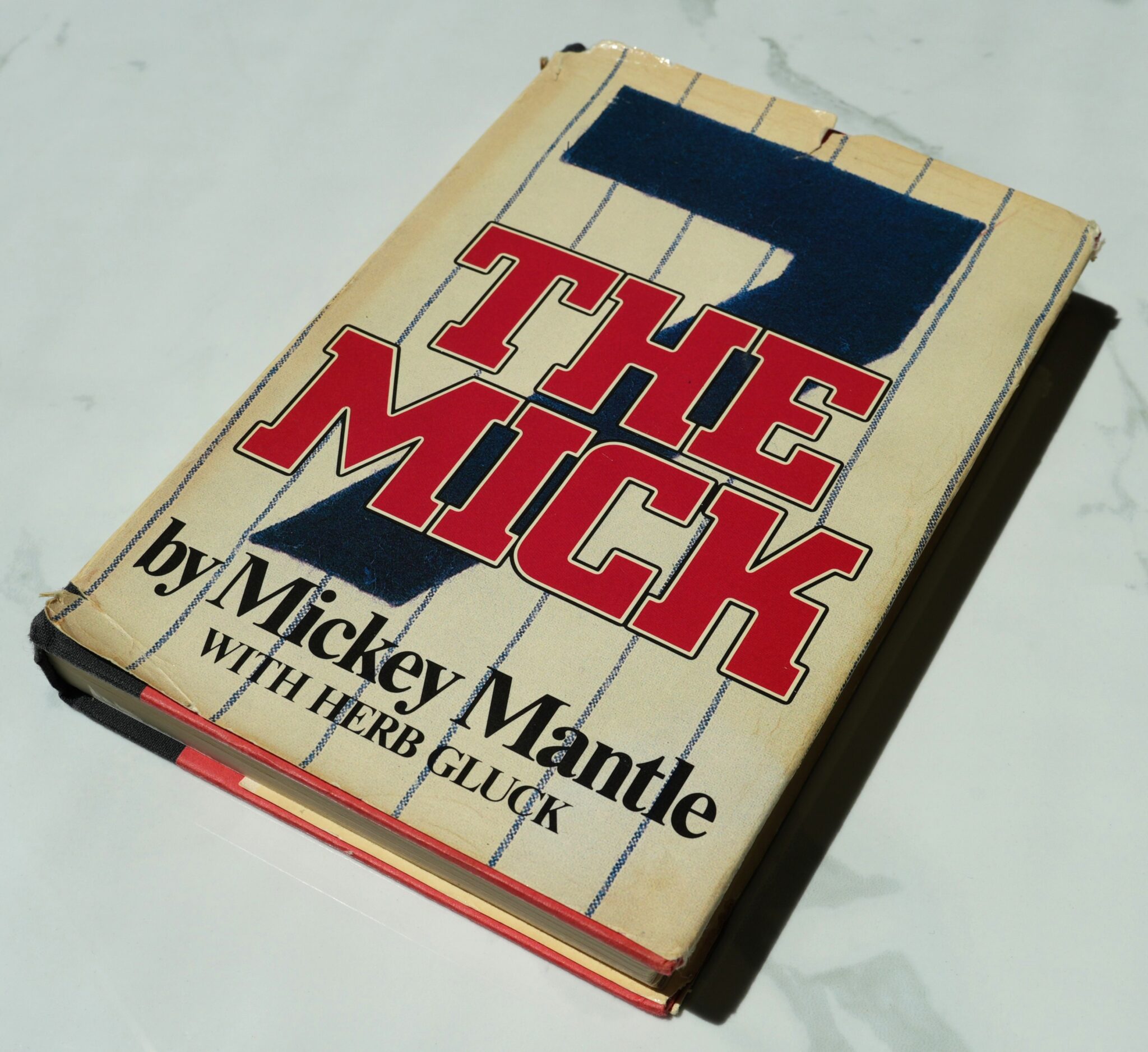
The Mick
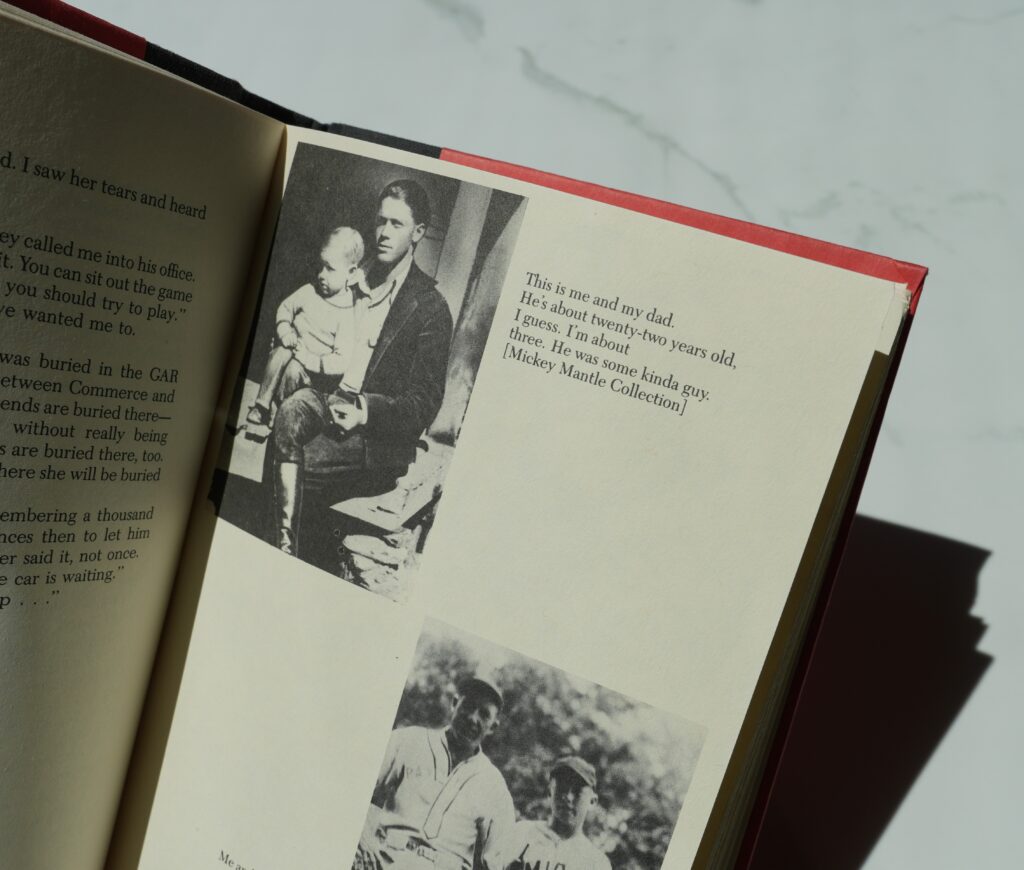
I just reread my book called, ‘The Mick,’ co-authored by Mickey Mantle himself.
And there’s a wild scene during Mickey’s first year in the big leagues. It’s nineteen fifty one and he’s really struggling. He can’t get a hit. So the Yankees send him down to the minor leagues. He can’t get a hit there either.
Mickey’s in a giant slump for weeks. Now he’s in the minor leagues and he’s feeling like he lost it all, like it’s all over. It might be time to give up. Mickey’s thinking about quitting baseball only a few months into his rookie season.
Just a nice pep talk right about now from the guy who was with him all the way from the very start. He thought a pep talk might help him out. He got a lot more than a pep talk.
Before that though, let’s back up a couple months. The 1951 season was a roller coaster of emotions, full of highlights and lowlights for the 19 year old Mickey Mantle. The crushing thing right now about this giant hitting slump.
Spring Training, 1951
Is the fact that he was just on top of the world coming out of spring training. It took me a little time to figure out exactly how all this went down. But like I said, I got a great book right here, The Mick, by Mickey himself, in his own words. And I have another book here, too, by author Jane Levy. It’s titled The Last Boy.
Just a few months before his hitting slump, Mickey was tearing it up in spring training. Players and fans were seeing for the very first time what this guy could do.
Here’s Jane Levy’s book,
“The next day at Gilmore Stadium. Mantle went from first to third with such blinding speed it drew a collective gasp from the crowd of 13,000. After seeing Mantle in Los Angeles, Branch Ricky, the general manager of the Pittsburgh Pirates, wrote Dan Topping, “I hereby agree to pay any price, (fill in the blank) for the purchase of Mickey Mantle, and please be reasonable.” Topping’s facetious reply. ”Ralph Kiner and a half a mil.” Frank Lane, the White Sox general manager, fumed at the Yankees’ dumb luck. “They got him for nothing. Nothing, do you hear? Why, for a prospect like that, I’d bury him in thousand dollar bills.”
And so that’s from The Last Boy by Jane Levy, a book about Mickey Mann’s career and life.
The Rookie Year of Mickey Mantle
Okay, so what is going on here? It’s spring of 1951. And 19-year-old Mickey Mantle absolutely tears it up in spring training, which started in Arizona, then it headed to California for a few exhibition games before opening day back in New York.
There’s an exhibition game in Los Angeles. The Yankees are playing the USC Trojans on campus, right at USC. Thousands of fans are there to watch. Mickey goes four for five with seven RBIs. Two home runs.
One of those home runs lands halfway into the practice football field where the Trojan football team is working out. Here’s how Mickey describes the scene on the USC campus after his huge game. He said,
“Half the student body must have been in the stands and it seemed as if every one of them came heading toward me as I walked out of the locker room. Absolute bedlam. They shoved scraps of paper into my hand for autographs, clawed at my shirt, pushed and screamed. It shook me. Yeah, I finally realized the price I might have to pay for being called the next DiMaggio.”
So now the star is officially born. Teammates can’t believe their eyes. The Yankees name Mickey Mantle to the big league roster. Check this out. Listen to what the Yankee players were saying once they got a good look at Mickey in this very first spring training. Listen to this from Jaden Levy’s book, ‘The Last Boy.’ It says,
“Players size up other players. That spring, rookies and veterans alike stopped to watch when Stengel’s protege took batting practice. “It was like he was hitting golf balls,” Yankee pitcher Tommy Byrne said. “Who in the heck is this kid?” wondered Yogi Berra. Mantle’s talents were unprecedented.”
And then it keeps going. It says,
“He has more speed than any slugger, and more slug than any speedster. And nobody has ever had more of both of them together,” Stengel declared. “The kid ain’t logical. He’s too good. It’s confusing.”
And Jane Levy’s book, it goes on here, everybody’s just looking at Mickey like just totally baffled with what they’re seeing. It says,
“Compounding Stengel’s befuddlement was the disconnect between his actual size. At only five feet eleven and maybe 185 pounds, he wasn’t big at all. Yankee pitcher Eddie Lopat was the first to observe. “That kid gets bigger the more clothes he takes off.”
So he’s just ripped. He’s not that big, but he’s strong. And like it just said, the other Yankee players are sizing up the new guys. They see Mickey play, and nobody could believe what they’re seeing with this kid. The team’s wrapping up spring training. Here’s what it says right here.
“Potential is the most elastic of human qualities. By the time the Yankees boarded the train for California, the dispatches being wired back east were inflated with wonder and speculation. How much more might he grow? And if you filled out what place in baseball history might he occupy?”
So it’s just hype right now for Mickey. Word is spreading. Just wait till you see this kid. The sports writers are just hammering on their typewriters, sending these reports back east from spring training. You can see now why this slump that I was talking about was such a big disappointment. Just weeks before, everybody’s going crazy for this kid. Another sports writer, Stan Isaacs, he wrote this.
How Good Could Mickey Get?
“Since the start of spring training, the typewriter keys out of the training camps had been pounding out one name to the people back home. No matter what paper you read or what day, you’ll get Mickey Mantle, more Mickey Mantle, and still more Mickey Mantle.”
And then he goes, he says,
“Every day there’s some other glorious phrase as the baseball writers outdo themselves in attempts to describe the antics of this wonder.”
So everybody’s just freaking out. Seeing Mickey Mantle for the first time in spring training.
But just hold up right here.
Just wait a minute.
Something happened here that all of these other Mickey Mantle documentaries and videos that I’ve watched, they completely miss it. And I know that because I’ve watched every one of these tribute videos to Mickey over the last few days.
The Iconic Photo of Mickey Mantle
I didn’t know this until I read the book though. Back up right here, March 26, 1951.
The Yankees are playing the USC Trojans on campus in LA, wrapping up their spring training that started in Arizona. On March 5th, exactly three weeks before Mantle launched that 600-foot or some say 700-foot home run onto the USC practice football field, bouncing off the football players.
Three weeks before that, back in Arizona, a 19-year-old Mickey Mantle shows up for spring training. And a photographer snaps a picture of Mickey standing with his bat on his shoulder. It’s a clear blue sky behind him. And his head’s turned looking off to his right.
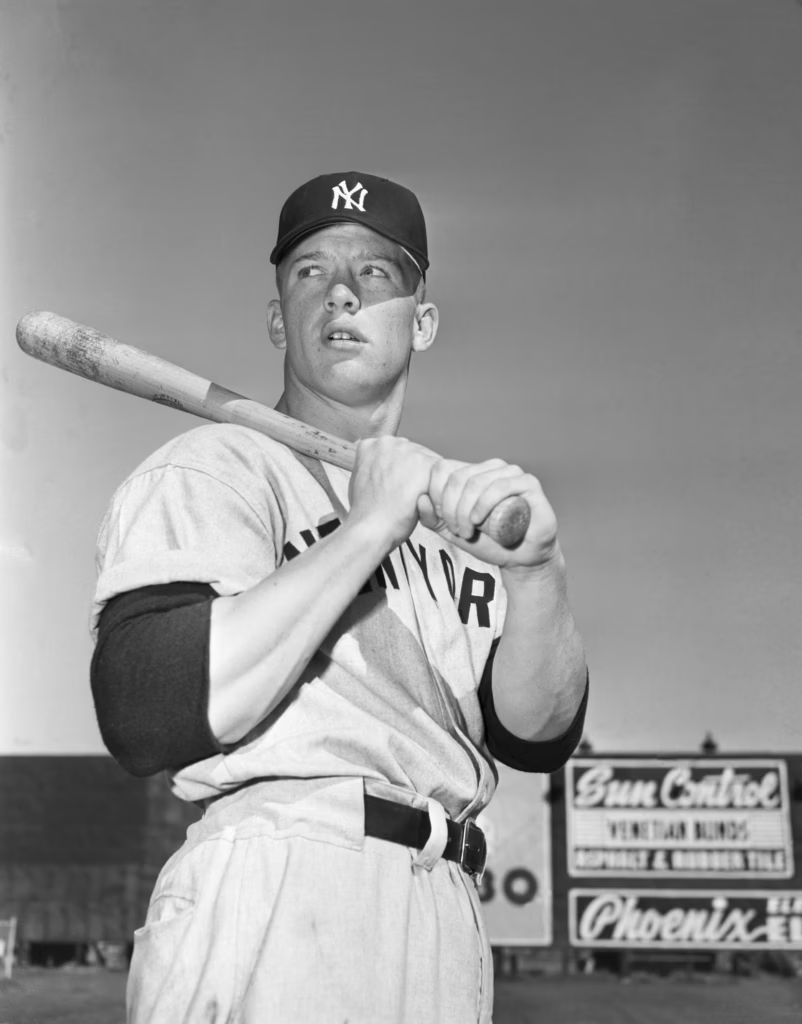
That’s the photo that they would use for the iconic 1952 Topps Mickey Mantle baseball card. It’s from that photo. On that day, right there. That moment in time, March 5th, 1951, was when they took that photo.
It was right before Mickey completely tears it up in spring training and shocks everyone. That photo also marks the very beginning of maybe one of the craziest and wildest rookie years any ball players ever had. And it’s the start of the legend, the very beginning of the Mick.
By the time that nineteen fifty two tops Mickey Mantle card was released and it hit the shelves a full year and a half later in the fall of nineteen fifty two. He’d lived through a crazy emotional roller coaster of success and heartbreak, struggle and regret.
Page one, first sentence. In Mickey’s book that he co-wrote with sports writer Herb Gluck, titled ‘The Mick,’ he starts his book off, and this is what he actually says. He says, “Let’s start here, April 15th, 1951. My first season as a Yankee.”
Heading to New York for Opening Day
That’s his first sentence of his book. First page. And right here in the story, what we’re talking about, the Yankees just wrapped up spring training, like I was saying. He’s the next big thing right now. The big story. He was already overshadowing Joe DiMaggio’s last season as a Yankee, which DiMagg’s was probably not thrilled about at all. DiMagi was wanting to start his farewell tour off, and now all this hype is on this new kid.
Anyway, Mickey starts his book. He’s on the train heading back to New York for the season opener right here. On this train ride, he signs his first big league contract with the owner right on the train. He’s just absolutely flying high right now. He’s feeling it. He said in his book, “I float out of that smoking lounge on the New York Washington Express like I’m in a dream.” It’s the biggest moment of his life right here. He just signs a his first big league contract. I think it was for like $7,500 for the year.
And it was that’s not a lot of money even back then. It’s just slightly over the league minimum that he signs for, but he does not care at all. He’s pumped. He goes back to his seat on the train and he starts thinking back about how he got there, how this all happened. Growing up in Commerce, Oklahoma, and he thinks about his dad.
Mickey’s dad worked underground in the mines all day. And then he’d come home from work. He’d practice baseball with Mickey every single day of his entire life. His dad made him into the player that he was, and Mickey knew that.
Even as a youngster, sometimes Mickey didn’t want to practice every single day, but his dad was there, making him do the drills, knowing that someday it could pay off. And then it did. So it’s opening day at Yankee Stadium. Mickey’s hitting third in the lineup and he goes one for four with a single. There’s 50,000 fans watching the game. Ted Williams is in the other dugout. And Mickey’s just completely numb in shock.
He’s sharing a field with Ted Williams and then running around in the same outfield where Babe Ruth played. He’s just loving it. But after the game in the locker room, the reporters just swarm him and they just hammer him with questions. And it’s a big adjustment to deal with this New York press that this shy kid now from Oklahoma has got to try to deal with and answer the questions. So Mickey struggles.
Mickey’s Big Rookie Slump
He hits just .260 with 52 strikeouts and in 246 at bats. So he’s going down swinging like once every five at bats. The press and the fans in New York are just all over him. And they boo him, Mickey’s getting hate mail. Fans were calling him a draft dodger because of this bone infection that he had when he was a kid, and it kept him out of the military when some of these other big league players they had to report to military service for the Korean War. So Mickey’s just feeling the pressure.
And he starts throwing his bat and he’s kicking water coolers. Here’s Mickey describing it in his book. He said,
“It was a case of too much too soon. Too many people expecting more than I could deliver. And the New York crowd can be very cruel if they think you’ve let them down. I’d hear their shouts coming from the right field stands. Guys screaming at the top of their lungs, boos and catcalls, curses. “Go back to Oklahoma, you big bum!”
So that’s from Mickey’s book. It’s just a bad scene right here. Mickey talks about how bad this was in his book. He just can’t do anything right. What there’s one game, bottom of the ninth, two outs. There’s a runner on second, and he’s at the plate, and he swings and misses twice. And he’s not even close to making contact. He goes, “I bunted and ran to first as fast as I could go.” But the ball rolls foul here, so he’s out.
It’s the last out of the game and everybody just kind of walks off the field like, what was that? His manager says after the game, if I want you to bunt, I’ll give you the damn bunt sign. Do you understand me? So now maybe the straw that broke the camel’s back is right here. It’s a double header. Mickey strikes out three times in the first game, then strikes out two more times to start the second game. So that’s five strikeouts in a row. And they pull him out of the game right there. They bench him.
Mickey Demoted to the Minor Leagues
And now he knows it’s probably all over. So finally, manager Casey Stengel sends him down to the minor leagues in July. Mickey’s just crushed. So he reports to the Kansas City Blues, the minor league team, and he can’t get a hit there either. There’s a 0 for 22 slump in the minors with the Kansas City team. At one point, it’s just bad right now. He’s still getting hate mail at his hotel in Kansas City. He said people wanted him dead. Just crazy fans sending him all kinds of nonsense.
And you could see how now this was almost as low as you could get right here. Mickey’s alone in his hotel room and he calls his dad. Remember, he didn’t call his dad at home who was sitting on the couch. They didn’t have a phone at their house. He’s got to call his dad at work. That’s the only place they had a phone. So his dad answers at work. Mickey says to his dad, I’m not hitting dad. I just can’t play anymore. I’m gonna quit.
And so listen to this out of Jane Levy’s book right here. It says,
“He called his father and said he wanted to come home. I was down, really down. You wait right there, Mutt said.” So Mutt is Mickey’s dad. They called him Mutt. He said “I’ll be up there.” The day before he left for Kansas City, Mutt called Ed von Moss at the Blue Goose Mine to say he wouldn’t be at work the next morning. I gotta go get that lazy kid of mine, Mutt told him. According to Von Moss’s son Jerry, his father reassured Mutt that there was still a place for Mickey and Commerce. I’ll have a job for him.”
Okay, so his dad just says, wait right there, I’ll be up there. I’m on my way. He hangs the phone up, and then his boss says, Hey, Mickey can have a job back at the mine anytime he wants it. To kind of reassure Mutt that if it doesn’t work out, playing ball. He can still work at the mine.
So listen to this same story out of Mickey’s book right here. Here’s how he describes that same story right here. It says,
Mickey’s Dad, Mutt
“A few days passed. I finally called the Eagle Pitcher Mines asking for dad. He came to the phone with a tired sounding hello. It’s me, I’m in Kansas City. And his dad says, Yeah, I’ve been reading.”
So he’s been tracking his son in the newspaper, following him in the sports page. And so Mickey says,
“Yeah, well, it looks like I can’t play here either. His dad says, What? I’m not hitting dad. I just can’t play anymore. I can’t. His dad says, Hell you can’t. Where you staying?”
And then Mickey says, “The way he said it, I knew his body had tensed up and I could feel his disappointment. And he says, I’m I’m at the Aladdin Hotel. His dad says, Okay, I’ll be there. And Mickey says, When? He hung up. I paced the floor waiting, rehearsing what I would tell him. After what seemed like years he would be at the door, haggard after the five hour drive from commerce, but his eyes were blazing. The same look he used to give me when I was a little boy and I did something to displease him. He didn’t need a whip, only that stare.”
Mutt Mantle and ‘The Talk’
Alright, so that was out of mix out of that that was out of Mickey’s book right there. So I can picture this scene in my mind now after reading a couple different books about this multiple times. This is Mickey Mantle’s rookie year, 1951, and it’s no fairy tale. His dad shows up after a five-hour drive. He was working in the mines and he hears his son tell him he’s gonna give up. So Mickey’s dad, Mutt, so they all called him Mutt, he was sick at this point. His health was failing, and he shows up at Mickey’s hotel room after driving five hours. The book said his pants were almost falling off him.
He was losing weight, and he didn’t know what was wrong with him yet. But he had bigger problems than losing thirty pounds and fighting some mystery illness. The biggest issue for Mutt Mano was his son was about to give up to just quit. So this scene is wild right here, just raw life. It’s father to son. Just remember what Mickey said, I just read it. “After what seemed like years he was at the door, haggard after the five hour drive from commerce. But his eyes were blazing.”
Eyes blazing. It’s how Mickey writes about this in the book. Mutt’s in Mickey’s hotel room in Kansas City. Here’s what happens.
“He said, All right, tell me again. And Mickey says, Dad, listen, I tried as hard as I could, and for what? Where am I headed? I’m telling you it’s no use, and that’s all there is to it. Mutt says, Now you shut up. I don’t want to hear that whining. I thought I raised a man, not a coward.”
“It was as though he had leveled a double barreled shotgun at my head. Dad, please. His dad said, Sure, I’m gonna please you. I’m gonna pack your stuff. That’s what I’m gonna do. You can go back and work in the mines like me.”
And so Mickey goes on in his book. He says, “The sight of him, his face is white as a sheet. His eyes were full of sorrow and shame as he flung socks and shirts into my bag, all the time muttering, I thought I raised a man. I groped for something to say that would stop him. It happened slowly, welling up from deep inside. Those lost memories of us at the Baxter Spring ballpark, with him pushing his way through the crowds, grinning, looking everywhere and bragging to everybody about his kid. And days when he just sat slumped, the minds robbing him of his strength, dog weary, probably thinking about all the dreams that had turned sour in his own life. What life had to be for him now? And I realized it was the thought of me making good that kept him going. Something he could cling to, no matter what. So Mick says, Okay, I understand. Give me another chance. I’ll try, honest I will. He hesitated. A hint of a smile, and he slapped the bag with his hand. Well, what the hell? Why not?”
So as Mick keeps going in his book, it says,
“A few minutes later, downstairs in the coffee shop, he simply said, “So you’ve had your slump. You’re not the first, and you sure won’t be the last. Everybody has him, even DiMaggio. Take my word, it’ll come together. You’ll see.” That’s how it ended. We ate, he patted my back, I took a quick sip of coffee, then watched him walk up the street toward his car. I stood there looking, and all I saw was the strong, youthful father I’d always known.”
That’s a crazy scene right there. And I never heard that story until I read this book right here. And I’ve been a baseball fan my entire life. That’s just a wild story to think that Mickey Mantle, 19 years old, is just one little thought away from quitting baseball. And his dad somehow snaps his kid out of the funk that he was in. Luckily, his dad made that drive to Kansas City.
That’s why I said earlier, sometimes you think just like maybe a big hug or a nice little pep talk. That’s all I need, right? I mean who doesn’t want that? That’s what Mickey thought he was gonna get when his dad arrived at his hotel room. Just someone to cheer him up, tell him how great he is. Maybe that would work too. But his dad played a different hand right there. It was a totally different approach. He called him a coward right there in their hotel room. And Mutt had five hours to think about what he was gonna say once he got into that hotel room in Kansas City.
Mickey Bears Down
Maybe Mutt doesn’t know for sure that Mickey’s gonna be a huge baseball star someday. But at least he can try to save him from a life working in the mines like him. Literally trying to save his son’s life, knowing that he could end up back in the mines. He wants more than that for his kid. So here’s what happens the very next day. This is how Mickey explains it in his book. He says,
“The next day I went back to playing ball, really bearing down, telling myself over and over, I’m gonna do it for him.”
“We played our next series in Toledo. I hit a double, a triple, and two homers over the light tower. We did it. Me and my dad. I was on my way back.”
It’s incredible right there. So that’s out of the mick, Mickey’s book. He’s on his way back. About a month later, the Yankees call him back up to the major leagues. They go on to the World Series that year and end up playing the New York Giants.
And this would be the year of that shot heard round the world, that home run by Bobby Thompson that sent the Giants to the World Series to play the Yankees. On that team was another rookie phenom, and I did an episode on this guy. It was one of my favorite episodes on the old baseball legends. It’s Willie Mays on this team, a rookie just like Mantle. And they played each other in the 1951 World Series right here. So Mickey’s dad Mutt drives to New York to watch the World Series.
The Epic 1951 World Series
Game one. And Mutt Mantle would have been completely beside himself with pride and joy, sitting there watching game one of the World Series in Yankee Stadium with his son leading off.
They lose game one to the Giants. Game two, Mickey says it in his book, he goes, “I was afraid to look at the lineup card for the next game, but finally gave it a passing glance. Right field, mantle, leading off again.”
So third inning of game two now. Mickey throws down a bunt for a single. He moves to second on another bunt, then comes around to score on a base hit. And he says, “I scooted home for my first World Series run, knowing my father was in the stands.”
So that’s another amazing moment right here for Mickey and his dad. I was saying this year was a crazy roller coaster of emotions for Mickey. And you could end this story right here, and it’d almost be like a movie script already. Just all the ups and downs this entire year.
And then Mickey comes home to score his first World Series run, probably glancing up into the stands to see if he could find his dad sitting up there. It’s just a magic moment for these two after all they’ve been through this year so far. Three innings later, in the same game, Giants rookie Willie Mays steps to the plate. He hits a fly ball into short right center field, right between Mickey and the center fielder Joe DiMaggio. Both players go for the ball.
Mickey’s running full speed. DiMaggio calls for the ball at the last second. Mickey pulls up to avoid a collision with DiMaggio. His spikes catch on the drain cover in the outfield grass. His knee blows out right there on the spot. Mickey drops to the ground. People thought he’d been shot or had a heart attack. He just went down so quick and he didn’t move. So they stretcher him off the field, Mutt’s down in the Yankee dugout by this point, and he goes home with Mickey right there.
Mickey and the Injury
The next day they both go to the hospital. And when Mickey gets out of the car, he leans on his dad, puts some weight on him to step up onto the curb. Well, Mickey’s dad collapses onto the sidewalk. So they haul both of them into the hospital. They’re both in the same room now. In the hospital. They’re trying to figure out what’s wrong with Mutt. And then they’re doing tests on Mickey’s knee.
They lay there in the hospital together in the same room and they watched the World Series on TV. This is from the Mick right here.
“There was a soft knock at the already open door. One of the doctors who’d been attending my father, his face grim as he approached my bed. I stared back into his eyes, daring him to tell me what I had already known for a long time. At length he said in a low, almost inaudible voice, It’s bad news. Your father has cancer. Where? It’s well, it’s Hodgkin’s disease. I’m afraid there’s not much we can do. Mickey says, Is there a chance? The doctor gave a slight twist to the corner of his mouth, then shrugged. You can take him home. Let him go back to work or whatever he wants. I’m sorry, Mick. He was dying.”
So Mickey and Mutt they head back to Oklahoma. Mickey’s knees racked. He’s just sitting around and Mutt’s not doing well at all. The book says,
“I finally had my own bed and lay there trying to sort things out. It seemed that nothing made any sense. Nights I’d be in front of the TV, my bum leg propped up on a stool, a can of beer in my hand, mindless. Toward mid November the cast was removed. I lazed around, feeling sorry for myself instead of doing the exercises prescribed by the doctor. I thought the muscles would automatically come back good as ever. I was twenty years old and I thought I was a superman. If you add it all up that winter and the first few months of nineteen fifty two were the end of boyhood days. For me, the crunch came two days before Christmas.”
All right, that’s out of ‘The Mick.’ So he’s talking about he gets married right before Christmas, 1951, to Marilyn, a girl he met in high school, and it was something his dad really wanted him to do. His dad hoping it would help him lock in. And just settle down. He wanted to try to keep him away from the nightlife in New York as a pro ball player. So Mickey says it himself right there that winter was the end of boyhood days.
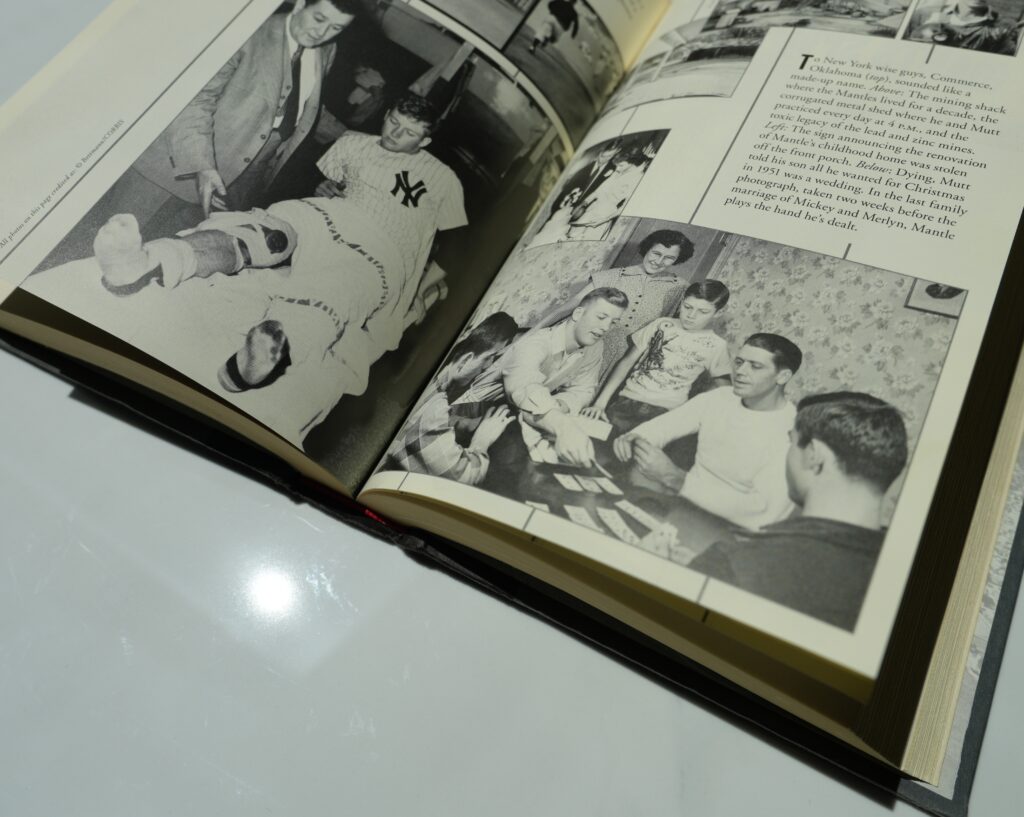
His dad’s still not doing well at all, his health’s going downhill fast. So Mickey and his wife, Marilyn, they drive him up to the Mayo Clinic in Minnesota. And it was just out of total desperation. They didn’t know what else they could do. They were trying to find anything they could do for him.
So Mickey says, “He underwent exploratory surgery. Marilyn and I waited and waited until finally the doctor reappeared. He didn’t have to say anything. My father was too far gone. They just sewed him up, and a few days later he went back to commerce with us, his life flickering away quietly. And when I saw the despair settle deeply in his eyes, I began to doubt God. And what of Marilyn? Baseball, everything else. Could I hold on to that? All I knew was a bottomless sorrow and I couldn’t express it to anyone.”
So Mickey has to join the team again the next spring. He’s back playing with the Yankees early 1952, and it’s May 6th. It’s a day that Mickey would remember. Here’s what he said.
“On May 6th, with the Cleveland Indians in town, I was getting dressed to go to the ballpark. I remember standing by the window, looking down at a stream of traffic along the Grand Concourse, and the phone rang. Mick, this is Casey. Hey Skip, what’s up? Your mother called, she thought you were here at the stadium. I waited, holding my breath, and when the words finally came I just stared blindly across the room. My father was dead. Why? What had happened to him in the thirty nine years of his life with all the scrambling and disappointments and frustrations? Where did it get him? He needed me and I wasn’t there. I couldn’t make it up to him. He died alone. I cried. What kind of God is there anyway to let him die like that? No excuse. I lashed out and smashed my fist against the wall, then looked at Marilyn, helpless, choked with grief.”
So Mickey heads back to the ballpark. He goes to see his manager, Casey Stengel. His manager says you can take the day off if you want from playing this game, but then he and then Casey says, “I’m really sorry, Mick. We all hate it. You can sit out the game tonight if you’d like, but I really think you should try to play.”
And Mickey says in his book, he says, “I did play. I’m sure my dad would have wanted me to.”
The Lessons of the Old Baseball Legends
So the story of the old baseball legends, it’s not a Hollywood movie. The more I learn about how the legend was created, the more I’m finding out that these stories are about struggle and grinding it out. And really tough challenges. Even the greatest of all time went through these incredible ups and downs. And sometimes we just forget the struggle that even the greats had to deal with.
And they wrestled with life just like everyone else. Just to give you a few examples from my story so far that people just might forget about these famous old ball players.
Babe Ruth was basically fired at the end of his career. He desperately wanted to become a manager, and the Yankees owner, they were just like, No, forget it. It’s not gonna happen. It’s over. And Babe Ruth was just crushed by that when it was over.
Ty Cobb, he suffered zero fools. That’s what I love to think about Ty Cobb. He suffered no fools, probably since they since he was a toddler. He’s already, so he’s already super sensitive and feisty. Well, he goes through this brutal hazing as a rookie in the big leagues. After his entire incredible career as an old man, he wrote that cruelty he went through. He said it left a quote, heavy burning inside. And he just took that out on his opponents his whole career.
Same thing with Ted Williams. An explosive temper and super sensitive. He could hear a single boo in a crowd of thousands, he used to say. He really fought this bitterness his entire career with the fans and the media and the players, everybody. Even as one of the greatest hitters to ever live.
Lou Gehrig, if you want to see a legend, just go down. Almost like this just the unfairness of it all right here with Gehrig.
Out of nowhere, he gets this awful disease. He can’t figure out what’s happening to him. He’s in batting practice before the game. He’s making great contact with the ball. He’s swinging as hard as he can. The ball’s barely getting into the outfield grass. He’s in the locker room, he bends over to tie his spikes, and he almost falls over. He has no balance left. His teammates are just looking around nervously like, trying to help him stand up. Nobody knows what to do. Just a brutal, brutal end for Gehrig, the legend.
And I could go on and on. I think you get the point.
When I was a kid, we’d watch Sports Center every morning to try to get the highlights. Everyone wants to see what happened the day before. All the highlights, the greatest place. Who did what? We all want to see that. Still we want to see the highlights.
When you read an entire biography of these old baseball legends. I’ve read a bunch of them now. It’s honestly one of my favorite things to do. You wouldn’t believe the stack of books that I have right here in front of me that I’m patiently waiting to read. But you have to go through the entire book to get the full story. The highlights and the low points. One of the reasons I love to read an entire five hundred page book is to get into the details. You can’t get the details when you skim through a book. The little known stories, all those failures, but most of all the regrets. Because it’s gotta be hard to write about the regrets.
Highlights are exciting, but the lowlights, when you hear the raw and honest failures of a superstar athlete who was just larger than life, those really leave an impression on me.
Mickey Mantle got the news that his father passed away, and later that day he played in that game, just like his dad would have wanted him to. And then he went back to Oklahoma for the funeral.
The year in 1951. What started off with that now legendary photo in Arizona with the sun shining in the background, the photo that created the most iconic baseball cart of all time. As soon as that photo was taken, almost instantly, everyone’s about to recognize that Mickey Mantle has been working with his dad, preparing for that spring training day his entire life.
Think about that year in 1951 when Mickey almost quit. But his dad was there to turn it around. Drive five hours to Kansas City, not to sweet talk him like Mickey probably wanted him to do, but to show up at his hotel door with eyes blazing.
It’s not a fairy tale. It’s a struggle. Ups and downs trying to figure it out one day at a time. Just hardcore real life. A superstar ball player who won seven World Series and was a hero to millions of fans.
But just like everyone else, also had to deal with pain.
And the worst kind of regret.
Here’s Mickey Mantle straight out of his book.
“I went to the funeral alone. Dad was buried in the GAR cemetery, on a flat plain of the road between commerce and Miami in Oklahoma soil. Many of his friends are buried there. Miners who lived, worked, and died without really being known. And his father and his two brothers are buried there too. And my mother has a plot next to him where she will be buried when she dies.
I stood before my father’s grave, remembering a thousand things from the past, so many chances to let him know how much I loved him, and I never said it, not once.”