*Transcript from the episode
The Review That Sparked A Legend
"Watching him go and listening to the exhaust note as he changed gears up and down in the distance, Arthur Kesser, the Daimler Benz press chief, exclaimed, Did you ever see anyone so happy at his work? He's a toy maker. Delighted to find people interested in his latest creation. And this was truly the most fabulous toy of all. The fastest car on the road anywhere in the world today. No one can possibly say how much it costs. And it is definitely not for sale."
So that was an excerpt from an unbelievable review that I just read by auto journalist Gordon Wilkins, published in 1956. I'm starting with this review because it was something that just kept coming up over and over as I was learning about this car. So I dug up the review, and once I read it, it was clear why so many people had been referencing it over the years.
I try to start these episodes off with the big moment, when the legend is born. So with this car, it was amazing to discover. My big moment that just seemed so clear, it was when the public finally got to experience this car for the first time. There were a few auto journalists who were given access to this car, and what they found was it was just simply like nothing else that's ever been built. So we're going to get into the review, but we got to look at the force of nature that was behind this car, the creator of one of the most amazing and valuable cars of all time.
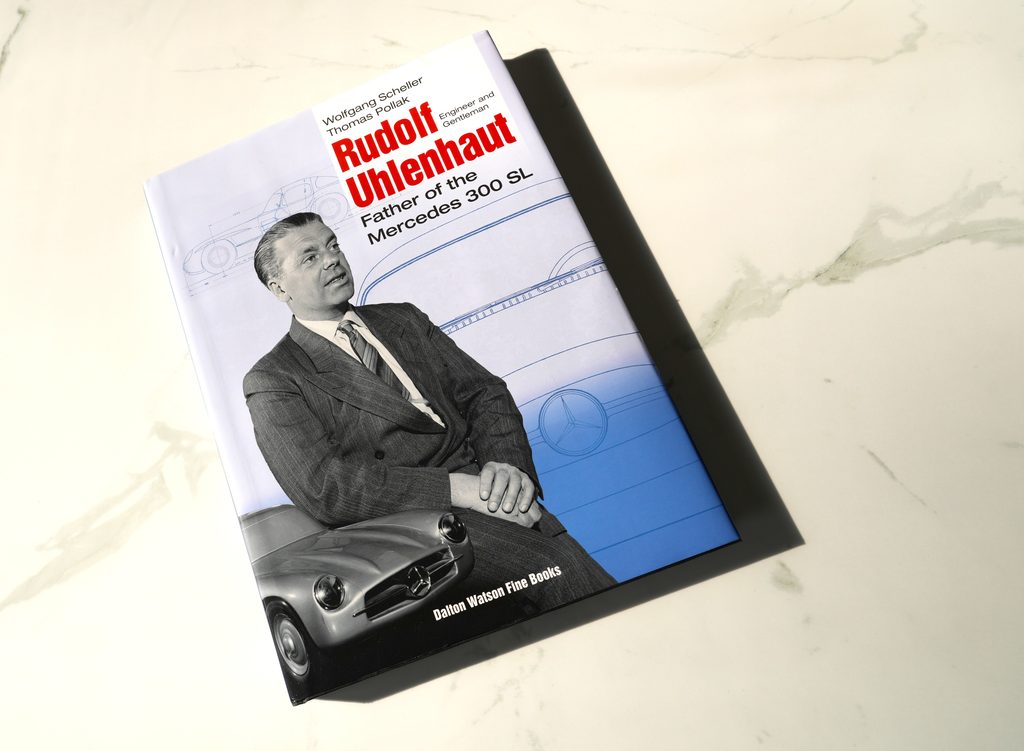
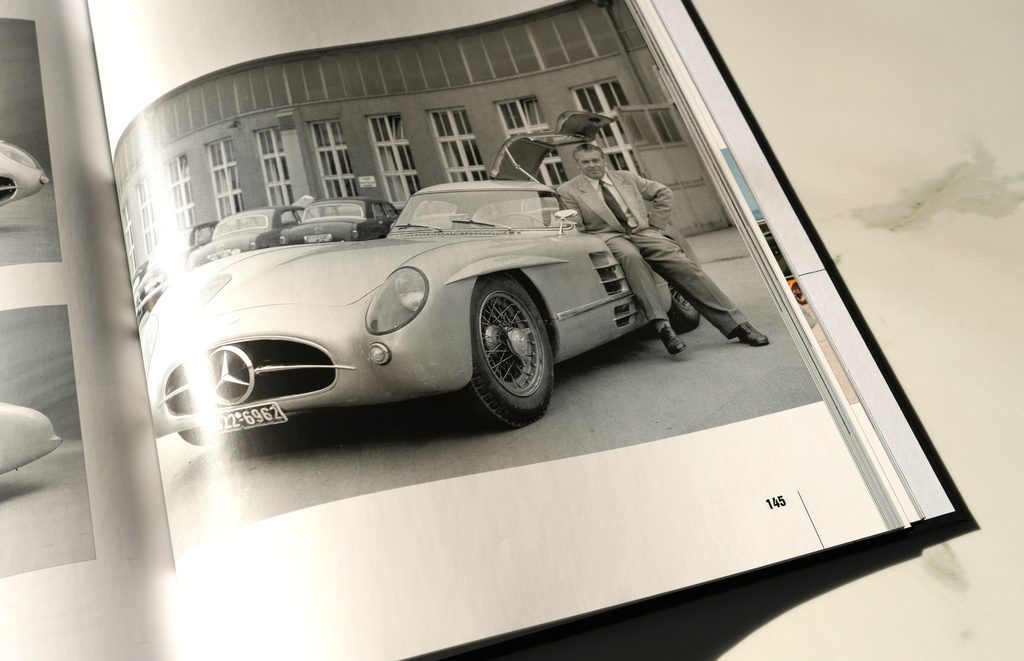
It was a guy named Rudolf Uhlenhaut. And the car that he and his team created back in 1955, it's the Mercedes-Benz 300 SLR Uhlenhaut coupe. So it turns out, and what I just learned over the last week, I read an entire book on Rudolf Uhlenhaut. And he was one of the key figures at Mercedes-Benz for over 40 years, from 1931 to 1972. His career in the racing department and the passenger vehicle test department spanned a huge part of Mercedes-Benz's incredible history.
And what I just read out of that car review was auto journalist Gordon Wilkins. He was able to test drive this car back in 1956. So with another auto journalist, they put this car through a series of very rigorous tests. They drove it over 2,000 miles all over Germany, Italy, and into the Swiss Alps. And then Gordon Wilkins wrote this insane article about his experiences and his time that he spent with this car.
Chapter 02 · 3:12The Toy Maker Behind The Car
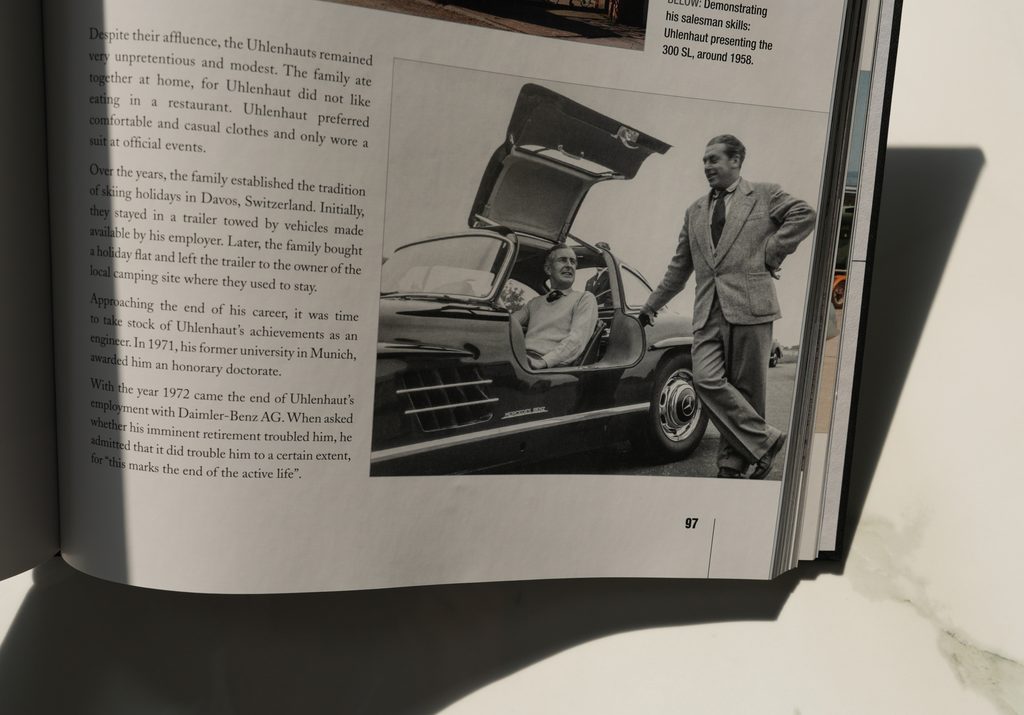
I wanted to read that opening excerpt from Gordon Wilkins, right from his review, because it captures something really important about the force behind the car. The guy whose name is attached to it. This is how he was describing it. There was a group of journalists standing around on the side of the road and they're waiting for something. They're standing there with the press chief from Mercedes, this guy, Arthur Kesser. And Kesser says to the group, he goes, "Did you ever see anyone so happy at his work?" And then he follows up with that amazing line. He goes, "He's a toy maker, delighted to find people interested in his latest creation."
So Kesser, he's the Mercedes press chief. He's talking about Rudolf Uhlenhaut and what they're all waiting for on the side of the road. They're all standing there waiting for their turn to get a ride in this car, the 300 SLR. And then of course, as they're standing there waiting, here comes the car. And here's how Gordon Wilkins describes it. He says,
"Occasionally the silence was shattered as a long, low silver projectile hurtled towards us at 100 miles per hour and then stopped a few yards away as though restrained by some supernatural force. No ordinary brakes could ever stop a car like that. The gullwing doors would open up. A passenger, dazed with noise, speed, and acceleration, such as he had never before experienced, would climb out over the high side. Another would step in, and Rudolf Uhlenhaut, director of the Daimler Benz Experimental Department, would drive off, smiling happily on another demonstration run."
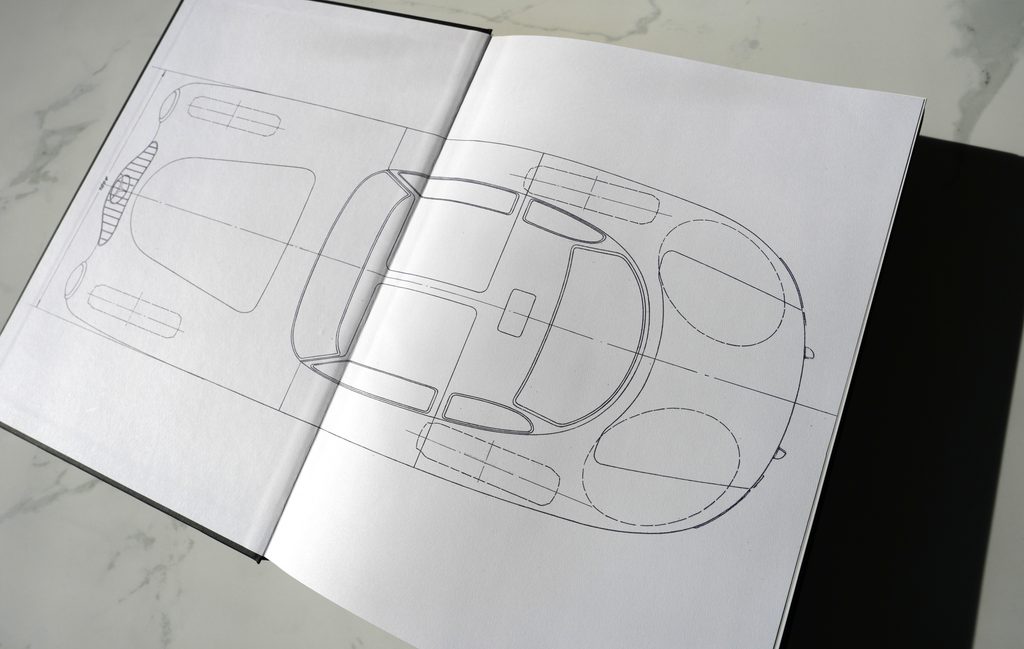
So there it is. We have this amazing review written by one of the top auto journalists who got to put on over 2,000 miles on this car back in 1956. So we'll get into that review in a little bit. But we then we have the man himself, the toy maker, as he was just called, Rudolf Uhlenhaut. He wasn't just a super talented engineer at Mercedes. He had something else, something special. He had this unique blend of qualities that we're going to look at.
Because you don't just end up with your last name on the most valuable and historic Mercedes car ever built unless you stand out and you bring something to the table that nobody else has. So what was so special about this guy? I needed to figure that out. And so I have a book right in front of me that's dedicated to the entire life story.
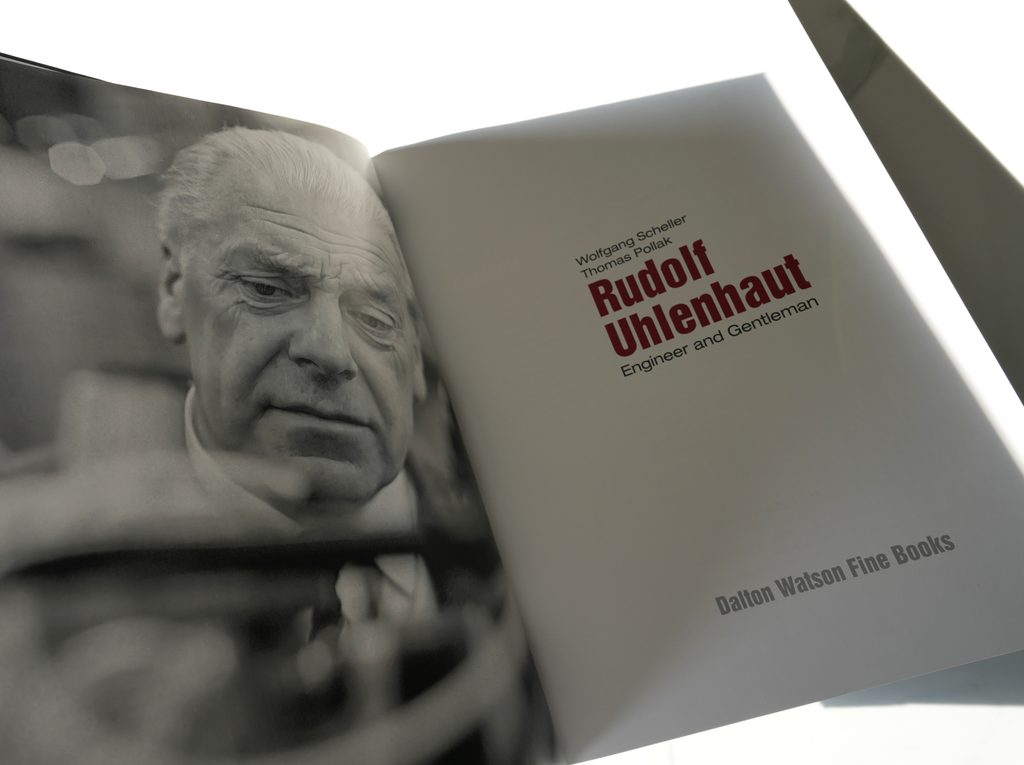
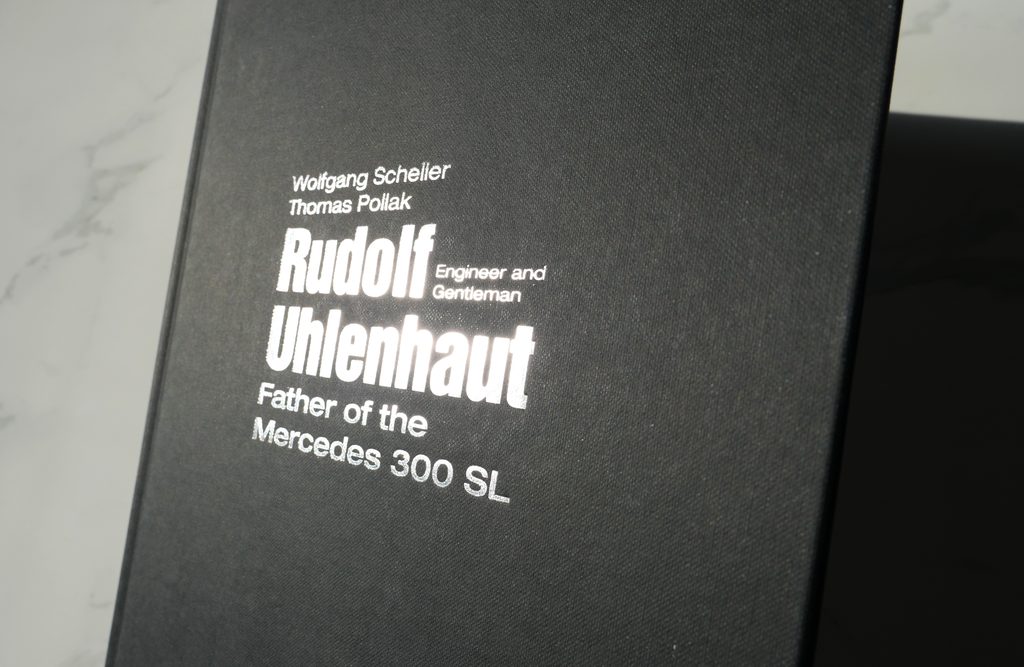
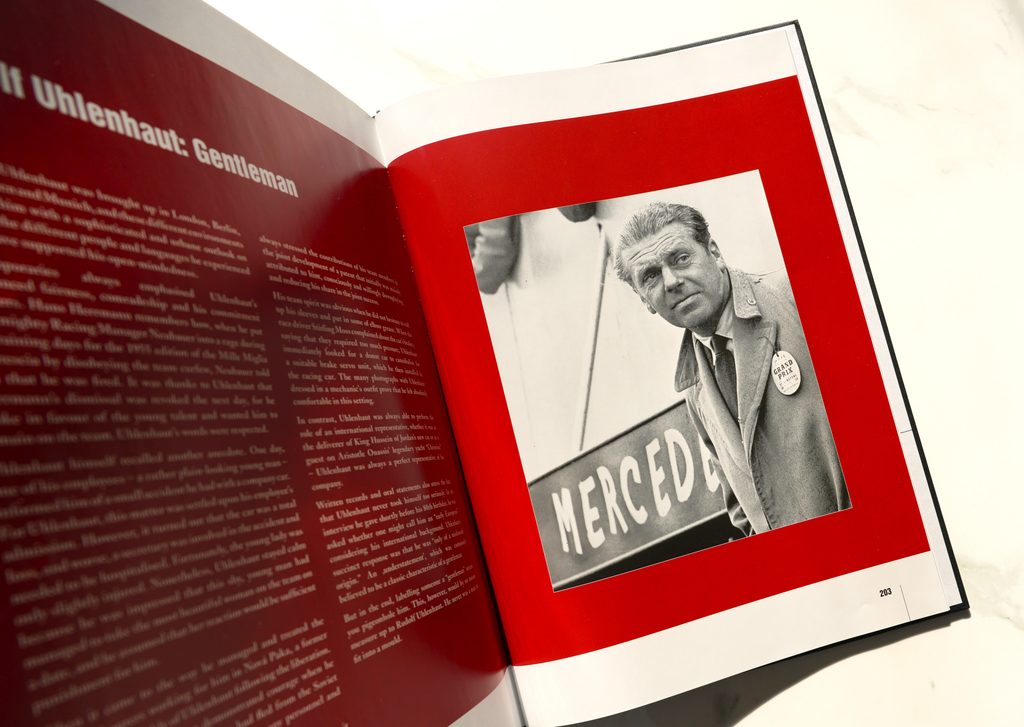
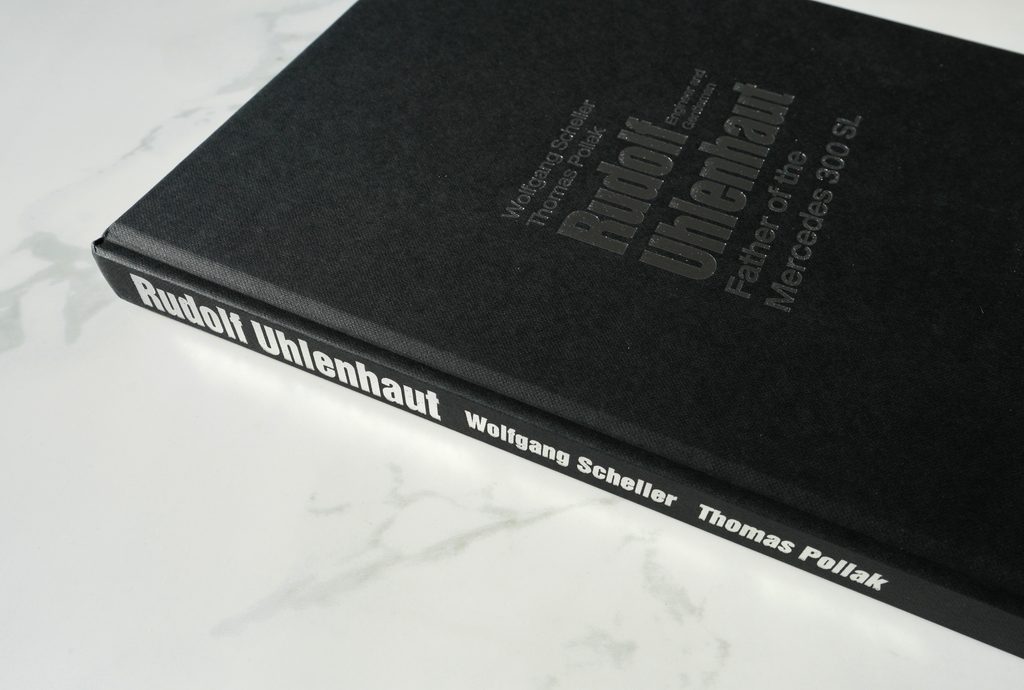
The book's titled 'Rudolf Uhlenhaut, Engineer and Gentleman,' is written by authors Wolfgang, Scheller, and Thomas Pollack, and they first published this book back in 2015. What really helps us understand an icon like this who spent 40 years at Mercedes designing cars, we need to understand where they started out and where they're coming from.
Depression Beginnings And Wartime Survival
Young Uhlenhout, he studied mechanical engineering in Munich, and then he lands a series of internships in the late 1920s. So he graduates and he's looking for a job, but it's 1931 and the Great Depression's hitting Germany and everywhere else in the world. So it's brutal. The job market is in the tank.
There's a 30% unemployment rate. But one of the early lucky breaks for Uhlenhaut, he catches it right here. Through a connection of his father's, he gets hired at Daimler Benz. He was one of the few new hires at Daimler Benz that entire year during the depression. So he starts out as a technical assistant in the test department, but he quickly climbs the ladder, and in just a few years, he's working his way up to lead the newly created racing department in 1936 as a senior engineer.
Now, by the late 1930s, Germany's making massive investments in motor racing through Mercedes and then also through Auto Union, which was a group of four other German automakers. So they're making this big push into racing, and Uhlenhaut's right in the middle of it. But it wouldn't be long. World War II breaks out and all racing comes to a complete stop. They move Uhlenhout into a research engineering role for aircraft engines and parts during the war.
So Mercedes-Benz plants, they're actually bombed during the war. So he's moved out of Stuttgart to a safer location. The book goes into detail on all these years of World War II, and it's just a bunch of crazy stories where Uhlenhaut, he's just pretty much trying to survive as an engineer, doing his work, but then also making it through the end of the war and trying to get back to work at Mercedes and start to rebuild after the war. As you can imagine, this is a really tough time.
Trying to get the economy going again in Germany and rebuilding bombed-out factories. And then there were the investigations about any role that anyone might have played for the German army during the war. So all of this takes several years, all the way to 1948. When Uhlenhaut's finally able to join Daimler-Benz again as a test engineer back in Stuttgart, then he quickly becomes head of the test department.
Mercedes Returns To Racing Glory
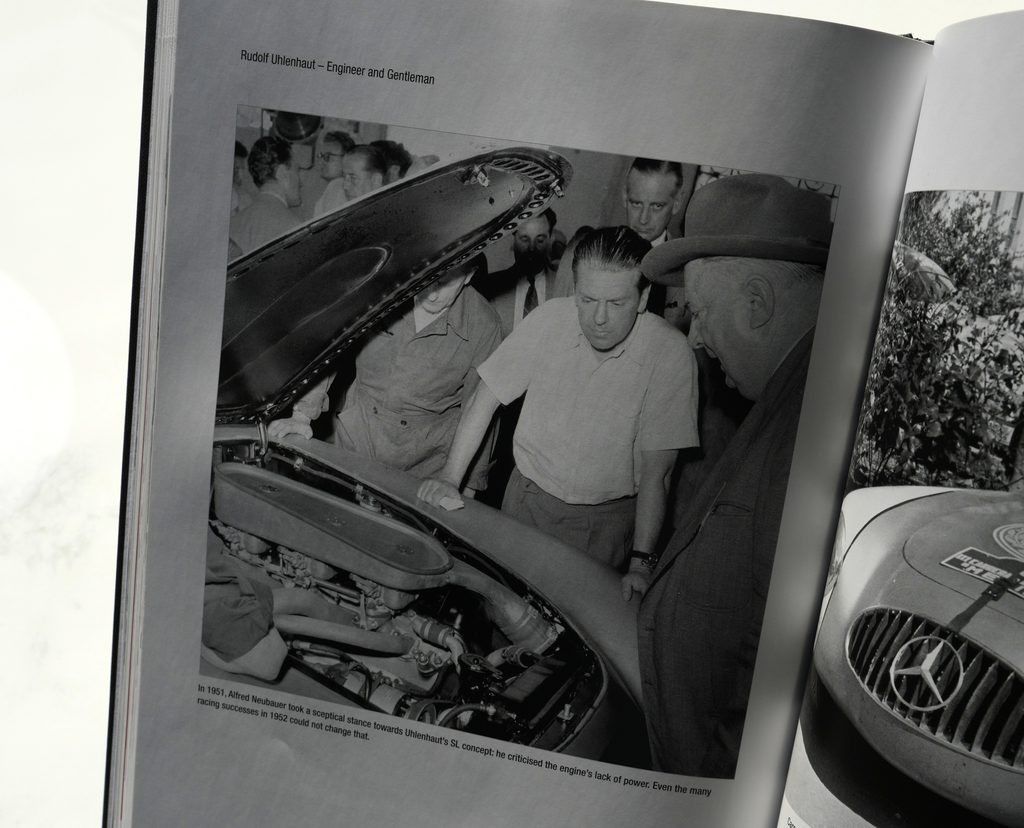
Not long after that, we have a big board meeting at Daimler-Benz. This board meeting takes place in 1951, and this is the board meeting that makes a big decision to get back into racing and to build a new race car. This decision lands directly on the development team now, the department that Ulenhout's heading up.
It turns out Uhlenhout had already been thinking about a sports car for several years. And once this board meeting takes place in 1951, it's not long after that they have the very beginning of the Mercedes 300 SL model. Now they're racing, so 1952 racing season, it shows that Uhlenhaut had a great design, and that 300 SL wins four races. Over the next few years, there's a few design changes, and then they would build the W 196R version. So 1954, Juan Manuel Fangio wins the Formula One World Championship in this car. Now I gotta stop right here.
Anytime Fangio makes a guest appearance in one of my episodes, I gotta just stop. If you're talking about car racing, there's no getting around Fangio. He pops up in almost every important biography on the great car makers. He pops up in my Enzo Ferrari story because he was a driver for Ferrari and then Mercedes. He plays a huge part in the company over many decades. He even pops up in my Horatio Pagani story that I did. And my episode I did on Pagani, if you ever wonder why Horatio Pagani talks about Juan Manuel Fangio, in almost every interview he's ever done, just listen to my episode on Pagani and you'll understand the importance of Fangio. He was a racing legend.
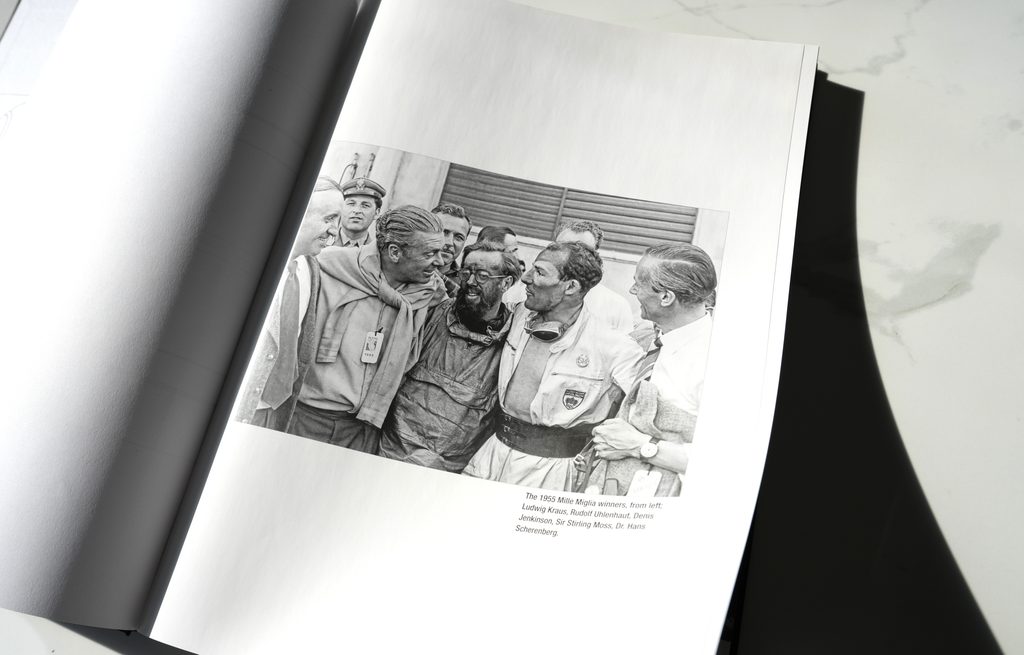
Anyway, that's Fangio. And he just wins the big race for Mercedes in 1954. They start their racing program, and in just a few years, they're winning races with these amazing cars from Uhlenhaut's engineering department. After Fangio's big win in 54, they take the next step and they develop the 300 SLRs that would win and set records. Stirling moss behind the wheel at the Mila Miglia, and they would go on to win the Targa Florio. These are big victories for Mercedes. Now they're winning with the open top cars, but they have an idea to enclose the cabin for the long endurance races. They wanted to try to protect the drivers a little bit. If you've ever seen the photos of Sterling Moss after this victory, you'll understand instantly what I'm talking about.
He has this thick layer of dirt around his face, and you can see he's totally covered in mud and dirt because of these dirt lines that are around his eyes from his goggles. So the drivers were totally exposed for these endurance races with the open top cars. Right after these victories, they want to develop the coupe version, what would become the Ulenhaut coupe with the enclosed cabin and then with those iconic gallwing doors. Now you would think that the drivers would be all for this idea of enclosing the cabin, but they actually push back on it quite a bit because enclosing the car on long endurance races, it just drove the drivers nuts.
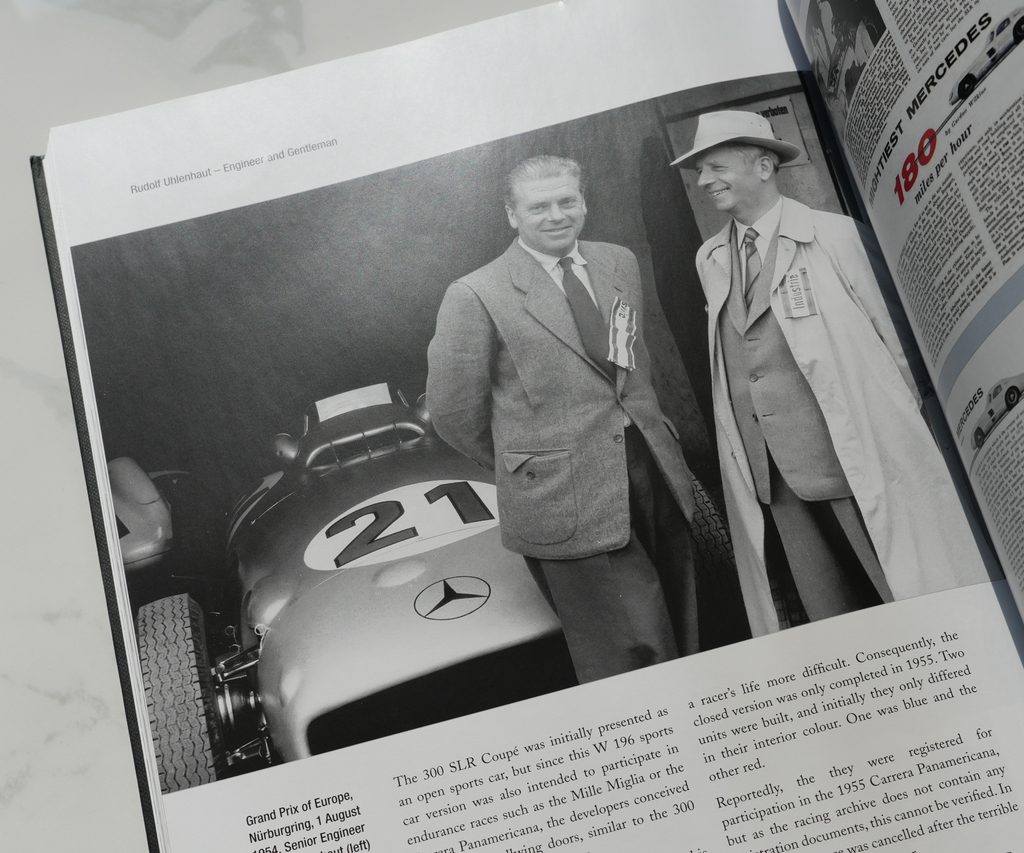
They found out from earlier versions of the 300 SL, they just hated the idea of enclosing the cabin because the engine was unbelievably loud and there was no ventilation. So the heat and the exhaust from the engine would be pumping straight into the cabin. So with the initial pushback from the drivers, these two versions of the 300 SLR with the fully enclosed cabin, which they would call the coop version, building these two cars were delayed a little bit, and they weren't completed until later in the season in 1955. One of these cars had a blue interior, and the other one had red. These were the only two cars that they built with the enclosed cabin. And there's a rumor that they're registered to compete in the 1955 Carrera Panamericana race.
But then in that same year, just before that, 1955, there's a terrible crash at Le Mon. Dozens of spectators are killed in this horrific crash, and the Carrera race would be canceled. So it's late 1955. We have these two amazing SLR coupe race cars that are built. There's one with the blue interior, the other has red, and they never hit the track. At the end of the 55 racing season, Mercedes as a company, they make a big decision to exit competitive racing.
They'd be completely out of racing for several years. One of the main reasons Mercedes ends the racing program is so they can focus on building new passenger cars. And so guess who's right there ready to dive into development and testing? It's Rudolf Uhlenhout.
Two Coupes Built And Never Raced
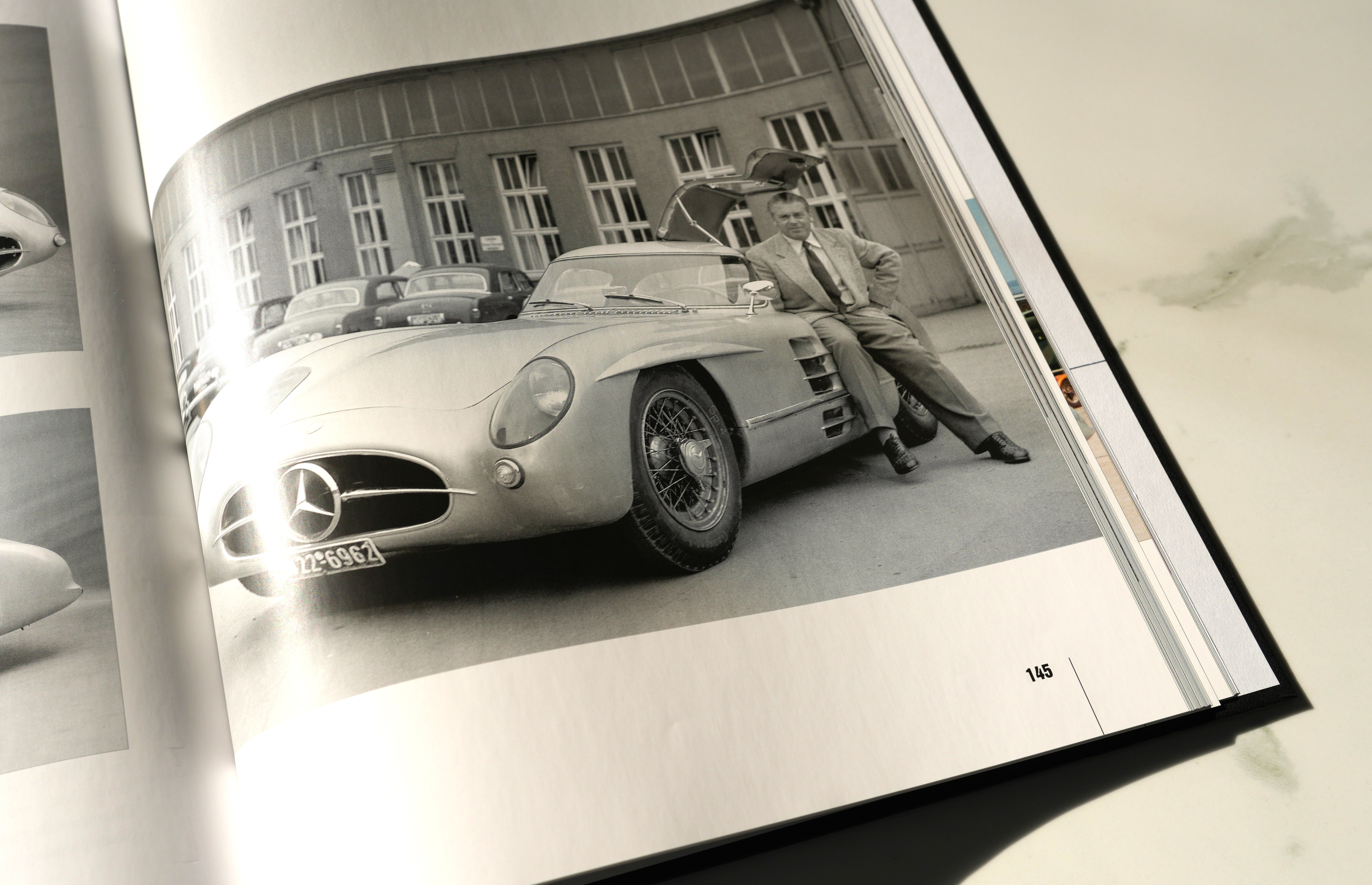
Now, luckily, as head of this division, Uhlenhaut needs a reliable company car to drive while creating these new passenger cars. And what does he have right there in the parking lot? He has two cars that never made it into a competitive race. One with red interior, the other with blue. And he would drive these cars around on the roads back and forth from his office to his home, to the test track, and all over. He was using these cars as his own personal vehicle while he was designing the 300 SL, which would become those iconic Mercedes road cars.
They went on to sell 1400 of those cars with the Gallwing Doors, and then another 1800 Roadster versions all the way through 1963. So that's Rudolf Uhlenhaut in that division, creating those cars, and at the same time he's cruising all over Germany in his 300 SLR coupe. The race cars that never raced. And everyone in town knew he was coming because they could hear him. These engines just roared on these cars, and it became known as the 300 SLR Uhlenha Coupe. There were only two of those cars made, so he stood out anywhere he went.
The roar of that engine and that original design and the fact that it was a race car with coop panels built over it. Everyone knew how amazing those cars were, even back then. And so the name just stuck to it. His name, because he was using them for his personal company cars. So Rudolf Uhlenhaut, he's this legend. Not just because he's waking up all the neighbors with this coop race car that he's ripping through town with. They don't just name a car after you for tearing around the neighborhood. They name the car after him because he was the force of nature behind that entire division of Mercedes. He shaped the company for decades, through the racing and then through the passenger car departments.
Uhlenhaut The Engineer Test Driver
This guy was totally unique. He's not your average engineer. There's so many amazing traits that are detailed in the book that I read about him. He had this amazing combination of skills. Like I was saying, he's not just a talented engineer, he was also a brilliant test driver. He was known to jump into the race cars and record lap times that were faster than his drivers.
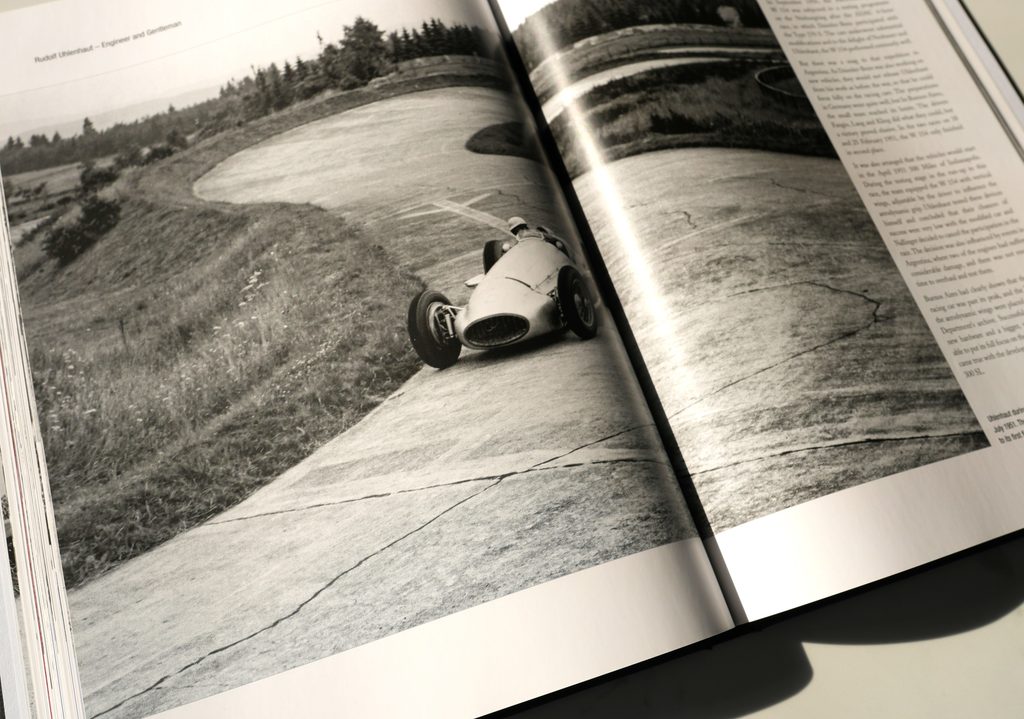
There's a famous story when Juan Manuel Fangio was complaining about the car at the Nurberg ring. So what happens? Uhlenhaut gets into the car and he runs a lap time that some say was faster than Fangio's. The legend goes that he ran a faster time than Fangio. And then of course he's going to downplay that entire thing. He doesn't make a huge deal about it, but that's a legendary story that pops up everywhere I was reading about Ulenhout.
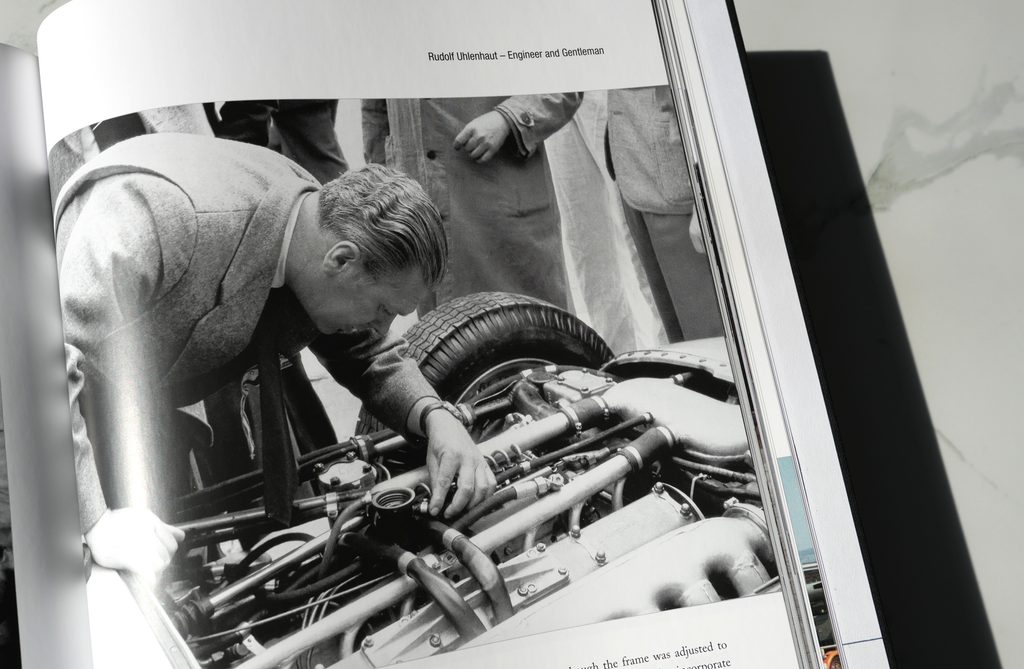
Beating Fangio's time after listening to him try to say that something's not right with the car, that's an epic story. So then not only would he jump in and race the cars on the test track, but he'd also roll up his sleeves and he'd get dirty trying to make adjustments on the cars, right there on the track. That was not lost on the team. It was just not something that the head of a test department would normally do. And then there's Uhlenhout down underneath the car, getting full of grease, trying to make adjustments. So there's a few reasons that he did this, because he talked about it in that book that I read.
He emphasized active personal involvement. He said "only active personal involvement can turn knowledge into skill and is the beginning of all learning." So one of the reasons that he pointed out that he did this was that race car drivers sometimes had a hard time articulating exactly what they were experiencing as they were driving the car. Whereas an engineer who could also test drive what he called active personal involvement, they could gain insights that the drivers might not notice or might not be able to describe.
And then this is where the iteration comes into play right here. It's a continuous improvement through testing. It was just like that Porsche 917 story that I just did. Iteration was the key to the Porsche 917. It didn't come out of the factory perfect, ready to win every race. They had a ton of work to do on that car to perfect it. And so you got to check out that episode if you want to hear a great story. Same thing here, though. He drove the cars over and over out on the track so he could find these deficiencies and remove them. And then his passion for his work, and you can see this in all of the car creator stories that I've been doing.
But this is the lifelong passion for Uhlenhaut. He's working 12 hour days, at least six days a week. That's what's in the book. He's putting in all these hours since his earliest days at Mercedes. It's his life's work that he's dedicated to. Just like Carl Benz, Enzo Ferrari, Horatio Pagani, Gordon Murray, all these episodes that I've done so far. This is a common trait right here. Total dedication around the clock, whatever it took to get the job done, and then decade after decade. Ferdinand Pieche with the Porsche 917. Same thing. Total commitment and passion to build and create the very best car possible. Now, another thing, too, that I love about this story, Rudolf Uhlenhaut. His name was not on the building. So we have Enzo Ferrari, Horatio Pagani, Carl Benz.
I do some of these stories of the founders of the companies. Their names are on the building. Of course, you're we you would assume they're going to be dedicated to their life's work. Their own name is on the building. But then I like to do these up other episodes too of people who were just dedicated to the task. So you have Rudolf Uhlenhout, he is all in. He may be a shareholder, but he's also an employee for the owner.
You have Gordon Murray, same thing. I did that story on the McLaren F1. Gordon Murray worked for several different companies, but every single time he was all in. Adrian Newey, I did that story, same thing. He worked for several race teams, but he took it on as his own. John Wire, I did that story too. That's a great story. He worked for several racing teams, same thing. Total dedication, all in. And Rudolf Uhlenhaut, same thing right here. So I love doing these stories. You have these different types of scenarios. You have the owner or the founder, the creator of the brand, the company, their names on the building, and then you have these guys within the company taking it on and dedicating round the clock all year, decade after decade, complete dedication. So that's a common trait I love to read about in all these stories.
A 2,000 Mile Road Test
I got to get to this review of the 300 SLR Uhlenhaut Coup, this amazing review. So we talked about at the beginning of the episode, it was auto journalist Gordon Wilkins who tested this car. Then he wrote this extensive, incredible review. The descriptive writing is what makes this review so amazing. Reading this review makes you want to drive this car. It makes you want to drive any car. As you're reading all about it, it just makes you excited.
Think back to that opening quote that I read. There's a group standing on the side of the road and they're waiting for their turn to get a ride in this car. It's 1956. So the car is less than a year old at this point. And the Mercedes press chief, he's he says, Have you ever seen anyone so happy at his work? He's a toy maker. Delighted to find people interested in his latest creation. And of course, he's talking about Ulenhout right there. So the review continues on. A few paragraphs later, it just says this quote,
"To ride in the 300 SLR with Ulenhout was a revelation, an object lesson in performance and how to use it. Okay, so check out this next line. It keeps going. It says, He seemed to be doing 100 miles per hour wherever there were a few hundred yards of clear road, but he never took a chance and always seemed to be driving with almost exaggerated respect for other traffic."
So Wilkins so Wilkins goes on to explain, even with all the testing that's been done for the racing, this car hadn't been put through any ordinary road test yet. That's where the 2,000 mile performance test comes in. They hit the Autobahn. After the German police closed down the entire Autobahn, they want to capture the official road speeds. So they shut the whole Autobahn down, they get the official speeds, they take this car through snow, rain, they bring it into the mountains, into the Swiss Alps, through Italy. Wilkins is explaining the lengths that they went through to get this car into every different condition possible. Here's a few takeaways. He says,
"It was by no means the first time we had collaborated on tests of fast cars, but the SLR opened up a new stratum of experience, not only in acceleration and speed, but in steering, braking, and road holding, and all the factors which allow high performance to be employed in safety."
So I love that right there. He says the SLR opened up a new stratum of experience. He keeps going. Listen to this. He says,
"Here is a car that, in the right conditions, can touch 180 miles an hour on the road. A car that in the short space of 550 yards can accelerate from zero to 100 miles an hour and break to a standstill again. A car that overtakes other vehicles and is back on its own side of the road again within two seconds."
So this review is starting to catch my attention now as I'm reading it. It's getting really good. As I was reading this for the first time, I'm starting to get an understanding of the giant leap in performance with this car. So, Wilkins, the guy that's doing all these tests, he's already explained it. He said, this is by no means the first time that we've run tests on fast cars. So he's trying to say, like, he knows what's out there already. And then he just goes on and he spends most of the rest of this review trying to explain how much better this car is than anything else ever experienced. It was awesome.
So it reminded me a lot of the McLaren F1 story that I did with Gordon Murray. It was just the best car anybody's ever seen up to that point. Full stop, like Gordon Murray would say. So Wilkins continues on in his review right here. He says,
"The 300 SLR is a thoroughbred, but a tough one. And so he goes on and he talks about all the crazy locations that they took the car. Listen to this, he says, another day we took it roaring up over Switzerland's Suston Pass. Necks straining to the acceleration, twitching the wheel to hold it on traces of ice and melting snow."
These guys are up in the Swiss Alps with their necks straining to the acceleration. And that starts to get your own adrenaline pumping just reading about this. Can you imagine driving this car up in the Alps on ice and snow? But here's what they found with this car, not a problem. Listen to this. He says,
"A single touch on the starter always set the engine going. And we never had the slightest mechanical trouble. Fantastic acceleration without any trace of wheel spin. Permits safe passing in situations where you would never normally think of it. Between closely spaced mountain hair pins, second and third gears will take it flashing up over 70 miles an hour before slowing to a crawl, under the action of its superb brakes for the next corner."
If you can imagine this, this is crazy. So he goes on in the review. It keeps going. We're not even close to being done with this review. Listen to this. He says,
"In fact, the initial acceleration is not staggeringly fast. But as the torque develops, the car bounds ahead, pressing driver and passengers hard against the backrest. It is at about 35 miles an hour in first gear that maximum torque is felt, giving the car an acceleration approaching 0.5 G's and subjecting the occupants to a sensation that is the reverse of normal braking."
Alright, so then I keep going and I keep reading this review. And just when I thought it couldn't get any better, here's what Wilkins describes right here: the gears. Check this out. He says,
"In normal road driving, first gear is not employed. The car starts easily in second. And in third gear, it goes over 100 miles an hour without reaching the limit of 8,000 RPM, which can be utilized for short periods. It is a rare cat in which you can go from 0 to 100 without using more than two of the five ratios in the gearbox!"
There's an exclamation mark at the end of that one, and there's a lot of exclamation marks in this review. It's pretty funny. You can't help but get excited when you read through this. He keeps going, listen to this. Quote,
"The engine is remarkably flexible, and there's no need to shift continuously when not trying for maximum results. But if absolute optimum performance is the object, it is time to think of downshifting from fifth to fourth gear when the speed drops to 100 miles an hour. This puts maximum torque on tap, ready to exploit the slightest opportunity to take the car up from 100 to 120 in 5.8 seconds."
All right, so Wilkins is talking right there about downshifting from fifth to fourth when the speed drops down to 100, and then taking the car back up from 100 to 120. And there's more exclamation marks in that part of that review right there that I just read. Now remember, this is 1956 when they're doing these road tests. Cars just did not do this back then. It was the fastest car on the road by far, with a top speed of 180 miles an hour. So if you can imagine what they are experiencing right here, I mean this might as well have been a spaceship. They've never been in anything like this car before in 1956, and now they're experiencing it for the first time. So here's another quote right here. It says,
"If the acceleration figures surpass anything recorded in any previous road tests, the braking results are equally outstanding. The unearing wheel grip and those enormous chassis mounted inboard brakes with their turbo cooling fins can be clapped on hard even at 100 miles an hour or more without the slightest drama."
I love that right there, describing the braking at 100 miles an hour or more without the slightest drama. That's awesome. And then there's this, maybe my favorite passage right here. He says,
"Steering is a little disconcerting at first. It is light and direct. It follows the slightest movements of the driver and transmits some road shock at low speeds. But at high speeds, the car almost seems to sense the wishes of the driver. Even at 100 miles an hour in driving rain with a gale of wind blowing across the road."
So the steering, just like everything else, he says, it's disconcerting at first, but then at high speeds, the car just senses the wishes of the driver. Okay, so now this one right here, this right here might be my new favorite part of the review. Right here, listen to this.
"To use the amazing capabilities of the SLR on narrow, winding, and crowded European roads, you must be in good physical shape, with quick reactions and good eyesight. You also need a certain amount of physical endurance. The noise, and in summer the heat, the continuous concentration, and the unending acceleration, braking, and gear shifting. For this is a car which one never seems to be traveling at a steady speed. They all add up to a fair amount of effort. But remember that this is simply a racing model, only partially adapted for road use."
That's insane. So Wilkins again is reminding us the car is supposed to be used for racing. And then so as fate would have it, Mercedes withdraws from racing, and these two cars are sitting there, never used in a race. So Wilkins is reminding us this is not a car that lets you just sit back and relax. You have to be in good physical shape to drive it, just like a race car driver. So he goes on right here. He goes,
"With practice, the enormous power of the 300 SLR proves to be fully usable. On highways, 100 to 120 miles an hour becomes cruising speed. And on ordinary roads, the average speed beats anything one had thought possible without ever taking risk. To drive such a car is to glimpse the qualities of the production models of the distant future. It points the way to vast improvements in controllability and safe handling that will make existing conceptions obsolete."
Man, so what a description of this car by Gordon Wilkins. It's like nothing he's seen before. Cruising speeds he never thought possible without taking risk. So just a feeling of like driving this car is just like nothing else. If you have any doubt why the Uhlenhaupt coupe is such a legendary car after all these years, this is exactly why right here. It just transcended everything else by such a huge margin at the time. And Wilkins says it right here. He says,
"To drive such a car is to glimpse the qualities of the production models of the distant future."
And then that car, it would make existing conceptions obsolete. I just loved reading through this review. I read it several times. It's showing what it was like when this car hit the road in 1956. It just blew away everything else that existed up to that point. So cool.
The Traits Great Creators Share
There's a bunch of common themes that I keep finding over and over when I'm doing these episodes on the greatest collector cars of all time. The creators of these cars shared several common traits that keep coming up. They were just the force of nature propelling these amazing projects forward. It was passion and vision and perseverance that linked several of these episodes together.
You see it over and over with these car creator stories. Just the passion to commit all your waking hours to designing and creating these amazing race cars. Another big theme, too, is the vision. All these amazing car stories have a very bold vision. I kept thinking about Gordon Murray here. He wrote in his design notebook before he even started building that McLaren F1. He said he was out to build not just any car, but quote, simply the world's best car, full stop. And that's exactly what they did at McLaren.
If you look at Enzo, he had this vision to build the greatest racing stable, what they called the scuderia. That was his vision with his own name attached to it, the Scuderia Ferrari, and to make that racing team the best in the world. That's what he did decade after decade for the rest of his life. That was his vision. So it's cool to see these common themes come out and all these car creator stories that have been doing.
My other favorite theme here, and there's a ton of examples of this, but one of the most amazing themes to see over and over, it's just the determination and perseverance. It's just unbelievable what happens over an entire lifetime that might derail this vision. And so that's so much of the stories that I'm finding out. Just overcoming one challenge after the next and solving one problem, and the next one is right there, ready for you.
Remember, like we talked about, Uhlenhaut is designing these cars right in the middle of Germany in the 1930s and 40s. World War II breaks out, he gets through it, and then he has to figure out how to rebuild, restart his whole career. Think about at this exact same time, Enzo Ferrari is doing the same thing in Italy. He's trying to figure out how he's going to make it through some of these really tough times. They can't race cars. There's major world events happening all around them, they but they just keep going. Planning and working for a time, hopefully, at some point.
They don't know when, but at some point that they can get back on the track. And it just takes years and years, but they get it through it. Another one of my favorite examples, Horatio Pagani, overcoming so many obstacles. It took him decades. But he was determined to build his own car using state-of-the-art carbon fiber parts. He's trying to show how art and science can come together and walk hand in hand. That's what his vision was. We talked about it in the episode.
You got to just listen to that full episode, but he kept at it and he didn't quit. So it's nonstop obstacles and then how to overcome them and never giving up. John Wire, David Brown, and his Aston Martins, we went through that story. Uh, Colin Chapman, amazing story. We did that one. Adrian Newey, Carl Benz, probably my favorite story of perseverance. Ridiculous. You got to listen to Carl Benz and his story. I went through his entire memoirs, translated them from German first, and then read his memoirs, and probably the greatest first-time author that I've ever read.
His memoir, he wrote his memoirs on his 80th birthday. It was the first time he ever wrote anything because, like he said, he was too busy inventing the entire automobile industry to write anything down until he got to be 80 years old. And the writing he writes like he invents. It was just incredible. So check out that episode too.
This book was also great. Wolfgang Scheller and Thomas Polak wrote this book, 'Rudolf Uhlenhaut, Engineer and Gentleman,' published in 2015.
The 140 Million Sale And No Words
Now don't forget this. There's only two cars ever built. One has blue interior, the other has red. So let's go back to the very opening of the episode. I read this from that review. They said, this was truly the most fabulous toy of all, the fastest car on the road anywhere in the world today. No one can possibly say how much it cost. And it is definitely not for sale. So back in 1956, when they wrote the review, they didn't know how much the car cost because the car wasn't for sale.
Well, check this out. Both cars, those only two cars ever created, would sit in the Mercedes-Benz Museum for decades. Not for sale, they would just sit there on display, just like the review says. Well, just a few years ago, Mercedes decided to sell one of those cars. They sold off one and they sold it for I don't know what the total ended up being. It's like $140 million, roughly, by far the highest amount ever paid for one single car.
So this car takes the title of most valuable transaction. Now, I found a few really great quotes on this car. One of the quotes here is from someone who was arranging that deal that was made to buy one of these cars. And they asked him, this guy, Kidston. Kidston arranged the deal between a private owner and Mercedes.
He's he and it took him years and years to try to get them to sell this car. Well, they asked him after the sale, they said, Well, could your client have gone higher than the 135 million euro price tag? Kidston says, he goes, quote, let's say there was probably still some gas in the tank. So he could have gone higher than 135 million euro or 145 million dollars or whatever that is. Now listen to the greatness of this car. A couple more quotes that I found.
And it was so cool to try to find people talking about this car. It reminded me of my Babe Ruth episode that I did. I read a great biography on Babe Ruth. It was written by Robert Creamer back in the 1960s. It was like the definitive Babe Ruth story at the time. And I have the book. It's like a leather-bound, it was a great book. The entire book really was about people trying to describe Babe Ruth. And it was so funny. They couldn't come up with ways to describe them. It was like a hundred different descriptive words trying to describe Babe Ruth from all these different people.
And at the end of the book, I realized, yeah, nobody knows how to describe Babe Ruth. It's impossible to describe. I got that feeling with this car too, because I started seeing these quotes. Well, first of all, we already looked at the Gordon Wilkins review and we found out he did his best to try to describe this car, which creates amazing writing when you just don't really know exactly how to describe something.
So the same guy, Simon Kidston, the guy that arranged the sale years before he arranged this sale for his client from the Mercedes Museum, Simon Kidston, he said this about the car years before the sale. He goes, they asked him about this car, and he said he got to drive it one time. And they asked him, what's it like driving that car? Simon Kidston, he goes,
"Intense, deafening, powerful, hot, intimidating, magnificent, intoxicating."
That's Simon Kidston trying to describe this car. Those are some great descriptive words for a vehicle, right there. There's another auto journalist. I got a bunch of his books. I've read a bunch of his books, Doug Nye. I actually he wrote the McLaren F1 book that I have. It was awesome. Doug Nye, here's how he tries to describe this car. And this is so funny. Listen to this quote. And then remember what I said about Babe Ruth, how nobody could really describe Babe Ruth through that entire book that I read. Here's how Doug Nye talks about the Uhlenhaut Coupe. He goes,
"Incredible. Cacophonus. Car splitting noise is what the 300 SLR is all about. Conventional language just doesn't express it."
That's Doug Nye, very well-known car auto expert. He just doesn't know how to he just doesn't know how to describe this vehicle. Here's another one. Okay, maybe you need another way to look at this. Okay, somebody took a shot at it. This is from another road test by another journalist. Here's how they described driving this car. They said,
"From 5,000 RPM, you feel as if you're standing in the middle of a stadium full of jackhammers."
I think you're getting the picture here.
It's very difficult to describe something that's incredible when you want to try to convey what you experienced and nobody else really knows because they haven't experienced it. Like being teammates with Babe Ruth for several seasons and traveling the country with this guy, the Bambino, and then being asked years later, what was it like? It's not easy.
Same thing here. I'm getting the same impression that anybody that got to drive this car, years later, they tried to write about it and talk about it, and they couldn't really figure out the words to use. But they tried. And that's what I talked about in my Bay Birth episode too. They did try to describe it, and it was all different.
It was a hundred different ways. So, Gordon Wilkins, he did that great review, and I could read the entire thing and it would be great. But I picked out a few of my favorite excerpts from it.
The Starter Button And Final Shiver
There's another excerpt in his review, and he talks about the car starting up. Sitting in the car, starting it up. What happens to your body? He says this,
"As soon as one touches the starter button, there's a shattering noise from the engine, which momentarily numbs the senses."