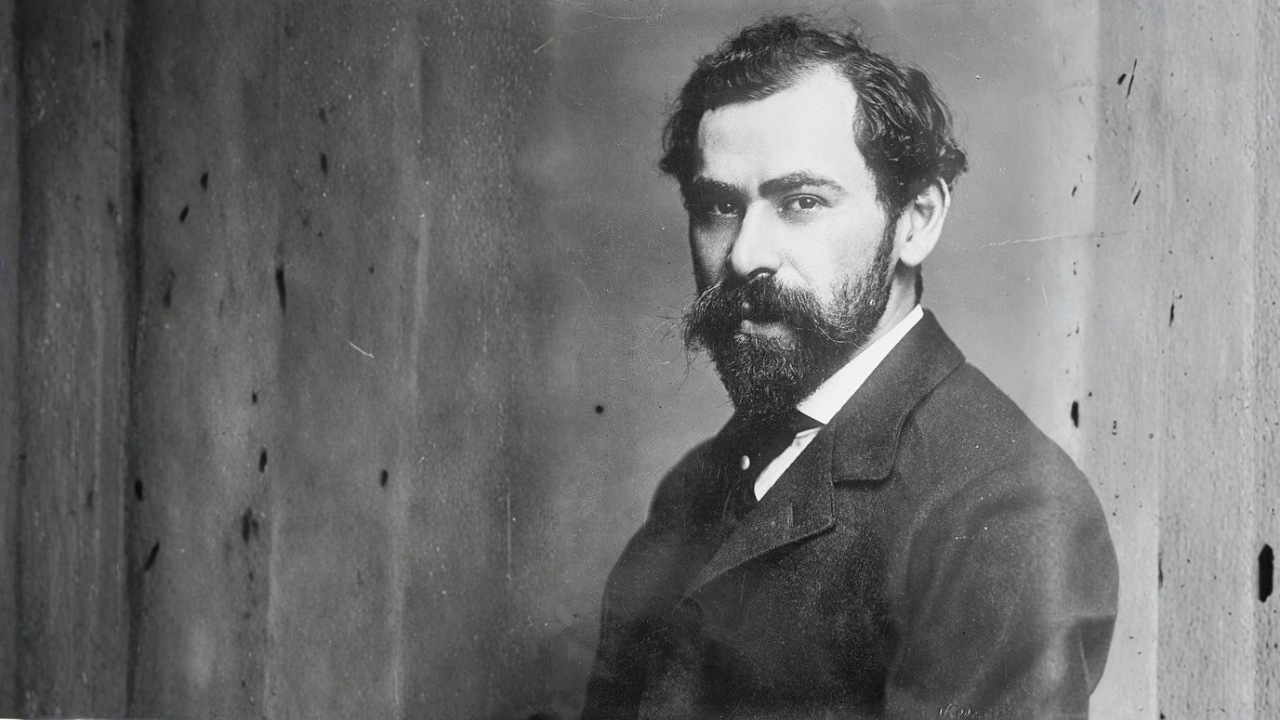
Victor David Brenner
The Lincoln Cent (Victor David Brenner)
10.14.2025
“If I find that this order has gone forth,” said Mr. Brenner, I shall write to Mr. McVeigh about it. He should consult me before doing anything of the sort. It is a courtesy that is due to me. When my design was accepted by the Treasury, my full name was upon the coin. Secretary Cortelyou, with whom I had my dealings, assured me that my name should remain upon it. Mr. Leach of the Mint at Philadelphia understood this too. When I received the first die of the coin, my name was there, just as I had engraved it. They sent me another die later, and on this my initials appeared instead of the whole name. I thought that that was an exceedingly peculiar thing for them to do, but I decided to say nothing.”
– Victor David Brenner
And so those are the words of Victor David Brenner, sculptor, engraver, and artist. An immigrant to the US from Lithuania who rose to the top of his craft creating the most popular piece of artwork in world history.
I just read from a letter that Brenner wrote, right in the middle of a big turning point in this story that we’re going to look at.
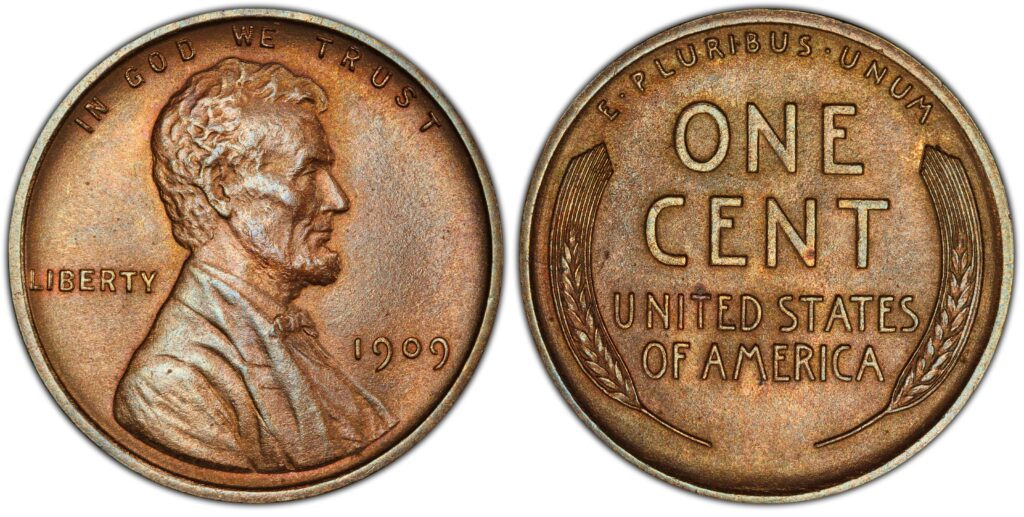
But I’m not sure if you caught what I just said. This story is about the Lincoln cent and Victor David Brenner, who created the most popular piece of artwork of all time, ever. And what I mean by that is the most reproduced piece of art in the world.
Over 427 billion Lincoln cents were created by the U.S. Mint, making it by far, the most produced piece of art in history.
And the story of Victor David Brenner is amazing.
Victor David Brenner and the Lincoln Cent
So this is a big moment in the creation of this coin. When the artist is finding out the US Mint just changed his design, they removed his name from the back of the coin. The Mint accepted Victor David Brenner’s coin design with his last name Brenner on the back of the coin. Then at the last minute, they decided to replace his name with just his initials V. D. B. and they did this without telling him anything about it.
That opening excerpt that I read I found in a book all about this coin. And I’m not just going to go out and Google search a bunch of random articles. I don’t do that for these stories. I can’t. And at the end of this episode I can explain to you why now more than ever I’m relying on old books from experts when I really want to learn the real story.
Q. David Bowers and his Book
I needed the absolute best research for this story and I found it from maybe the top coin expert of all time, Mr. Q. David Bowers. He wrote a book titled, “A Guidebook of Lincoln Cents.” And inside this book, David Bowers includes the letters written back and forth as this coin was created. I always try to find the letters. Any big event going back into the early 1900s is going to have a lot of letters back and forth.
The book by David Bowers, it doesn’t just have all the handwritten letters, but it also includes a bunch of the newspaper articles that track this story day after day, giving the update and describing all the twists and turns.
It’s an incredible coin creator story, starting with the simple request to update an old coin. But once this thing gets going, and this is the fun part about doing these stories, because you really have to get into the details of the story to figure out what actually happened. So once the letters start flying back and forth, this turns into one of the great coin creator stories.
Roosevelt Commissions Brenner on the Cent
President Theodore Roosevelt was just wrapping up his term in office, but he had time to get one last coin request in. Of course, ‘The Old Lion,’ he doesn’t like to leave things undone. His presidency’s almost complete, but he wants to get this scent redesigned. So he commissions Victor David Brenner to redesign the scent piece.
So President Roosevelt knew all about Brenner. He knew he was a great artist, and Brenner gets to work on the coin design right away.
This is his breakthrough moment. This is like getting called into pitch in the ninth inning of a World Series Game 7. For a sculptor like Brenner, it doesn’t get any bigger than this. Brenner’s not going to work directly with the president though, not like my story on the Saint Gaudens Double Eagle coins. I have episodes on that creator’s story, so check that out if you haven’t heard it yet.
But Roosevelt and Augustus Saint Gaudens team up. For what was my all-time favorite coin creating dynamic duo. It takes all the effort of Saint Gauden’s and the force of nature, Theodore Roosevelt, to get that coin created, the double eagle.
The Artist and Sculptor Brenner
Anyways, it’s different for the cent because Augustus Saint Gaudens passed away right at the end of the effort to redesign the double eagle. Otherwise, he would have worked on the cent piece as well, but he passes away and Roosevelt still needs the cent coin redesigned.
He signs on Victor David Brenner for a one thousand dollar commission to do this design just before his presidential term is up.
The reason I’m telling you all this is because Brenner is passed off to the Mint. Another character from my episode on the Saint-Gaudens double eagle, the director of the Mint, Frank Leach. He played a big role in the Saint-Gaudens story that we talked about a few months ago.
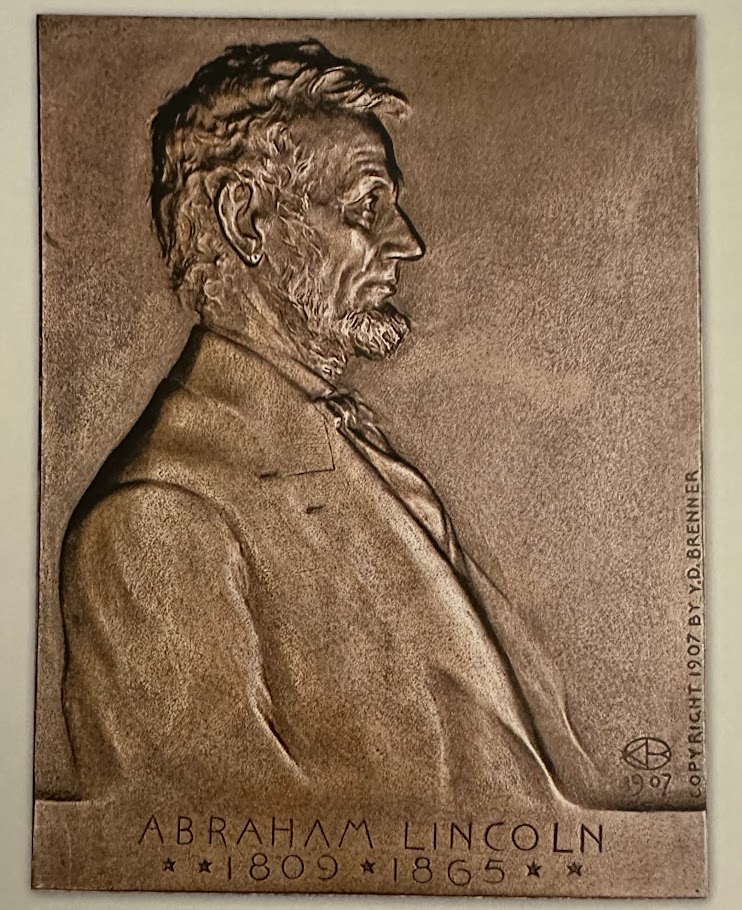
So Victor David Brenner gets after it. He gets busy on this design for the cent piece and proposes Abraham Lincoln should be on the coin.
He’s going to use his own engraving of Lincoln that he did just a few years before. It’s a side profile from a photo of Lincoln. He engraved this bronze plaque of Lincoln and he knew Roosevelt loved that plaque.
He wants to use that same engraving on the new cent piece. Brenner submits his design with the Lincoln profile from his plaque that was already completed. And then he designs a new backside of the coin with two stocks of wheat.
Frank Leach and the U.S. Mint
He submits the design to Frank Leach, director of the Mint and he adds a request. He says, can I please examine the hubs like the final plates before they’re sent into production? He’s asking if he can be there in person. He says he wants to do any retouching right there on the spot if it’s needed.
And this is part of the story that caught my eye. I was reading this request from Brenner as he sends his design for the new sent coin. Check this out straight from his letter. This is the last line that got my attention. So the artist Brenner, says,
“I will appreciate the permission of examining the hubs before they are hardened. And should any retouching be necessary to do so under the supervision of Mr. Barber.”
So, damn, he just said Barber. He’s talking about Charles Barber, the Chief Engraver at the US Mint. We know all about this guy from the Saint Gaudens double eagle stories that I’ve done. I’m not sure how to say this, but this guy Barber is just a real pain in the ass.
And I hate to say that, but from everything I’ve read about him, I just can’t find anyone with anything good to say about Charles Barber, Chief Engraver at the Mint. He was known for fighting really hard against this trend of letting artists and sculptors outside of the Mint get involved in the designing of coins. The tradition of the Mint was that it was always the chief engraver’s job to design the coins.
President Roosevelt threw that rule right out the window when he was elected, because he was on a mission to create coins as epic and beautiful as the ancient Greek coins. That was his famous line. And the president brought in Saint Gaudens. Barber and Saint Gaudens feuded the entire time that double eagle was created.
And it was President Roosevelt who was leading the charge, totally backing the artist Saint Gaudens. That double eagle probably would never have been created if it wasn’t for the president going head to head with Charles Barber at the Mint. They were trying to sabotage Saint Gaudens design, but the president just hammered his way through it and led the charge.
Victor David Brenner and Charles Barber at the Mint
But maybe another reason outside artists were brought into redesign coins was that Barber, they said he was a decent engraver, but a really crappy artist. That’s what everyone said. Here’s a quote from Saint Gaudens himself. He saw metal that Charles Barber was working on and he called the design, “deadly.”
Then said, he said Barber quote, “Cannot possibly do artistic work.” So the sculptors and numismatists called him incompetent or worse. And they said he was, “pendatic and thin skinned, angry eyes and a hostile mouth.”
So this is all from the Saint Gaudens story that I did, but it’s the same thing here. You get the point. This guy, Barber, he’s the gatekeeper at the U.S. Mint as the Chief Engraver and constantly butting heads with everyone who’s involved in redesigning coins.
Barber thinks it should be his job and all these artists are moving in on what he thinks is his turf. He’s a big problem in the Saint Gaudens double-legal story I did. Well, Barber’s here in the Lincoln Cent story just two years later and of course he’s gonna be a big problem again.
We’ll get into more on Barber in a minute here, but let’s get back to Brenner. He’s smart and he just submitted his final design samples to Frank Leach, but also he requested he be there to make any last-minute alterations.
He wanted to be there with Barber. He knows all about Barber and the games that might be played. Brenner’s almost to the finish line here when his coin design will go into production. But not yet. At this point, Brenner has a coin design submitted and almost ready to go into production with his portrait of Lincoln on the front from his plaque that he made a few years ago on the back of the coin. He’s got two wheat stocks that he designed.
Brenner’s Last Name on the Cent
He also put his last name across the back of the coin. ‘BRENNER.’ His full last name. And I’m sure he’s watching that like a hawk. With his fingers crossed, hoping it’ll remain on the pattern coin. Because it’s a bold move. Usually only the initials of the designer go on that coin. Augustus Saint Gaudens, who just created the double eagle. He had his initials on his coins.
Here, Brenner submits a design with his entire last name across the back. I can just imagine Brenner’s watching this like it’s like the last few minutes of a close hockey game and your team’s up by a goal. If you’re a hockey fan, you know that nerve wracking experience when you just keep looking up at the clock and you just need those seconds to tick away for the game to be over and the clock seems like it’s not even moving. Like you think two minutes have gone by, you look up at the clock, and like 8 seconds have ticked off.
It’s like that feeling here for Brenner, he’s almost done it. The new Lincoln cents with his sculpted profile of Abe Lincoln on one side and his last name is across the back of the coin. It’s like Brenner’s about to win what would be an engraver’s Stanley Cup Championship. His design with his full last name is about to be minted onto a US coin if he can just get this coin into production.
The Mint Rejects Brenner’s Sample Coin
But there’s a problem. Frank Leach, Director of the US Mint, he writes a letter to the head of the Philadelphia Mint, to this guy, Landis. And Leach says, I just sent you the models of the new cent piece. And let’s just read the letter here because David Bowers, includes these letters in his book. Here’s what Frank Leach writes about the pattern coins. He says,
“I send you by express today the models adopted by the president of the design for proposed new issue of the one cent piece. I noticed that Mr. Brenner insists upon putting his name in full on the adverse side. I am sorry to have to disappoint him in this matter, but after consulting with the secretary of the treasury upon the subject, it was decided that only his initials could be permitted and that in an unobtrusive way.”
So Leach makes the call. He’s consulting with the Secretary of the Treasury who at this exact time, there’s two of them. There’s the outgoing George Cortelyou, who was President Roosevelt’s guy, involved in the Saint Gaudens double eagle redesign. And it was Cortelyou who also recommended that Frank Leach be appointed as the director of the Mint.
So this is like the old crew. But then there’s the incoming crew and the new Treasury Secretary, Franklin MacVeagh. He officially takes over on March 8th, but Leach is already consulting with MacVeagh on this issue because all this coin production will happen under his new term.
So it’s just terrible timing for Brenner. If he had just another month with George Cortelyou things might have been totally different. But I just read it. They want to remove Brenner’s last name from the back of the new coin.
Brenner’s Initials
But Brenner’s still in it. He answers back. He says, cool, no problem. Let’s just do my initials on the back. I’ll change the design. I’ll add my initials VDB on the back and take off the Brenner lettering. Here’s the letter that Brenner wrote back to Frank Leach. He says,
“I fully agree with you that my name on the averse looks obtrusive and thanks for calling my attention to it. I shall take it out and put it in small letters on the reverse near the rim.”
That was Victor David Brenner writing back to Frank Leach. He says, no problem. You’re right. I couldn’t agree more. My full last name on the obverse was a bit much. I’ll change it to my initials VDB and we’re all good.
So probably another sigh of relief for Brenner right there. He’s watching an entire new administration change out in Washington at this exact moment. William Howard Taft is the new President. On the exact same day that Brenner wrote that letter to Frank Leach, what I just read, it’s the exact same day that president Taft takes office, March 4th, he’s taking over for President Roosevelt.
It’s got to be nerve wracking for Victor David Brenner. He wants to see his design all the way through without any changes and half the government is changing over at the exact same time. But Brenner has his initials on the coin. He’s got the VDB on the back of the coin and all is well, right? It was. Until Frank Leach sends a letter a few months later. He says he’s not happy with the Lincoln send.
Not only that, but he’s working with Barber on changes to the coin. This is bad. Here’s what he says to Brenner. He writes this back to him. says, quote,
“I have to inform you that I was not satisfied with the first proof of the Lincoln cent. I found that you had not dropped the Lincoln portrait down so that the head would be near to the center of the coin. A matter I called your attention to when we were discussing the model. This is necessary to get the best result in bringing out the designs of the features in striking the coin. Therefore, I had Mr. Barber make me a proof of this change. And as this left so much blank space over the top, we concluded that it would also be better to put the motto, “In God we Trust.” This change has made a marked improvement in the appearance of the coin. I cannot send a sample, but if you feel enough interest in the matter, it would be better for you to go down to Philadelphia where Mr. Barber can explain and show you what has been done.”
The Lincoln Cent and the Motto
They add the motto, “In God We Trust,” on the back and they shift the spacing around a bit, but Brenner still has his initials on the coin. Now, reporters and newspapers are getting the details and the official release of the new Lincoln cent is getting close. By August, the government releases a description of the new coin. It’s a big story. New coins were a big deal back then.
Anticipation is building. Coin collectors are getting ready to add this coin to their collections and then the general public is starting to hear about the new coin and now everyone starts thinking they should get this coin too. Leading up to the release of the new Lincoln cent, I stumbled on this little nugget. Let me read this real quick. David Bauer’s book. It said this,
“In May 1909, Chief Engraver Barber supervised the making of 13 pattern strikes, all of which were certified as having been destroyed after they were inspected. Director Leach commanded that no samples be sent out, not even to Brenner.”
So it’s really strange Brenner wanted to be there in person to help out, and I’m sure also so he could see if they made any changes to his design. But they go ahead and make 13 pattern coins and they don’t even send any to Brenner. I wonder why they didn’t want Brenner to see the samples?
The Frenzy for the new Lincoln Cent Piece
Anyways, we were talking about the anticipation growing here. The press is drumming up excitement. People are getting hyped for this coin to hit the streets. Finally, August 2nd is the day they release the new link and send and lines form all over the country.
They realize pretty quick that they better start rationing the new coin because everyone wants to load up and get as many as they can. The government ends up limiting the payout to just two coins each and people start bidding in the street, and they’re trying to buy the new penny for 3 cents each, then 5 cents each, then 1 for a quarter in some places.
So that’s a 25x return on the new cent if you’re going to flip it, if you can even get one to flip.
And then they start running out of the new cent. And in this frenzy, the talk starts to turn to the artist’s initials on the back. Victor David Brenner’s VDB is on the back of the coin, in small letters but still a pretty prominent place right in the lower middle portion of the coin.
The rumors start swirling. They might recall the coins and remove the initials. They were debating if the initials should be on the coin and then reports would come out defending the initials. Most other coins had the artist’s initials on the coin. So why should Brenner’s not be on the cent? This was the debate and it started to heat up.
Everyone Wants a new Lincoln Wheat Cent
Newspapers across the country are tracking this story every day. There’s a Washington Post article at the time and it said this,
“The demand for the new Lincoln Center almost has reached the stages of a frenzy throughout the country. In Washington, it has assumed mob-like proportions because of false report that the issue was to be recalled. Persons of all races, sexes, and ages have become seized with a wild speculative mania.”
That was the Washington Post article. So it’s a perfect storm right now. The new coin is a big deal just on its own. But then the talk about recalling the coin because the initials might get removed, that takes this thing to a whole new level. Here’s another description in the book from a newspaper report at the time. It said this,
“The mob about the corridor and steps was at times 600 strong, desperately struggling to get to the window where the coins were issued. At first, all was tumult, for it had never been dreamed that policed regulation would be necessary. It was soon seen, however, that the system must be established, and a line of the penny applications was formed from the window, stretching, serpent-like, up and down the long corridor and out to the steps in front of the main entrance.”
And they call in the police. That was out of the newspaper article. So they’re calling in the police to get some order here in the lines. And then there’s another report here and it said, “Boys at once set up a thriving business.”
So these there are these paper boys who would buy coins at the front of the line that they’d run to the back of the line and they’d start selling these cent pieces for five cents each. And then they would run out of coins to hand out and they’d shut the windows and turn hundreds of people away who wanted this coin and that just fanned the flames even more for the next day.
Here’s one more account from a newspaper on this frenzy. It says,
“Aged men also were numerous in the throng. One of them came rushing up, perspiring and breathless, demanding to be shown where he might get the new coins. When the inquiry was made of him, why he was so frantically eager for the pennies, he replied, “don’t you know? They’re going to sell for a big premium. I want to get $25 worth.” He was very much crestfallen when informed that not more than 25 pennies could be had by one applicant.”
End of story. So there’s a frenzy to say the least, and there’s tons of different accounts in the book about how crazy it got. Collectors are paying up to a dollar for each Lincoln cent they could buy up.
Brenner’s Initials are Removed
And the frenzy’s not going to stop, because the newly appointed Secretary of the Treasury, Franklin MacVeagh, he makes a statement.
He says he was surprised to see Brenner’s initials on the coin and that he never saw the coin before it was released. MacVeagh says run it back.
He’s gonna remove Brenner’s VDB initials from the coin. This is from the book,
“Secretary of the Treasury MacVeagh has decided to stop the minting of the new Lincoln Cents. New dyes will be prepared as soon as possible, substituting for the initials of the designer the single initial “B” in an obscure part of the design. None of the cents so far will be called in, but the minting will be stopped because a sufficient supply is on hand. The initials VDB are those of the designer, V. Brenner of New York, and the single initial will be, it is considered, a sufficient recognition of his work.”
They’re pulling his initials.
And they say just a single “B” now will be sufficient recognition. So this was a big surprise because other coins had the designer’s full initials, like we were saying earlier. And not only that, MacVeagh said that he didn’t know the initials would even be on the coin in the first place. He just played dumb.
And later on from another letter, David Bowers points out in his book, we know that he did see the coin prior to it going into production. So maybe he didn’t look closely enough to see the initials or maybe he was just caving to the pressure right now of people around him.
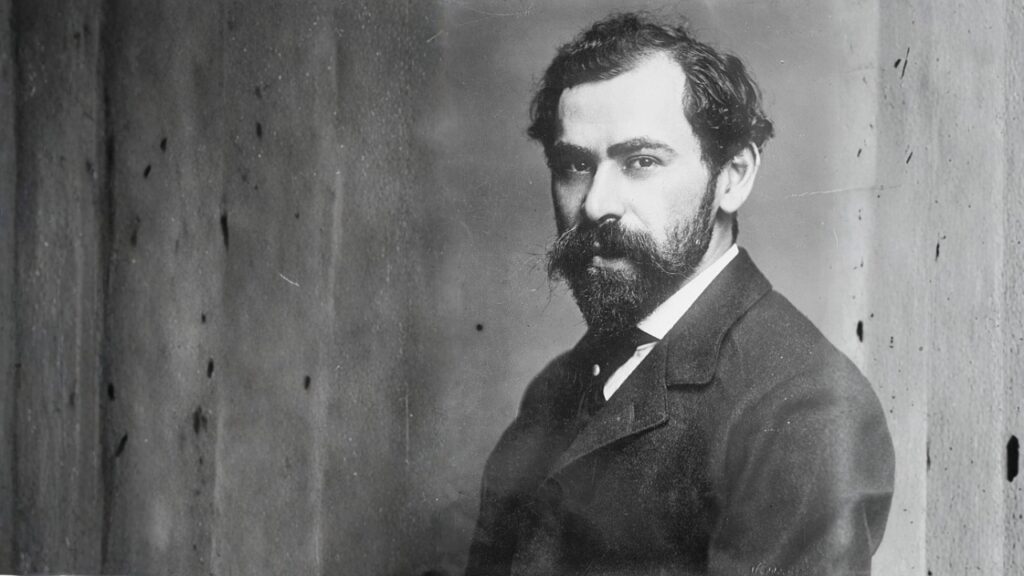
And so he’s like, “what? I had no idea. I had no idea there was initials on this coin.” What typical politician move right here.
So I did some reading up on this guy, MacVeagh, and I don’t know, I guess he was okay. He went to Yale, Skull and Bones, then Columbia Law School, lawyer, banker, and then President Taft brought him in. And actually president Taft was also Skull and Bones at Yale. And I found out, just started reading about this and I found out President Taft’s father actually created Skull and Bones at the secret club at Yale.
Anyway, that was the Taft family had quite a lineage there, but that’s how this guy MacVeagh ends up as the Secretary Treasury from his connection with Taft.
Anyway, like I just read, MacVeagh says they’ll drop the VDB and will only include a B for Brenner. Just the one letter B will be sufficient. And now you can imagine when Brenner heard the news, he was not happy. The book said when Brenner heard the news, he was, “greatly cast down.” And then he said, “that a serious injustice would be done him,” if the secretary’s order was carried out.
Victor David Brenner Makes Inquiry
The book has more from Brenner and that’s part of what I read to start this entire episode. This is one of the big moments of the story right here and I’ll read it again. This is what Brenner wrote when he heard the news. He said,
“If I find that this order has gone forth, said Mr. Brenner, I shall write to Mr. MacVeagh about it. He should consult me for before doing anything of the sort. It is a courtesy that is due to me. When my design was accepted by the Treasury, my full name was upon the coin. Secretary Cortelyou, with whom I had my dealings, assured me that my name should remain upon it. Mr. Leach of the Mint at Philadelphia understood this too. When I received the first die of the coin my name was there just as I had engraved it. They sent me another die later and on this my initials appeared instead of the whole name. I thought that was an exceedingly peculiar thing for them to do but I decided to say nothing.”
And that’s what we read to start this episode off but Brenner continues on in this letter and he really just doesn’t understand. Like, why are they doing him like this? And I totally understand what he’s saying. He just doesn’t know what is going on. Here’s what he wrote to continue on in that same letter. He says,
“Now that they’re going to cut down the initials to one, I feel that I have the right to object. Why should they deny this courtesy to me? On all the coins, with the exception of the scent with the Indian head, the sculptor’s initials have been allowed. You will find the initials of Saint Gaudens upon the 20 and the 10 gold pieces, and those of Bella Lynn Pratt upon the 5 and the 2.50 pieces. Upon the silver dollars there is the initial and on all other silver coins the initial B. I am delighted, Mr. Brenner added, that so much attention has been directed to the new cents. That pleases me. But the taking of my initials off takes half the satisfaction away.”
So what the heck are they trying to do to this guy? Why are they jerking him around?
The artist and sculptor, Victor David Brenner. Why are they doing this? I’ve been trying to figure that out now for a week. What did this guy do to deserve this kind of treatment from several different people? Really, you got Frank Leach, who I thought was the standup guy from that Saint Gaudens episode that I did. Frank Leach was the man in that story. And now he’s just kind of shying away from this issue completely.
Then Secretary Franklin MacVeagh, he’s just getting started in his new position and it seems like he’s been jerking Brenner around for months. And then of course you have Charles Barber. He’s just playing games constantly here. The book by David Bowers, it has the letter that proves MacVeagh did approve the sample coin with that VDB in July. And Frank Leach also approved the coin before that in February without any issues when Roosevelt was still in office.
But now they want to stop production of the coin, pull off the VDB and only leave a B. And their excuse is that they didn’t know the initials were on there in the first place. But now we know that’s BS.
The shenanigans don’t stop there.
You won’t believe what happens next. Even with an investigation and the full report that they gave to MacVeagh that shows precedent. That most coins have the artist’s initials on them. He didn’t even care about that.
Someone’s in his ear about how they’re gonna alter the pattern and pull the VDB off and then just insert a B. And they’re telling MacVeagh, you can’t just erase the V and the D and leave the B. You have to create entirely new mother dies, they’re telling him, which would take at least 14 days. But someone is saying down at the Mint, they’re telling MacVeagh, instead of a delay of 14 days to make new dies with just the “B” you could just erase all the initials and have none.
Nothing, just a blank space.
And that would only take three days to make that change. So you’d save 11 days production by erasing all of Brenner’s initials. And they even add this argument. You could erase all the letters and you’ll be only delayed three days instead of 14. And there’s great demand for this coin. So you don’t want to delay too long. And there’s also a great profit to the government in making these coins.
So guess who’s behind this argument? I don’t even have to say it. You probably already know who it is. It’s the chief engraver at the Mint, Charles Barber.
In a letter to McVeigh during this decision, it says, “Mr. Barber favors cutting off the initials and leaving them off entirely.”
To top that all off, here’s the smoking gun right here. The reason why Charles Barber was just sort of a shady character from everything that I’ve read about him. Here’s a letter explaining to MacVeagh why he should erase the VDB entirely.
Here it is, “There are two reasons why Mr. Barber favors erasing the initials from the new penny. First, because it involves a delay of only three days in coining operations instead of delay of about 14 days. Second, because if the B is placed, in an inconspicuous place, he fears that it may be confused with the B, which now appears on the half-dollar, which was engraved by himself. He’s not willing to be held personally responsible for the Lincoln penny, which he has always opposed and does not regard as a successful coin.”
So, Barber’s pulling his strings here behind the scenes and playing games, and he has always been against any artist designing coins.
And he’s probably still insulted from that whole double eagle embarrassment that he just went through. He fought hard against Saint Gaudens and President Roosevelt and lost. Well, now President Roosevelt’s not around anymore to look out for his artists that he commissioned.
Don’t forget Roosevelt handpicked Brenner to design the cent piece after Saint Gaudens passed away and now Roosevelt’s out of office. But Barber’s still there. And Barber saw an opening to punch back at an artist who was just straight up outnumbered.
Brenner needed Roosevelt there to have his back, just like he had Saint Gaudens back. Now Brenner’s just hanging in the breeze. Taft was in office and Barber got the initials removed with the help of the new Secretary of the Treasury, Franklin MacVeagh.
So Brenner’s not happy, but he knows there’s nothing he can do. He makes one last plea to MacVeagh in a letter. And this is what Brenner says,
“Much has been said for and against my initials on the Lincoln cent, and as the designer of the same, it was natural for me to express indignation to their being taken off. In reality, there is a feature in the new scent which was brought in without my knowledge and which concerns me the most. Lincoln’s bust in my design was to touch the edge of the coin. In the minted cent, the bust is separate from the border. This feature makes my coin lose much of its artistic beauty. I beg you, sir, before more scents are minted and before new dyes are made, to kindly consider and advise.”
Victor David Brenner’s Initials Removed
Brenner’s grasping at straws here. He’s trying to come up with anything that can get him back to the table with his design, anything he can say to have them reconsider. Now, David Bowers in his book says that this letter proves that they never even showed Brenner that final design before the first official release of the coin. Like they’re just treating Brenner like garbage, really.
There’s no reason not to treat a coin designer like Victor David Brenner with respect. He was an accomplished sculptor. He wasn’t a criminal. This was a respected artist. And these Washington officials are just ignoring him and insulting him with like basically zero communication for no reason.
But still, right after Brenner sends that last ditch effort that we just read, which was totally ignored, they just remove all his initials from the coin with no mention of Brenner at all.
And again, in the book, David Bowers says more of what I’ve already been saying about this Charles Barber and how he just barely tolerated Brenner getting involved in the scent design. But the book says that Barber played it cool for a while because he took so much heat during that St. Godin’s double eagle feud. says Barber acquiesced. So he was just playing along until he saw the opportunity to erase all the initials. Once the coast was clear, and President Roosevelt was gone, he just went for it. Here’s more from David Bauer’s book on Charles Barber, Norton’s August 5th letter to McVeigh, given above, included this poignant comment about Barber. “He is not willing to be held personally responsible for the Lincoln penny, which he has always opposed and does not regard as a successful coin.” This reveals that Barber’s true view of the Lincoln cent must have been well known, not just at the Philadelphia Mint, but within the Treasury Department in Washington. It must have been an especially bitter pill when numismatic catalogs and the numismatist soon praised Brenner’s new scent to the skies.”
So lots of people saw the injustice here that was done to Victor David Brenner, and especially the coin collecting community. Brenner was a member of the ANA himself for years, and they had his back.
They wrote letters and protested this removal of Brenner’s initials from the Lincoln cent. And Brenner appreciated the support. He wrote this to the Numismatist, this magazine. He wrote this letter, he says,
“It is mighty hard for me to express my sentiments with reference to the initials on the cent. The name of the artist on a coin is essential for the student of history, as it enables him to trace environments and conditions of the time said coin was produced. Much fume has been made about my initials as a means of advertisement. Such is not the case. The very talk the initials has brought out has done more good for numismatics than it could do me personally. The cent not alone represents in part my art, but it represents the type of art of our period. The conventionalizing of the sheafs of wheat was done by me with much thought, and I feel that with the prescribed wording, no better design could be obtained. The cent will wear out two of the last ones in time due entirely to the hollow surface. The original design had Brenner on it, and that was changed to the initials. Of course, the issue rests with the numismatic bodies, and Europe will watch the outcome with interest.”
So Brenner here, he’s thinking there’s still a chance for an appeal out there. That’s not happening. There’s no chance. The same day Brenner wrote that letter, Director of the Mint, Frank Leach, got the word that production resumed with the Lincoln scent that had Brenner’s initials completely removed.
The New Lincoln Cent Without VDB
They already moved forward with production. So I’ve been talking a lot about the Saint Gaudens episode that I did. And in that story, the Director of the Mint, Frank Leach, is one of the stars. He’s all over that story. He helps President Roosevelt get those coins made. There’s no doubt he’s fully behind the president and Saint Gaudens, like he’s a straight shooter all the way in that story.
So I found the book that Frank Leach wrote about his entire life. And the last chapter of his book goes into detail on his time as director of the Mint. And he gives very detailed history of that double eagle coin story.
So when I got to this Victor David Brenner story on the Lincoln cent, there he is again, Frank Leach. So when I’m learning about this mistreatment of Brenner and how everyone’s just jerking him around, I’m thinking, this is perfect. Frank Leach’s book is going to have the full story. I’ll get the real truth from his book. So I grab his book. I flip to the end of the book, ‘Recollections of a Newspaper Man.’ That’s Frank Leach’s memoirs. There’s not much in there about Brenner at all. Just one little paragraph. So I found that really surprising that he didn’t mention anything about how badly mistreated Victor David Brenner was during that production period.
And no mention of the real story at the Mint where he had to know that Barber was fighting against Brenner’s initial staying on that coin. Frank Leach had nothing to say about any of this in his memoirs, but he went into incredible detail on almost every other aspect of his time in Washington.
Here’s a theory I came up with. Frank Leach published his book in 1917. He wrote his introduction in his memoirs and then he signed it. Frank Leach, San Francisco, California, April 10th, 1917.
Well, it turns out I was looking for an admission from the straight shooter Frank Leach on the real story on how Charles Barber worked behind the scenes at the Mint to remove Victor David Brenner’s name from his Lincoln-sent design.
That’s what I was searching for and it wasn’t in there. And then it hit me. Charles Barber passed away that same year Frank Leach wrote his book in 1917. So I looked up the date, and Charles Barber passed away on February 18th, 1917, about five weeks before Frank Leach wrote the introduction to his memoirs.
If there was anything to say to spill the beans, to unveil the dirty games that Barber was playing at the Mint, that was no time to write about it. Not from a stand-up guy like Frank Leach. He probably felt there’s enough said about Charles Barber by then. It wasn’t the time to say anymore. And so that’s just my guess.
The Legend Coin Creator, Victor David Brenner
My favorite part of this story, the reason I wanted to do this episode, the creator of a penny. Why would I want to do an episode on the Lincoln cent?
It’s the spirit of Victor David Brenner that hooked me into this story.
From nowhere in the middle of Lithuania, immigrated to New York City when he was 19, with nothing but his skills as an engraver that his father taught him. He goes over to Paris to become an expert, then back to New York to show his talents.
He catches the eye of President Theodore Roosevelt and gets commissioned to design a United States coin using a plaque of Abraham Lincoln that he created.
It’s an insane story. But what happens to Brenner once he gets his big break? His entire name was on that coin. Remember I was saying he almost pulled that off, but then it was dialed back to just his VDB initials and then totally erased.
The Most Popular Piece of Art in World History
Here’s my favorite part of the story. Turns out, it doesn’t matter if his name’s on the coin or not. Everyone in the world now knows that it’s the most successful, most reproduced piece of art in the world.
The Lincoln cent created by Victor David Brenner. It’s officially the most popular piece of art ever. His engraving of Abraham Lincoln, which was on that coin, has been created over 427 billion times.
That’s how many of his Lincoln cents have been made since 1909. A much deserved record for the legend, Victor David Brenner. The next time you see a Lincoln cent, I want you to think about this amazing creator’s story of Victor David Brenner. An absolute legend who did his work and then let time decide if it was any good or not.
Victor David Brenner, from Nothing to the Top of His Craft
An artist from nothing, who was pretty much run over by a small group of very powerful people back in 1909. Nobody would care if his design would remain on that coin, or if it’s replaced after a few years. But it was so good, so popular, and turned into such a timeless piece of history, the Lincoln cent by V.D. Brenner. They made 427 billion of them.
And you won’t just see them here on Earth. Fixed to the Mars rover, currently crawling around on the planet Mars, NASA scientists placed a 1909 VDB Lincoln sent next to the camera on the Mars rover to help them calibrate the camera to scale the photos from the rover that are getting beamed back to Earth, from freaking Mars!
When I said Victor David Brenner is a legend, I had this thought, maybe there’s a better way to call someone a legend. Maybe this is how I’ll describe a legend from now on. And I’ll just say this – his work remains.
So at the beginning of the episode, I gave a little teaser on why I have to rely on old books written by experts to do these stories.
I wouldn’t have it any other way. It’s so much fun to search for and then dive into an awesome old book. So I love to do that. And when it comes to coins, Q. David Bowers is the authority that even the experts turn to. He’s the Pro’s Pro. For over 60 years, he’s been researching these coin stories and writing books. And inside these books, Bowers weaves in the firsthand accounts, old letters, newspaper articles.
It’s all in there and it’s incredible. So with every episode I do, I’m admiring and appreciating these old books more and more.
The Old Books and Creators Stories
But let me tell you another reason why. That I gotta go with the old books. Every time. I just said that Victor David Brenner’s Lincoln cent is the most reproduced piece of art in history. With over $427 billion created. It’s pretty easy to track how many pennies were minted over the years.
If there’s one thing that US Mint does, it’s track production numbers. So you can just add up every production year for the Lincoln cent going back to 1909. And then you’ll come up with 427 billion. It’s not that difficult. I actually just checked it.
So here’s my point. I go to chat GPT just for fun. And I ask it, I type this into the search, into the search bar. say, “what’s the most reproduced piece of art in world history.” That’s exactly what I asked it because I wanted to see if I could find anything good on Brenner that I didn’t know already. But I knew the answer to this question. I just wanted to read more about Brenner.
So chat GPT, it spits out within a half a second the answer. And so I looked down, it says, quote, “the portrait of Queen Elizabeth II on the British postage stamp is the most reproduced piece of art in history.”
And so it goes on and on. says, yeah, “the portrait by artist Arnold Machin is the most reproduced piece of artwork of all time.” On and on and on. It says that they made 200 billion of these stamps with this profile of the Queen on it.
And it’s telling me all about how this is the most reproduced piece of art in history. So I’m like, “what is this crap?”
I write back in the response to chat GPT, I type this in, say, “Why did you say the stamp was the most when Brenner’s work had 220 billion more?” Okay, so that’s exactly what I asked ChatGPT back in this exchange and instantly in two tenths of a second, it comes back with this response.
Quote, “This is an excellent and very important point to clarify. my previous response had a significant oversight and I apologize for the inconsistency. You are absolutely correct that the production numbers for Brenner’s Lincoln profile on the penny are higher.”
And it goes on and on and on comparing Brenner’s 427 billion pennies to Machlin’s 200 billion stamps of the Queen. And I’m just like, what are we doing here?
This is just a simple fact. 427 billion is more than 200 billion. And ChatGPT can’t get this right. You have got to be kidding me. That’s what I’m thinking.
So I’m sitting at my desk here. I’ve built a library up over the years and it’s spilled into the other rooms by now. But right in front of me, I have this full wall of books as I’m sitting at my desk. And most of them are these old books about these amazing creator stories.
And the older the books, the better, like to say. So I love to collect and try to search out these cool old books. But when I saw this simple error come through on Chat GPT, this artificial ignorance, and I checked it in my premium account on Gemini as well. Wrong there too. But when I saw that, I was just like, what are we doing here, people? And I’m a big technology guy. Trust me. I spend a lot of time thinking about giga factories and data centers across the country in my other activities, so I’m right in the middle of this stuff. But come on people. That chat GPT effort was embarrassing.
Anyways, I look over at these old books packed on my shelf and I just had this feeling of admiration and respect for history’s great creators. Especially the ones like Victor David Brenner, who just did their work and let time decide if it’s any good or not.
Like I said earlier, Brenner’s a legend.
Even more than that, Brenner’s work remains.
And then another thought rushed over me – more like a panic. I think I’m gonna go order more of these old books right now.