
Walter Johnson
Walter Johnson, Baseball’s Big Train
08.26.2025
“The kids returned to form the next week with a 10-2 pounding of Nampa, in which Johnson struck out 14. The runs would be the last scored against him for almost two months. The first in a long string of shutouts came against Boise on May 19th. A 6-0-1 hitter, in which he struck out 19 batters, including eight of the first nine. The Boise players went down before the mighty Johnson like grass before a reaper, said the Daily Statesman.”
– Henry W. Thomas, ‘Walter Johnson, Baseball’s Big Train’
“Of his great strikeout record at Weiser, where he averaged almost 14 a game, Johnson said in 1914, “In those days I could pitch as swift a ball as I can now. Many batters don’t care for speed, especially if the pitcher is a trifle wild. Many of the players were delighted when the umpire called them out on strikes. Others would take three-week swings for fear the umpire might not call them strikes.”
And that’s one of many, many amazing passages in this book I just finished reading about the great Walter Johnson. The book by author Henry W. Thomas titled, ‘Walter Johnson Baseball’s Big Train,’ published in 1995.
What I just read was a very common occurrence in the book. It was lots of strikeouts, lots of hitters fearing for their lives, just wanting to get the hell out of the batter’s box.
Walter Johnson
And then lots of quotes straight from one of the most humble and respected old baseball legends, Walter Johnson. The book is also packed with great phrases from over a hundred years ago. Like I just read, the Boise players went down before the mighty Johnson like grass before a reaper. The early 1900s slang might be my favorite era for great phrases. And I’ll show you a few more examples.
This book is also full of first-hand accounts of maybe the most dominating pitcher to ever play the game. As I read this book, was laughing out loud at some of the writing. Teammates, opponents, fans, and sports writers were trying really hard and struggling to describe exactly how dominating a pitcher Walter Johnson was back in the day. And they used some amazing phrases that I’ve never heard before.
Dominating Performances
At one point, they asked Ty Cobb about the first time he faced Walter Johnson. And he said, he watched him take this easy windup and then he goes, “Something went past me that made me flinch.” And then Cobb said, “I hardly saw the pitch, but I heard it. The thing just hissed with danger.”
This is what Ty Cobb said about the first time he stepped into the batter’s box against Walter Johnson. “The ball hissed with danger.” So the book is full of amazing phrases just like this. And I was loving the way people were trying to describe what it was like to play against Walter Johnson.
Cobb finishes his quote that I just read. He said, “The ball hissed with danger.” And then he says, “Every one of us knew we’d met the most powerful arm ever turned loose in a ballpark.” That’s an incredible admission by one of the greatest hitters to ever play the game. Ty Cobb. He was not someone who was known for praising his opponents like that, but Ty Cobb and Walter Johnson got along just fine. And they were actually friends. Maybe one of Cobb’s few close friends in the game.
Walter Johnson and Ty Cobb
So of course Ty Cobb pops up in this incredible Walter Johnson story. But how in the world does Ty Cobb become good friends with Walter Johnson? Two of the most opposite personalities in baseball. Because game recognizes game and these were two of the best to ever do it. I love the fact that Ty Cobb and Walter Johnson were buddies. Something I didn’t know before I read this book. Walter Johnson was described as almost the opposite of Cobb.
Here’s what they said about Johnson. “He was beyond a doubt the greatest pitcher that ever scuffed a rubber with his spikes. But he was much more than that. Walter Johnson had all the virtues commonly, but not always truthfully, attributed to athletic heroes. Honesty, decency, dignity, thoughtfulness, and genuine modesty. A simple man, he was, in his way, a great man.”
That was Frank Graham, Baseball Magazine, 1947. He wrote that about Walter Johnson.
The Old Baseball Legends
So those are two main themes in this book. Great stories and phrases from people just trying to describe how dominating a pitcher Walter Johnson was on the mound. And then they also struggled to explain just how great of a person he was. But the book was awesome. I flew through this book. It’s 400 pages and I had a great time learning all about this baseball legend. So we already said how dominating Walter Johnson was on the mound. You’re probably thinking he was a child prodigy, mowing down hitters from the age of five years old.
Well, not exactly. Walter Johnson didn’t play baseball until he was 16 years old.
We talk about this a lot in my baseball episodes. When did these legends get their start? Mickey Mantle was being groomed as a switch hitter by his father and his grandfather just after he learned to walk. Babe Ruth was playing at age seven, just after his parents dropped him off at St. Mary’s boys school. It was all they did at this school was play ball and he was going up against the 12 year old team when he was just eight or nine. So babe got an early start too.
Walter Johnson, The Natural
Ted Williams was laser focused on becoming the greatest hitter of all time. When he was just a kid, he would carry his bat to school every day, but not Walter. And he credits this late start for actually saving his arm from too much stress as a youngster. It actually said that in the book.
Here’s what he said. “He drove a team of horses for his father after school and during summers, apparently leaving little time for playing ball. I never had a chance to play, was the only explanation offered for the fact that not until well into his 16th year did Johnson play baseball to any extent. He credited the delayed start for the remarkable resilience and durability of his arm. By that time I had attained sufficient strength so that I could not hurt myself, Johnson explained.”
So I love to learn about when exactly these baseball legends found out they had a talent for baseball.
Which always leads me to this, another theme in my baseball episodes, the great debate about being a “natural.” This is turning into my favorite little nugget buried inside these stories. So check this out, Ty Cobb and Ted Williams would get irate when sports writers would call them naturals. They’d say, none of this comes easy for me. I worked damn hard to be this good. So this caught my eye when I was reading this book. Walter Johnson admits he was a natural. This is in the book. Here’s what it says.
“The ability to throw hard was not something that Johnson ever had to develop. was a gift, pure and simple. From the first time I held a ball, it settled into the palm of my right hand as though it belonged there, he told an interviewer. And when I threw it, ball, hand and wrist, arm and shoulder and back seemed to all work together.”
Walter Johnson Gets His Start
So that’s from the book. So Walter Johnson had a gift to throw a baseball. He didn’t even play on a team until he was 16 years old, but started to notice this talent before that just messing around playing with his friends.
But the reason he didn’t play ball because he was too busy working. He drove a team of horses for his dad in the summer. They didn’t have much money as a kid and he had to help out around the house. So he grew up in Kansas and there was work to do on the farm. But then his family moves to Los Angeles when Walter’s 14 years old.
There’s an oil boom going on in Southern California so Walter works in the oil fields as a kid but then luckily gets a chance to play some ball finally. But it wasn’t as a pitcher. Once he started playing ball he was a catcher. They didn’t have catcher’s gear back in the day so the catcher would have to stand about 10 feet behind the batter without catcher’s gear. But then young Walter Johnson was back there just still gunning down baserunners who were trying to steal, standing 10 feet behind home plate.
Moving to Pitcher
But his dad sees this. says, “Walter, with that arm, you should try pitching.” And initially Walter didn’t like the idea of pitching. He liked playing catcher. He told his dad in the book, Walter says to his Dad, goes, “But Papa, they don’t ever steal when I’m behind the bat.”
So he’s having fun as a catcher, nailing base runners. But if he thinks that’s fun, wait till he gets on the mound.
He gives pitching a try and finds out it’s even better than playing catcher. Here’s what it says in the book about his first game as a pitcher. And as you would imagine, he had some success on the mound that day. Says, “This was my first taste of real competition. Johnson recalled. I soon found out there was just as much pleasure in whipping the ball to the catcher as in shooting it to second base. And as one after another retired on strikes, I found the pleasure even greater.”
Strikeouts
He struck out 12 batters in all and the boys on the flat had found themselves a new pitcher. So I love these big first moments right here when the star is born and for Walter Johnson, it happened over and over. Every time he moved up to the next level on his way to the big leagues, there’s this first moment of him just shocking everyone, just dominating the game. It’s a pattern in this book as he goes up the ranks and on his way up, he just dominates at every stage.
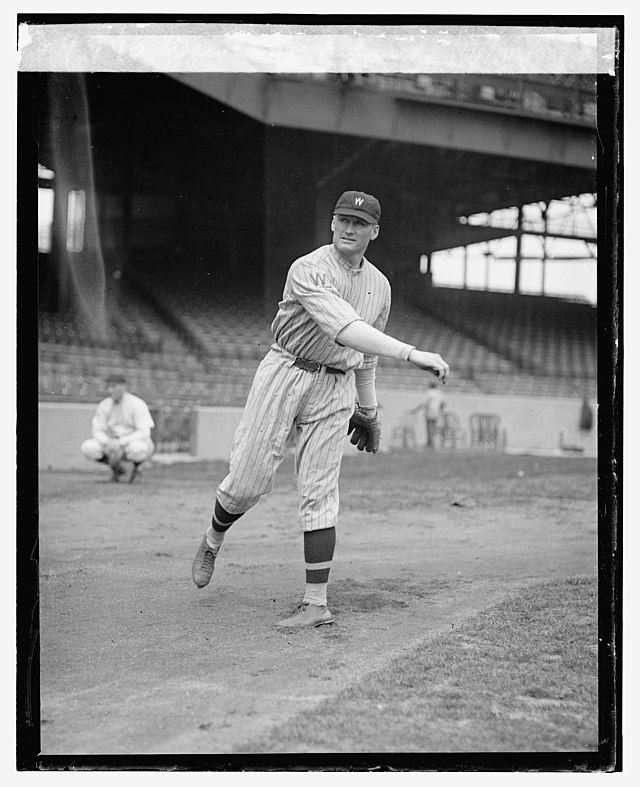
And this was the very first time that happened for Walter. So here’s how the book describes that moment. says, “Years later, a witness recalled his impression of Walter Johnson’s first start. There was no uniform for him to wear, so they gathered some odds and ends. Always a husky youth. The shirt he wore was too short, so his shirt tail was out after every pitch, and his pants hid him well above the knees. They were too tight to buckle and his cap bobbed on his head. He took an awful ribbing, which he ignored, fanned every batter and before he was through he had the entire crowd cheering for him.”
High School Records
That was Walter Johnson. Now he’s off to the races. They get him onto the Fullerton High School baseball team in Southern California and he’s mowing down almost everyone. There’s this epic game against Santa Ana High School. The game goes 15 innings. It ends in a 0-0 tie. Walter pitches the entire game and strikes out 27.
The book says the game wasn’t cancelled because of darkness. It was called because of exhaustion. It says this in the book. “Rooters were out in force for both sides and the grandstand was kept in a constant uproar, applauding the brilliant work of the players.”
So that’s what the paper wrote about this crazy game. So the book goes on and it says, “Santa and his captain, Garland Ross, recalled that for the most part, we just went up to the plate, took our three swings and walked back to the bench. I remember we all kept saying to the next batter, he ain’t got a thing, but a fastball. And that was true, but what a fastball. It came up to the plate like a pea shot out of a cannon.”
So what a game that was at zero, zero, 15 inning game. And they just call it a draw. Johnson pitches all 15 innings. He strikes out 27. Johnson’s team can’t score a run and there’s no way Santa and his team is touching the ball. So we got to end this game. They just call it. It’s insane.
Walter Heads to the Minor Leagues
Now there’s a chance for Walter to go play in the minor leagues after high school and he ends up heading north to Idaho to play for a team in Weiser. And it’s wild up there. The great Northwest. It’s so wild that some of his family was already a little skeptical about Johnson playing baseball as a career back then. And rightfully so.
Baseball players were rough. Over and over, read this in my baseball episodes, mothers and fathers did not exactly want their kids to go off to play baseball. Lou Gehrig’s mother called baseball a, “waste of time,” and, “a bunch of nonsense.” Ty Cobb’s father told him when he said he wanted to play baseball, his dad told him, “Go satisfy yourself that there’s nothing in this baseball business. then come back here to your studies.”
It was a low pay. The players were not treated well by the owners and playing baseball was associated with lower class behaviors is what they called it. With lots of smoking and drinking and mostly just a dead end, there’s no stability whatsoever as a career. So even though Walter Johnson’s clearly a super talented pitcher in high school, it wasn’t a no brainer to go play baseball.
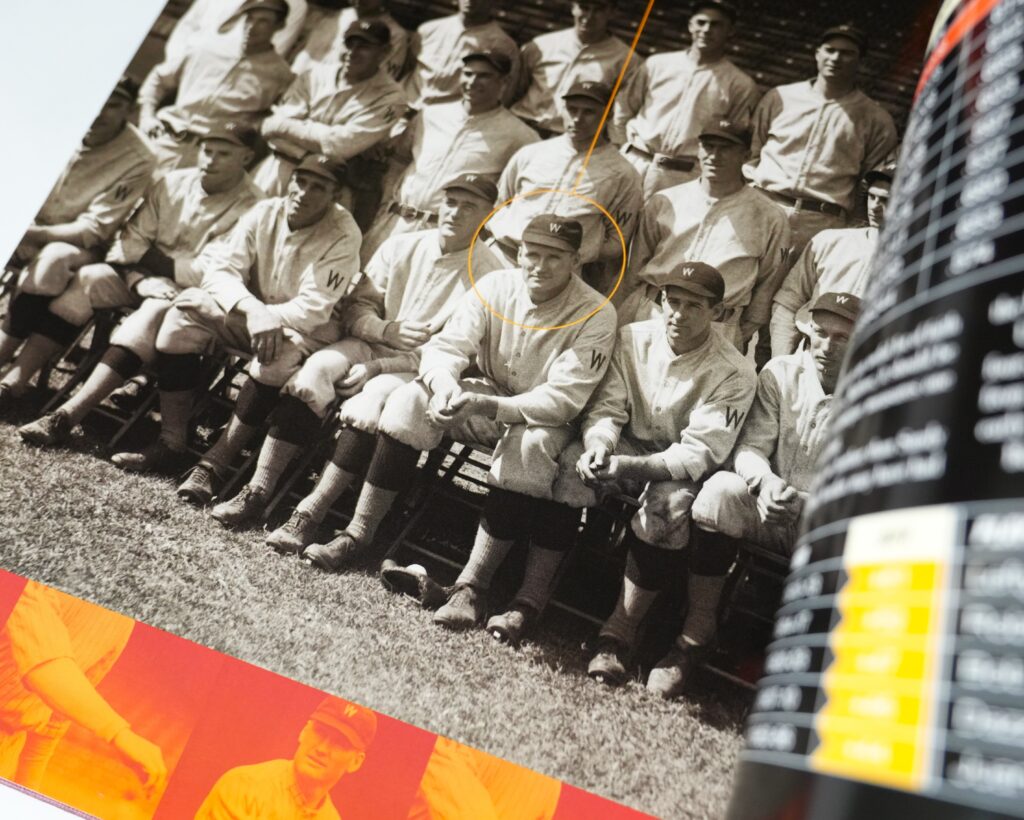
He didn’t fit the mold at the time of the rough and tough, wild man. He was the opposite of that. But off he goes. His family decides to let Walter head north to Weiser, Idaho and give it a shot.
So like I said, it’s wild up there. And the book goes through all these details of this time for Walter. He’s dropping right in the middle of this crazy league in Idaho with a bunch of rivalries between some of these small town teams. These games are a big deal for the people of these towns.
Big Games in Idaho
They’re all coming out to the games and the stakes are high because they’re betting on these games. It’s a big deal. Thousands of dollars are on the line and here comes Walter Johnson striking out everyone in his path. So he makes a name for himself pretty quick. Word starts to spread and there’s some really exciting games he’s right in the middle of in this minor league up in Idaho. There’s one game over the 4th of July. 5,000 people show up for the game.
It was the biggest crowd they’d ever seen at the time. Johnson throws a no-hitter. The local paper writes this. says, quote, too much Johnson was the result. Then the article says, “He didn’t do a thing, but pitch, say nothing and chew gum.” One of my favorite quotes right there.
So he’s mowing down the opposition. Thousands of fans are witnessing these games and there’s all these great articles written about this new phenom pitcher. It’s great. Here’s another report from the from his time playing in Weiser. It said, “This boy throws so fast you can’t see him. And he knows where he’s throwing the ball because if he didn’t, there’d be dead bodies strewn all over Idaho.”
That was Shirley Poyich, sports writer for the Washington Post back in the day. So there’s a big section of this book that describes all these minor league games, all the crazy characters. There’s brawls with the fans and the players. It’s just these games are crazy.
Here’s why I read the quote at the beginning of this episode. It’s during this time when everybody starts to realize Walter Johnson is the best pitcher anyone’s ever seen. He’s throwing no hitters. He’s striking out 15 to 20 every game. And it gets to the point where they notice some hitters are just standing up there taking three quick swings and getting the hell out of the batter’s box as fast as they can. They’re terrified. Nobody’s ever seen anybody throw as hard and as fast as Walter Johnson.
Dominating the Minor Leagues
He just dominated up in Idaho. Let me read this from the book to give you an idea. Here’s what it says. “On June 9th, Johnson pitched his second no-hitter in a row, striking out 18 in an 11-0 Weiser rout of the Emmett Prune Pickers. In 27 innings from Sunday to Sunday, he had given up two hits and one walk, while striking out 44.”
The book goes on and on, but now Walter Johnson has a scoreless innings streak that’s making headlines in all the papers. He goes 58 straight innings without giving up a run. Now word of Walter Johnson’s traveling around the country and people are writing letters to the major league teams on the east coast. And they’re telling them about this phenom that they’re watching.
This is where the Washington Senators manager hears about Walter Johnson. Joe Cantillon is the manager for Washington. They’re telling him all about Johnson and a respected source is telling Joe, you gotta see this kid pitch.
The Offer from the Senators
So finally Cantillon gives in and sends a telegram to Johnson with an offer to join the Washington Senators in the major leagues. The offer is rejected. Cantillon’s like, what the heck is going on with this guy? So now he’s got to send someone in person out to Idaho to follow up. So he sends Cliff Blankenship out there. He’s an injured player. He was a catcher for the Senators who had an injured thumb.
So he sends Blankenship out to, “go get Johnson,” is how they said it. “Go get Johnson.” And eventually he’s able to convince or get Johnson to join the Washington senators on the East coast. So finally, Walter Johnson heads to Washington, DC, but nobody really knows what he can do yet. They’ve all heard about it. The crazy stats, 166 strikeouts in 11 games, but there’s no video proof.
They’re still pretty skeptical in Washington DC until they see it with their own eyes. They finally let Johnson pitch in a batting practice with the Senators just to see when or if he might be ready to play in a big league game. And here’s a great description of the big league ballplayers stepping up to the plate for the first time to face their teammate Walter Johnson in batting practice. This guy, Jim Delante, was one of the best hitters on the team. He’s up first. Here’s what happens.
The First Impression
“I never had time to take the bat off my shoulder, he said later. That ball shot right by me, right in the groove and was in the catcher’s glove before I knew it had left the rookie’s hand. And when he came back with another in the same spot, I’d laid my bat down and walking over to manager Joe Cantillon, I said, I’m through.”
“What’s he got? Asked Cantillon. Has he got a fast one?”
“Fast one. No human ever threw a ball so fast before.”
“Has he got a curve? Quarried Cantillon.”
“I don’t know and I don’t care.”
“What’s more, I am not going back to find out until I know how good his control is.”
So Delany asked Cantillon when he planned to start “this blizzard,” as he called Johnson.
“As soon as he looked ready, the manager told him.”
“If ever there was a pitcher in baseball that was ready, Deelany shot back. That Rube out there is the guy.”
So Walter Johnson, he’s ready for this first game. Just like every other time. People are just stunned when they see him pitch at every level. It happens every time high school, minor leagues, and now the pros.
Dominating the Big Leagues
The book has so many amazing stories of Johnson showing his stuff for the first few years in the big leagues. And here’s one of my favorites. And most of these stories include the character of Johnson. He’s just a humble guy. He doesn’t want to show anyone up. He’s not going to yell at the umpire. He’s going to strike you out.
But then he’ll try to think of something nice to say about you afterwards. This is just a pattern that you see. So there’s this game in Boston. Walters pitching and the game is close. There’s a few errors and now the bases are loaded with nobody out. The Red Sox are close to breaking this game wide open and the Boston fans are cheering and going crazy. Well, Johnson strikes out the next three hitters in order. The meat of the Boston lineup.
The book says Johnson with his head down he just walks to the bench and the guy telling the story in the book this guy Ed Grillo he’s playing in this game and Johnson’s walking to the bench with his head down after striking out three guys in a row and leaving the bases loaded and the Boston fans are probably throwing themselves back down into their seats in disappointment. Ed Grillo says this he goes,
“But Johnson buckled down to business and struck out Hooper, Speaker, and Lewis, Boston’s big guns, and then with his head down walked to the bench. I was sitting with Maculere at the time, and as Johnson walked from the mound, Maculere poked me in the ribs and shouted, look, look, he’s ashamed he did it.”
So that was Ed Grillo sharing an amazing story, and you can just picture it. Johnson humbly striking out three in a row, and it looks like he’s almost sorry about doing it.
The Humble Walter Johnson
And everyone’s just in awe of this guy and how he carries himself. And so another amazing thing that kept coming up in this book over and over, the bean balls of the early 1900s. These guys didn’t wear helmets and the game was rough. So the bean ball was a real deal back in the day. Walter Johnson was always worried about hurting someone by hitting them with a pitch. He talked about this a lot. He didn’t want to bean a batter. What’s even crazier is that he had a major league record for several years of most hit batsmen.
He beamed 205 hitters over his career. But it’s so funny, the hitters were terrified of getting beamed by Walter Johnson because of how hard he was throwing. And Walter Johnson was terrified of accidentally beaming a hitter. He didn’t want to hurt anyone. and then so Grantland Rice, an amazing sportswriter back in the day, he was actually a poet too. But they call them the Dean of American Sportswriters.
He wrote about Walter Johnson and how he could have been almost unhittable if he would have adopted the bean ball like other pitchers did. He said Johnson would be, “Almost unhittable beyond all range if he ever adopted the tactics used by most successful slab men. That is the policy of shooting a stray shot at the batsman’s onion once in a while.”
And now you know why Grantlin Rice was the Dean of Sports writers. There’s a lot of Grantland Rice in this book too. And he had a way with words back in the day. He said, if Johnson would have just started shooting a stray shot at the batsman’s onion once in a while, he would have been unhittable because that would have put even more fear in the minds of the hitters.
The Beanball Era
They were already terrified. We know that, but what if they also thought Johnson was just a little bit crazy to go along with it? They all knew he was one of the nicest guys in the game.
And Grantland Rice goes on, “Johnson never used the tactic of driving the hitter off the plate like some pitchers did.” He wrote it was for a good reason though, because the hitters couldn’t move out of the way fast enough. So he said this, “The batsman would have only an outside chance of ducking the shot as propelled by Walter’s arm. And if the shot landed squarely, Johnson would have the ghost of a dead man stalking his sleep.” Again, that was Grantlin Rice.
And then this book gives some good reasons why Walter Johnson hit so many batters when he was maybe the only pitcher not trying to hit anyone. Here’s a few reasons. It says there was just more volume than anyone else, first of all, which is true. Johnson played for 20 years and there was other pitchers with a higher frequency of hitting batters per innings pitched, but Johnson just pitched more innings. A few other reasons. There was shorter reaction time because of the speeds of the pitches, which makes sense.
Another theory, unpredictable movement on the ball because the other pitchers were tampering with it. And then of course, some of the crazy hitters, they were just leaning into the pitch, trying to get on base, knowing that they had no chance of getting a hit against Johnson. Now, after just a few years, Johnson becomes a superstar. He’s not winning every game because the Washington Senator’s team is just not that good, but he’s by far the most powerful pitcher in the game. His ERA would be under two for most of his career, right up until the live ball of 1920.
The Amazing 1913 Season
Here’s an amazing description of the start of his 1913 season, where he’d win the MVP and lead the league in almost every single statistic. He started the season against the New York Yankees, where he gave up a run in the top of the first inning, then shut them out the rest of the game for a two to one win. Then check this out, here’s how the book says it. More than a month passed through eight games and 56 straight innings before he was scored on again. And it was almost six weeks before he took his first defeat.
It wasn’t just Johnson’s best start ever. It was anyone’s best start ever. The scoreless stretch contained four complete game shutouts, two of them two hitters. Typical of his pitching strategy now was the sixth inning of a 3-0 victory at New York on April 19th. The Yankees opened with a single and a double, putting men on second and third with no outs.
Johnson then struck out the side. “He toyed with his opponents until they threatened, then came that terrific speed which the human eye cannot gauge. This newspaper reported, as he walked back to the bench, 18,000 New Yorkers rose in standing ovation.”
That’s awesome, Imagine striking out the side in Yankee Stadium and then getting a standing ovation from the opposing team’s fans.
“Then came that terrific speed, which the human eye cannot gauge.” This is what the newspaper wrote. And this happens in every ballpark. The crowds were coming out to the games to see Johnson pitch, not just at his home park in Washington. There’s another close game a few weeks later. They’re playing in Boston in a close game and they get Johnson up to come in as a reliever. It says the crowd went into an uproar.
They were so excited. It says even though Johnson coming into the game would make the chance for victory very slim for the Red Sox. Getting to see Johnson pitch, the Boston fans “went into ecstasy.” That’s what it says in the book. So that’s what they wrote in the newspaper.
Walter Johnson the Superstar
And then it says, even on the days he’s not pitching, just when he walks across the field, it brings applause. So they go on, they wrote, “His very first appearance on the field in any city of the circuit wins him applause. Johnson is not only noted for his remarkable ability, but he has made many friends by his modest demeanor. Unlike most of the other stars in the game, Johnson does not push himself into the limelight. He never does anything to attract attention to himself.”
So the book goes through the details of all these games, but for as many great scenes at the ballpark, there’s just as many stories about the amazing character of Walter Johnson. This is what they wrote, “The hero that never struts. The star that never brags.”
And then they said this, “He is sophisticated enough so that nobody would mistake him for a probable purchaser of green goods. But sophistication hasn’t spoiled him.” And so then they add, “He’s now receiving 60 letters a day,” and he answers them all. So then they asked Johnson, why you respond to every letter? And Johnson says this, he goes, “Folks who are interested enough in the game and me to take the time to write are entitled to a reply.”
What a guy, he knows what to say and then why’s enough not to say too much and he’s making all the right moves. But here’s another common occurrence in my other baseball episodes and even with the best guy you could imagine, it’s the same challenge. Back in the day, it was an absolute grind to get paid what you’re worth.
There’s no agents, the owners had the upper hand, and even the best players had a fight on their hands to get a raise. Year after year to make sure their salary was where it should be compared to the other players. In my Honus Wagner episode, he had to announce his retirement to get a pay raise. He was only a few years into his career, but he said he was done. And so the owner was like, okay, Wagner, we’ll give you the damn raise, just come back and play.
Trying to Get Paid What You’re Worth
And another thing he would do is he would just let the contract sit on the kitchen table for a few months in the offseason, unsigned, just as a sort of a message to ownership that he might or might not play ever again. then finally one year he just straight up retired. So that was Hannes Wagner’s tactics for negotiation.
So it was tough. Lou Gehrig went through the same thing. Babe Ruth had the same problem, only he’d just go straight to the owner, Rupert. He’d go over the head of the general manager, Ed Barrow, and he’d just go straight to the owner to try to get his money.
So same thing here for Walter Johnson. And you would think with everything we know about Johnson, he’d just say, okay, sure. Just pay me what you think is fair. Some might think that, but Johnson’s a competitor and he knows the game between the owners and the players that’s going on.
So, Johnson sees an opportunity. He knows he’s the best pitcher out there. How can he get even more leverage without having to officially retire like Honus Wagner did? Well, there’s a rival league, the federal league, and they’re busy recruiting players and they want to sign Walter Johnson to their league and things escalate quickly. And before you know it, there’s a big offer on the table from the federal league and Johnson takes it.
He signs a three year contract with Chicago in the federal league. And when the Washington Senators owner hears about it, they’re just beside themselves. The book says they were in tremendous shock and the senators manager, Clark Griffith, he had to do some fast talking and make a quick deal with Johnson before they lost him to the federal league.
But this was all about negotiating a salary for the next season. And you can see this cat and mouse game back and forth with the baseball legends and the owners.
The players really struggled through this because they just didn’t have the negotiating skills to go up against the owners. And they were the best of the best too. Can you imagine being an average player back in these days? If it was rough for Johnson and Gehrig and the Babe, the average player had no chance going up against an owner.
This would lead to the nickname that stuck with Johnson all these years. He was late in reporting to spring training the next season because of all the salary negotiating.
The Big Train Nickname Sticks
So a sports writer wrote this, wrote, “A storm prevented the big train from reaching these parts on time.” Bud Milliken wrote that. A few weeks later, he wrote this, he said, “The big train would not have been scored on but for an error.”
And this was the start of that great nickname, “The Big Train.”
And now we get back to Cobb. There’s a lot in this book about Ty Cobb. And I think I said this earlier, but I like Cobb more and more every time I read another guy’s biography because he’s usually in there mixing it up.
The Ty Cobb Friendship
But this one is really cool. I was not expecting to read that Ty Cobb and Walter Johnson were bros, but they were all the way to the end. I think they’re playing in some old timers game after they were both retired and Cobb turns to Johnson and he says something like, “A lot of the guys ain’t around anymore, but we’re still here.” Something like that he says to Johnson.
So this friendship starts during Walter Johnson’s very first game in the big leagues. He’s got a pitch against Detroit in his very first game, which would have been terrifying for any other rookie pitcher. But there’s a mutual respect right away between these two. That’s when Cobb said the quote that I read at the beginning of the episode that the ball just hissed with danger from Johnson.
But of course, the first ever at bat against Johnson, Cobb lays down a perfect bunt for a single, and then comes all the way around from first to score when the next hitter throws down another bunt for a 1-0 lead. In most of career, Cobb had a tough time against Johnson. He hit only 2.75 in the first half of his career. And here’s what Johnson said about facing the Georgia Peach. He said, “I always gave him everything I had, plus a little I kept in reserve for the good hitters. Johnson said later, not a soft pitch did Ty ever get from me. I always believed that if you could keep Cobb off the bases, you could keep out of a lot of trouble.”
The Favorite Story of Walter and Cobb
That’s Walter Johnson on pitching to Cobb. And then this is really funny. I can just hear this from Cobb. He struggled so much against Johnson. Here’s what an umpire remembers. Cobb complaining as he steps into the batter’s box. Cobb says this. goes, “Watch the big Swede go into high as I come up.”
You can just tell Cobb is dreading this at bat as he’s digging in and the umpires listening to him complain about the big Swede about to crank it up on him.
And then this gem, I love this quote from Cobb. This is also in the book, it says, “Asked one time to describe his most embarrassing experience in baseball. Cobb answered Washington on any dark afternoon with Walter Johnson pitching.”
I know these two were friends because the book is full of stories and quotes from these two amigos. It’s an unlikely pair, but it’s all in the book. Here it is again. “We were friends at all times, on the diamond or across the poker table, Cobb remembered, a sentiment expressed also by Johnson. In 18 years, I have never had an unfriendly word with Cobb. I consider him one of my best friends. Even when I landed from the wilds of Idaho, a raw and frightened kid.”
So there you go, right there in print. Just in case you wouldn’t believe me when I say these two were buddies, it’s right there in the book. But the book doesn’t stop there. It’s full of crazy stories with these two. You won’t believe it. And I can’t get into every one of these stories as much as I want to.
Pulled Over
Here’s one example. The book says, so Walter Johnson wrote about this story back in 1924, but the short version of this story is Cobb gets a new hot rod. He gets a new car and he wants to show it off to Johnson. So the two of them take it for a spin. Cobb puts the pedal down and ends up getting pulled over. He gets a speeding ticket, but then gives the police officer tickets to the game later that day.
The officer had no idea he just gave Ty Cobb a speeding ticket with Walter Johnson in the passenger seat. So he rips up the ticket and tells Cobb to hit two home runs that day and then he’ll call it even. So later that day, Johnson sees the police officer in the stands. He yells to Cobb. says, look up there. And then they start laughing. Cobb hits a home run in the seventh inning, then another one in the ninth. So there’s his two home runs that he asked for.
And that’s the story straight from Johnson, which is in this book. And I have no idea if it actually happened, but Walter Johnson has never told a lie. I don’t think so. It’s gotta be true. Two legends right there. So that’s a sampling of what’s in this book. And the stories just go on and on. There’s a few other amazing quotes that I can’t leave out. And I talked about these already in my Ty Cobb episode I did. I have to remind you, Walter Johnson defended Cobb, even when Cobb was sometimes tough to defend.
Defending Cobb
Johnson and Clark Griffith were having dinner at Cobb’s house in Detroit one time, and apparently Cobb bolted from the dinner table to go physically take care of an argument that he had with a butcher. And that’s all the details I have on that story. But here’s what Johnson said about Cobb’s aggressiveness. He said, “He was always willing to fight to win, Johnson said, but I don’t believe Cobb ever picked a fight just for the sake of a row. Leave him alone and treat him right and he’s all you expect to find in a well-mannered southern gentleman. But start something unfair and you’ll get a fight, whether you’re a ball player or a taxi cab driver.”
And then there’s a whole lot more in the book about this friendship. And then Cobb starts figuring out Johnson and having a little more success at the plate. And it was because of a few observations he made, that let Cobb get into the mind of Johnson a little bit. And at the end of his career, after this observation that Cobb made, he hit 435 off Johnson the last few years of his career.
Now that I’ve done a handful of these episodes on the baseball legends, I’m just going to have to accept that Ty Cobb is going to be a figure in every single one of them from this era. Like I said before, he’s right in the middle of it. This is Walter Johnson’s book, but lo and behold, his best friend Ty Cobb is the co-star.
I was not expecting that, but I love it. So this book was awesome. Walter Johnson, baseball’s big train written by the grandson of Walter Johnson, Henry W. Thomas published in 1995. I would strongly recommend you read this book. It’s 400 pages, but it’s packed full of amazing stories. And there’s so much more I didn’t get into, but Walter Johnson begins to run into other legends as his career goes along.
There’s all these matchups against Babe Ruth, not just as a hitter, but early on they would pitch against each other when Babe was still playing in Boston. And then Babe hit, I think he hit 10 home runs in his career off of Johnson. So the Babe was tough to deal with at the plate, even for Johnson. I feel terrible for any other pitcher going up against Babe Ruth. If Walter Johnson had his hands full with the Babe.
Can you imagine any other pitcher trying to get Babe Ruth out? Here’s one amazing quote to give you an idea of what I’m talking about. They asked Walter Johnson to compare Babe Ruth’s home runs to Jimmy Fox or Hank Greenberg. Johnson said, “All I can say is that the balls Ruth hit out of the park got smaller quicker than anybody else’s.”
The World Series in 1924
So something that I really enjoyed as I was reading this book, I didn’t know if Walter Johnson ever won a world series. And I just did an episode on Babe Ruth. So I knew 1924 was sort of a down year for Babe Ruth and the Yankees, but I didn’t know who won the world series that year. I just didn’t know.
And as I’m reading the book on Walter Johnson, I just started thinking the senators are just not a good team, basically his entire career. And I’m thinking in the back of my head. Walter Johnson, I guess he’s just one of those greats who never wins the big one. And that just happened. Some of these legends, they never win a world series.
So maybe that’s Walter Johnson. So the most fun I’ve had reading a book in a long time was when they get to this 1924 season and they’re making a run at the pennant and the senators are trying to make it to the world series. And it was so exciting because I have to admit, I just hadn’t heard this story before.
Did Walter Johnson Win the World Series?
I guess maybe I’m the last one to hear it, but that’s okay. I’m glad I finally got to find out. So I’m not going to spoil the surprise. Get this book and go through the 1924 season. If you don’t know the story, the author does a great job building up the suspense. So check out my other episodes I’ve done on these baseball legends. They’re starting to all tie into each other. Honus Wagner, Babe Ruth, Lou Gehrig, Walter Johnson, and of course, Ty Cobb right in the middle of it at all times.
And actually I just listed off almost the entire inaugural class of the baseball hall of fame right there. Walter Johnson was one of the first five players inducted into the baseball hall of fame in 1936. So it was Babe, Cobb, Honus Wagner, Matheson, and then Walter Johnson. One last thing I loved about the book. There was a lot of Grantland Rice, the great sports writer and wordsmith.
The Legend
I actually ordered his book as I was in the middle of reading this book. His book is called, “The Tumult and the Shouting, My Life in Sport.” And I don’t have that book yet, but I can’t wait to get it in the mail. He was a great sports writer and he’s in this book a lot. As Walter Johnson was getting older, people were trying to figure out if the legend was losing his stuff. They were wondering if Johnson was losing a little zip on his fastball and Grantland Rice answers.
He said Johnson seemed to have, “Slowed up in the same way that John D. Rockefeller has gone broke. Both have lost something, but they still have enough.”